Just as no one can study political science without a basic understanding of human history, or study a modern animal without a basic understanding of evolution, so no one can understand climate change without understanding the Earth's history, argues the Princeton geology professor.
Tell me about your work and how it connects to the environment.
I study Earth history. For example, the Neoproterozoic-Cambrian Era (900-490 million years ago) is a particularly important interval in Earth history because, at the same time that Earth endured radical drift of the continents and a glaciation that sealed the global ocean in ice for millions of years, animals first evolved and quickly became large and diverse.
I choose precipitated sedimentary rocks such as limestone as my history books because a single outcrop of limestone may contain physical evidence for the energetics of winds, waves and currents, biological imprints of ecology and evolution, chemical records of the climate system, and magnetic evidence of latitude and geography.
My study group conducts extended field campaigns to map these physical and chemical records into a three-dimensional landscape of ancient environments. My goal is to tell rich stories of Earth history that shed light on the origin of animals and the evolution of Earth’s climate.
I would say that these days climate is front and centre in many academic departments. To date, the emphasis really has been on trying to predict future climate change. However, even as models get more and more sophisticated, model predictions remain highly uncertain. Some of this uncertainty comes from not knowing how sensitive our climate is to various events known by scientists as climate forcings. I think the most valuable piece of information missing in studies of the modern climate system is a deep understanding of Earth’s past to shed light on how Earth has responded to similar forces in the distant past.
“My goal is to tell rich stories of Earth history that shed light on the origin of animals and the evolution of Earth’s climate.”
You can make the connection to any field. No one would ever study modern political science without a basic understanding of human history and civilisation, and no one would ever study a modern animal without a basic understanding of evolution. Well, it is the same with the climate and Earth history; the only problem is that you have to study nature and not books to understand Earth history.
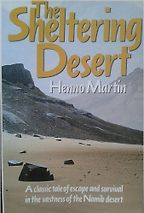
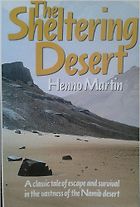
Tell me about your first book, The Sheltering Desert by Henno Martin.
Henno Martin is a geologist who before World War II was famous for finding and supplying water to farms in Namibia. During the war he spent a two-year exile in the Namib Desert to avoid being interned by the South Africans for being German. So in 1940 he set out with a pistol, air rifle, two cars and his partner Hermann Korn. What kept them sane during those two years of survival in the desert was curiosity and mental exercise – whether they were making geological maps or discussing Darwinian evolution. TheSheltering Desert is a book about his experiences in the desert.
For me the book demonstrates their deep respect and understanding of nature. When you live outside, you obtain a completely different understanding of what is around you. You observe the sun, moon and stars. You look at animal behaviour and end up seeing them as human. And when you think about humans, you see some characteristics and behaviours that would not be out of place in the wild.
In the book there is a lot of discussion about evolution. Henno is constantly considering how important learning from experience during a single lifetime is compared to Darwin’s chance mutations. I can imagine how steep the learning curve would have been, surviving in the desert for two years, and I can see how Henno would have realised how much knowledge he was obtaining through daily experience and how he would wonder if this knowledge would be passed on to the next generation as a form of evolution. Reading this book made me want to read Darwin’s The Origin of Species.
Martin wrote, ‘For me the most important gain of our life in the Namibia was the experience that the human mind can rise above even the most savage conditions’, which really inspired me.
It is not that what we do out in the field is that adventurous, but sometimes things happen. I have been in a helicopter crash, I have been on a cliff for 24 hours with a bear waiting below me, and when these things happen you slowly realise that it is remarkable how resilient a person can be if you keep your wits about you. That is what Henno and Hermann were going through but in a much more extreme fashion.
I was inspired by seeing how they coped and how they used scientific discussion to get through their experience. I still remember when our helicopter crashed in the Mackenzie Mountains of the Canadian Arctic, we jumped out of the chopper and ran for cover, and the first thing Paul Hoffman, my adviser at the time, did was start discussing the nearest rock outcrop. It was scary and comical at the time, but it was also coping, and it is amazing what you can endure when your mind is preoccupied with curiosity and a yearning to understand the natural world. In the Namib Desert, Henno’s and Hermann’s minds never stopped being active. When they felt dehydrated and weak they still carried on studying their environment, whether it was finding a new way to hunt, observing animal behaviour, or mapping where they were.
You say that reading The Sheltering Desert prompted you to read your next choice, The Origin of Species by Charles Darwin.
Yes. For me (and many others) this book forms the foundation for modern biology. It is all about humans’ concept of themselves. And, considering how long ago it was written, it is surprisingly readable.
Specifically, what Darwin has in mind is a biological analogue of uniformitarianism, which is a theory developed through a combination of James Hutton, John Playfair and Charles Lyell. Charles Lyell was really the one who popularised the idea, and did it in book form. But Hutton, who was a gentleman farmer, made a great observation – he saw that each year part of his farm would erode away. The dirt would be carried by rivers and rain water to the sea. We call it run-off today. Hutton realised that if he went down to the beach he would see sediments that had accumulated as layers and he could measure their thickness.
And then he had this eureka moment and he realised that when you go to a mountain by the sea there are all these layered rocks that are probably analogous to the layers of sediment he saw forming today. He also realised that the layers probably accumulated at the same rate in the past that they do now, so that when you count these thousands of layers of rock you would realise that Earth is very very old. This idea, that the same processes occurring slowly and steadily today also have been active throughout Earth history, slowly but steadily shaping the landscape, is known as uniformitarianism.
And Darwin used the same principles to describe evolution. In Darwin’s voyage on the Beagle, he observed speciation occurring today – birds isolated on different islands adapting to their environment and developing new characteristics. So he deduced that slow and steady (uniformitarian) development throughout Earth history (ie, evolution) could explain the myriad animal and plant forms preserved in the fossil record.
A school of thought developed in reaction to uniformitarianism is called catastrophism, where people realised that there are occasionally very large events such as a meteorite hitting Earth. In the case of evolution, punctuated equilibrium describes rapid evolutionary development, sometimes in response to sudden environmental change. To me this uniformitarian-catastrophist debate was fascinating, and I sought to observe evidence for both in the geological record. But in my first read of Darwin, one quote in particular stunned me, and continues to inspire much of my work today:
I cannot doubt that all the Silurian trilobites have descended from some one crustacean, which must have lived long before the Silurian age… Consequently, if my theory be true, it is indisputable that before the lowest Silurian strata was deposited, long periods elapsed, as long as, or probably longer than, the whole interval from Silurian to the present day… The case must at present remain inexplicable; and may be truly urged as a valid argument against the views here entertained.
What is so interesting about this quotation is that he recognised that despite all of his work defining and documenting gradual animal evolution, the first animals themselves seem to have appeared very suddenly and with a remarkable degree of initial complexity. You have four billion years of our history without the slightest inkling of an animal and then suddenly nearly all the animal body plans that exist today appear, and gradually evolve. So Darwin asked why did they suddenly appear? What is missing? Is the fossil record incomplete, or is there something very fundamental about evolution that we do not understand?
How does this help you with what you do?
Well his work really inspired me to study the Cambrian era (which he referred to as Silurian). I can’t help constantly wondering what kind of impact of climate change would have had on animal development and, vice versa, what kind of impact on the environment did early animals have – just like today, with humans having a major impact on the environment.
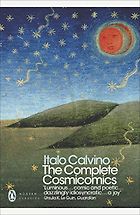
Your next book is Cosmicomics by Italo Calvino.
In many ways this book is like those disaster Hollywood films that are so popular today like The Day After Tomorrow or The Core, which take compelling scientific ideas and morph the timescales to that of human experience. In the films, directors always try to make the catastrophe as real as possible, and in the process lose the charm and wonder to ridiculousness.
In Cosmicomics Calvino also takes huge and relevant scientific ideas, transmutes time, and describes spectacular geological and astrophysical processes through the senses of the intrepid protagonist Qfwfq. But, rather than aiming for the false realism of Hollywood, Calvino lets the stories develop like fables or memories, always leaving me unbearably fascinated by the scientific idea, like a child getting read a bedtime story.
When I read this book for the first time in high school, I remember being absolutely astounded that the moon used to be closer to Earth. Of course people did not paddle boats out to the rising full moon and climb on to the scaly milky surface with a ladder like Calvino described in his book, but this fantasy inspired me to study the natural world, and in a more direct way, inspired my work on tidal rhythmites and history of the Earth-moon orbit.
How does that work?
Well, the moon story is the one that stuck with me the longest. I think it is the first one in the book. All I remember thinking when I read the story is, why is he saying the moon needs to be closer to Earth? And, of course, it was never that close, but remarkably it turns out that with every single day, the moon raises a tide on Earth, and the moon actually moves incrementally further and further away from Earth through a transfer of angular momentum. And this tidal dissipation has been happening throughout geologic history. This idea was fascinating and really inspiring so I thought, I wonder if there is a way to study the history of Earth’s orbit. By the time I was in graduate school I discovered there is type of rock that records layers of sediments whose thickness depends on the strength of the tide.
These rocks help me to work out the history of the moon and at what rates it has moved away from Earth. There is one really interesting result – you can shoot a laser at the moon to see how fast the moon is moving away from Earth and it turns out it is going way too fast (the current rate would predict an Earth-Moon collision that would melt Earth 600 million years ago, right while animals were evolving!). So then we wonder what’s wrong with this calculation; we realise that the efficiency of tidal dissipation can change through time as a function of climate and paleogeography. In other words, these geological records of the Earth-Moon orbit may actually record information about the geometry of ancient continents and the duration of ancient ice ages!
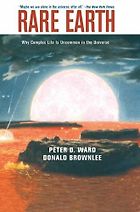
Your next book is Rare Earth by Peter Ward and Donald Brownlee
This book looks at a classic Carl Sagan idea that if there are zillions of stars and bazillions of planets in the universe, then there must be at least millions of habitable planets with complex life. But the book looks beyond statistics and considers in detail the series of ‘coincidences’ that occurred to make complex life on Earth. To do so, they must go through many of the important events that occurred in Earth history, so, first and foremost, this book represents a useful introduction to the history of Earth.
They conclude that Sagan might have even underestimated the amount of bacteria in the universe, which can survive crazy conditions. But complex life on Earth is the consequence of so many freak coincidences (and not just habitability – like size of planet and distance from sun) and is so precarious that we might actually be alone in the universe.
How do they reach that conclusion?
Well, the idea about bacteria is that wherever you look, even at the bottom of the sea or in the middle of a rock kilometres underground, there is almost always some crazy bacteria surviving by strange and wonderful chemoautotrophic metabolisms. This observation let scientists realise that almost any planet, no matter how inhospitable, might have some form of life in the form of bacteria because bacteria are so adaptable and resilient.
But the most interesting part of this book is when they discuss complex life. Instead of just using the statistics arguments and saying there are zillions of planets and stars therefore there must be x number of Earth-like planets, which may well be true, but the question is, would they have complex life or just a bunch of bacteria?
And Ward and Brownlee make the argument that it takes more than habitability to make complex life, especially humans. It takes a special set of unique events and their consequences that result in the life that we have on Earth today. For example, had Earth not been hit by large meteorites at just the right time, had Earth not received a major delivery of water from a stray comet, had Earth not endured multiple global glaciations, would animals have evolved the way they did? I think this book is a useful introduction to some of the major events that shaped Earth history, and at the same time gives us a provocative new way to think about the origin of complex life.
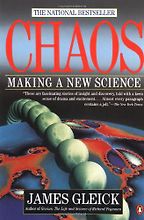
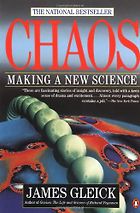
Your final book is James Gleick’s Chaos:Making a New Science
James Gleick is a former science writer for the New York Times and in this book he describes the science of chaos, and how complex systems can also be interpreted in terms of simple rules and simple (but interacting) behaviours. For example, he examines Edward Lorenz’s butterfly effect. I love this part because it is something that pretty much everyone has experience of in everyday life, but never in their introductory physics class.
Get the weekly Five Books newsletter
The cliché is the weather where you can imagine that the tiniest, tiniest change in the weather in New Jersey would affect the weather in London down the line because the entire system is linked. If one system has slightly lower pressure, the rest of the system reacts. Another example is, imagine you are on the top of a pyramid-shaped mountain and you put a little ball on top. The tiniest wind will determine which side of the pyramid the ball rolls down. The theory basically says that many systems will respond completely differently depending on tiny changes in their initial conditions. And this idea is something we have to keep in mind, for example, when we study Earth history. For example, if we look at climate change, the tiniest change can alter things and, most importantly, the size of the change doesn’t have to scale with its consequences. A relevant example today is the stability of the Greenland and West Antarctic Ice sheets. So far, they have remained stable while the climate has warmed over the last century. Will a small change somewhere on Earth destabilise one of the ice sheets, cause a chain reaction, and flood coastal cities around the world?
In my group we don’t practise chaos theory mathematically, but we practise it when it comes to creativity and observation all the time. We just keep in mind that not every process is some simple isolated linear system that you can set up as a physics experiment.
April 19, 2010
Five Books aims to keep its book recommendations and interviews up to date. If you are the interviewee and would like to update your choice of books (or even just what you say about them) please email us at editor@fivebooks.com
Five Books interviews are expensive to produce. If you've enjoyed this interview, please support us by donating a small amount.
Adam Maloof
Adam Maloof is assistant professor of geology at Princeton University. He spent his childhood summers in Newfoundland and Maine and his interests centre on the relationship between ancient life, climate and geography. He says the most valuable piece of information missing in studies of the modern climate system is a deep understanding of Earth’s past.
Adam Maloof is assistant professor of geology at Princeton University. He spent his childhood summers in Newfoundland and Maine and his interests centre on the relationship between ancient life, climate and geography. He says the most valuable piece of information missing in studies of the modern climate system is a deep understanding of Earth’s past.