In a panel discussion of science fiction in London not long ago, you described the genre as “a metaphorical literature, not a mimetic literature”. Can you expand on that before we talk about some science fiction classics?
I’m drawing, I hope, a common sense distinction. Mimesis is the business of reproducing the world ‘realistically’. I prefer the phrase mimetic fiction to realist fiction, partly because ‘reality’ is exactly part of the problem that science fiction investigates. SF, along with fantasy more broadly, sets out to extrapolate imaginatively from the world. The world of a science fiction novel will be recognisably our world in some respects, but it will contain new things – technologies, social relationships, possibilities – that aren’t in our world. At the London event I was channelling Samuel Delany, a great writer of SF, who says that sci-fi is a metaphorical literature because it aims to represent the world without reproducing it. That’s right, I think. But I also think that the metaphor has a centrality to the imaginative practice of good SF – the metaphor actualised as Frankenstein’s monster, or a time machine, or a genderless society.
The difference between a simile and a metaphor is that in the former the comparison is based on a likeness, and in the latter on a more potent unlikeness. To say “Achilles is like a lion” is to concentrate on the ways – his fearlessness, strength and ferocity – Achilles is like a lion. To say “Achilles is a lion” is to do that and also to invoke this strange animal-man hybrid. The film The Matrix is saying that working in a dull office job is like being trapped inside a computer generated virtual reality. But by actualising that metaphor, by literalising it, the film creates all manner of weird, potent oddities and effects. Mimetic art can’t do this, because it is tied to the way things actually are.
In the same vein, what can we learn about ourselves and our world through fantastic imaginations that we cannot in more strictly realistic fiction? Any good examples?
It is possible to learn about, for example, the way racism works in society by reading historical accounts of race relations. But the innumerable science fiction works that address the matter by transferring race onto aliens float free of all the baggage we already carry with respect to that question. They can make the issues new again. The really big social questions of the 20th century were – if you’ll excuse the massive generalisation – problems of encountering otherness: Race, gender, sexual orientation. So a literature that is as sophisticated and nuanced with regard to the representation of “the alien” as science fiction is well placed to articulate questions of otherness.
Take same-sex desire. Mimetic novels like Angus Wilson’s Hemlock and After in 1952 or EM Forster’s posthumously published Maurice in 1971, although both are very well written, seem dated and stale now, because they’re both constrained by the social and cultural particulars out of which they were written. On the other hand a novel like Ursula Le Guin’s The Left Hand of Darkness – which in many ways addresses the same questions – remains eloquent and moving because its science fiction conceit enables it to float free of all that.
How have you gone about selecting just five titles to represent sci-fi?
Selecting only five titles from the entire backlist of SF is, as the contemporary phrase goes, a big ask. I’ve been reading this stuff all my life. I read a lot, all the time, and I’ve still barely scratched the surface of the vast active living intelligence system we call the entirety of science fiction. I could have chosen 100 titles, or I could have made 100 different versions of this five-book list. But accepting the limitations, I have decided to choose five classics across the range of the mode, from its beginnings to the present. I could have chosen five different SF masterpieces that dealt with space – with cosmic immensities and subatomic wonders – but instead I have chosen five books that deal with time.
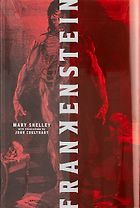
Let’s begin with Mary Shelley’s Frankenstein, published in 1818.
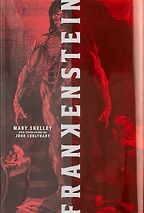
Frankenstein is called by some (but not by me) the first science fiction novel. In it, that futurity is materialised as Frankenstein’s monster, a weird symbolisation of “the child” filtered through the imaginarium of horror and terror. Shelley had miscarried her first pregnancy a year before writing the novel – the year after it was published, both her babies died of malaria – and her novel understands the relationship between creativity and morbidity, between birth and death.
I’m sure I don’t need to summarise the story for you [spoiler alert!]. A scientist called Victor Frankenstein constructs and animates an eight-foot-tall artificial man, but obscurely horrified by what he has done, abandons his creation and temporarily loses his memory. The creature – never named – comes into the world a mental tabula rasa to be written upon by experience – as it transpires, mostly the experience of others’ hostility towards its hideous appearance. It learns not only to speak but, improbably enough, to read and write by eavesdropping unnoticed on a peasant family. Thereafter it becomes murderous, a consequence not only of others’ hostility but also of reading Milton’s Paradise Lost and identifying with the outcast Satan. Lonely, it seeks out its maker demanding that he create a monstrous bride. Frankenstein agrees and builds a second, female creature, but belatedly alarmed at the implication of his two creations breeding and populating the world with monsters, he tears it to pieces. In revenge the monster kills Frankenstein’s own wife. Frankenstein pursues his creation to the arctic wastes, where he dies. The novel ends with the creature still alive, but promising to kill itself.
Summarised so baldly, this perhaps seems a little clumsily plotted – Shelley was 19 when she wrote it – and the novel does sometimes lapse into a rather melodramatic crudeness. But it also possesses remarkable imaginative power, not least in the embodiment, in both heart-wracked scientist and sublime monster, of two enduringly iconic archetypes of the genre.
Do we trace the beginnings of sci-fi back to Frankenstein, or earlier still?
Brian Aldiss has famously argued that science fiction starts with Mary Shelley’s novel, and many people have agreed with him. For Aldiss, writing in Billion Year Spree, Frankenstein encapsulates “the modern theme, touching not only on science but man’s dual nature, whose inherited ape curiosity has brought him both success and misery”. Indeed, in 1974 Aldiss wrote his own oblique fictional treatment of the same story, Frankenstein Unbound, in which a modern man, propelled by “timeslips” back to the Romantic era, meets not only Mary Shelley but Frankenstein and his monster too – the latter proving an eloquent commentator on man’s capacity for dialectically interconnected creation and destruction. As a description of the novel and an implicit characterisation of SF as a whole, this has persuaded many.
I once wrote a History of Science Fiction in which I argued that SF begins much earlier than Frankenstein. I’m not alone in thinking so. Some people suggest that it goes all the way back to Homer’s fantastical voyage or the Epic of Gilgamesh. Fantasy in the broadest sense is of great antiquity in human culture, I agree. But there seems some point to me in separating out science fiction from the broader category of fantasy, and I’d say we can’t really do that until we have “science” as a meaningful category. For me that means the Renaissance.
I argue that the first proper SF story is a book by Johannes Kepler, the German astronomer, called Somnium – written in 1600, though not published until the 1630s – in which he imagines what actual lunar life forms might look like. There are a great many voyages to planets in the 17th and 18th centuries. But that said, I’d agree that Frankenstein occupies a special place in the genre. Though a little clumsily put together, it is astonishingly powerful and dream-haunting. One reason for that is the way it realises, in dramatic form, the terror of generation – of what inherits us, what comes after.
Next on your list is 1895’s The Time Machine by HG Wells.
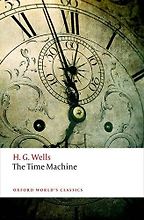
This is the novel that inaugurated time travel as a sub-genre. Wells picked up the up-to-date (in the 1890s) scientific speculation about time being a fourth dimension, and ran with it, imagining a machine that could take a man backwards and forwards through time. Wells’s time traveller – we are not given his name – goes from late Victorian times to the year 802,701, where he finds that humanity has by a process of divergent evolution degenerated into two species – the infantile, hedonist Eloi and the subterranean, monstrous Morlocks who prey upon them.
It is a short novel, almost a novella, but it is smoothly and evocatively written, and it manages to open a chink in the reader’s mind that gives a dizzying, thrilling glimpse down the vertiginous perspectives of long time. My favourite moment comes near the end, after the time traveller has left the Eloi and Morlocks behind him (as it were) and travelled more than 30 million years into the far distant future. He finds himself on a desolate beach, seemingly lifeless but for green slime on the rocks, the sun grown to massive proportions, and witnesses an eclipse:
“The darkness grew apace; a cold wind began to blow in freshening gusts from the east, and the showering white flakes in the air increased in number. From the edge of the sea came a ripple and whisper. Beyond these lifeless sounds the world was silent. Silent? It would be hard to convey the stillness of it. All the sounds of man, the bleating of sheep, the cries of birds, the hum of insects, the stir that makes the background of our lives—all that was over. As the darkness thickened, the eddying flakes grew more abundant, dancing before my eyes; and the cold of the air more intense. At last, one by one, swiftly, one after the other, the white peaks of the distant hills vanished into blackness. The breeze rose to a moaning wind. I saw the black central shadow of the eclipse sweeping towards me. In another moment the pale stars alone were visible. All else was rayless obscurity. The sky was absolutely black.”
Time viewed from the perspective of the sublime. It still makes the hairs stir on the back of my neck.
Tell us more, if you will, about what makes Wells’s sci-fi a classic and so unique.
Wells is the first genius of science fiction, and the genre informs his choice of core metaphor. We see it in pretty much all his short fiction – in an ordinary, contemporary environment we come across a device, object or circumstance which opens vistas to strange new worlds. In the short story “The Door in the Wall”, the protagonist finds a mysterious green door that permits him to leave the grimy reality of 19th century London and enter “a world with a different quality, a warmer, more penetrating and mellower light with a faint, clear gladness in its air”. And there are many subsequent stories that employ the same device. In “The Remarkable Case of Davidson’s Eyes”, a malfunctioning scientific experiment replaces the protagonist’s ordinary vision with vision of the exact opposite point of the globe. In “The Crystal Egg”, the object of the story’s title gives its possessor, a London junk-shop owner, unexpected visual access to a scene on Mars, with Martian house and flying Martians.
That last story epitomises the way this sort of tale operates. Wells draws a clear distinction between the shabby, lower middle class existence of the shopkeeper who owns the crystal egg and the fantastic, exotic world opened up by the egg itself. This contrast is integral to the functioning of the story. As Wells said in 1934 in Experiment in Autobiography, with reference to The Time Machine, “I had realised that the more impossible the story I had to tell, the more ordinary must be the setting”. In “The Crystal Egg” the egg is, in fact, science fiction itself. It is the thing that gives us fantastic, other-worldly visions. By setting a seedy junk shop against the exotic Martian palace, the story balances the genre of late-century “realist” fiction – of the sort that Wells also wrote but which is more strongly associated with writers such as [George] Gissing and [Arnold] Bennett – with the sparkling possibilities of SF itself.
This is the key to The Time Machine. Instead of reading the tale as an allegorical coding of contemporary class circumstances, we can read it as deliberate mediation of the generic representation of those circumstances (realism) and the escape from such quotidian, everyday representation (the time machine itself, or science fiction). It is of course possible to say, as critics have done, that the time machine is a mechanism by which the author can represent, for instance, Darwinian time. The time machine is like a clock, a car, a weapon and all the various things that critics have read into the tale built around it. But the time machine is a literary device. The time machine is science fiction.
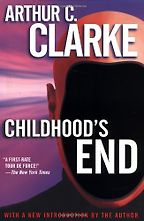
Now we leap to 1953, to Arthur C Clarke and Childhood’s End.
Childhood’s End is Clarke’s best book by a long way. Alien “overlords” land on Earth and impose – by force – a benign and workable utopia. That sounds like a whole story there, but that’s only the start of Clarke’s compact, evocative novel. Humanity lives through five decades of a golden age, but then the reason behind the overlords’ appearance becomes clear. I don’t want to say too much about this, because I don’t want to spoil the beautifully paced and judged series of reveals that Clarke orchestrates – except to say that the ending strikes me as among the purest sense of wonder that SF has achieved, and that it has to do with children.
But we might guess that from the title – that mankind’s “childhood” will end over the course of the narrative. It is what happens to the children of the main characters in the final sections of the novel that constitute the novel’s most powerful element, moving and disturbing in equal measure. In fact, several critics have noted how the late 1940s and 50s saw a plethora of SF stories that dramatise human children in league with aliens or as aliens themselves. Something, we might say, was working itself out in the speculative culture of the immediately postwar years – some widespread cultural anxiety about the nature and status of children. An apprehension of the uncanny aspect of the child.
Near the end of Clarke’s novel a human character, George Greggson, learns from an overlord called Rashaverak the true nature of the world’s young generation: “The colour drained from his face. ‘You mean?…’ he gasped … ’then in God’s name what are my children?’” That question has resonance precisely because it catches actual parental fear, and embodies the uncanny and alien nature of any child. The love a parent feels for his or her child may provoke its own intense jouissance, but that jouissance also mediates the horror. Your child will outlive you, her life is your death. Which is entirely the way it ought to be – if it were any other way it would be tragically unbearable – but which also necessarily confronts you with your own mortality. Moreover, your child is you in one sense, but in another is quite other than you. An alien and estranged creature, a being whose delight excludes you.
Something similar happens with the starchild of the last frames of Clarke-Kubrick’s 2001. In that movie, what is most uncanny is not the appearance of the starchild itself but rather the scenes that immediately precede it – [the astronaut] Bowman stranded in some Louis XV drawing room at the other end of a cosmic wormhole, haunted by himself and ageing visibly before our very eyes. In other words, the uncanny thing – the newness of the starchild and the change, perhaps destruction, it forebodes to the Earth – is transferred in inverted form onto Bowman, the “parent”. It is his accelerated ageing that is the spooky thing, because it reinforces the trajectory towards death and the supercession that is implied by the figure of the starchild in the first place.
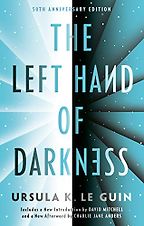
Fourth up is my own favourite science fiction writer, Ursula Le Guin.
Ursula Le Guin may be the writer I most admire. The Left Hand of Darkness, published in 1969, may be her best novel. Set on a beautifully evoked wintry planet, it concerns a diplomatic envoy called Genly Ai who visits the world to invite it to join an interplanetary polity called the Ekumen. The inhabitants, the Gethenians, have no fixed gender. For three weeks in the month they have no gender at all, then for a week they go into “kemmer”, a period of sexual receptivity during which they may become either biologically male or female, depending on the gender of those around them. This enables Le Guin to explore the extent to which gender determines society – what would a world look like if its gender roles weren’t fixed the ways ours are?
There is something solid and appealing in the society Le Guin portrays, although at the same time it is intensely conservative, the frozen landscape it inhabits an externalisation of its inner stasis. The novel also incorporates a mystical aspect, one the rationalist Genly finds hard to assimilate. Travelling from the quasi-Western country of Karhide to Orgoreym, ruled by a quasi-communist totalitarian regime, Genly eventually makes his way over the glaciers back to Karhide with his companion Estraven. The novel increasingly focuses on the love that grows between Genly and Estraven – which Le Guin handles very movingly indeed.
The Left Hand of Darkness is often discussed, and indeed taught, as a machine for thinking about gender, and it performs that function admirably. But there is much more to it than that. There is a rather dangerous gender-essentialism in the assumption that Le Guin, being female, must have subordinated her aesthetic project to feminist proselytising. Le Guin’s writing is always much more balanced than that. Indeed, that balance as such forms one of her major concerns. Left Hand balances form to theme, and symbol to narration, flawlessly. In a strange way, the book also articulates something about time – in this case, about stasis as both security and oppression.
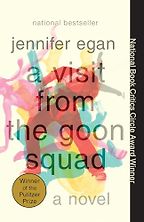
Your fifth choice is, curiously, Jennifer Egan’s A Visit From the Goon Squad.
I love this novel. It is wonderfully written, brilliantly imaginative and engaging, funny and sad and smart. I also love it because of what it says about SF. That in a genre often caricatured (by those who don’t know it very well) as being about the wish-fulfillment fantasies of adolescent boys – huge space weapons, scantily clad astro-girls and so on – some of the very best work is being written by women.
The four novels I’ve chosen so far are all acknowledged classics of the genre. This one is more left-field. Not that it has lacked for plaudits – it won a 2011 Pulitzer Prize – but it might seem only glancingly science fiction. The novel starts in the 20th century and narrates the lives of a series of related characters: Bennie Salazar, who works for a record company, Sasha, his assistant, and others. The narrative is deliberately fractured and structured so as to bounce us around, and chapters are written in a series of different styles: Straight storytelling, a David Foster Wallace-ish magazine article, a Powerpoint presentation, and so on. The characters are beautifully drawn, flawed without being obnoxious, but above all Egan understands how time moves and keeps moving.
That is what the novel is about, really. It is as much a time travel story as Wells’s great novella, except that the travel portion is rendered formally, in the way the novel is structured rather than via a device inside the tale. The last 100 pages or so are set in a post-environmental-collapse future, a world in which the characters struggle with the same, human mix of success and failure, ordinary heroism and ordinary foible as before. Events might conspire to mug individuals – the title might suggest that providence is a “goon squad”, ready to beat us up. But more crucially than that, events are the iteration of life in time. That’s what the title is really about – time. “Goon” is “Go on”, you see.
The near future setting of the last third of the book is all about this. The environment and society will change radically, it says, and a new generation will grow up so fitted to the new world that they will seem a little alien and spooky (like Frankenstein’s offspring or the children in Clarke’s novel). This is by way of saying: It will not always be like this. And it won’t. That is the truth of science fiction’s so-called “predictions” of the future – not the specifics, but the awareness that the future will not be like the present.
Orson Scott Card told me: “The point of a futuristic novel isn’t to predict the future. The point is to show how humans adapt to deal with whatever the future brings. So the question of sci-fi ideas becoming fact is merely a matter of coincidence.” I take it you agree?
There are things on which I disagree with Card profoundly, but this isn’t one of them. It’s not the business of science fiction to predict. In 1865, in De la Terre à la Lune, Jules Verne predicted that man would blast off from Florida and fly to the moon in a capsule exactly the same dimensions as the Apollo command module – but both “predictions” were arbitrary coincidences. He also said that the moon vehicle would be fired out of a gigantic cannon – the pressures of acceleration would have squashed the astronaut-hopefuls like bugs – and that later, when in space, they would dispose of the body of a dead dog by opening a window and throwing it out. Verne wasn’t trying to predict. He was extrapolating the scale of 19th century advances in technologies of war and exploration into a vivid imaginative space. It doesn’t harm his broader work that it hasn’t come true. It’s not trying to come true.
That said, there’s something about the future and science fiction. The common belief that science fiction is in some sense “about” the future isn’t wholly wrongheaded. One feature of 19th and 20th century science fiction is that it is fascinated with time in a deep way. Time only opens up, as a wholly new dimension to be imaginatively explored, at the very end of the 18th century. It’s a puzzle, actually, why this should be. [The critic] Darko Suvin thinks it has something to do with the French Revolution. But before about 1800 people almost never wrote stories set in the future, and then after 1800 lots of people did just that. SF as a mode of projecting oneself into the to-come connects powerfully with human concerns in the way that specific prophesy – pedantic, fiddly, bound to be wrong – doesn’t. The five novels I’ve chosen here all engage, in their different ways, with this sense of time as the medium of our existence.
Finally, what is the set-up of your own new book, By Light Alone?
Photosynthetic hair. I was commissioned to write a story for an anthology in which science fiction writers were paired with actual scientists. I discussed my idea with Professor Rein Ulijn, now at the University of Strathclyde, who specialises in biochemistry and is internationally renowned for his work on polymeric biomaterials. I imagined a world in which people were genetically engineered to be able to photosynthesise energy directly from the sun through their hair. He didn’t think this was entirely impossible – or else he was too polite to shoot me down. I wrote the story, but the world I’d imagined refused to leave me alone. So I ended up writing an entire novel.
This interview was published in November, 2011
Five Books aims to keep its book recommendations and interviews up to date. If you are the interviewee and would like to update your choice of books (or even just what you say about them) please email us at editor@fivebooks.com
Five Books interviews are expensive to produce. If you've enjoyed this interview, please support us by donating a small amount.