Why did you choose to discuss books of essays?
I guess because this is where my heart lies in terms of writing. For me, essays are about brevity and also personality, a feeling that you’re being taken on an intellectual or emotional journey by a particular person who you get to know along the way. Essays root ideas in personal experience.
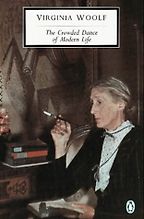
Why do you recommend The Crowded Dance of Modern Life by Virginia Woolf?
Because she is a very admirable essayist. For me, her essays are better than her novels, which I never got along with. What I particularly like are her essays of description. In “Street Haunting”, she makes a very ordinary subject, such as going for a walk around London, very charming. When you put it down the world seems a more interesting place.
I wondered if the “crowded dance” is meant to imply some sort of futility in modern life?
Not so much. Woolf was like many writers of the early 20th century, such as Joyce or Proust, who were interested in the word “modern” – a word today which we overuse. The traditions of the 19th century had been broken and the modern world was going to be governed by new things, particularly by technology. And it was going to be a predominantly urban, democratic world, dominated by the media. A writer like Woolf was both excited and worried by this. The title for me captures some of those feelings.
Is it a feminist collection?
I think to describe it as such would not be accurate. She never discusses the position or rights of women in these essays. She wrote particularly feminist essays in other books, but not in this one.
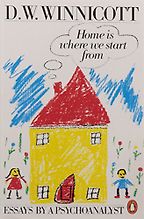
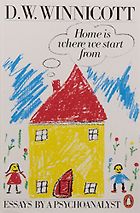
The next collection of essays you recommend is Donald Winnicott’s Home is Where We Start From. I understand Winnicott was the first paediatrician to train as a psychoanalyst. What is it about his work that you admire?
He was one of the most accomplished interpreters of Freud in England. And what is interesting is that he makes psychoanalysis very English, if you like. He takes a body of knowledge that can be very abstract and pretentious at times, and turns it into something much more suited to the English character. By that I mean that he spoke in plain language. He was also eccentric and he had a sense of humour, which we associate with literature in this country.
He was also humane. He worked with children and their mothers and fathers, and he was very aware that life is difficult – and that we are all slightly crazy. Rather than humiliating us and making us feel that certain thoughts are perverted, as some psychoanalysts did, he was generous about it.
Winnicott also came up with the idea of the “good enough mother”. Other psychoanalysts often demanded that the mother be everything, or else the child would be harmed. But Winnicott allowed a greater amount of error for both the mother and father. For anyone who has a family of their own it’s a nice deprecatory starting point.
This collection brings together Winnicott’s most important works about understanding the minds of children, and includes essays such as “Concept of a Healthy Individual”, the “Value of Depression” and “Delinquency as a Sign of Hope.” These sound very intriguing, and indeed controversial, even by today’s standards – would you agree?
Definitely. A lot of his writing involved picking up the broken pieces after the Second World War, when children had endured complicated family arrangements – whether the father was away, or killed, or the children sent to the countryside. He found a ready audience in his ideas about imperfection, and about accepting imperfection while still trying to get better.
Winnicott is praised as being one of the most creative and accessible of all psychoanalysts. Your own work has been described as a “philosophy of everyday life”, and I wondered whether his approach inspired yours?
When I think about the essayists that I like, I realise I have a very low tolerance for complicated writing. There is almost nothing in the humanities that can’t be expressed simply, even if it’s a complicated idea. It’s not rocket science, so the onus is on the writer to provide a charming reading experience.
Why did you choose his collection over better known psychoanalysts, such as Sigmund or Anna Freud?
Partly for literary reasons – I like the way he writes and I like his personality. He is the sort of person I would like to be friends with, which I don’t feel about either Anna or Sigmund Freud. While a lot of what he says is Freudian, I prefer the nuances and the ordinariness that he holds on to while discussing pretty weird stuff.
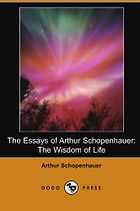
Arthur Schopenhauer’s The Wisdom of Life was published posthumously way back in 1890. He was a proponent of philosophical pessimism and believed that life is essentially evil. Your own works address many modern malaises, but I find your outlook quite uplifting and even hopeful, and I wondered what you feel you share in common with his philosophy?
I think I can correct both analyses. Though Schopenhauer comes out with some pretty extreme comments, he never loses his sense of humour and a lot of what he says has a slightly tongue-in-cheek quality. He delights in provoking us and I think it’s wrong to say that he is entirely grim-faced.
And as for myself – I feel very close to his personality. The Germans call it galgenhumor – which is a kind of gallows humour, which both he and I share. I have an unfortunate reputation for being a cheerful chap peddling happy thoughts.
I was interested to learn that Schopenhauer subscribed to the Buddhist belief that desires can never be fulfilled, and preferred instead to negate them. Was it very unusual for a European philosopher to align himself with Buddhism?
He was the first to do so and, you’re right, that’s something fascinating about him – that he took Buddhism seriously and integrated it into his philosophy.
Anyone past the age of 20 is sure to realise that our desires are pretty endless and that some of them are the result of a modern capitalist society. It’s very nice to be reminded by Schopenhauer that we won’t ever get to a stable position where our longings will end. But whereas some Buddhist texts are unappealing and quite strange, what Schopenhauer does is to write about Buddhism for the Western mind.
Schopenhauer believes that love is an immensely powerful force in the world and rejects the idea that it is trifling or accidental. How much does your own book Essays in Love fit with this outlook?
I don’t think I’d read him when I wrote it. But I think that Schopenhauer was a proto-Darwinist in that he suggested that the reason we fall in love is just to have children, that it’s a biological imperative and we can’t expect much happiness from it. No one can live with that – though it’s a very interesting provocation, it’s not something to absolutely believe in.
Five Books interviews are expensive to produce. If you're enjoying this interview, please support us by donating a small amount.
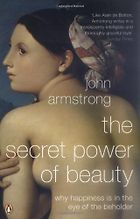
John Armstrong’s The Secret Power of Beauty has a tantalising title – why did you choose this collection?
I admit I know the author very well. I partly chose it because it reflects many ideas that I have discussed with him and I also think he writes very well.
His central argument is that beauty is linked with all kinds of values that we find encoded in objects, and that these values can excite and move us just as people can excite and move us. I had not heard discussions of beauty unfolding in this way.
Has the way we think about beauty changed over time?
The modern way of thinking about beauty is to consider it a diversion. People apologise for finding someone attractive because we think it’s superficial. Or if someone is interested in fashion, they’ll say: “I know it’s all a bit frivolous.” Armstrong goes back to a much earlier view held by Greek philosophers, which was that our connection to beauty is connected to deep things and it’s an interest in goodness more generally. It’s a good starting point for being a decent human being and that is not at all a modern day version of beauty.
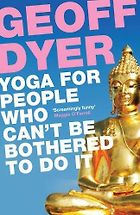
Your final selection, Geoff Dyer’s Yoga For People Who Can’t Be Bothered To Do It, is actually part-travel book, is that correct?
It is a series of essays on the places he’s visited. It’s not one journey but a scattering of essays.
I understand that he is not one of those bright-eyed, 20-something travellers, and that a sense of ennui is prevalent throughout the book. Would you agree?
He is a counter-cultural hippy figure and that comes across in his book – there’s a chapter on taking dope in Amsterdam. He is also horny and has a lot of sex. He is not an older gentleman just travelling around – he is a hipster, a dude.
Get the weekly Five Books newsletter
Why would you recommend this book in particular, when there are so many travel books around?
I guess because it’s not a travel book in that sense. It’s a book about his mind, which I think is both interesting and funny. And he is charming as a writer. He is constantly flitting with ideas about all sorts of stuff – not big ideas, but things such as how easy it is to lose your hotel room key and why grass is green (literally). There is lots of stuff in it, hung together by the force of his personality. You would have a hard time describing it to a publisher. In this age where books are supposed to be about one thing, whether it’s Henry VIII or the Crimean War, it’s a very nice change.
Does he take a dim view of yoga?
The title is supposed to be in praise of slacker-dom and not doing very much. It’s not about yoga at all.
Five Books aims to keep its book recommendations and interviews up to date. If you are the interviewee and would like to update your choice of books (or even just what you say about them) please email us at editor@fivebooks.com