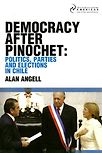
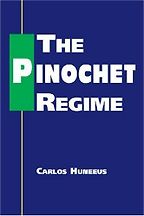
Tell me about your first book, The Pinochet Regime, by Carlos Huneeus.
Basically, there have been a number of ways of defending the Pinochet regime. You can say that it was necessary to deal with the turmoil of the Allende years. You can say that Pinochet ran the economy well and so on. What this book does is seek to destroy all these kinds of justifications.
Running through the whole book is a sustained attack on the legitimacy of Pinochet’s regime and its attempts to portray itself as a genuine reformer in Chile. There is a lot on the human rights episodes. So it is a very effective demolition of any kind of attempt to justify what went on in those years.
“It is a sustained attack on the legitimacy of Pinochet’s regime and its attempts to portray itself as a genuine reformer in Chile.”
It is extraordinarily well-documented and impeccable academically. And it is also very good on how clever Pinochet was at managing to stay in power during all those years. He was the commander-in-chief of the army and nothing happened without his say-so. He could have vetoed the whole operation if he had wanted to.
One of his main opponents was General Leigh, the air force general. He was very important in the whole regime. He wanted to maintain a nationalist stance and was very unhappy when Pinochet began to adopt the free market economic model. But Pinochet was able to get rid of him without much difficulty and that removed the one person in the junta who might have been able to be a focal point of opposition to Pinochet.
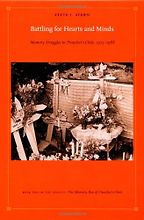
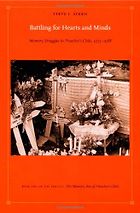
With your next book, Steve Stern’s Battling for Heart and Minds: Memory Struggles in Pinochet’s Chile, is there this idea that people’s memories at the time were manipulated?
Absolutely. This is an extraordinarily moving book. It tells the story of people who, in the most appalling circumstances, tried to defend liberty. Not people who were necessarily very much on the left, but just ordinary decent democrats. And what he does very well is to say that both sides are trying to construct a memory. So you have these two ideologies in conflict and people remember what’s appropriate to their set of ideas rather than having an objective view of what was going on.
He focuses on key episodes, like the assassination attempt on Pinochet in 1986 and what that meant. There is a great deal on the church. Although the church in Chile is a very conservative institution now, it had a strong line on human rights. For the first ten years of the dictatorship, before the economic crisis of 1982/3, the only real internal opposition to the abuses of the regime came from the Catholic Church.
“The only real internal opposition to the abuses of the regime came from the Catholic Church.”
The church was very important, not just because they protected individuals but also because they stood up and said what Pinochet did could not be justified. Stern writes about the church lawyers who struggled to keep the human rights issues central and became the core of what the opposition stood for in the Pinochet regime.
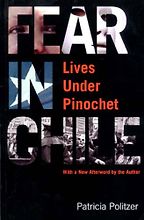
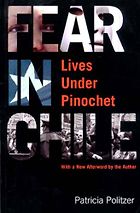
Your next book, Patricia Politzer’s Fear in Chile: Lives under Pinochet, looks at the individual stories of people right across Chile during the regime.
Yes, there was a new version published in 2001, but Patricia actually wrote it in 1985 towards the end of Pinochet’s regime. So it’s a courageous book, because to publish books in Chile which might be seen to contain critical material was not an easy decision to make. What she does is look at a whole spectrum of people: from powerful people with money on the right, to the poorest of the poor peasants. Through their stories she reconstructed their lives and beliefs.
I found it an extraordinarily moving book. The last chapter deals with the case of José Tohá, one of Allende’s ministers who was starved to death in a military hospital. His widow, because they were friends of the family, goes to Pinochet to try to find out what happened. I was actually moved to tears in this chapter because it is this woman’s attempt to come to terms with the dreadful things that have happened to her husband at the hands of someone they thought of as a friend.
And how did Pinochet react to her visit?
Oh brutally – he just more or less said ‘that’s tough, that’s life, that’s how things are.’ That really offended her; that someone they knew quite well could actually behave like that. He was a very cruel man. I don’t think he cared a damn about the kinds of things he did.
You are very much a specialist in this field; you have written numerous books on the subject and lived in Chile. So what do you think it is about Pinochet that makes him stand out as one dictator that everyone remembers from South America?
I think it’s because Chile had a very high international profile. People could identify with the socialist experiment in Chile. And then it was destroyed. They said if it could happen to Chile it could happen to us. At least that was the view of the French Communist Party and the left in many countries in the world. So there was enormous sympathy for Chile.
“People could identify with the socialist experiment in Chile. And then it was destroyed.”
Also, I think what was important in Chile was the role of television. This was one of the first televised coups. There were images of Pinochet in his dark glasses and the bombing of the Presidential Palace, La Moneda, and books being burnt in the streets.
Get the weekly Five Books newsletter
All those images were flashed all over the world. And there was never anything like that for any other military coup which took place in Latin America. So, he became a kind of mirror image of Che Guevara. You had the hero on the left and Pinochet the evil dictator on the right
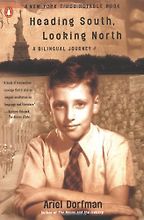
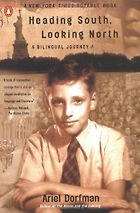
Ariel Dorfman’s Heading South, Looking North is a biography all about language and identity.
Dorfman is a well-known playwright. People will know about his play Death and the Maiden and he has written a lot of novels. This is his autobiography. It is the story of a peripatetic intellectual — he wandered all over the place. He was born in Argentina and spent a long time in the United States. I think what he does extremely well is give us an insider’s view of what is happening. But he also has the perspective of someone who is looking at it from the outside. He speaks and writes in English as well as he speaks and writes in Spanish.
He was very involved in the cultural side of the Allende period. A lot of things happened in Chile during the Allende years and one of the impressive ones was the cultural innovations that were taking place in song, painting, theatre and in writing. What this book does is show you what it was like to be an intellectual at a time of great social turmoil. He is looking into where his roots are. It is a very personal as well as a very political book.
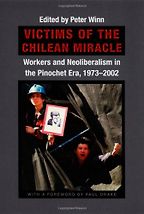
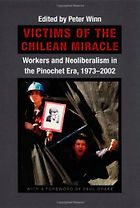
Your final book is Victims of the Chilean Miracle: Workers And Neoliberalism In The Pinochet Era, 1973–2002, by Peter Winn. This brings us to the post-Pinochet political era.
There are many good books about the period of democracy since 1990, most them in Spanish. But there is no sort of comprehensive account of the whole period. I think what is interesting is how what has happened on the labour front has been ignored a great deal in literature. And Winn does this very well.
He has brought together a group of researchers who look at what happened in various sectors in the economy. Places like the forestry sector, the fishing sector, the copper mines and so on, to try to explore what had been the benefits and drawbacks of this period of democracy. He wants to find out what has happened to ordinary working people.
And the story is fairly mixed. Women now are more likely to find employment. It’s often not very well paid employment and for long hours but it has had a peculiar effect in family relations. Women used to have a subordinate place in the family, but now that is changing.
Some might say paving the way for the first female president in Chile – Michelle Bachelet?
That was interesting. Chile is regarded as a very conservative society and the idea that Chile of all places would be somewhere to vote in a female president was really quite remarkable.
But do you think that is part of the nostalgia going back to Pinochet times? Was it about who her father was?
Yes. Interestingly, they actually opened a museum of memory in Chile and there is something about her father there. He was an air force general, a democrat who believed in a subordinate role for the military.
“The idea that Chile of all places would be somewhere to vote in a female president was really quite remarkable.”
He died in prison because his heart condition was allowed to deteriorate. But, this book doesn’t go into that. It is a very serious academic book. And it tells you a great deal about how the Chilean so-called miracle has had a kind a complicated impact on the lives of ordinary working people in Chile.
Chile puts itself forward as one of the most stable and successful countries in the region. Looking back on the governments since Pinochet, what is your assessment of that?
Chile has a stable democracy and that —looking at other countries in Latin America— is a very positive development. Overall economic performance is also positive, but there are grave problems of income inequality and increasing political dissatisfaction with the political parties.
Right-wing apologists would argue that Pinochet laid the way for that positive economic performance.
No, no, no. Certainly, Pinochet started some of the things. But, really, the situation when the new government took over was quite precarious. So what the government has done is to take some of the Pinochet reforms but get rid of the less successful ones.
On the whole, my assessment of the Pinochet regime is negative. Don’t forget that over 40 per cent of the population were living in poverty in 1990. It is down to about 13 per cent now. Also what the various governments have done since then is to develop a very stable democratic order. They really have constructed a democracy of institutions rather than a democracy based on one leader.
Five Books aims to keep its book recommendations and interviews up to date. If you are the interviewee and would like to update your choice of books (or even just what you say about them) please email us at [email protected]
Five Books interviews are expensive to produce. If you've enjoyed this interview, please support us by donating a small amount.