I suppose my first writing about music was when I was at college. I had trained as a musician, although never to a very elevated degree, and also composed music – or tried to – from around the age of nine or 10. So I was very much immersed in music. Writing was my other great love when I was younger, but I didn’t try to combine the two pursuits until I was doing a radio show in college which required me to write out announcements for programmes I was doing. We also published some CD reviews, so those were my first official acts of music criticism.
After college, the idea of becoming a music critic still hadn’t really occurred to me. There were so few people doing it that it didn’t even seem possible. I was planning to go to graduate school when I started to get occasional freelance assignments. I was reviewing a great many CDs for a magazine called Fanfare. One thing led to another until, after a couple of longer pieces had appeared, TheNewYorkTimes became interested in having me as their very junior fifth-string critic. So I moved to New York in 1992, only two years out of college. By becoming a full-time music critic I was able to fuse together those two great loves, music and writing, in a way that I hadn’t imagined was possible.
At the very start of your book, Listen To This, you say that “writing about music isn’t especially difficult”.
What I meant by that was I don’t think it’s any more difficult than writing about any other art form. I was reacting against the famous quotation, “Writing about music is like dancing about architecture” – this idea that there’s something especially, peculiarly impossible about capturing music in words. But I do think that writing about any kind of artistic expression is always difficult. I don’t think it’s done well all that often, but frankly I read as much obtuse commentary on painting, poetry or film as I do on music.
“Classical music is not in some distant fortress, high above the plains of society, but really is right down there in the middle of society.”
There are many shining examples of good and great writing on music. It’s just a very inexact and idiosyncratic science. Either people have an instinct for it or they don’t, but it’s very important that it go on. Because the great throng of people who care deeply about music in any genre want to be part of a conversation about it, and they want someone out there doing the work of listening to this vast quantity of new music and singling out some voices that they should be paying attention to. So I think the role of the critic will remain strong even if the media landscape is constantly changing.
One person who made use of a great variety of media in his discussion of music was Leonard Bernstein. Your first book, The Infinite Variety of Music, is a collection of his writings and lectures.
Bernstein was a genius – not only at making music but at embodying it, and playing this role of the media spokesman. Which is so crucial in our culture, for better or worse. So much depends on the media and on the power of celebrities. It was extraordinarily helpful in the fifties, sixties, seventies and eighties for this figure to emerge who had a certain glamour, a certain wit, and who moved easily between classical music and other forms of culture, and added to the landscape of popular culture. He was very widely loved, despite some of his personal eccentricities and limitations, and he simply got people excited by music.
Over the course of the 20th century, classical music became progressively more defined as an elite form – as something that was at a distance from the mainstream, from everyday life, even from emotion. It became seen as highly esoteric and intellectualised. None of that is true. There’s always been a great diversity and audience for classical music – wealthy people, poor people, people in the middle – and everyone who loves this music identifies with it, first and foremost, on an emotional level. The intellectual level comes after. But in the presentation of classical music, something went awry. Bernstein put a temporary stop to that, or at least slowed down the progress of that stereotype.
When I was very young, I loved the fact that Bernstein’s language was so vivid. I was already sold on the music. As far back as I can remember my parents had the records and were playing them, and I took to them immediately. It was really the only music that I cared about, early on. Bernstein allowed me to have a conversation – only with myself at first – about the music. Words are so important in coming to terms with this purely non-verbal form of communication, and I was able to talk about it with the few friends I had of my generation who also cared about classical music. As I got older, these essays by Bernstein became the foundation of how I think and talk about music. It’s always something I’m trying to emulate in my work, however faintly.
Do you think some writers are afraid to write personally about classical music and its emotional impact?
I think so. Looking back over classical music criticism, especially over the past 50, 60 years, this reserve – this certain kind of evasiveness – seems to have become pretty common. Back in the 19th century, when you read Berlioz, Schumann, Wagner and others writing about music, their language was highly colourful, highly emotional. Now people are almost afraid of exposing themselves emotionally when they talk about music.
Certainly in my own work I’ve tried to react against that. I’m not a particularly confessional writer, and I don’t really talk about my own experiences that much, but in the essay that opens [Listen To This] I consciously made an effort to bring my own history as a listener into the discussion. It doesn’t come naturally to me, maybe because I’m as much part of this classical mentality as anyone else. But you don’t need to just write a searing diary of your daily life as a critic – you can make the emotional dimension clear in many other ways.
The social relevance of this music, and its cultural history, is also hugely important. That was what my first book was about. My great aim was to show how much music mattered in 20th century history and how deeply these composers were entangled in the events of their time – sometimes in a rather disturbing and frightening way, but nonetheless in a way that showed how the music mattered. Classical music is not in some distant fortress, high above the plains of society, but really is right down there in the middle of society.
That ties in well with your second choice, Nietzsche’s The Birth of Tragedy and The Case of Wagner, and the ideas that he develops about classical music and Wagner in particular.
I have a huge preoccupation with Wagner right now. My third book, a very big, long-term project, is going to be called Wagnerism. It will not be a book about Wagner per se, but an account of his vast cultural impact from the latter part of his life to today in all the arts. I’m not actually going to talk about his impact on music, which is a book or many books in itself.
Nietzsche as a young man was completely besotted with Wagner, and had to fight his way out of this obsession – not only with the music but the man, because they had quite an intense personal relationship. In the latter part of the 19th century, this reaction of Nietzsche against Wagner points to a new strand of thinking, which became modernism in a lot of ways. It’s the case with many other major figures of the later 19th and early 20th century. Very often, you see an early infatuation with Wagner, followed by a reaction against him or a modification of the passion. You see it in Thomas Mann, James Joyce, Virginia Woolf, TS Eliot and many others.
People have forgotten just how overpowering a figure Wagner was in the late 19th century. If you were an intellectually or artistically leaning young person in any field, you more or less had to come to terms with Wagner, or at least expose yourself to him. He influenced every imaginable form. He had an impact on socialists, communists, feminists, early gay-rights people, as well as the right wing of course, which is all that people remember in a way.
“People have forgotten just how overpowering a figure Wagner was in the late 19th century. He influenced every imaginable form.”
One very significant problem that classical music has faced in the 20th century has been an association with fascism, and in particular Hitler’s notorious love for Wagner. There was a sense that something had gone spiritually awry in classical music itself, or that Hitler’s love for Wagner had somehow tainted the music or revealed something evil inherent to it. This is something of a misunderstanding, or a far from complete picture of Wagner – but it needs to be confronted and talked about.
The other thing about Nietzsche’s writing about Wagner is that it’s wonderfully brilliant, unpredictable vivid and perceptive, even when he’s deliberately distorting the material for a certain effect or working out his own profound ambivalence about Wagner. It’s fantastic music criticism exactly because it’s so wild and eccentric and unreliable – he’s the last person you should turn to for an exact account of what’s going on in Wagner’s librettos, but it’s insidiously quotable and fantastically expressive. It’s a dangerous model to use for music writing, but an inspiring one nonetheless.
Why does Nietzsche’s reaction to Wagner differ so between the two books?
People are still debating this. One school of thought is that the break is not as severe as it appears to be. The Birth of Tragedy appears to be the work of a man who worships Wagner and places him on the same level as the great Greek tragedians. The Case of Wagner appears to be the work of someone mocking his subject ruthlessly and rejecting the entire apparatus of romanticism. But the obsession and the love of Wagner lingers. Nietzsche admitted all the while that he was still under Wagner’s spell.
The two books together are a record of a man struggling in different ways to come to terms with the power this music has over him. He never broke free of it, he never entirely rejected Wagner – in that way it’s a revealing case study in musical obsession. Very often when people talk about their musical tastes, they have gone through an infatuation with a certain artist and suddenly it turns into revulsion or some sense of a total break. Musical taste gets very deep inside of us. In a sense it’s like a relationship in real life – a tempestuous love affair that can go up and down.
It’s especially fascinating in the case of Nietzsche because there was also a direct personal dimension to this. At the heart of the story may be the tensions of Nietzsche’s relationship with Wagner – Nietzsche’s inability to sustain a certain kind of sycophancy which Wagner seemed to require of those in his circle, and Nietzsche’s feeling that his own abilities were not being recognised. But it’s perfectly obvious to me – and it’s quite touching reading The Case of Wagner – that he never did fall out of love with the music.
Nietzsche is one of many philosophers who has written about Wagner – others include Theodor Adorno and Alain Badiou. What is it about Wagner that attracts them?
This sustained tradition of philosophical commentary on Wagner is in a way a chapter in the history of philosophy. It really begins with Nietzsche and the questions that Nietzsche poses – almost ethical questions about what role culture has to play in our society. There is something very elusive about Wagner on that ethical level, something very slippery. Even as he denounced extant systems of morality, Nietzsche remained a rather moralistic figure to the end, but Wagner was the opposite in many ways. Wagner was the sybarite, the sensualist and the one who seemed to release sexual energies in his music. It’s interesting to recall that the danger that Wagner seemed to pose in the later 19th century was often identified as a sexual danger.
In terms of the philosophers who followed Nietzsche, because it became such a preoccupation with him others had to try to come to terms with Wagner as well. And by Adorno’s lifetime, the question had appeared of Wagner and politics – that’s very much the subtext to Adorno’s writings about Wagner. But it was that dangerous confluence of the personal and sexual with the historical and political that made Wagner an explosive quantity whom everyone had to come to terms with.
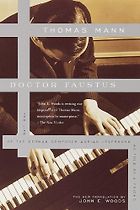
Your third choice is Thomas Mann’s Doctor Faustus.
I read Doctor Faustus when I was around 18 and something about the book just overwhelmed me. It was one of the most intense reading experiences of my life. I remember finishing the book, standing up in my bedroom at home at 2am, literally unable to sit down it had such an electrifying effect on me. What was revealing to me was everything that I then went on to talk about in The Rest is Noise – the fate of the composer in the 20th century and the collision with these catastrophic political forces. Also the cultural question of composers seemingly becoming ever more esoteric and difficult in terms of their style, and the intellectual, personal and psychological roots of the avant-garde movement in 20th century music.
Mann depicts his composer – the hero, or antihero if you prefer – Adrian Leverkühn as a man who’s losing his mind. If you read the book in a very obvious or vulgar way, his madness seems to be symbolic of the madness of Germany in the 20th century. But I remember at the time being thrilled by Leverkühn. He wasn’t someone to admire or emulate and he’s quite frightening, but I had the sense of this character, this artistic figure, going absolutely against the grain and pursuing something so individual, so pure, that it leads him to destruction in the end.
Get the weekly Five Books newsletter
What sets this novel aside from so many others that have been attempted on the subject of music is the authenticity. There’s an extraordinary sense of plausibility in how Mann described these fictional compositions of Leverkühn. They’re so vivid that you think they exist – you can almost hear them. He copied his models very carefully and even asked Theodor Adorno to help him draft some of the musical descriptions so that they would have the ring of authenticity. But there were many other sources for the musical material in the book, as well as Mann’s own musical experience. He was a very knowledgeable listener with a great deal of experience, and he played piano to an extent. It all comes very much out of his world.
“There’s an extraordinary sense of plausibility in how Mann described these fictional compositions. They’re so vivid that you think they exist – you can almost hear them.”
There’s something so extraordinary about this book. It has had such an effect on musical readers over the years. Certain composers have actually attempted to bring to life Leverkühn’s compositions in their music. A string of composers have been obsessed with this book. It’s a really singular phenomenon, that a fictional composer ended up having a degree of influence on the real history of 20th century music.
You contrasted Mann’s writing about music with that of other authors. What are your feelings about how music is handled in literature more generally?
There’s a long list of bad examples of vague and gushy writing about music in literature, but there’s also a string of distinguished examples. I wrote a piece for The New Yorker a couple of years ago where I talked about my favourite composers in literature. It makes me very happy when I see a novelist going to the trouble of getting the musical details right, because this is part of the conversation on classical music that we very much need. To have plausible and vivid representations of composers and classical musicians in literature and in film is very important.
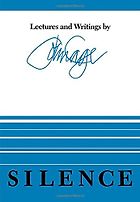
Your fourth book is Silence, a collection of writings and lectures by John Cage. It seems safe to say that he still has the power to shock.
Absolutely. He marked out certain extremes in the avant-garde which have yet to be matched. He went all the way. He covered the entire spectrum of what you could do with sound, from noise – with the most dense and enveloping assemblages of sounds – to, famously, silence. In his composition 4’33”, the performer is directed to make no sound and the work, the music, becomes whatever is going on in the room where the listeners are gathered.
Silence is one of the great music books. Purely on a literary level, there’s something about Cage’s style which is tremendously unique, something quite special in the history of literature. There’s a gentleness as well as a bluntness in terms of how he goes about presenting his ideas. There’s a poetic quality, even a mystical strain, but there’s also great clarity. He’s also really quite funny – there’s a wryness that goes through all his work from beginning to end. No one was ever entirely sure how serious Cage was about all of this. Some people suspected that it was all some kind of grand put-on. It was not. He was deadly serious. But there was always a certain deadpan quality to his style, a certain understatement, a trace of a smile. It’s a wonderful quality for an artist to have.
“People who care deeply about music want someone listening to this vast quantity of new music and singling out voices they should pay attention to. The role of the critic will remain strong.”
Cage encountered so much hostility in the course of his life, so much scepticism and outright rejection. But he remained unflappable and it never seemed to get the best of him. This power of resistance and of remaining steadfast is very impressive to behold. Even if you don’t like his ideas or his music, as a personality and a cultural figure there’s something heroic about Cage, almost saintlike in terms of how he moved through life. Every time I pick up this book I’m won over again by the incredibly sophisticated charm of the writing. All he wanted was to make people think differently and to step out of their humdrum daily selves. His entire project was to shake his audience out of a certain slumber, and it was a deeply philosophical project in the end. You could make a case for Cage being a great philosopher. If there’s one composer aside from Wagner who’s had a deep and lasting impact on philosophy, on the theory of art and on any other form of intellectual commentary, it’s Cage.
What does he say about silence?
There’s a sense in which Cage, deep down, was a rather traditional man, a kind of American who looked back to some lost American paradise. This is a simplification and I wouldn’t go too far with it, but there was an element of him which looks back to [Henry David] Thoreau – he loved Thoreau’s writing. The happily lonely man out there in nature, the solitary frontiersman, the pioneer, out on the plains in his cabin against the winds and the rain – there’s an element of all these iconic American images in Cage, a longing for it.
When he confronted noise, the city, technology and new media he often eagerly absorbed it into his work, but I think he was always fighting against it and trying to acclimatise himself to a kind of alien landscape, searching for pockets of peace and serenity. At the centre of his career, that contains so much deliberate uproar, is the silent piece. It was first performed in a little concert hall in upstate New York, the Maverick Concert Hall, which is partly open to the outside and is in the middle of the woods. The silence – the ambient sounds – that the audience would have been listening to on that occasion was reportedly a bit of rain, birds, rustling and the rest of it. So at the heart of this career is a Thoreau-like, serene immersion in the sounds of nature. That is the silence that Cage was seeking and that he felt was being lost.
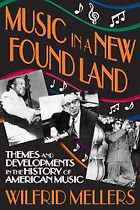
Your final book, Music in a New Found Land, is a history of 20th century American music.
This is a wonderful book, and somewhat forgotten. It’s currently very hard to find, here in America at least. It’s fantastically vivid and passionate writing about music of all kinds. It’s one of the greatest books ever written about American music. Somewhat ironically, as Mellers was English – but as an outsider he was able to look over the entire landscape of American music, before the 20th century and into the 1960s, with a completeness that perhaps an American writer could never have achieved.
“It’s one of the greatest books ever written about American music.”
What’s amazing about this book, and so rare, is the ease with which it moves from one genre to another. It begins with classical music, moves into jazz, then it goes into the world of the blues. It almost reaches rock ’n roll (it was published in 1964). If he’d written it a few years later, of course, Bob Dylan would have been part of it.
He did. It wasn’t as successful. But this one, whatever the genre is, he writes with equal authority, equal seriousness and equal vividness. It’s something that I aspire to in my own writing – to move outside the classical sphere. I haven’t really tried to write about jazz, but I’ve written a few pieces about rock. Actually, all three of my major pieces on popular music are in Listen to This: Bob Dylan, Radiohead and Björk.
I’ve mostly given it up at this point, because I find it taxing and a real struggle. There’s a language that comes very easily to me now, writing about classical music, and everything seems to take much longer when I’m writing about pop music. I’m happy with those three pieces, but it felt unnecessarily difficult. With the Bob Dylan piece, actually, I almost had a little nervous breakdown in the middle of writing it, and had to stop for several months because I reached a total impasse and doubted what I was doing. But I wanted to do it nonetheless and I felt it was important to try.
One thing that comes across in your essay on Dylan, as in all your writings on popular music, is that you still employ a lot of musical terms. You write about your frustration that much of the writing on him refuses to engage with the music but is focused on the lyrics. Is that a more general frustration of yours when you read about popular music?
I don’t know if that’s so much the case anymore. When I wrote that piece [in 1999] I was feeling more combative in terms of how I was responding to pop and rock critics, and trying to assert a role that I could play as a commentator who got into musical detail in a way that very few Dylanologists had done up to that point. But these days I follow a lot of pop critics, I admire what they do and I don’t think it’s essential that you get into so much musical detail. In certain cases, if there is something notable happening in terms of how an artist or band is manipulating harmonic progressions or something to do with rhythmic structure or textures, it’s important to apply that detail – and it probably doesn’t happen as often as it should.
But there’s so much else to talk about in the pop music world. I really admire the critics out there who are keeping up with this insane diversity of what’s happening in the pop music field, keeping track of all the social and the political dimensions of pop music – which critics in that field tend to address much more forthrightly and intelligently than classical critics do. That’s one of the major weaknesses of contemporary classical criticism. There are some pop critics who do delve into musical detail. But my feeling now is that to write a review of a pop show in the same style as a review of a classical concert just wouldn’t make very much sense.
January 1, 2013
Five Books aims to keep its book recommendations and interviews up to date. If you are the interviewee and would like to update your choice of books (or even just what you say about them) please email us at [email protected]
Five Books interviews are expensive to produce. If you've enjoyed this interview, please support us by donating a small amount.
Alex Ross
Alex Ross has been the music critic of The New Yorker since 1996. His first book, The Rest Is Noise: Listening to the Twentieth Century, a cultural history of music since 1900, won a National Book Critics Circle award and the Guardian First Book Award, and was a finalist for the Pulitzer Prize. His second book is the essay collection Listen to This. He is now at work on a third book, called Wagnerism, describing the composer’s vast cultural impact. In 2008, he was named a MacArthur Fellow.
Alex Ross has been the music critic of The New Yorker since 1996. His first book, The Rest Is Noise: Listening to the Twentieth Century, a cultural history of music since 1900, won a National Book Critics Circle award and the Guardian First Book Award, and was a finalist for the Pulitzer Prize. His second book is the essay collection Listen to This. He is now at work on a third book, called Wagnerism, describing the composer’s vast cultural impact. In 2008, he was named a MacArthur Fellow.