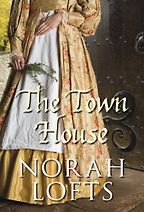
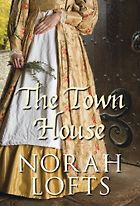
Our topic is the best historical novels and your first choice is Norah Lofts’s House Trilogy—The Town House, The House at Old Vine and The House at Sunset—which dates back to the late 1950s/early 1960s.
It’s a bit cheeky to choose a trilogy, I know. But if you read them all as one book—and you can—it is the most outstanding historical novel that I have ever read. It is effectively the history of England, seen through the eyes of each generation of the owners of a medieval house, from 1380 through to the 1950s.
So you learn the history of England without having to read a dull history?
Yes, but it’s not just that. There are wonderful vivid characters, sinister undercurrents, and so many different story lines and themes. Sometimes there is a little gap between the stories where the reader is wondering what’s happened in between, and there are dark hints… The whole thing is a joy. I’ve been instrumental in getting it republished, and all three books are now available.
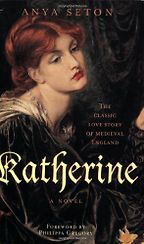
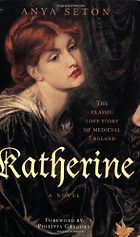
What about Katherine by Anya Seton, which is based on the life of Katherine Swynford?
This is one of my all-time favourite historical novels; it’s absolutely inspirational. Every sentence is a joy. It was written in 1954 and is, of course, of its time – bodice rippers came later. But it’s written with such integrity, and I see it as a benchmark for historical novels. Anya Seton was an American author and she spent four years in Britain researching this novel. Given the sources available to her at the time, it’s brilliant. It has inspired so many people. In 2003 the BBC did a poll, ‘The Big Read’, of all-time favourite books, and Katherine came in the top 100. It’s never been out of print.
And by ‘sets a benchmark,’ you mean she really did the research, so it’s accurate as well as gripping?
It’s not accurate by modern standards, but it’s so well done that it convinces. The second half of it is largely fiction. The earlier part is based closely based on historical sources, but where there are gaps in Katherine Swynford’s life, Seton fills them credibly. To me, it evokes that medieval period, which I have long studied as a historian.
When you say ‘by modern standards’, what do you mean? Has the bar been set higher in terms of historical accuracy?
I mean it is not accurate compared to what we know about Katherine Swynford today. There has been a lot of research on her since 1954. No, today, I’m afraid, the bar has gone way down. That’s why you have so many dumbed-down historical novels. There are one or two honourable exceptions, but not many.
Was it because of Anya Seton’s book that people were inspired to do research about Katherine Swynford, so that, as a result, we know a lot more about her?
Possibly, but not only that. It’s an absolutely inspirational book to read, one of those people love to go back to. I do go to a lot of events, and when my biography was in preparation my audiences would ask me, ‘What are you doing next?’ And I would say, ‘I am writing a book about Katherine Swynford,’ and you’d hear a frisson in the audience, and afterwards people would come up and they’d all say, ‘I read Katherine.’
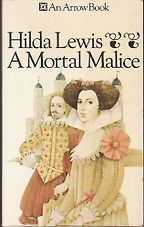
Your next choice is A Mortal Malice by Hilda Lewis.
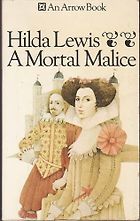
This book is now out of print. It dates from the early 1960s. Hilda Lewis is my third favourite novelist of all time (you’ve got the other two in the list). She wrote a wonderful series of historical novels. This one is based on the famous poisoning of Sir Thomas Overbury in the Tower of London, in the early 17th century. It has a rich cast of rogues and royal characters at the Jacobean court. It’s a tour de force, and you could actually rely on it as history. They just don’t write them like that now. It’s a page-turner that has everything – witchcraft, sex, scandal and murder.
And still very accurate.
Incredibly so.
So that’s what you favour, when you read historical fiction, that it’s true to the history?
I do feel quite strongly about that. I think that historical novels should be written with integrity. Even if the author is taking dramatic licence, it’s got to be credible in the context of what is known about the subject. As a historian, I quickly abandon historical novels if I realise that whoever wrote them hasn’t done very much homework.
Get the weekly Five Books newsletter
Who was Hilda Lewis?
She was a great British novelist. She didn’t just write historical fiction, she wrote modern novels, including a book based on the Dr Crippen case, right from the 1940s until her death in the 1970s. One or two of them were filmed. The film Mandy was based on her book The Day is Ours, about a deaf and dumb child growing up in London in the early 1950s. It’s searing. All three of these novelists – Lofts, Seton and Lewis – have an incredible grasp of character, and I know that Nora Lofts has been the subject of a recent university thesis, because there is a growing body of opinion that her work has been underrated.
It’s a wonderful idea, to take a house and look at history through its inhabitants.
It’s an epic tale. And it wasn’t the only one of its kind. Lofts wrote another called Bless This House, in a single volume, which was about an Elizabethan house through the centuries, and that was later followed by A Wayside Tavern, about the history of an inn, from Roman times to the present day. I have all 63 of her books, and nearly all of Hilda Lewis’s. I am still trying to track them down, as some are pretty rare.
What about your last two books, both by Anya Seton? Tell me about Green Darkness first.
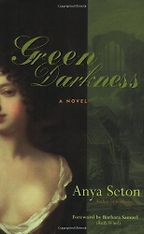
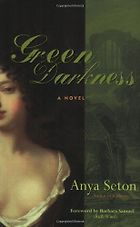
Green Darkness was written in 1968 by Anya Seton. It’s a time-slip novel with reincarnation as its central theme. A group of people gather in an old farmhouse near historic Midhurst in Sussex for a weekend in the country, but there are chilling undercurrents beneath the social interaction. As the plot unfolds, the reader realizes that all these people are reincarnated from characters who lived in the area at the time of Wyatt’s Rebellion in the 16th century. The story is based around the actual discovery of a skeleton walled up in a fourteenth-century house called Ightham Mote in Kent. This book is about how the skeleton came to be there. As the story progresses, the conflicts of the Tudor period are resolved in one way or another in the modern age.
So it begins in the present, at least in 1968?
Yes, but the greater part of the book is set in the mid-16th century, and it’s the most accurate and vivid account that I’ve read of Wyatt’s Rebellion, which was a revolt against Mary Tudor. It’s utterly gripping.
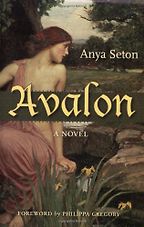
And your last book, Avalon, is set in Viking times?
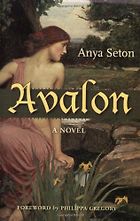
Yes, it’s set in Saxon and Viking times, in the tenth century, at the corrupt court of King Edgar of England, long before the Norman Conquest. It’s based on the obscure legend of a saint, Rumon, about whom very little is known. He is the central character. It is also about the lady he loves, Merewyn – and what happens to her. The story takes us along to Greenland – which the Vikings colonised, and where Merewyn was forced to make a new life. It’s just a beautiful love story. I read it first as a teenager, and found it quite striking and moving, and I still think it holds up very well now.
So in Avalon, there’s a bit more poetic licence, because not that much can be known about how people lived that long ago?
Again, it’s credible. Some of the characters are historic and it’s very, very well done. Seton has focused on people about whom hardly anything is known – which is a gift to any historical novelist because one can use one’s imagination creatively. And she’s done it well.
Five Books aims to keep its book recommendations and interviews up to date. If you are the interviewee and would like to update your choice of books (or even just what you say about them) please email us at editor@fivebooks.com
Five Books interviews are expensive to produce. If you've enjoyed this interview, please support us by donating a small amount.