From the Hearsts to the Murdochs, powerful families have often controlled the newspapers we read. The author, and Kennedy family member, tells us why they do it and where it leads
I got interested in Cissy because of isolationism. Looking at her life, I found her larger family to be fascinating and it occurred to me that there were a lot of parallels between her families and other newspaper families throughout the English-speaking world and beyond.
The Hearsts, the Scripps, the Binghams, the Sulzbergers, the Chandlers and now the Murdochs, we seem almost as interested in reading about newspaper families as we are in reading the papers they publish. Why?
Many became oligarchs within their cities, particularly in the United States with, for instance, the Chandlers in LA and the Medills in Chicago. The prominence of the newspaper and the prominence of the city and the success and growth of both were intertwined.
Newspaper dynasties were very influential and powerful in their domains. They had the ability to become kingmakers and to influence public opinion. In a number of cases, that sense of entitlement was passed down to the children along with the expectation that their offspring would occupy a prominent role in society and in making public opinion, which they often characterised as for the good of the country. I imagine they believed that they used their influence for the good of the country and whether it was or not is always open to debate. And of course, a lot of newspaper families, the successful ones, became incredibly rich. Newspaper dynasties are not as common as they used to be. The Murdochs are one of the few who are left.
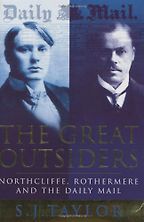
About 80 years before Rupert Murdoch entered the UK tabloid market, Alfred Harmsworth was pioneering the populist tactics of tabloid journalism at London’s Daily Mail. Your first choice is a book about the Harmsworths by Sally Taylor. Tell us about The Great Outsiders.
The name captures the Harmsworth family pretty accurately – they came from poverty in the late 19th century to become central figures in Britain through their new breed of newspapers; particularly, as you said, The Daily Mail. They pioneered a shorter simpler type of newspaper that was easier for the common man to read. It was sometimes said that their newspapers were run by office boys for office boys.
Their meat and potatoes was jingoism, militarism, imperialism and a focus on the royal family. They also were groundbreaking in that they created more space for women’s pages and fiction. And there were larger illustrations, which eventually gave way to new technological breakthroughs like using photographs. They were sneered at sometimes, in more established circles, not only for writing in monosyllables or catering to lowbrow tastes but also for not always being especially accurate. But they did democratise news.
Their growth paralleled the growth of a commuting class. The Daily Mail became an actual tabloid – a half-sized paper – rather late, in the early 1970s. But it had all the hallmarks that we associate with tabloids since the 19th century. A tabloid is a working man’s paper that, because of its smaller size and simple prose, is easy to open up and read while you are commuting to work on a train or bus. The Harmsworth family really pioneered that style.
Northcliffe, the elder Harmsworth, was a real innovator in terms of the content of the papers. And he became very influential in British politics and World War I, and his brother, who eventually became Viscount Rothermere, was the business brains of the operation. The model they created was imitated in the American newspaper market. The Daily Mail really was the inspiration for TheNew York Daily News. For better or worse, they really changed the types of newspapers the public came to expect and the tenor of news coverage that is prevalent throughout the English-speaking world and beyond.
It is said that Harmsworth dominated British press as no one has since – I’m wondering if that includes the Murdochs.
It’s hard to say, because the Murdochs have new media available to them that the Harmsworths didn’t at the time. But the Harmsworths, like the Murdochs, were very conscious of new technologies that would make their newspapers more appealing. So I think they’re similar figures in the history of journalism.
I read that their anti-German journalism was considered instrumental in pushing Britain toward World War I. So much so that the Kaiser bombed Lord Northcliffe’s estate.
They were instrumental in the way that William Randolph Hearst was influential in getting the United States into the Spanish-American War. These newspaper dynasties, the really powerful ones, often give rise to figures who, although not elected, have a bully pulpit. Presidents and prime ministers had, from time to time, decried them as anti-democratic or unelected kings. Yes, the Harmsworths were incredibly influential.
An ennobled press baron, like Harmsworth, figures in the second season of the transatlantic hit television programmeDownton Abbey. How did the Harmsworths come to be ennobled?
My understanding of it is that with their power and success they ended up being given titles in a way that the British do for people who are considered to have contributed something to the United Kingdom. The details I don’t know much about.
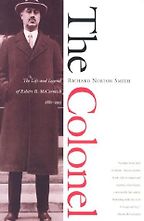
Let’s move across the ocean to a biography of your subject Cissy Patterson’s cousin. Please introduce us to The Colonel: The Life and Legend of Robert R McCormick and the Medill dynasty which created these two media moguls.
Richard Norton Smith’s biography of the colonel, the publisher of TheChicago Tribune from about 1910 until his death in the mid-1950s is not only a superb biography of McCormick it’s also a great family biography. It traces the family’s entrance into the newspaper business from McCormick’s grandfather Joseph Medill through his publishing descendants.
Like the Harmsworths, the Medills were very much involved in politics. Joseph Medill was a ferocious abolitionist who claimed, at least, to be the progenitor of the Republican party. He was one of the early boosters of Abraham Lincoln as a presidential candidate in 1860. He managed to acquire the majority stake in the Tribune and from there became a kingmaker. It was necessary for any Republican candidate – from Reconstruction until Medill’s death in 1899 – to have his blessing or at least be on good terms with him.
Colonel McCormick was raised, in many ways, to be an oligarch. Early in his life, he didn’t have any expectation of going to the Tribune but he ended up becoming the publisher. He took up his grandfather’s role as a kingmaker, inserting himself into local and national political matters. You may remember that famous headline of Harry Truman the morning after he was elected holding up the newspaper that says “Dewey Defeats Truman”? That was the Chicago Tribune. The Tribune in the early and mid-20th century was a very close reflection of McCormick and his isolationist, anti-Roosevelt views.
His cousin, Joe Patterson, ran TheNew York Daily News, which was modelled on The Daily Mail. And his other cousin, Cissy Patterson, created the Washington Times-Herald in DC. All made use of their papers, which sold very well and were widely circulated in their particular markets, to insert themselves into the national debate. Their papers were so popular that there are letters from Roosevelt to Churchill complaining about them. The Roosevelt administration and much of the more liberal press in the 1930s and 40s spoke about them as a McCormick-Patterson axis.
So Colonel McCormick led you to Cissy Patterson?
I was interested in American interwar isolationism and the isolationists themselves who were by and large a pretty colourful bunch, like Colonel McCormick, Charles Lindbergh and Joe Kennedy. Cissy Patterson was a lesser figure but the most outlandish of many. That’s how I got interested in her story. As I realised that a study of her life was inseparable from a study of her larger family, it started to become clear to me there were parallels with other newspaper families.
Colonel McCormick is remembered as a great crusader. What were his great causes?
He definitely ran the Tribune as his mouthpiece from the 1910s to the 1950s and took it as his right to do so. People within the Roosevelt administration sometimes felt that he was a traitor because, for example, he published a leaked top-secret military document that Roosevelt had ordered immediately before Pearl Harbor. There was some discussion of whether Colonel McCormick should be tried for treason. McCormick’s answer was that he was doing a public service because the document proved that Roosevelt was misleading the American public. In our historical memory Franklin Roosevelt is more fondly remembered than Colonel McCormick; but, for all his foibles, he was a great champion of the First Amendment and a free press.
I think Colonel McCormick was a particular type of patriot. There is precedent in the United States, having been a non-interventionist nation. McCormick’s take on isolationism was that the early founding fathers had intended the United States to be separate and apart from European struggles and entangling foreign alliances. If you consider Washington and Jefferson’s farewell addresses, both of them warn the United States about getting involved in entangling foreign alliances. He’s thought of as a ridiculous character now but in his time he helped open debates, including about how far the First Amendment could go and whether the public had a right to know certain military secrets. Those issues still come up from time to time – with Wikileaks, most recently.
So, your interest in newspaper dynasties stems from your interest in isolationism, which sprung from your book about the collected letters of your grandfather, political patriarch Joseph Kennedy. Do you see similarities between political and newspaper dynasties?
I do actually. I think that, typically, the children of press and political dynasties are raised with a notion that it is imperative to contribute something to their country through direct public service or through the public good of making information available by publishing a newspaper. Whether you think their contributions are positive or negative is another matter. One thing you see with the Medills and other press families is that they had their own particular vision of what was best for the United States and they were in a position to broadcast that viewpoint to a lot of people without being elected to public office.
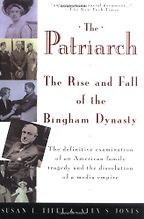
Let’s turn to The Patriarch: The Rise and Fall of the Bingham Dynasty. Please introduce us to this book and the Kentucky clan that is its subject.
The Binghams are a fascinating family, not only because of the rise of The Courier-Journal and The Louisville Times but because of the size and the almost gothic history of the family. The Binghams definitely had a drive to publish newspapers as a public service within Kentucky. Like many other newspaper dynasts, Robert Worth Bingham – the patriarch of the Bingham family, often known as Judge Bingham, who built the papers into nationally respected publications – went from newspaper work into politics. He was very much for the New Deal and pro-Roosevelt. He ended up as one of Franklin Roosevelt’s ambassadors to the Court of St James [United Kingdom].
So in the Binghams’ history you once again see the smooth transition from publishing into politics. Like, for example, in the Medill family one McCormick brother was the senator for Illinois. And with the Harmsworths, a younger brother was a member of parliament. And then, like a number of other newspaper families, with the Binghams there was a struggle for domination over the paper that eventually resulted in the family losing ownership. That’s another commonality – squabbles within a press dynasty end up ending a paper or ending a family’s association with the paper.
Tell us about the gothic part.
Well, there are a lot of gothic parts. For example, both of Judge Bingham’s wives met odd ends. His first wife, I believe, died in a car crash cradling their son in her arms. The second wife, who was an heiress to the Flagler fortune and the source of Robert Worth Bingham’s eventual wealth, died under a cloud, because of syphilis, which she probably contracted from Robert Worth Bingham. But there were whisperings throughout his life that he may have done her in. And then the struggles for domination over the papers that eventually led to the families getting out of the newspaper business were rather dramatic, entailing sisters turning against brother. So The Patriarch makes for great reading and it is very well written and very well researched.
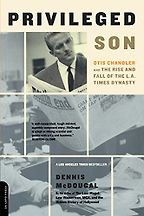
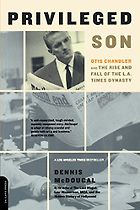
On to Privileged Son: Otis Chandler And The Rise And Fall Of The LA Times Dynasty. Please introduce us to the Chandler family and this book about them.
The book focuses mainly on Otis Chandler, who was a fourth generation publisher of the LA Times. In 1960, he took what wasn’t a particular well-regarded newspaper and set out to make it really exemplary. And he succeeded – he made it one of the finest newspapers in the United States, one of the papers that won the largest number of Pulitzer Prizes. He hired real talent and set a higher standard than his forebears. The metamorphosis that he brought about over the course of the LA Times’s history paralleled the growth and growing prominence of the city.
So this book, by Dennis McDougal, is well researched and accurate and very readable. It’s sometimes called a business history, but it’s also a multigenerational biography of the Chandler family. It makes clear how newspaper families form an intertwined, even symbiotic relationship with the city where they’re centred. With the Chandlers you see how, over the course of the 20th century to the time when Otis was unceremoniously forced out of the management of the LA Times in the 1980s, the city became more prominent as the paper became more prestigious. It became a world-class paper as Los Angeles went from being a sleepy agricultural outpost to a major metropolitan city.
When the Chandler dynasty’s founder, Harrison Gray Otis, took charge of the newsroom in 1882 the city had fewer than 13,000 residents. It is now a city of nearly 10 million. McDougal claims the Chandler dynasty shaped and reshaped southern California. Please explain.
One thing that people often cite is the water wars. The city needed water to grow and the paper supported the acquisition of water rights from an agricultural valley. That entirely changed southern California and made it possible for more people, and consequently more readers, to live there. The Chandler family was very involved in backroom politics and forcefully editorialised in ways that result in the expansion of the city.
As the man at the helm of the [US] West’s most important paper did Chandler help to elect California’s two presidents: Richard Nixon and Ronald Reagan?
Uh-huh.
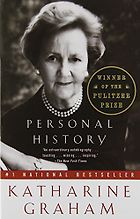
Your last selection concerns one of those respected eastern papers that the Los Angeles Times imitated. Please introduce us to Katharine Graham’s Pulitzer Prize winning autobiography, Personal History.
The family of Katharine Graham’s father, Eugene Meyer, had very little money but he had great success on Wall Street. He eventually became what was at the time called a “Dollar-a-Year man”, a public servant in Washington who believed he owed his adoptive country something so he worked for almost nothing in various administrations. In the same spirit, he bought The Washington Post at bankruptcy in 1933. He didn’t really know anything about newspaper publishing at the time but decided that another way to contribute to his country was to publish a newspaper. It didn’t sell well at first and Meyer poured a lot of money into The Post but ended up making it into a very well respected newspaper. Phil Graham, his son-in-law, took up and maintained that standard.
Personal History is surprisingly straightforward. Graham grew up with great wealth and privilege but wasn’t supercilious. She is forthright about her foibles; she doesn’t blink and she doesn’t make excuses. She tells some hard truths about herself. It’s the story of a woman who wasn’t really raised to take over the family newspaper but who ended up doing so when her husband killed himself.
She decided to run The Washington Post and therefore found herself in the middle of multiple momentous moments in American political history, like Watergate. Her support for the break-in investigation and the publication of the Pentagon Papers had a profound effect on the course of American history and the course of American journalistic history. She presided over the scoop of the century.
Also, it’s a great history of Washington, DC, from World War I through the 1990s. Just as any story about the Chandlers is also a story about Los Angeles, any story about Katharine Graham is also a story about Washington, which was a sleepy backwater and is still a rather small community compared to its importance on the world stage. It certainly was when Kate Graham was a young woman.
The Washington Post Company is now run by Katharine’s son Donald Graham and the paper is led by her granddaughter Katharine Weymouth. So the paper is transitioning to its fourth generation of family leadership. The Grahams of The Washington Post, the Blethens of The Seattle Times and the Sulzbergers of The New York Times are continuing their dynasties into the 21st century. Can media dynasties thrive despite the crisis in printed media?
That’s the $64,000 question. The dynasties that have survived in the past and probably will survive in the future are the ones that adapt to the realities and technologies of the present. The Murdochs excel at adapting. They’ve got into television and become multinational. It will be interesting to see what’s going to happen with the phone hacking scandal. That’s an illustration of a publication using modern technology to their advantage, except they got caught. The bottom line is I don’t really know which publishing dynasties will survive into the 21st century. But as the hacking scandal shows, it’ll be interesting to watch.
Five Books aims to keep its book recommendations and interviews up to date. If you are the interviewee and would like to update your choice of books (or even just what you say about them) please email us at [email protected]