Before we start talking about the books, Mother’s Day is the celebration of Motherhood, I’m wondering how it’s observed in the Chua-Rubenfeld household and what you think of this Western invention.
I always send flowers and a card for my own mother. But it’s harder for me to get the same amount of attention from my two daughters. Everyone is so busy. We’ll probably go to see a movie and to a Chinese restaurant. In my household, that’s the tradition.
The topic is ‘being a mother’ books, but you’ve chosen an illustrated children’s classic about a duck, a memoir and three novels. What do you have against parenting manuals?
I have nothing against parenting manuals, although I have been disappointed that people who haven’t read my book have portrayed it as a parenting manual. When my daughters were infants, I think I did have the “What to Expect” series. But once my daughters grew out of toddlerhood, I thought I’d just do what my parents did. I learned the hard way that what they did wasn’t so easy.
“When it comes to mothering, we all want to believe that what we are doing is right. But we’re all so afraid that what we’re doing is wrong.”
My parents were extremely strict, but also extremely loving, Chinese immigrant parents. While I wasn’t always so happy about how strict they were when I was growing up, as an adult I adore my parents. I feel I owe all that I am to my parents and I don’t think I turned out that badly.
So these books shaped your parenting style more than, say, Confucius?
Basic tenets of Confucianism are embedded in my culture and were embedded in my upbringing. So I was definitely influenced by Confucianism, as it is loosely defined. Deeply engrained in me are the importance of education, the importance of hard work and the importance of respecting authority. And my parents tried to instill modesty and humility in me too, maybe with less success.
Please give the OED a head start on their next edition by defining what it means to be a Tiger Mother.
A tiger mother is a mother—of any ethnicity or background—who believes in her children more than anyone else and is willing to do whatever it takes to help them be all they can be.
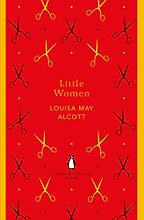
Your first book choice dates to 1868. Little Women by Louisa May Alcott. For anyone who doesn’t remember it from childhood, please give a précis, and for the rest of us, please explain what the March family teaches about mothering.
Mrs March has four daughters and they all call her Marmee. Her husband is away serving in the Civil War. So, for most of the book, she’s the rock of the family.
In so many of the books I read as a girl, it was the dad that was the strong figure. I’m thinking of Caddie Woodlawn, Johnny Tremain and even a lot of the Jane Austen novels. The mother in Little Women was the strongest mother I came across.
Marmee is a character that really resonates for me. She’s obviously not Chinese, but she believes that integrity and hard work are the most important things in life. She holds her daughters to very high standards. She doesn’t sugarcoat much. She also reveals to her rebellious daughter Jo, the star of the book and a character loosely modeled on Louisa May Alcott herself, that she had a bad temper too when she was younger. That’s exactly what I did with my own daughter Louisa.
Marmee March’s mothering style is very different from the Tiger Mother archetype. She encourages play and creative expression, and allows the girls to make their own mistakes. What does this have to do with getting into Harvard?
She encourages her daughters to play, but it’s often within the home. A lot of the play takes place within the family, which is very much the way I was raised. My husband and I spend a lot of time with our kids — playing charades, jumping in bed, watching movies and most of all, reading together. So the picture of family life in Little Women looks a lot like my household.
The kinds of mistakes that Marmee allows her daughters to make are very similar to the kinds of mistakes that I allow my daughters to make. Marmee provides a lot of guidance, she allows them to experiment within a moral framework. So it’s actually not as different as you might think.
Alcott’s parents famously studied their four daughters, taking notes since their birth. Did you do so too?
I didn’t even know that. I didn’t take notes with a book in mind, but I kept a long computer file of things that the kids said which I found adorable. Even when Sophia, my older daughter, was three years old I recorded all the funny things she said; and with my second daughter, I set down all the smart alecky things that she said. So when I started writing this, I did have a file of contemporaneously recorded stuff. Most of what I wrote down was them putting me in my place. If you read the book, you’ll see that my daughters are the heroines and they have all the best lines.
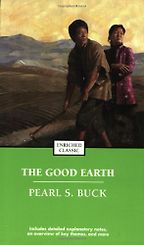
Let’s move to the Mainland of Chinese mothering. For you next being a mother book, you’ve chosen The Good Earth by Pearl Buck, a Pulitzer Prize winning 1931 novel about a rural Chinese couple who pull themselves out of poverty while raising a family. Tell us about it.
I read this book when I was about nine years old. It just made such an impact on me. O-Lan, the mother in this book, gives birth to two sons and two daughters, one of whom she strangles in infancy because there is not enough food to sustain the family. She’s born a slave. She’s plain and coarse. She toils silently and stoically all her life to provide for her family and is basically never rewarded. When her husband gets a little wealthier, virtually the first thing he does is take in a concubine. O-Lan has stuck with me for all these years.
Until you came along, O-Lan was certainly the most famous Chinese mother in Western literature. But not the sort of mother immortalised on greeting cards, at least in the West. She committed theft and, as you mentioned, infanticide. Was she a role model?
The story is about such a different time and different context. It’s not that I aspire to be an unrewarded, self-sacrificing, silenced woman. But O-Lan has some impressive qualities: stoicism, and a deeply internalised sense of commitment to her family. She is definitely not a role model, but there are aspects of her character that I do admire.
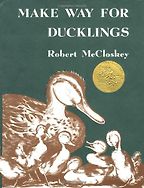
Let’s move on to a lighter motherhood book, and an illustrated one, the award-winning children’s classic, Make Way for Ducklings. Tell us the story.
Mrs Mallard is a mother duck and Mr Mallard is a father duck, and they have a brood of little ducklings. Much of the story involves their search for a place to roost and raise their babies. They end up in the Boston Public Garden.
Mrs Mallard is my mothering role model. She’s proud, she’s strong and she’s completely devoted to her ducklings. She assumes that her ducklings are capable of anything. She teaches her ducklings strength and dignity, by example. All of this comes across through the beautiful illustrations. Particularly the drawings of Mrs Mallard marching her brood through Boston with her head held up high. I’ve always loved this book. I used to read it over and over again to my daughters.
The Mallard couple work like many marriages I know. The mother in the book, teaches the children to swim, waddle and safely cross a road while the father takes a week’s vacation. Does this story remind you of your partnership?
I’m not endorsing it as a how-to guide for working mothers. It’s really just that little slice about her relationship with her children that I like. That’s all. I just feel like she has a really lovely, healthy bond with her ducklings.
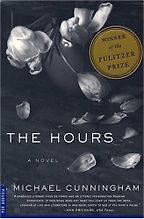
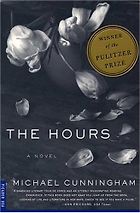
Your next choice is the one that puzzles me most: Michael Cunningham’s dark Pulitzer Prize winner. Tell us about the three interwoven novellas that make up The Hours.
The stories revolve around Virginia Woolf, who committed suicide, a forties housewife named Laura Brown and Clarissa, a contemporary lesbian editor. I could not be more different from all three of these women.
I chose this book because I think Laura Brown makes the strictest of tiger mothers look wonderful by comparison. She is totally detached and can’t get out of her head, so she retreats into books, specifically Mrs. Dalloway. She can’t feel love for her family. It fascinates me because I’m the opposite, my daughters are my main source of joy and energy. Laura Brown deserts her son; I think she goes to Toronto.
In my estimation, that’s a lot worse than demanding two hours of violin practice. It’s been interesting to me, the kind of things that I’ve been criticised for: “You’ve made your daughters drill math!” I’ve always found that surprising and maybe reflective of some cultural differences. Because parents who make their kids practice sports for five hours are celebrated. And then there is also neglect, parental indifference and even physical cruelty. It’s been interesting for me to reflect on different kinds of parents and how we’re judged.
Along the lines of what you just said, Nicole Kidman, who played the role of Virginia Woolf in the adaptation of this novel, is one among many celebrities slammed for their mothering choices. I’m wondering whether you feel that motherhood, once seen as sacrosanct, is now subject to sanctimonious – even sexist – scrutiny.
I do think that mothering is one of the areas where we all can be intolerant. I think it is insecurity driven, and I include myself in that assessment. We all want to believe that what we are doing is right. We’re all so afraid that what we’re doing is wrong. It makes us very quick to judge others. Which is odd, because you just look around and it’s so clear that there are so many ways of raising happy, strong kids.
You’ve been lambasted for tough love. Reading your press coverage, I wondered whether a father would’ve been judged as harshly for a similar style of parenting.
I do notice an asymmetry. There are so many movies, novels and books that celebrate paternal firmness. Real life soccer dads get a pat on the back for tough tactics. My parenting style would seem wildly permissive in China, Korea or Japan. My kids wear what they want. They go to parties. They talk back in a way that would be unacceptable in Asia. The fact that I’m characterised as an extreme parent in this country reflects a real cultural difference, and I think you might be right that there is a real difference in how we judge mothers and fathers.
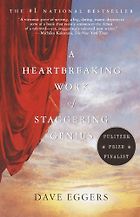
Finally, A Heartbreaking Work of Staggering Genius is a bestselling memoir by Dave Eggers about raising his younger brother, who is eight when he is orphaned. I can see the parallels, but please make clear to us what this memoir has to do with mothering.
I read this book 10 years ago and just loved it. It’s a memoir, but not exactly. That’s actually how I would describe my own book. Eggers is a flawed character in this book, an unreliable narrator. I’ve always loved books with unreliable narrators. When you can’t believe everything the narrator is saying, you have to read between the lines to understand what is going on.
His mother and father died within five weeks of each other, and at 21 he finds himself a single parent in charge of his eight-year-old brother. If you read the book, on its surface it’s very unsentimental and self-incriminating. Eggers describes trying to pick up women at PTA meetings; he describes food fights and dirty laundry everywhere. But if you read between the lines, it’s clear how much he loves his brother and how hard he tries to be a good parent.
Most people compare my book to “Mommy Dearest”, but it’s Eggers that I tried to emulate. This book was the model for my book. I thought my book would be received as a self-satirising memoir, not a manual. But it got caught up in a parenting debate and the debate took on a life of its own. I don’t think there is a major review that got my book as I intended it to be received. It’s interesting to me that no one misunderstood his book.
But Eggers overtly mentions in his foreword and narrative that his memoir is somewhat fictionalised. Do you wish you’d done the same? Apparently your title wasn’t a broad enough hint.
Battle Hymn of a Tiger Mother just seemed so over the top to me that I thought anyone who opened the book would already get it. But the title that people knew first was the one that someone assigned to an excerpt in The Wall Street Journal, “Why Chinese Mothers are Superior”. I think the way it was framed (as a how-to and Chinese-versus-Western mothers) just made it difficult for people to read the book the way I hoped it would be received.
Get the weekly Five Books newsletter
Right from the opening, my book is filled with contradictions. So I thought that people would read between the lines. On page four I write, “I think people who believe in astrology have serious problems” and then in the same paragraph I say that the Chinese Zodiac describes my daughters and me perfectly. There are points where I’m applying Chinese parenting techniques to my dogs. I thought readers would understand that it was hyperbolic self-parody.
So your daughter didn’t really read Sartre and understand set theory at three?
Oh my God, no! I think I give away in the next paragraph that reading Sartre meant recognising the words “No Exit”, and understanding set theory meant that she could scribble overlapping circles.
I’d like to read you one quote from Eggers’ memoir and get your reaction. He wrote: “We feel that to reveal embarrassing or private things, we have given someone something… like a primitive person fearing that a photographer will steal his soul.” Why did you bare yourself by writing Battle Hymn of a Tiger Mother? Wasn’t it a very un-Chinese choice?
It was very un-Chinese to write this book, my mother pointed that out. My mother actually loved the book but she was really afraid for me. She said, you’re going to get in trouble. And, of course, my mother is always right.
How did your daughters feel about the book?
They almost co-wrote it. They read every page and they corrected all the dialogue. I ran everything through all three people in my household. I seriously considered postponing publication until after my youngest was out of high school, but my daughters wouldn’t have it.
After the firestorm started, I thought: oh my God, because of my hubris my kids are going to suffer and my family is going to fall apart. But they weathered the storm so admirably. Their friends, teachers and our entire community supported them. And they supported me. My younger daughter Lulu, who is only 15, spends spare time cruising the Internet for positive quotes and texts them to me, saying, “Here’s a good one Mommy, hang in there.”
My older daughter, Sophia, started her own blog, even though her father and I objected. One more thing people miss about the book is they think it’s just about strict parenting; but it’s also about the value of rebellion. We said, “No blog! You’re going to get attacked.” But she is very strong-minded and so far, it’s been fine. I really do have two great girls.
Five Books aims to keep its book recommendations and interviews up to date. If you are the interviewee and would like to update your choice of books (or even just what you say about them) please email us at editor@fivebooks.com
Five Books interviews are expensive to produce. If you've enjoyed this interview, please support us by donating a small amount.