Your kaleidoscopic novel about post-9/11 life in New York The Submission was informed by your work for the New York Times in the wake of attacks. Please tell us about the experience of reporting on the aftermath of that awful morning.
I spent about six weeks in New York reporting on different aspects of the aftermath – a whole range of stories including ones about children who lost parents, families being notified of confirmed deaths, people sorting through the debris and “Portraits of Grief”. Then, after that, I went abroad to report – first from Afghanistan.
Although you contributed to the “Portraits of Grief” series – part of “A Nation Challenged”, which won the 2002 Pulitzer Prize for Public Service – profiling each of the people that died at the World Trade Center, you said you didn’t look back at it while writing The Submission. Why?
As a novelist, I didn’t want to raid details of people’s lives for material. But also, as a reporter, I felt ambivalent about the “Portraits of Grief”. The wordcount left no room for complexity. The project made me ask, how do you avoid reducing the dead to thumbnail profiles? People are much more complicated than can be represented through daily journalism. They deserve to be portrayed and remembered in all their fullness.
What else made you decide to filter the experiences of 9/11 through fiction?
After the attacks, I was constantly shifting perspectives. Reporting from New York was a very intense experience and then suddenly I went overseas to Afghanistan and a lot of other Muslim countries. It was hard to relay competing perspective in an article. And as journalists we look for differences – differences between countries, cultures, classes and communities. We’re very sensitised to difference, but it’s much harder to write about similarities across countries, cultures, classes and communities. I felt that was something that could never be captured in non-fiction or in journalism.
Also, I was interested in exploring ambivalence through fiction. As a reporter you tend to seek coherence from your subject or your source – it all needs to add up and make sense. In truth, in reality, there’s often a great deal of murkiness and muddiness, confusion and contradiction.
I felt drawn to explore through fiction the different perspectives and deeper truths of the attack’s aftermath but, on the most literal level, the reason I decided to write the book was because the scenario just occurred to me in 2003. I was talking about the September 11 Memorial competition, which was ultimately won by Israeli-American Michael Arad, with an artist friend who mentioned that the backlash against the design of the Vietnam Veterans Memorial in Washington was partially fuelled by the fact that the designer, Maya Lin – who was selected through a blind competition – was an American of Asian descent. That got me thinking about what would ensue if there was an anonymous competition to design a memorial for 9/11 and the winner turned out to be an American Muslim. That’s how I got the idea, more than five years before the controversy over the construction of an Islamic community centre close to Ground Zero.
Now to the books of others. I read that, according to Bowker’s Books in Print database, more than 150 works of fiction and nearly 1,500 works of non-fiction have been written that draw their subject matter from 9/11. Of those, you’ve chosen three novels, a memoir and a collection of poetry.
I wanted this list to replicate the multiple perspectives of my novel – Marian Fontana’s memoir gives you a look at loss and attempted recovery; Galway Kinnell’s poems channel our collective horror and grief and place 9/11 in historical context; Harbor uses plot to make us rethink where the emotions of 9/11 led us; Hamid and Cole, both of whose narrators are, in some sense, outsiders, cast a complicating eye on 9/11’s implications. If you read all these works you’ll be pulled from one point of view to another.
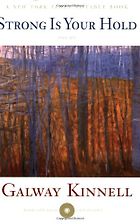
Let’s start with the poems and then move to the prose. Strong Is Your Hold is a collection of poetry by 84-year-old Pulitzer Prize winner Galway Kinnell. One of the poems within this collection is entitled “When the Towers Fell”. Please tell us about it.
Soon after 9/11, no more than a year, I heard Kinnell read this poem and it was an experience I will not forget. “When the Towers Fell” really demonstrates what poetry can do that other art forms can’t – provide catharsis by finding the right words to describe the otherwise unspeakable. Making art of tragedy is tricky. How do you do it? Is it unseemly? In what I have read of the literature connected to 9/11, I’ve observed that passages describing the day just don’t work for me. “When the Towers Fell” is as powerful a record of what happened as anything I’ve read.
As I heard him read his poem I was struck by the idea that poetry was truer to the experience of 9/11 than non-fiction. The disjuncture. In “When the Towers Fell”, the dissonance and unexpected juxtapositions of images and details allows us to see more clearly and feel more deeply what occurred on September 11. To quote the poem, the air “too foul to take in but we take it in”.
How about the rest of the collection?
Even though this is the only poem that is explicitly about the events of 9/11, there are echoes throughout the whole collection. Many of the poems are about mortality and mourning more broadly. The question of how we live on interested me deeply. We all pay so much attention to the memorial. But, in life, how are the lost remembered? How do we deal with death when it seems premature or unexpected? These are questions I explored through my reporting and my characters’ plight.
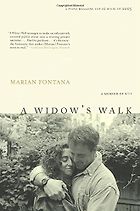
The next work I’d like to discuss is about one widow’s search for meaning after she lost her firefighter husband, on 9/11. Please tell us about Marian Fontana’s memoir A Widow’s Walk.
The reason why I have trouble with some of the fiction about 9/11 is a lot of it seems to be about people very peripherally affected: New Yorkers of a certain class whose lives were interrupted but who readjusted. Marian Fontana is not one of those people. Her life was completely rewritten. She writes, with great eloquence, about the very human wake of 9/11, the difficulty of balancing public and private grief when you lose someone, and the challenge of mourning while caring for a toddler.
You asked me to pick five works of fiction, but I insisted on a memoir because in this case it’s particularly difficult for novels to compete with reality. I didn’t read a lot of 9/11 fiction but in the ostensible 9/11 novels I did read, their attempt to muster emotion couldn’t begin to compete with Fontana’s reality. But then again, I don’t think fiction about this event or period should consider it sufficient to try to replicate that emotion – it needs to recast it, or twist it back on itself, or examine, which is partly what I was trying to do, where it leads, what its meaning is for our society or democracy.
The memoir also tells the story of how Fontana founded the 9/11 Families Association. One of the main characters in your novel is chosen to represent 9/11 families in selecting a memorial. And in your novel you convincingly and fearlessly describe how the tumult surrounding the attacks gave shape to lives left rudderless after the loss of loved ones. Was your novel inspired by this memoir?
Fontana, because of her position, could be more honest than most fiction writers dared to be. I loved lines like, “It has been interesting to watch each politician adopt a family member like a pet.” Or after dinner with another activist family member: “We accomplished little tonight, because while we are trying to operate like a business, the fact is we are nothing like one, as encumbered by our grief as we are fuelled by it.” On some level, I was probably inspired by her honesty in trying to etch the experience of my characters.
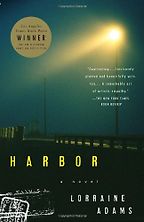
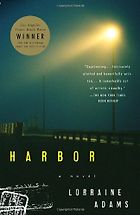
Let’s turn to Harbor, a first novel by Lorraine Adams. Please tell us about it.
Harbor is a beautifully written book about a group of illegal Algerian immigrants in the US, indelible characters. It cuts back and forth between Algeria and the US, telling the story of what their lives are like as they come under suspicion of being part of a terror plot.
Five Books interviews are expensive to produce. If you're enjoying this interview, please support us by donating a small amount.
I consider it a 9/11 novel for a few reasons. It’s a great portrayal of how we often look for terror in the wrong places. Its plot shows how its characters get caught up in the terror dragnet. Partway through, the perspective shifts to the federal agents investigating them. Suddenly seeing things through their eyes allows us to understand how we misread others.
Adams once reported from Algeria for The Washington Post, where she was a working journalist for many years. It seems like both of you are able to exercise the empathetic imagination that made you good reporters to create great fiction.
What enabled both of us to be reporters is this driving desire to get inside a culture or a community or a person’s mind. Fiction allowed us to go deeper.
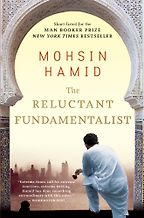
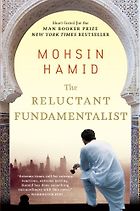
Let’s talk about your next selection, which also concerns how life changed for Muslims in post-9/11 America. But the protagonist of Mohsin Hamid’s The Reluctant Fundamentalist starts his American life in Princeton, instead of in Boston Harbor.
You’re right – the protagonist has a completely different profile from the humble one in Harbor. Changez is from a prestigious Pakistani family, but one without a lot of money. He comes to the United States to attend Princeton on a scholarship and then is recruited into the corporate world. The whole novel is a monologue. This character, in a café in Lahore, is talking to an unidentified American, telling his story about the life he led in the United States. How he was enamoured of New York, yet smiled as the Towers fell and grew even more embittered toward America in the wake of the attacks. The structure is original and well executed.
It’s a window on the conflicted feelings that I encountered in reporting about America, at home and aboard – and what they grow out of. At the same time, it raises questions in the reader’s mind about who should be suspicious of whom and why.
The author of this book recently told the BBC, “Fiction re-complicates what politicians wish to oversimplify.” Do you agree, and is that why you were drawn to fiction?
Definitely. A lot of political discourse is designed to force simple answers where there are none, or force people to take stark positions. In The Submission I wanted to re-complicate reactions to 9/11 so that even if you think you know what you think you still might find yourself switching your point of view.
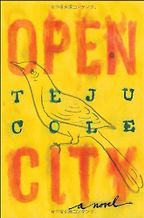
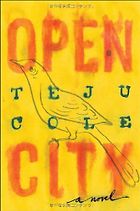
Let’s move on to your final choice, a novel that doesn’t directly deal with terrorism. Teju Cole’s Open City is set in New York, five years after 9/11. Please tell us about it.
It’s a very beautiful novel and very unusual in its construction. Open City is about a solitary narrator who for most of the story is just going on walks through New York. There’s no conventional plot. It’s filled with substance about the city and snapshots of characters he encounters along the way. It is almost like a musical variation, returning to the same themes and places over and over again in slightly different ways.
Get the weekly Five Books newsletter
On one walk the narrator ends up near the [Ground Zero] site. On another occasion, he goes to view the miniature model of the city at the Queens Museum of Art and notes the twin beams of light on the southern tip of Manhattan, which represent the World Trade Center. 9/11 keeps resurfacing, indirectly and almost allusively, in really interesting ways. Unlike some of the fiction that is explicitly about 9/11, Cole is grappling with issues related to 9/11 on a pretty profound level.
You noted that the definition of a 9/11 novel is quite elastic. And your choices certainly reflect the fact that the literature that grew out of the attacks is quite varied. Can you give me a catch-all definition?
I guess a 9/11 novel is one that grows out of the attacks in one way or another and uses literature to try to shed some new light. It seems to cover such a wide range of books – from ones that are trying to completely reinvent that day to ones where it’s only a plot device to reroute characters lives. And it includes one where 9/11 isn’t even mentioned – my novel, The Submission.
Five Books aims to keep its book recommendations and interviews up to date. If you are the interviewee and would like to update your choice of books (or even just what you say about them) please email us at editor@fivebooks.com