Popular perceptions of Pakistan in the West tend to be uniformly negative – corrupt, dysfunctional and dangerous are a few adjectives that come to mind. Do you think the country gets a bad press?
Yes, Pakistan does get a somewhat unfair press. It is, I’m sorry to say, all the things you have just described, so the press is not totally unfair. But there are two things that I think are unfair. One is when Pakistan is classed with genuinely collapsed states like Somalia or Congo – because, for all its problems, Pakistan is still a minimally functioning state. It’s deeply troubled but it hasn’t actually failed. The civil service continues to trundle along and there are bits of the economy which work surprisingly well. And of course there is a very powerful and united army. And although Pakistan is a violent society it isn’t the completely anarchic and savage violence seen in parts of Africa. You don’t have tribal militias rampaging around, gang raping and massacring villages. The violence is contained. So that’s one area where the coverage is somewhat unfair and I’ve tried to correct it in my book.
The other thing is that, although the Pakistani state does have a great deal to answer for in its behaviour, the Pakistanis do also have certain arguments on their side. They do live next to Afghanistan and they have been abominably treated by America in the past. Something that has disturbed me, and that I wanted in a tiny way to correct in my book, was this growing dialogue of the deaf between Pakistan and America, and even between highly educated officials. I have just been reading a memoir of Peter Tomsen, a former American official, who was there when I was a journalist in the country in the late 1980s. In his book he essentially puts the blame for everything that has happened over the last 30 years in Afghanistan on Pakistan. That is monstrously unfair, given some of the errors by the United States. But I’m sorry to say, it finds its precise echo in the statements of Pakistanis that Pakistan bears no responsibility for anything in the area and that it’s all the fault of the United States. This produces a kind of non-conversation, which is hideously dangerous given the way that the two countries are now confronting each other over Afghanistan.
Over the last 12 months the issues of drone strikes and border incursions by US troops into Pakistani territory have injected serious tensions into US-Pakistani relations. Can you envisage the US severing all economic and military aid to the country?
I think that’s very likely indeed. On the other hand it may not matter much. Americans tend to think that Pakistan is getting huge amounts of US economic aid but, due to the restrictions put in place by the US Senate, it just isn’t. It’s actually getting little – far, far less than key American allies got during the Cold War. Military aid is of some importance but the Chinese would probably substitute for most of it. Of rather greater importance is American goodwill when it comes to help from the IMF [International Monetary Fund]. Without American goodwill the IMF might be much, much tougher on Pakistan, and God knows they have got good reason to be, given the behaviour of the Pakistani state economically.
Severing aid is the mildest scenario. What worries me is that if American soldiers come in on the ground, on to what Pakistani soldiers regard as Pakistani territory, the mood now in the Pakistani army is that they will open fire. That could lead to a drastic deterioration in relations. Things could get much, much worse. If this develops into a major battle, and the Pakistanis, say, shoot down an American helicopter, the scenarios on the American side could get very radical indeed.
The other thing that really worries me is if there is a terrorist attack in the United States carried out by a Pakistan-based terrorist group. I don’t think for a moment that the Pakistani state or military would be involved in that because they have no interest at all in promoting terrorism against the United States itself, but, and I have been told this on very good authority, in that event public opinion alone would make it inevitable that the United States would retaliate militarily. Not by air strikes deep within Pakistan, but certainly by a vastly extended air campaign on the frontier with Afghanistan. Of course the consequences of that would be dreadful, not just in terms of relations with Pakistan, but in terms of support for terrorism by ordinary Pakistanis, radicalising still further the Pashtun population of Pakistan and providing more recruits for the Taliban.
Another argument of my book – and here I’m joining others such as [the University of Chicago academic] Robert Pape – is that terrorism and support for terrorism is not a fixed constant. It goes up and down according to popular feelings in the population as a whole and, above all, feelings about United States policy. What is really motivating support for the Taliban in particular in Pakistan is detestation of what the United States is doing. That’s another argument that I hope comes out very strongly in my book, and it certainly made it unpopular in some hardline circles.
When we talk about Pakistani support for the Afghan Taliban, are we in fact talking more about Pakistan supporting Afghan Pashtuns and ensuring that they maintain their influence in the country after America and its NATO allies leave?
That’s precisely it, as far as the calculations of the Pakistani high command are concerned. Above all, there is the fear of India, the belief that once the Americans have gone the non-Pashtun nationalities in Afghanistan will inevitably look to India for support and will turn Afghanistan into some kind of client state. That theory is exaggerated but it’s not paranoid. I have heard indirectly of plans by hardline elements in Delhi which sound very like that.
It’s also a Pashtun thing because it represents support for what the overwhelming majority of Pashtuns in Pakistan see as a legitimate resistance movement in Afghanistan. It resonates very strongly with Pashtun memories of fighting against the British and the Soviets. Sympathy with the Afghan Taliban is very widespread in Pakistani society but it’s especially strong among the Pashtuns and a good many Pashtuns volunteer to go and fight with the Afghan Taliban.
Fears of an Islamist takeover in Pakistan are often voiced in the West. Do you think this is likely?
I believe that a mutiny in the army provoked by the behaviour of the United States could lead to a collapse of the state and a tremendous surge of Islamist extremism. That would not lead to an Iran and to an Islamic revolution, but to a Somalia or Yemen and the disintegration of the country along ethnic, ethno-religious and tribal lines. This would be absolutely awful for the mass of Pakistanis because all these groups would start fighting each other. It would also have hideous implications for the West in terms of safe havens for terrorism and the huge number of weapons falling into the hands of terrorists following the disintegration of the Pakistani army. Of course, the ultimate nightmare is what happens to Pakistan’s nuclear deterrent. So compared to others I think an Islamist revolution is much less likely but I don’t discount at all the possibility of a complete collapse. I draw attention to the fact that one of the many hideous ironies of history would be if it were the United States itself that brought about that collapse.
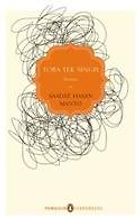
Let’s move on to your first book now, Toba Tek Singh: Stories. Perhaps you can tell us a little more about the author, Saadat Hasan Manto. He was a prominent writer during and immediately after partition and quite a tragic figure, dying in his early forties from alcoholism.
It’s interesting that while people stress what Pakistan and Pakistani culture lost by partition from India, Manto demonstrates that India also lost something. Manto was writing scripts for the Indian film industry before partition. Oddly enough, Muslims, perhaps because of the strong tradition of culture and music in the Muslim court in South Asia, have always played a disproportionally large role in Indian cinema. If Manto had stayed in India he would have ended up a very prominent figure in the Indian film world and Indian culture.
He was one of these people in 1947 who opted for Pakistan but whose whole life in many ways was damaged as a result, and he became a very tragic figure. Because like so many of them, he never really settled down in Pakistan, though that’s not to say that as a very proud Muslim he would have been happy in India either. But there was this movement of Indian Muslim intellectuals to Pakistan after 1947 and it seems almost incredible now that there was this belief, even among young progressive highly educated Muslims, that Pakistan could somehow be turned into not only an ideal Islamic state but an ideal socialist state – that egalitarian, almost socialist, traditions and the very strong traditions of social justice in Islamic thought could somehow be made to flourish in an independent Pakistani state. And, of course, what they found was – as Pakistan’s founder Mohammed Ali Jinnah miserably described it – a moth-eaten Pakistan.
All but one of the great centres of Muslim culture in South Asia were left behind in India. The Muslims lost Delhi, Lucknow, Hyderabad, Bhopal. Lahore became the beacon within Pakistan, of culture and belief of continuity of Muslim urban culture. What these highly educated, progressive, urban Muslims found themselves in was a pretty rough, heavily tribal, feudal dominated and pretty backward chunk of the former Indian empire in which they never really settled down. And then, of course, these were people who had also had very close and culturally productive relations under the British Indian empire with Hindu and Sikh intellectuals. This was especially so in the Punjab. Right up to a year before partition, the ruling party in Punjab was the Unionist Party, which united the landowning elites of the three religious communities.
Get the weekly Five Books newsletter
The tragedy was that these Muslim intellectual migrants from India ended up in a country which in every way fell short of the vision that they had. And then there was the terrible tragedy of the personal break with Hindu and Sikh friends and with Muslim friends and relatives who opted to stay in India. And, of course, the physical tragedy which accompanied partition itself in Punjab with hundreds of thousands of people massacred on all sides. All of these tragedies come out in Manto’s writing. He is one of the very finest writers that South Asia has produced and his short stories are incredibly moving.
Can you tell us more about the specific book of Manto’s that you have chosen?
The signature story is a masterpiece of allegory with touches of surrealism. It’s also a very powerful human story. Toba Tek Singh is the story of a lunatic asylum from British days in India, which after partition ends up on the Pakistani side of the border. In this lunatic asylum there is this Sikh called Bishan Singh from the village of Toba Tek Singh. His family flee to India and he’s left behind in Pakistan. A few years after partition – this is where you can see Manto’s deep regret about partition and where his anger and despair comes in – the decision is made that the Hindu and Sikh lunatics and the Muslims lunatics also have to be partitioned and that the Hindu and Sikh lunatics have to be sent to India. He refuses to go because he realises that he is going to be separated forever from his beloved Toba Tek Singh. When they try to drag him he throws himself on to the ground and the authorities leave him there for the night. In the morning, the implication is that he’s dead, with his body straddling the border between India and Pakistan.
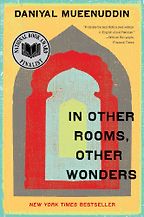
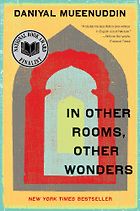
Your next choice is In Other Rooms, Other Wonders. I can remember this book coming out to rave reviews a couple of years ago. Why have you put this collection of short stories on your list?
I put it on my list for two reasons. The first is that simply he’s so good. Some of his stories I would say rival Chekhov in their ability to put across character, place and situation in a very vivid and deep way in a very short space. I mention Chekhov and the Russian writers deliberately because I think the other thing that makes him so interesting is that besides being half American, he also represents a Pakistani educated class which is very Western influenced and which speaks English, but which, like the Westernised Russian intelligentsia and landowning class of the 19th century, lives in a country where most of the population holds to a very different traditional and religious culture.
But most of the Pakistani writers of fiction, and most Pakistani intellectuals in general, are purely urban. Mueenuddin is much more in the mould of 19th century Russian writers. On the one hand he himself has a Westernised culture but unlike other Pakistani writers Mueenuddin is actually a landowner. He manages his family estate in the southern Punjab and is therefore close to the rural masses in Pakistan and rural society in a way that other Pakistanis writers are not. Mueenuddin therefore has a deep understanding of the ways in which Pakistani life goes on, the ways in which power is exercised at ground level, the whole texture of life in the Pakistani countryside, which I think is wonderfully described but also very important to understand. Equally, his Western background gives him the distance to see that society from the outside and to grasp it as a whole.
I know this is only his first book of short stories, but they do compare to, say, Turgenev, who is probably a better comparison than Chekhov, because this business of being a Westernised, noble landowner in the midst of a very un-Western, traditional society was precisely Turgenev’s position.
The stories follow the lives of the Harrouni family, who are rich landowners, and their servants and employees. Are they semi-autobiographical?
They’re not directly autobiographical, I believe, but they are heavily influenced by his own personal experiences of being a landowner and managing a big estate in the countryside Unfortunately, most of the people who have that background in Pakistan have not been capable of writing about it in ways that bring out their life for a non-Pakistani audience. The bulk of the Pakistani urban intelligentsia doesn’t know that world. Also the liberal intelligentsia in Pakistan would very much rather believe that that world didn’t exist. They prefer their mythologised idea of the Pakistani masses. They feel, and I can understand why they need to believe this, that somewhere there is this pure mass of the Pakistani people who are moderate and who only want justice and progress and so on. That is not the impression you get from Mueenuddin’s work.
The powerlessness of women and the poor is a recurrent theme in the stories.
There is a very deep sympathy with the sufferings of the poor and the powerless, and women in particular. There is also a desperately moving short story about this man whose wife disappears and then he himself is essentially tortured to death by the police. It brings out the relevance of so many of the things we talk about in Pakistan when it comes to the experience of ordinary poor people.
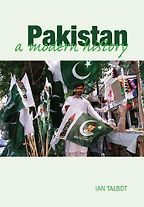
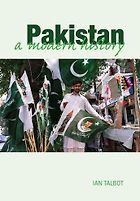
Next, why have you chosen Ian Talbot’s history of Pakistan?
Simply because it’s terribly important for Westerners to know the facts about Pakistani history and to have an understanding of where Pakistan today is coming from and how it was shaped. Ian Talbot’s book remains the standard work on that subject. His is the essential historical textbook that everybody needs to read. It’s essentially a straightforward narrative history with analysis, starting with the movement for the creation of Pakistan and then proceeding through the various stages of Pakistani history and explaining the reasons for the repeated military coups and so on.
What sort of conclusions does he draw?
He’s more optimistic than me about prospects for democracy and progress in Pakistan. On the other hand – and this is where we agree very much and where Talbot is very strong – his work does bring out very well the resilience of Pakistani society and the fact that it’s not a failed state, that it does have tremendous resources, social toughness and even institutional toughness and that the potential for progress and regeneration does still exist within Pakistani society and Pakistani institutions.
A new edition of this book is coming out in 2012 and in it he shows that Pakistan’s democratic institutions, so often decried as deeply corrupt and incompetent, nonetheless in the past couple of years have been able to bring about a very significant devolution of powers between the centre and the provinces. There has also been a rebalancing of revenues between the provinces in ways that have reduced regional and ethnic tensions within Pakistan. These changes are actually quite a significant tribute to the flexibility and dynamism of Pakistani democracy.
This book is one of two general history books on Pakistan you have chosen, the other being by Lawrence Ziring. What is the quality and quantity of current scholarship on Pakistan? Are books like Talbot’s and Ziring’s translated into Urdu?
I couldn’t say if Talbot has been translated into Urdu. I’m afraid the English-Urdu gap in Pakistan is very great and very, very destructive. Of course the vast majority of the population read and understand Urdu, but very little real scholarship and very little serious journalism today is either written in or translated into Urdu. In the field of literature, after partition and independence you had writers like Manto and great poets like Faiz Ahmad Faiz writing in Urdu. Now the biggest literary figures in Pakistan write in English. Urdu, from an intellectual point of view, has become deeply impoverished by the flight of intellectuals from Urdu into English. Then again, one of the reasons they are flying from Urdu is that the quality of the Urdu media in Pakistan, when it comes to serious analysis or thought, is frightfully bad. It’s a rather tragic situation.
There is a some good scholarship about Pakistan but it is very striking I’m afraid that if you go into a specialist library such as SOAS [the School of Oriental and African Studies in London] and you look at, say, the books on the Punjab you will find a whole bookcase stretching several metres on Indian Punjab and perhaps a sixth of that on Pakistani Punjab, even though Pakistani Punjab is about four times the size of Indian Punjab. There is a tremendous lack in particular of in-depth sociological studies and political anthropology. I’m afraid the reason for this is twofold. One is that Western researchers won’t go there. Curiously enough they didn’t go there when it was relatively safe to do so. This is in part a function of the decline of regional studies in the West, a turning away from the study of other societies towards a reliance on general theory in Western academia. Now added to that are security concerns.
Five Books interviews are expensive to produce. If you're enjoying this interview, please support us by donating a small amount.
On the Pakistani side, I’m sorry to say that the Pakistani higher educational system doesn’t turn out enough people who are capable of studying their own society in a sophisticated and in-depth way. Those who are capable also have a very strong tendency to want to get out of the country. They don’t want to go and live in a village in the Punjab and study the society there and get beyond the endless clichés and stereotypes about what’s happening and actually do the basic spadework of understanding that society.
And so as a result you have very little of the nitty-gritty empirical material on which to form sound judgments about society and development in Pakistan and you have quite a lot of people who sit in Western universities and basically draw up general ideas and then clap them on to Pakistan with no actual idea whether these are appropriate or not.
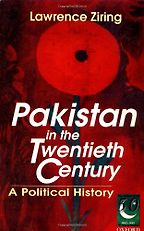
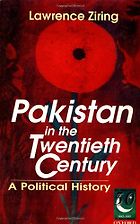
Moving on to Ziring now and Pakistan in the Twentieth Century: A Political History. How does this book help us understand Pakistan?
Talbot is very good at telling us what happened while Ziring is very good at telling us how and why it happened. Ziring’s is a more textured account with more interviews and more direct quotations. He has more of a feel for the realities of Pakistani politics and how things played out in individual relations. This is a society where personal allegiances and factions based around a mixture of kinship and loyalty to some big man are tremendously important. Ziring brings this out very well.
Ziring’s book, as the title suggests, is a specific study of politics – political processes, changes, events and developments. When it comes to a grasp of how Pakistani politics at that level actually works and has worked in the past, Ziring’s book is essential reading. When I went out and started to try to understand Pakistan, Talbot and Ziring were the fundamental building blocks on which I developed an understanding of Pakistan and its history.
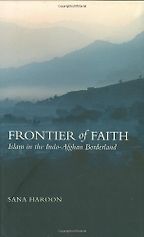
On to your final book now, Frontier of Faith. This book is a study of Islam, and in particular the role of local mullahs, in the Northwest Frontier. Why do you regard this book as being important?
Because it brings out the tremendous depth of the tradition of religiously justified – though not always religiously motivated – resistance to foreign incursion and foreign domination in the Pashtun areas of what is now Pakistan. Sana Haroon studies the tradition of Pashtun rebellion against the British in that part of the world in the 19th and early 20th century. This is something that both the Afghan and Pakistani Taliban today refer incessantly to – the idea that they are the legitimate heirs of this old tradition of local resistance. There is a reality to this. These traditions are very deep. At the same time Haroon analyses very well how the great majority of these rebellions against British rule by the tribes on the frontier were launched as jihads and in the name of religion but of course, just as today, this was a rallying cry, but one which covered and incorporated lots of local motivations in terms of tribal resentments and political ambitions of particular chieftains and local religious leaders. All these were subsumed in the jihad against the presence of the infidel. I think what she writes has a tremendous resonance for an understanding of what is happening today.
I must confess that the other reason why I have chosen Haroon is that much of what she writes is close to accounts and analysis by British officials and imperial scholars writing at that time. Now the problem is that if you cite those people you get the whole sort of fifth-rate imitators of Edward Said jumping up to accuse you of orientalism and being nostalgic for British imperial rule. This is one of the stupidest, knee-jerk, self-serving reactions by third-rate intellectual hacks in academia today. Well, Haroon is not a British imperialist and has absolutely no sympathy for British imperialism, but she does analyse the actual traditions and the actual structures of the society in that part of the world and the roots of that society’s resistance to pressure and incursion from outside.
In terms of the diversity of Islamic movements, has Wahhabism grown at the expense of, say, Sufi movements in the Northwest Frontier over the past 50 or 60 years?
It certainly has. The jihad, as it was called, against the Soviets in Afghanistan in the 1980s was very important from that point of view because it sucked in a great deal of both state and private money from Saudi Arabia, which then went into strengthening the Wahhabi influence. And it’s very clear that the training the leaders of the Afghan Taliban received in madrassas in Pakistan in exile was influenced mostly by the Deobandi tradition from South Asia, a puritanical but less extreme version, but certainly with Wahhabi inflections.
Get the weekly Five Books newsletter
But one mustn’t fall into the trap, as I’m afraid a lot of Western and Pakistani commentators do, of regarding this as a completely new and a completely alien influence in that part of the world. The first outsiders with strong Wahhabi affiliations to move into that part of the world to rouse the Pashtun tribes to jihad against the West moved there in the 1830s, not in the 1980s or 1990s. And when you come to modern political Islamism and the whole tradition that was developed in Egypt by Hasan al-Banna, it’s quite true that this grew up in the Arab world and spread to South Asia through Maududi and others, but one of the people who taught and influenced al-Banna and his comrades in Egypt was Jamal al-Din al-Afghani from Afghanistan. The linkages in the Muslim world long predate the events of the last generation. There have been cross-fertilisations between separate Muslim countries going back to the very beginnings of Islam.
Five Books aims to keep its book recommendations and interviews up to date. If you are the interviewee and would like to update your choice of books (or even just what you say about them) please email us at [email protected]