Having served as the International Co-Prosecutor of the Khmer Rouge Tribunal in Cambodia, Andrew Cayley QC draws on his firsthand experience to nominate the best books on war crimes.
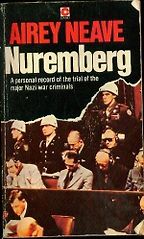
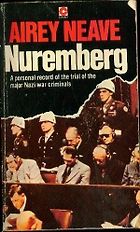
This is a book that I was given by a friend of mine in the army when I was working at the Yugoslav war crimes tribunal. Airey Neave was a soldier and a lawyer – a bit like me, I guess. He served in the infantry during the Second World War and it is very sad that he was blown up by the INLA in the House of Commons car park in 1979. It is an interesting book because it gives his personal account of the events at Nuremberg. He was an army Major then, assigned to serve each of the principal defendants at the main trial with their indictments. He gives a pen picture of each of them and the men that they had become after their arrests and during the Nuremberg tribunal.
Given the similarities of your careers what did you take away from this book?
Well, there were two things. Rebecca West, the journalist who reviewed the book and wrote the foreword to it, describes being in Nuremberg and being at the trials. And she said that the trial was a kind of legalistic prayer. She meant that the war had been so utterly devastating for everyone in Europe, that this was a prayer for help. That made a profound impression on me, in the sense that part of my work is all about passionately believing in a better world.
The other thing that had a big impact on me is that, at the end of the book, Neave writes about it being a historic trial and the sincere efforts to bring compassion and decency to the conduct of war. He went on to write that he had no regrets and was among those who helped to expose the Nazis.
After the Srebrenica trial I felt the exact feeling very strongly, because the Serbs had denied that those things took place. They refused to admit that anybody had been killed. And we proved beyond a shadow of a doubt that over 8,000 people had been murdered in the space of ten days. After that nobody could deny these events had taken place, and that was important.
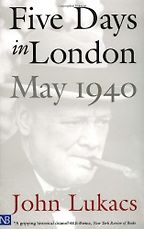
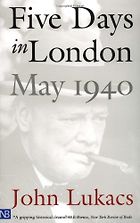
Your next book is all about the power of Churchill – Five Days in London: May 1940 by John Lukacs.
Yes. Actually, this book is in essence about the five days in May when Churchill had been Prime Minister just for a number of weeks. That was the time that a decision was being made as to whether or not the United Kingdom would come to some kind of arrangement with Adolf Hitler and Nazi Germany or whether the country would fight on. And John Lukacs explains the complex politics of the time. And, obviously, the central and critical role that Churchill played in ensuring that accommodation didn’t happen. Much of the book explains Churchill’s capacity to lead and to persuade people in a terrible situation that they should stay with him and not surrender. He told them to go on fighting Germany, until victory. I think Churchill comes out of this as a very impressive individual.
Support Five Books
Five Books interviews are expensive to produce. If you're enjoying this interview, please support us by donating a small amount.
The Nazi war machine was responsible for many horrendous war crimes and for me Churchill represented the antithesis of this. He stands for something that was decent and one of the things that impresses me about him is just his sheer leadership qualities. Qualities like that have always inspired me when I am leading war criminal trials. It is tremendously pressured and you are often up against people who simply don’t believe you can actually do it. I have always been impressed with him because he believed it could be done in the face of overwhelming odds, and he succeeded.
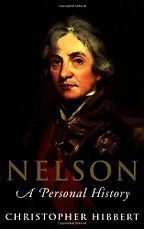
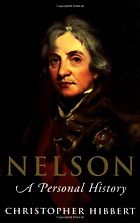
Another historical figure you’re impressed by is Nelson. Tell me about Christopher Hibbert’s Nelson: A Personal History.
I read this book about three or four years ago. Christopher Hibbert is an absolutely wonderful biographer, another professional soldier. I seem to read a lot of books written by professional soldiers.
How does this link to war crimes?
Well, I don’t think Nelson ever committed any war crimes. But, for me, this book is about the link with my army background. I have always been interested in and admired effective military leaders. Nelson was a very complicated character. He could be extremely vain and arrogant but also he was a tremendous individual and absolutely loved by his men. People today in the Royal Navy still talk about what’s called the ‘Nelson Touch’. This was the manner in which he inspired both the officers and men around him to perform extraordinary deeds. For a time that was extremely brutal in terms of the conduct of warfare, he really was a remarkable man.
And do they make people like him any more?
I think it’s difficult to be this kind of leader any more. But, certainly in my experience of British army officers who I became quite close to during my military career, I would say many of his qualities still inspire junior officers in all three services today.
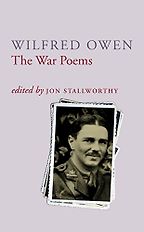
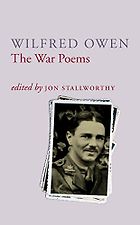
Your next choice is The Poems of Wilfred Owen.
This is a book that was bought for me in 1997 by my wife on our second Christmas together. She knew that I loved his poetry. I have loved this poetry since I was a child because my grandfather was a First World War veteran and my father wanted to try and understand what he went through. So my father read them and when I was a child I would look at the book as well. And then at school my headmaster liked Wilfred Owen a lot too
Owen was killed in the last month of the war as a young lieutenant in the Manchester Regiment. If you look at his face (there is a photo of him on the front of this book), you will see it is a very sensitive face. I think he found war terrifying and emotionally draining and in many respects he wrote poetry to try and explain some of the things that he was seeing.
I will just read you three lines from the preface to his book which he wrote in May of 1918.
Above all I am not concerned with poetry.
My subject is war and the pity of war.
And the poetry is in the pity.
And, actually, what he really does address in all of his poems about the First World War is the utter pity of it all.
You’ve been to places like Bosnia, Darfur, and Cambodia. Do you still see parallels with Owen’s comments on pity there?
Yes, absolutely. What I see is that he was constantly addressing the utter, utter stupidity of warfare and certainly the amount of human damage that lies in the wake of all of these events, whether it’s Darfur, Bosnia, or Cambodia. He was addressing the catastrophic human effect – wasted lives, young people being forced to fight an absolutely appalling war and often losing their lives and the effect that it has on generations. You have got to remember that an entire generation of people were wiped out in the First World War. So, yes, I do see parallels and I do see the effects on society in places like Cambodia.
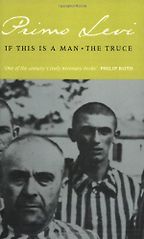
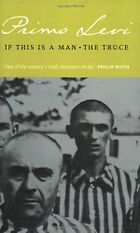
Primo Levi was an Italian Jew and he was arrested as a member of the anti-fascist resistance towards the end of the war, after Germany had occupied Italy. He was deported to Auschwitz. He survived and then he wrote a book about his experiences there. This really is a book that everybody should be made to read because he very sensitively describes what people become in a concentration camp.
What went on at Auschwitz were some of the most serious crimes that were addressed in Nuremberg. If you read Airey Neave’s book, many of the senior officials in the Nazi regime simply denied that they knew anything about these concentration camps. They would say: ‘I knew nothing about the extermination of the Jews.’ When you read Primo Levi’s book, you cannot possibly imagine these people did not know about the industrial killing of millions of people.
It’s the complete inhumanity – much in the same way as Pol Pot’s Cambodia, just erasing people who become nothing.
Absolutely. He is showing us the situation where we could very easily lose our humanity. It’s an absolutely shocking book. More than anything, he examines human behaviour and how people adapt in order to survive.
January 25, 2010
Five Books aims to keep its book recommendations and interviews up to date. If you are the interviewee and would like to update your choice of books (or even just what you say about them) please email us at editor@fivebooks.com
Andrew Cayley has worked as both prosecutor and defender in genocide trials around the world and is about to take up his post as prosecutor at the Khmer Rouge genocide tribunal. He reflects on the pity of war, the power of inspirational leadership and the importance of bringing people to justice in order to create a better world.
Andrew Cayley has worked as both prosecutor and defender in genocide trials around the world and is about to take up his post as prosecutor at the Khmer Rouge genocide tribunal. He reflects on the pity of war, the power of inspirational leadership and the importance of bringing people to justice in order to create a better world.