You yourself fought in Afghanistan. I was wondering why you suggested understanding the war there as the title. Is there a lot about it people don’t understand?
I’ve had a varied life over the past decade. I really started my professional life after the 9/11 attacks, as a young platoon leader in Afghanistan. I went back to Afghanistan in 2004 as a ranger platoon leader and I then went off and studied the Arabic-speaking world for several years. I earned my master’s and PhD focused on Lebanon. But I started working on Afghanistan again in 2009 when I served as an adviser to General McChrystal and then went back briefly in 2010 to do an assessment for General Petraeus. If I look at my life over the past decade, even though I’ve probably spent more time in the Arabic-speaking world, Afghanistan is a place that I have kept going back to, much like the soldiers who are in the US military.
So you definitely know what you’re talking about.
I’m not really sure. I would start with a position of intellectual humility. When I left the army I moved to Lebanon and spent several years studying the people, politics and cultures of the Arabic-speaking world. I think that regional studies background has made me much less likely to make broad claims about the people, cultures and languages of Afghanistan. When I first went into Afghanistan in the winter of 2001 and fought in Operation Anaconda in March of 2002, I thought I knew pretty much everything I needed to know as a young platoon leader. I knew how to manoeuvre my squad, I knew how to fire my weapon with accuracy, I knew how to run my platoon and to engage with the enemy. I thought that was enough. But one of the books I cited was Clausewitz’s On War. The first and most far-reaching act of judgement that the statesman-commander has to make is to establish the kind of war on which he is embarking. For me, that means studying the human terrain of the environment in which you’re operating. Like a lot of young military officers, I don’t think I was humble enough about the environment in which I was operating as a young officer. I would like to think that over the years I have become more aware of all that I do not understand about the environment. When I went back to look at Afghanistan from the perspective of a think-tank scholar and as a civilian adviser to the commander there, I like to say that I knew more of what I did not know.
And knowledge of the environment is essential for success?
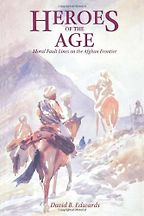
Yes. I remember when I first went to Afghanistan I’d read Ahmed Rashid’s Taliban, which is a great book. But the soldiers who work in Afghanistan today – especially those that spend over a year in the country – need to have a much more granular understanding of Afghan culture. They’re never going to be anthropologists with machine guns, but they should be able to understand the local dynamics better than I did when I first went there. One of the problems you have with military officers – and I speak as someone who used to be a military officer – is that they want to know the one book they need to read. The one thing they need to do. Often, working in an environment like Afghanistan or the Arabic-speaking world, more important than having the right set of data is being comfortable with all that you’re not going to be able to understand. I especially like the David Edwards book, Heroes of the Age, for this. It highlights a lot of the ambiguities and contradictions within Afghan society and culture and history that are unrealistic for a US military officer to try to wrap his head around in a nine-month tour.
In terms of people not understanding this decade-long war, what is it that frustrates you most?
As a veteran of the war, what frustrates me more than anything else is that, for the most part, American society has waged war in a country that it hasn’t bothered to learn much about, and it has waged the war with young men and women that it really doesn’t know. Only 0.5% of America’s population serves in the military, so the percentage of soldiers, marines and airmen that serve in Afghanistan is smaller than that. So there is this disconnect between American society and the military that serves in Afghanistan, and there is this disconnect between this large national project in Afghanistan – this conflict that we’re waging and a variety of developmental activities associated with that conflict – and the American people. They really don’t have any connection with it. As someone who has, at times, advised military commanders and often finds myself in conversations with younger military officers, guys that are doing the types of job that I used to as a young officer, I just try to promote a degree of learning about the environment before people go into it.
Which gets us into the books.
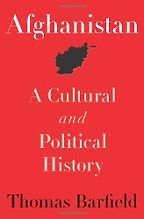
The one-volume introduction to Afghanistan that I always recommend to people is Thomas Barfield’s Afghanistan. The two others that I really enjoy are by David Edwards, who is a social anthropologist at Williams College [Massachusetts]. He is just a delightful writer and an accomplished and fantastic anthropologist working on Afghanistan. So those three books by those two anthropologists I always recommend to people. If you only have time to read one book on Afghanistan, make sure it’s Tom Barfield’s – if you have time to read a little more, make sure it’s the two books by David Edwards.
Let’s look first at the Thomas Barfield book. He is an old Afghanistan hand, he has lived in Afghan villages, he’s an academic – but is it also a readable book?
Yes. The first three books that I’ve recommended are all eminently readable. Both Barfield and Edwards are obviously Afghan hands, they know a lot about Afghanistan, but they present the material in a very accessible way. They really are a delight to read. When you think about anthropological texts on Afghanistan, you think of pretty dry reading – that’s not these books at all. They’re really delightful, if very sobering.
Tell me a bit more about the Barfield book specifically.
Barfield’s book, which is a cultural and political history, was published in the spring of 2010. Oh, had this book been published just one decade earlier! When the US military and its diplomats and allies went into Afghanistan in the fall of 2001, we really didn’t know much about the country. When I went back in the summer of 2009 I was shocked to discover that most people working in Afghanistan didn’t know much more about the country in 2009 than they did in 2001. Tom Barfield is a scholar whom a whole lot of other scholars, military officers and diplomats have a lot of time for, and this is a very accessible one-volume history of Afghanistan. It serves as a great overview for anybody working there, whether he or she be a military officer, diplomat, aid and development worker or private investor. The things I would stress about this book are firstly that it’s accessible. Secondly, that it’s really quite funny – he’s a witty writer. Thirdly, that it’s become – for better or worse (mostly for better I would argue) – a reference point for anyone working on Afghanistan. I’ve seen this book on the shelves of everyone from serious scholars to squad leaders to General David Petraeus.
Let’s discuss the next book, by David Edwards. As you mentioned, he is also an anthropologist.
David Edwards wrote two books. The first book, Heroes of the Age, looks at the competition within Afghanistan between tribe, state and Islam. I remember I finished this book flying from Herat to Mazar-e-Sharif in the summer of 2009. The conclusion is haunting. Edwards writes, “I contended that Afghanistan’s central problem was Afghanistan itself, specifically certain profound moral contradictions that have inhibited the country from forging a coherent civil society. These contradictions are deeply rooted in Afghan culture, but they have come to the fore in the last 100 years since the advent of the nation-state, the laying down of permanent borders, and the attempt to establish an extensive state bureaucracy and to invest that bureaucracy with novel forms of authority and control.” That was a very sobering thing to read, especially as we were trying to design a comprehensive counterinsurgency campaign in order to increase the legitimacy of the government of Afghanistan. Centralised authority and a strong state is something that Afghanistan has never really had.
And Edwards tells that story by looking at three individuals – a tribal khan, a Muslim saint and a prince who became king of the newly created state.
Yes, he traces a person’s story and shows how that person says something about Afghanistan. For example, he traces the story of Amir Abdur Rahman, who was able to forge a strong state. But then, when he died, his body had to be smuggled out of the capital in order to be buried, because people were so enraged by his heavyhandedness. It was one of the more sobering books that I read on Afghanistan and the tension that exists between various different centres of authority.
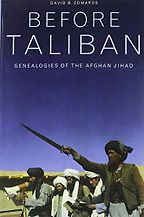
Heroes of the Age is set in the 19th century. The second book you’ve picked by Edwards, Before Taliban, is more contemporary.
It starts with what happened in 1978 and Afghanistan’s descent into violence, and brings us up to speed on developments in Afghanistan up until [the] September 11 [attacks]. Because if you look at the history of Afghanistan in the 20th century, it’s a pretty peaceful country. As William Maley has written, Afghanistan is really the exception in Asia in the 20th century. When much of the continent of Asia was at war, Afghanistan was basically at peace until 1978. It’s not true that Afghanistan has always been a country at war with itself. It’s always been a country where authority has been contested, but it’s mostly, up until August 1978, been the story of a country at peace with itself and its neighbours. Edwards traces Afghanistan’s descent in 1978 into the Afghanistan of conflict that we tend to think of when we see it today.
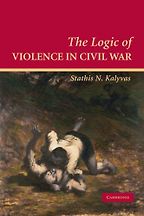
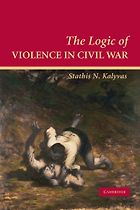
Your next choice is The Logic of Violence in Civil War by Stathis Kalyvas. This is not about Afghanistan, but rather a book that made a big contribution to the theoretical framework for understanding violence in civil war.
Yes, in picking five books on the war in Afghanistan, I chose three books on Afghanistan and two on conflict itself. The reason I chose this book is that it had a revolutionary effect on the way social scientists think about civil wars in general. Prior to the publication of this book, social science literature viewed political allegiance and loyalty in civil wars as being primarily exogenous. You have a loyalty, you stick with that loyalty, that’s who you are, that’s what defines you during the conflict. This book challenges that notion.
In terms of the conflict itself, what concerns both an insurgent or a counterinsurgent, or the parties to a civil war, is really behaviour. How do you behave during the conflict? And if you look at the way populations behave throughout civil wars, whether or not they collaborate, and who they collaborate with, is largely determined by who controls that population.
Five Books interviews are expensive to produce. If you're enjoying this interview, please support us by donating a small amount.
This book had a revolutionary effect. Some would argue that Kalyvas goes too far in arguing that loyalty is all endogenous and that he glosses over things like religious identity and tribal identity. But, in general, if you’re trying to predict how a population is going to behave, you’ll be more successful if you look at what party or combatant controls a certain area or part of the population than what the pre-war political preferences are. That has direct policy implications. If you’re trying to create collaboration within a certain area, you know that you have to exert control over the population, you can’t take for granted a person’s political loyalty. By the same token, you can’t just write off a population. One of the things we saw in Iraq is that in areas where the US military was able to surge, you started to see rates of collaboration go up. You started to see concerned local citizens, you started to see people joining police forces. Part of the logic of the US campaign design in Afghanistan was underpinned by these observations about the way populations behave in civil wars.
And in Afghanistan as well, from your observations on the ground, there was validation of Kalyvas’s theory?
Yes. Kalyvas writes that the higher the level of control exercised by a political actor in an area, the higher the level of civilian collaboration with this political actor will be. Populations in civil wars are basically trying to survive. They’ll do this in a number of different ways: They’ll survive by hedging, they’ll survive by swinging back and forth between different factions, they’ll survive by autarchy (“A pox on both your houses – I’m just living for myself!”). Their goal is just to survive. Both the insurgent and the counterinsurgent or the various parties to the civil war actually need the population to do something different. They need them to take sides. At the very least, they need them to start supporting the institutions of the state that are necessary in order to defeat the insurgency, like joining the police forces, for example. We’ve seen that in Afghanistan. The more the counterinsurgent forces are able to exert control over an area, the more collaboration with counterinsurgency forces go up. So have we seen The Logic of Violence in Civil War play out in Afghanistan? Yes, I think we have. The two questions are, is this drop in violence sustainable and is it worth it?
Is it?
Maybe not. It’s only sustainable if those counterinsurgent forces, which are predominantly US and allied, can be replaced by Afghan security forces. In a place like Helmand province, for example, the US has invested billions of dollars. The overall question of whether or not that expenditure was worth it is ultimately a political question.
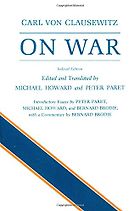
Your last book is On War, by the Prussian military theorist Carl von Clausewitz.
If you’re trying to understand any conflict you still have to start with the dead Prussian. If we’re assigning a reading list to understand the war in Afghanistan, we first have to understand war as a phenomenon. It has a certain logic. There’s still no other book that’s as significant in terms of understanding war as On War. First, as Clausewitz said, you have to establish the kind of war on which you’re embarking. One of the criticisms of the counterinsurgency operations in Afghanistan is that there’s been a disconnect between counterinsurgency operations and the political aims of the decision-makers back home. There hasn’t been any strategic bridge. I think that’s probably a good criticism. The operations in Afghanistan have taken on a life of their own, they have become disconnected from the politics. There’s a divide between the civil policymakers and the military on the ground, and I think both sides are responsible for that.
Are you saying that when Clausewitz argues that the first thing you have to decide is what type of war you’re embarking on, in the case of Afghanistan that wasn’t done properly?
That is one area in which we have failed in Afghanistan. We’ve misdiagnosed the conflict at several key junctures. I’m not sure we even understand the war right now. I always think the US and its allies have been a step too slow in understanding the conflict in Afghanistan. For many years, we continued to fight what we called a counter-terror campaign. We then decided to fight a counterinsurgency campaign, but decided to fight it without the resources we knew would be necessary. Then, even after we surged resources, we were dealing with a partner in Afghanistan…
Tell me more.
Traditionally, the problem a government faces when it faces an insurgency is a lack of capacity. When we think about counterinsurgency, we think about the problem being the capacity of the Afghan government. But one of the observations we made in 2009 was that the problem in Afghanistan was not necessarily the lack of capacity of the Afghan government, but also its behaviour. We’ve never created a political campaign to go along with our military campaign. We’ve waged operations to disrupt, dismantle and defeat Al-Qaeda and to degrade the Taliban, but we’ve never come up with a coherent political strategy to address the behaviour of the Afghan government at all levels.
Are you talking about corruption?
The problem is not corruption per se. A state can be corrupt and still exist. The United States deals with corruption. The problem in Afghanistan – and one of the things that disheartens even people like me, who have invested a lot of time and sweat into the war in Afghanistan – is things like the Kabul Bank fiasco. You have officials who not only want to eat the golden egg, but also kill and cook the goose that laid it. The problem we have in Afghanistan is this mentality – in large part fed by the psychology of a population that’s been living with conflict for 30 years – that is all about maximising returns over the shortest period of time, without thinking about long-term institution building. In the case of Kabul Bank, people just tried to make themselves as rich as possible without really worrying about whether or not the bank itself was going to collapse. We have never developed a coherent strategy to use our influence over Hamid Karzai and others, to affect the behaviour of key Afghan decision-makers.
A lot of people who read On War won’t themselves be soldiers. As a former solider, was there a part in the book where you really thought, “Wow, he was writing at the time of the Napoleonic wars, but this is so true today!”
Personally, I think books one, two and eight [of On War] are just as relevant today as they were when they were written. In book eight there is a section about how war is only a branch of political activity. War is in no sense autonomous, it is simply a continuation of political intercourse with the addition of other means. And yet, you’ve seen the conflict in Afghanistan being prosecuted almost entirely by the US and allied militaries without really thinking through the political nature of the war. Had we thought through the war in Afghanistan as a political problem, that the end goal was not necessarily the destruction of the enemy’s fighting forces, but political reconciliation, had we thought through the political behaviour of the Afghan government, then I think we’d look at a campaign that looks very different from the one we’ve been waging.
Get the weekly Five Books newsletter
Are you in favour of the planned withdrawal by the end of 2014?
I’ve co-authored a paper that talks through how the US can draw down. I think the US needs to have an enduring commitment to the region, but it’s entirely reasonable for the US and allied taxpayers to demand that the war in Afghanistan be fought with fewer resources and in a way that does not tie down the vast majority of our military and intelligence capabilities in a landlocked country in Central Asia. We have to be honest here – the US has very few interests in Afghanistan. It makes no sense for the US to be over-committed to Afghanistan over the long term. Personally, I wish the Obama administration had done things a little differently. I wish we had made a long-term commitment to Afghanistan with fewer resources. Instead, we made a commitment with a lot of resources but over a very short period of time. The way we committed to Afghanistan has encouraged behaviour among the Afghans – and Pakistanis as well – to simply try to get as much out of the United States and its allies over the shortest period of time possible.
Five Books aims to keep its book recommendations and interviews up to date. If you are the interviewee and would like to update your choice of books (or even just what you say about them) please email us at editor@fivebooks.com