The astronomy professor says the process of scientific discovery can be slow and messy – but that reading about some of the extraordinary personalities involved brings the history alive
We were originally going to just talk about astronomy, but you chose the theme “astronomy, physics and people” – why is that?
I am an astronomer and I love astronomy and looking at what is in the universe. But I don’t read much popular astronomy myself, so I don’t feel very qualified to tell other people what to read who aren’t professional astronomers. But what I love and think that others may appreciate is the cultural embedding of science.
Astronomy is a branch of physics and I would like to talk about physics in general and not just astronomy, but I also want to look at the social process and what happened in history. I think what is reflected in my book choices is the idea that although science is an objective process, how we get there can often be very subjective because, after all, scientists are human beings. People go down wrong trails and so finding the objective truth about the world only happens slowly and in a messy way. There is a lot of fashion involved in what is pursued and what people think they know. Even to understand the technical side of the subject, I often find it very helpful to know about the different personalities involved and a bit about the history – why they use some bizarre term or why they have always assumed that something is true as opposed to something else. If you trace the history and know the people it can make more sense.
“Science isn’t subjective, because out of very human processes and bias and fashion and error, the scientific process itself does eventually work.”
Now if you are not careful it sounds a bit like saying that science is subjective – but it isn’t, because out of that very human process and bias and fashion and error, the scientific process itself does eventually work. All those biases and history gradually fall away and you arrive at what really is the truth. But getting there is achieved by people in social circumstances, which I find very interesting.
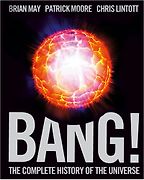
Let’s look at some of your choices, which reflect this idea. First up is Bang! The Complete History of the Universe, by Brian May, Patrick Moore and Chris Lintott. As well as having a PhD in astrophysics, Brian May wrote “We Will Rock You” for Queen. Is this book as catchy?
Yes, it is, and I will come on to Brian May in a moment. This is actually the book which least demonstrates the starting speech I just gave. It is a straightforward astronomy book which is really good. Mostly I choose it because I thought I have to have something by Patrick Moore for myself and for all the other working astronomers who started life as kids reading his books. Somewhere in the 1960s I had The Observer’s Book of Astronomy by Patrick Moore. He really is an institution – a national treasure.
What do you think it is about him that makes him stand out as this iconic figure for so many budding astronomers?
I don’t know! He is a fairly weird guy. I wouldn’t go with his politics, but he is very colourful. He is very straightforward. He knows the science but he is really an amateur astronomer. So he has always presented astronomy in a very concrete way to the public. It is about saying, anybody can look at the sky and here it is. He did it in this eccentric British way, which is very captivating. Also, he has always felt to the public like one of them. There are hundreds of books by him, but I went for this one because it is so good and colourful. It has a mixture of history and science and maps of the sky and all sorts of things.
What about Brian May?
Brian is a lovely success story because he started doing a PhD in astronomy at Imperial College back in the 1970s but then he had this other life with the pop group Queen and eventually when Queen took off he gave up his PhD.
And then he came back to it.
Yes, and he actually finished his PhD after all that time, which is unprecedented. He was supervised by an old friend of mine, Michael Rowan-Robinson, and it was a very good piece of work. Chris Lintott, the third of the three authors of Bang! is different again. He is a professional astronomer who works a lot with Patrick. They are three very different people – a colourful 80s rock star, an eccentric British amateur astronomer and a regular working astronomer – so they are a bit of a dream team.
It sounds like it. Before we move on to your next choice I just wanted to touch on what the authors say about the end of time, which they discuss as well as the Big Bang.
This is a much more controversial subject than the Big Bang. It has not been clear for many years whether the universe keeps expanding and getting bigger and bigger and will endure a slow cold death over an infinite period of time or whether the universe will stop expanding and collapse, so that you get a big crunch and then it all starts again. This has been a controversy throughout my whole career.
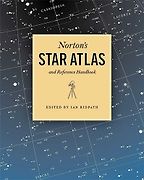
Your next choice, Norton’s Star Atlas, sounds like the perfect book for anyone wanting to explore the night skies.
I thought it would be nice to have something that isn’t just grand theories and armchair stuff, but something that is really helpful. It is a kind of field guide – the amateur astronomer’s bible. Professional astronomers like it too. It is a little bit like an ordnance survey map of astronomy. People love it for the same reason, because it is both practical and beautiful. It has got maps of the sky and useful information about how to do your observing and so on. The maps are just beautifully done. They are incredibly clear so people love staring at them in the same way that many people love staring at ordnance survey maps.
It is in its 20th edition now.
Yes, it started many, many years ago but in 2003 Ian Ridpath overhauled it and brought it up to date and did a lovely job of it.
Is this something that serious scientists would use as well as amateurs?
Very occasionally. I have been on telescopes where everything is working fine and then something goes wrong – for example, there is a power cut and all the computers go. So you have to get the telescope knowing where it’s pointing again.
So it’s a bit like normally using a sat nav but having to go back to maps if something goes wrong?
Absolutely. And you think, Oh God, I have to get out Norton’s Star Atlas, point the telescope at Alpha Boo and start again!
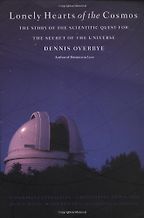
Your third choice explores the lives of some of the people behind those amazing discoveries to do with the night skies – Dennis Overbye’s Lonely Hearts of the Cosmos.
It is popular science and journalism and history all rolled into one, and very nicely done. Dennis Overbye trailed real working astronomers for a couple of years. He went to the conferences and went up and down the corridors and buttonholed people. He also dug into the history. So it starts early in the 20th century and stops at around 1990.
This book very much links up with what we were talking about earlier on – that is looking at people and the particular fashions in science which shape their work.
Yes, if you want to know how astronomy really works then this is a book you should read. It is warts and all. It has got competing personalities. For example, a lot of the book is about the so-called Hubble Wars. Hubble was the guy who found the universe was expanding. The number that tells us the rate of expansion is called Hubble’s Constant. But measuring that rate exactly is very, very hard. It took a number of decades to get it really right. Now we pretty much have it nailed so no one argues about it any more, but they certainly did then.
Get the weekly Five Books newsletter
From 1950 to 1990 there were two warring camps. One bunch of people was led by Allan Sandage, who said the Hubble Constant is 50km per second per megaparsec, plus or minus five. Another camp, led mostly by Gérard de Vaucouleurs, said it is 90, plus or minus five. So they didn’t even overlap. You were either in one camp or another or stood in the middle, going, “What the hell is going on, can’t we sort this out?” It took a long time to figure out what the problems were. The number we now believe is pretty much in between the two – about 73. But the leaders of both camps were both very determined personalities and they had young followers who learnt at their feet.
But for me, science is not just obstinacy and fashion. It is driven by the passion to know the truth. The facts are out there and eventually it gets sorted out. This is the most extreme example in astronomy in the history of the 20th century of clashing personalities in the so-called Hubble Wars. There are always miniature versions of that going on.
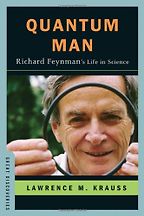
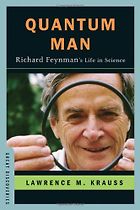
Let’s broaden our topic out to physics with Lawrence Krauss’s biography of Richard Feynman – Quantum Man.
Richard Feynman is a hero of every physicist. Until quite late in his life he was only known by physicists and wasn’t a public figure at all. That changed in the 1980s when he started writing popular books. He was a very fun and colourful character.
He liked to play the bongos and party hard.
Yes, he certainly did. There was very much this image of him as this straight-talking man from Queens who wasn’t interested in the fashions of science and would do his own thing in his own blunt way.
What did this book teach you about him that you didn’t know before?
I discovered from this book that his image of “I am a straightforward man” wasn’t that simple, because actually he did have quite a big ego. Also, there was this very interesting arc to his personal life. As a very young man, his wife, whom he was devoted to, died young. After that he went slightly off the rails and turned into this womaniser, chatting up inappropriate women at the bars of the various conferences he attended. So he became almost as notorious for his personal life as he was for science, and then he met another woman who straightened him out in the classic fashion.
For the next part of his life he stopped being so unsettled and became this sort of folk hero, did all the bongo playing, and discovered the throat voice singers and all that kind of fun stuff that people know about. It is a lovely book, which I was very pleased by. Lawrence Krauss is quite a well-known populariser but I had never been very fond of his books. He had written a thing about the science of Star Trek and I thought it was a bit gimmicky. But this book isn’t like that. It is very straightforward and beautifully written. If you want to know what it is like inside the skull of a physicist it is a very good book to read.
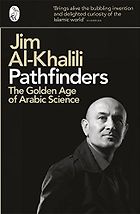
Your final choice is Jim al-Khalili’s Pathfinders, which looks at a golden age of science, when for over 700 years the international language of science was Arabic.
This is a history book, but about the history of science. It was an eye opener to me because I thought I knew about Arabic science and I didn’t. The story that most scientists will tell you is, “First there were the Greeks who did these wonderful things, and then later on there was the Renaissance and the Scientific Revolution. In between the Arabs and Islam held the torch.” The picture you get is that they kept the knowledge alive between Aristotle and Newton as it were and passed the torch down by transmitting what the Greeks had done.
But actually they were doing interesting things in their own right.
Yes, they were doing much more original things than most people think. In that standard picture of them passing the knowledge down, you usually hear about the Moors in Andalusia in Spain in the 12th century. That was indeed an important transmission point because that is the way a lot of knowledge got into Europe from Africa. But, actually, the really original scientific things in the Islamic world happened in Baghdad in the ninth century.
What were they doing?
A very wide range of things. They did original things in astronomy, in algebra and in medicine. They did a lot of things that the Greeks certainly did not do and which were not re-discovered until much later in Europe. There was someone who proposed the circulation of the blood, pretty much the same way [William] Harvey did, and there was an Arabic astronomer who proposed the heliocentric theory. They did amazing work in optics. It was clear that a number of them followed methods that we would recognise in modern times in a way that the Greeks did not. The Greeks were much more about armchair science. So this is a whole area of history that most Westerners don’t know too much about.
You mentioned earlier that this last book ties in best with your whole thinking about people, physics and astronomy – why is that?
It is because of this idea that somehow you understand knowledge better when you know where it has come from. It seems odd, because you may think the truth about the universe is the truth about the universe, but somehow, personally, I find it easier to understand if I follow the historical flow.
I do this with my own work as well, over a smaller time scale. Some of my younger colleagues will just read the latest papers on something, but sometimes I just find them puzzling and I have to go back and work out how the scientists got to that point.
October 14, 2012
Five Books aims to keep its book recommendations and interviews up to date. If you are the interviewee and would like to update your choice of books (or even just what you say about them) please email us at editor@fivebooks.com
Five Books interviews are expensive to produce. If you've enjoyed this interview, please support us by donating a small amount.
Andrew Lawrence
Andy Lawrence is Regius Professor of Astronomy at the University of Edinburgh, where he works at the Institute for Astronomy. The Institute is part of the Royal Observatory Edinburgh, along with the UK Astronomy Technology Centre and the ROE Visitor Centre. Andy is an expert on quasars – supermassive black holes accreting matter in the centres of galaxies. He is leading an international effort to map the Northern sky in infrared light. He writes the blog The e-Astronomer
Andy Lawrence is Regius Professor of Astronomy at the University of Edinburgh, where he works at the Institute for Astronomy. The Institute is part of the Royal Observatory Edinburgh, along with the UK Astronomy Technology Centre and the ROE Visitor Centre. Andy is an expert on quasars – supermassive black holes accreting matter in the centres of galaxies. He is leading an international effort to map the Northern sky in infrared light. He writes the blog The e-Astronomer