Nonfiction Books » Politics & Society » Terrorism
The best books on The Politics of War
recommended by Andy McNab
Andy McNab, author and SAS veteran, discusses the politics of war, arguing that it's principally all about money and politics.


Andy McNab, author and SAS veteran, discusses the politics of war, arguing that it's principally all about money and politics.
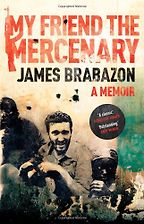
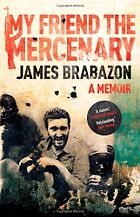
Tell me about the James Brabazon book.
This is James’s personal story of going to West Africa as a journalist covering the war in Liberia. He hired a protector and fixer to look after him and the fixer turned out to have been involved with Simon Mann and Equatorial Guinea so James just became immersed in the story behind the coup. It’s a fantastic view of the whole thing – and of the midnight phone-calls with people telling him what they knew.
The picture we get is that there was the coup plot led by Simon Mann and thankfully it was stopped. But the politics behind it is fascinating. There was a lot of dodgy dealing. There would have been some hands-off approval from outside governments for the coup to happen but somebody obviously changed their mind about that approval.
The way it works is this: you’ve got your face-workers, the guys on the ground who will actually do the job, and a lot of those involved with Mann, the South Africans, are still in prison in Equatorial Guinea. When there’s a change of government they’ll probably get out. That’s one of the theories about why Simon Mann has been so quiet since he was freed – there are still people in prison that they’re trying to get released and Mann doesn’t want to jeopardise their future. I met Simon Mann’s son last year and he said he used to get these phone-calls when his father was in prison saying: ‘Give me a million dollars and I’ll get him out.’
Would they have done it?
No. It’s all a stitch-up; it was better to wait for the system to work, and he was released. But ‘mercenary’ is a good word for a book title. Really, it’s all about money. The planned coup was business. Mark Thatcher thought he was buying…what? An air ambulance? What a load of rubbish. Mann would have done a deal to finance the coup – and the money men supporting him would get something out of it, like rights to some mineral mines or first refusal for a power station.
That kind of ‘White Man Guns’ activity all stopped in the late 70s really – I got involved in it a bit in the 80s with the regiment when the guys coming to power weren’t the good lads government thought they were and we’d go in and redirect things, but Equatorial Guinea was really a throwback to the old days, to the old way of doing business. ‘White Man Guns’ doesn’t work any more. Simon Mann was a well-known private security contractor based in South Africa – he had his moment. But it’s more suits than flak jackets now and it’s all done in London and Washington. Lots of business is actually done at Lloyds – people need insurance, training, security. Every time the government talks about withdrawing troops the private security business is all ‘Oh, come on! Give war a chance!’ – isn’t that a P J O’Rourke quote?
“But it’s more suits than flak jackets now and it’s all done in London and Washington.”
There’s a Ministry of Defence white paper now about making use of private security firms. But Mann did it the old way. Even so, he’d have needed a tick in the box. There would have been some talk with the countries that had a vested interest in the outcome but then something changed.
Why wouldn’t someone have told them things had changed?
Well, there was a change of policy somewhere and, quite frankly, the politicians probably thought, fuck ’em. Let’s make an example of them. Fighting for the private military is illegal in South Africa now – technically, South African soldiers fighting with the British could be arrested when they get home.
But they would have been told directly to go ahead with the coup at some point?
No. It’s always a question and never a statement. More like: ‘What would be the advantage of X, Y and Z being dead?’ ‘It would probably be good.’ That kind of thing. It’s a business. People don’t do this kind of thing thinking: ‘Yee haa! This is fun!’ They ask: ‘What will I get out of this?’
Crusades. Terry Jones and Alan Ereira.
I watched that Terry Jones documentary about the crusades ages ago and it was quite funny. You’ve got old Pope Urban in the 11th century who got up and said: ‘We’ve got to go do it.’ And the spread of Christianity – it was all about business, power. And all of a sudden the crusaders were getting absolution. There was a crusade in the south of France and the Pope said: ‘Just kill them all. God will sort it out in Heaven.’ And you’ve got the Knights Templar who invented the first cheques and who were there when the Magna Carta was signed saying: ‘We are the king-makers.’ They thought they were stopping the spread of the evil Islam…
One thing that struck me was when Bush was making his early speech on the War on Terror and he referred to it as a crusade. I really don’t believe that was a mistake. He was playing to the neo-con, Baptist lobby. It was exactly what they wanted to hear: a crusade! His speech writers are smart people – they wouldn’t have been ignorant of the implications. And if it were ad lib then he got it exactly right. It lit the touchpaper.
In Islam they know more about our history than we do. Bin Laden will refer to things in antiquity and we don’t know what he’s on about. But the extremists do. Read the Terry Jones book and you can just see that nothing changes.
You say that people go to war for money and politics, but what about bloodlust? Don’t young men just want to get out there killing people?
During the Crusades that was definitely part of the whole thing. They had these young men and they were guaranteed a place in heaven and all the booty they could grab. The Pope got them out there and they even hit and destroyed Constantinople which was a Christian city but by that point, no one gave a shit.
Now we are a liberal society and people find it very uncomfortable that there is a part of the population that wants to go to war, that wants to fight. I give talks to the military and I was speaking to some boys just back from Afghanistan – they take pride in fighting, they like what they do.
They like it until they get hurt or until they get traumatised though. Isn’t it just the idea they love?
No it isn’t. I think if you look at our army, we’re remarkably resilient. In the US 15 per cent of serving soldiers get post-traumatic stress disorder and in the UK it’s four per cent. There are variations, of course – infantry soldiers, for example, experience higher rates than the rest of the services because they are more exposed to the bang bang.
For the people who do suffer PTSD it generally begins to impact 10-13 years after serving and then it becomes more of a social problem than a military problem. It is a very real issue but not everyone’s running around traumatised. I was with 2 Rifles in Basra and some of them were signing up to stay on another six months after their tour ended because they were saving up for a new Ford Focus.
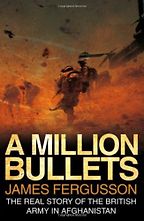
James Fergusson, A Million Bullets.
Fergusson was a journalist in Afghanistan with Herrick 4 – the campaign has gone on so long we’re now on about Herrick 14. Fergusson had done all the big interviews with the Defence Secretary and got all that standard block information on the war, but then he started to talk to the soldiers, asking them, ‘What do you think? Why do you think you’re here?’ John Reid was saying the operation in Afghanistan could be achieved without a single shot being fired and yet the soldiers were in the middle of this big fight. How did that happen?
He talks to the Taliban too. In the blurb they make out that it’s a big deal but actually they’re everywhere. You go to Kabul and you bump into them – it’s easy. But it is particularly interesting when he talks to the British units. There’s this Lieutenant-Colonel and he sees it as his time to make a name for his unit and win medals – the politics of the media and medals becomes important when you’re there. I’ll give you an example: there was a big media focus on the 16th Air Assault in Sangin. Why? Because that’s as far as the media were allowed to go into Afghanistan. And ITN covered it, but at exactly the same time the Royal Regiment of Fusiliers was up at Now Zad where the media weren’t allowed and they fought the biggest trench engagement with bayonets since the First World War! But because the media couldn’t go there the media coverage was all about the paras in Sangin and nobody knew about Now Zad. And so you get the Battalion Command Officer and the Company Commander moaning, quite rightly, that not one of those lads in the Fusiliers got a decoration.
As far as the media was concerned, Sangin was the most dangerous place on the planet because the journalists need to be seen to be in the most dangerous place, but it wasn’t! And afterwards the National Army Museum even did a big display about the paras in Sangin. You know, you’re rattling around with the troops and the squaddies are saying: ‘That’s not dangerous! That’s why they were there – because it’s not dangerous!’ And the politics with the medals is funny since John Major brought them all together so that everyone gets the same medal, a campaign medal. People don’t like that! They say: ‘Campaign?! We were in a war!’
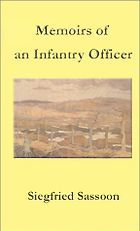
Siegfried Sassoon’s Memoirs of an Infantry Officer.
This is a stunning novel. I love the English gentleman element of it. You’ve got this well-educated man who really doesn’t mind killing Germans but what he doesn’t understand is the reason why he’s killing them. As the war continued he began to realise that it was for political reasons – the military industrial complex. There was too much power play – the Allies couldn’t stop because they need the Germans completely on their knees so everyone got the divvy-up of land and power. [dpnate]
At one point, he describes being back on leave on a Sunday evening and there’s less ambient noise than we have now so he could hear the artillery fire in northern France. And he’s sitting in the Ritz and can’t understand why people won’t drink the Hock, just because it’s German. It’s cheap so he drinks it. He gets the Military Cross but chucks it back and he makes a speech saying he is willing to go back and fight but wants to know what he’s fighting for. It’s a fictional account but it’s obviously him and his life – understated in that way.
I can’t understand where you’re coming from. You say war is about power and money and you are a consultant on a private security firm. But then you obviously admire Sassoon for standing up against war as a business. Which is it?
Look, I’m not anti-war. You get Clausewitz saying that war is an extension of politics but it’s not – it’s part of politics. Politics is war without bloodshed and war is politics with bloodshed. That was Mao Tse-Tung, I think.
So you are willing to embrace it but you admire those who don’t?
Yes. Sassoon stood up for what he believed. Do you remember the defector Gordievsky? He used to do talks and stuff for the intelligence services and members of the Special Forces were invited to the lectures. But a lot of us thought: ‘Why would we want to go and listen to him? He’s a traitor. He turned his back on something he said believed in.’ We have respect for terrorists too. Even the Real IRA or the Continuity IRA or whatever they call themselves. They’re saying: ‘We’re not going into the peace accord. I don’t want to be the minister for education. We wanted a union and you sold us out so fuck you.’
And the Taliban. You respect them because they are trying to kill you. So you have to respect them. If not you become slack and you die.
What about the women in Afghanistan?
I agree. I know. It’s a nightmare. A real nightmare. I saw a girl of eight or nine doused in petrol burning and everyone was ignoring her. We did what we could but she died. Apparently she’d been talking to a boy. It is a nightmare.
But there’s also a lot of positive stuff we never hear about because media coverage is all about the bang bang. You know, the Russians put girls into school in Afghanistan when they were there and there are now mixed sex schools with boys and girls and a university for girls in Kabul. Students still have to have protection to go there because they never know if someone might shoot them but the girls are still going.
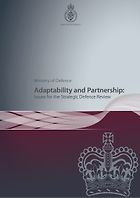
Your fifth choice is a Ministry of Defence green paper.
Yes, a bit geeky this one. This is an MOD green paper pre-empting the white paper and it’s a very clear and concise document about the politics of war. We are a trading nation and we will go to war to keep our trading routes clear. Alan Greenspan said we went to war in Iraq for the oil, and he was right. The fuel is coming on line now (the army is getting a deal for something like five pence a litre) and, though Basra is never going to be a day out in Margate, things have calmed down because people are making money. It’s about the freedom of goods, services and information and to secure our food and resources. That’s the way we do it. We don’t send in the gunships any more, but we go into joint operations with America because they have the same doctrine as us. We are in Afghanistan because we need stability in the region – there is the Caspian Sea up north and the oil pipeline heading west into Turkey. And the Pakistani soldiers facing India, of course. That’s why the US refer to it as the AfPak situation, not just Afghanistan. Karachi is now virtually under sharia law and the influence of the Taliban is a real problem. Russia and China are worried – that’s why Russia went into Afghanistan. To stabilise the borders. People say that nobody has ever won in Afghanistan but no one, including the Brits, has ever been there with the purpose of taking the country.
“People say that nobody has ever won in Afghanistan but no one, including the Brits, has ever been there with the purpose of taking the country.”
The McChrystal doctrine is really starting to work –training up a credible army and police force. It’s working better with the army. But [General] McChrystal has gripped it. Brilliant. The political situation is still a problem though – with a weak and corrupt government who are football mad and have said they’d rather watch Chelsea than deal with the problems. President Karzai is known as the Mayor of Kabul – he’s weak. And the drugs trade is still going strong, you can buy heroin for $200 a kilo in the countryside, double in Kabul. It needs sorting out. Two years ago they had the best crop they’ve ever had, but if you took it away they’d all join the Taliban. They fight for money. It’s about money.
Couldn’t it be legalised?
Yeah. Bush used to pay the Taliban to keep the yield low, but that’s all over now. Colin Powell said: ‘We can shower you with money or we can shower you with bombs.’
May 27, 2010
Five Books aims to keep its book recommendations and interviews up to date. If you are the interviewee and would like to update your choice of books (or even just what you say about them) please email us at editor@fivebooks.com
Support Five Books
Five Books interviews are expensive to produce. If you've enjoyed this interview, please support us by donating a small amount.

Andy McNab
Andy McNab is the pen name of Steven Billy Mitchell. McNab wrote about his experiences in the SAS in three best-selling books, Bravo Two Zero, Immediate Action , and Seven Troop.
Andy McNab
Andy McNab is the pen name of Steven Billy Mitchell. McNab wrote about his experiences in the SAS in three best-selling books, Bravo Two Zero, Immediate Action , and Seven Troop.
© Five Books 2025