Tell me about your general interest in censorship.
I’m interested in literature. I’m interested specifically in English literature. You can’t really understand English literature without understanding the various pressures and restraints on English writers at one time or another, which have combined to inhibit or direct the writing of plays, poems and novels away from the immediate commitment and interest of the writers themselves. That’s the first reason that is internal to my interest in literature.
The second reason is that, because I am a lawyer as well as a literary scholar, I’m interested in the connection between the two and, of course, mostly the way in which law engages with literature is by means of restraints and inhibitions – via the laws of defamation, blasphemy, pornography; copyright, plagiarism, and so on. So, if you confront the law and literature nexus as I do all the time, then plainly the issue of censorship is constantly being thrown up (even though there is another, enabling aspect of law in its relation to literature).
In what sense?
Well, take copyright. Why is it that the big advocates of copyright protection are authors? In one sense, copyright is a restraint, and could be assimilated to the category of censor-type restraints; on the other hand, it’s actually protective of literature and enabling of authors, allowing them to earn a living and to carry on producing works that are protected from piracy and so on. So, once you recognise the complexity of the engagement between law and literature, you get drawn into reflecting on it.
If I look back at all the stuff I’ve written from my first book to my most recent, all the books are about the collision between creativity on the one hand and norms and rules on the other. My first book, on T S Eliot, was a study of Eliot’s anti-Semitic poetry, principally. What is anti-Semitic poetry, but a tremendous affirmation by the poet of the independence of literature and the freedom of the poet to write poetry, notwithstanding that it violates utterly basic norms of human decency and civility?
Five Books interviews are expensive to produce. If you're enjoying this interview, please support us by donating a small amount.
Then my next book, Idolising Pictures, was about whether it’s possible to have an aesthetic that comes out of a prohibition. The Second Commandment says that you shouldn’t make graven images, which is more generally taken to be a prohibition on representational art-making, but nevertheless there is a Jewish art. How can a Jewish art exist with the Second Commandment? There are various solutions – non-representational art, iconoclastic art and so on.
My third book, Transgression, was an attempt to write a history of art from Manet to the present by reference to this principle of transgression. The aesthetic from the 1860s to the 1990s has conceived of art as essentially violating norms – political norms, social and moral norms or the norms of art-making itself. My last book, Trials of the Diaspora (and especially Chapter Four, which is about English literary anti-Semitism), returns in part to the themes I explored in Eliot and raises questions like, ‘Should hate speech, which is also literary speech, be banned?’
And?
And my view is no, absolutely not. The book I’m writing now is about censorship and the English novel.
Tell me what your first choice is.
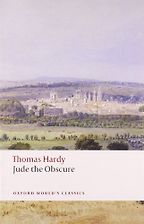
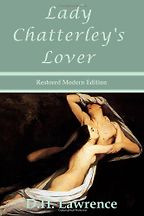
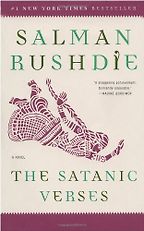
My first three books are each about censorship, as well as being the objects of censorship themselves: Jude the Obscure, Lady Chatterley’s Lover and The Satanic Verses.
Jude the Obscure is about a poor young man, a country boy, who is inspired by the example of his village teacher to commit himself to studying so that he can go to Christminster (which is transparently Oxford). For various reasons, he fails, and makes a series of disastrous decisions, and he is rejected in any event for reasons beyond his control and he dies. The epigraph is all about Christianity and the divorce laws and about the self-destructive possibilities in literary ambition itself. Jude wants to study, and he immerses himself in the Classics and so on, and, in the end, it’s that ambition that does for him. So it’s a curiously self-cancelling work in that way.
There is a point at which, when he decides he’s going to live with his cousin Sue, he thinks it’s no longer possible for him to study to be a lay preacher because of the incompatibility of the two aspects of his life. So he decides he has to destroy all his Christian works and he burns them all. Now, when Hardy published the book there was a tremendous outcry, because it was considered to be anti-religious and sexually very frank. A bishop wrote to him and inside the envelope there were a few ashes; the Bishop explained that that was all that was left of the book, which he had burnt. It’s interesting because there’s no reference in the letter to the scene in which Jude burns the Christian books – but it’s as if Hardy got his retaliation in first. The relationship between literature and its censors feels like a kind of agon, in which two contradictory principles are articulated in the moment of their collision.
On to Lady Chatterley’s Lover.
Of course, this book was also the object of censoring attention, culminating in a couple of trials (one in the States and one in Britain). But it’s also itself about the violation of norms – in this case, the violation of the marriage contract and the norm of monogamous living. Lawrence wrote about the difference between literature and pornography, and, curiously enough, in defending Lady Chatterley in 1928/9 against the charge that it was pornographic, he himself said that he was in favour of censoring pornography. Pornography ‘does dirt on sex, does dirt on life,’ he said, and he would be in favour of censoring it, suppressing it; but his work was not pornographic.
So Lawrence allows the possibility of censorship, but not if it is misapplied or misdirected at his own work. The complicity of the author with the principle of censorship is interesting in the case of Lawrence and Chatterley.
I’m interested in the trials, of course – particularly the trial here, but also the trial in the States – because of what they meant in the context of the 1960s. Just as I’m interested in what The Satanic Verses meant at the moment of its publication in 1989/90: with the collapse of the Berlin Wall and the end of the Cold War, the extinction of socialism as a project of human liberation, and, coincident with that, the emergence of Islam or Islamism as both a threat and a promise – and how a novel manages to be the axis on which these huge global events turn.
Get the weekly Five Books newsletter
Lady Chatterley represents a moment of liberation, just as The Satanic Verses also represents a moment of liberation – the end of the Cold War – but also the inauguration of a different kind of struggle. Is it correctly conceived as a war of civilisations? Probably not. Is it correctly conceived as a war on terror? Definitely not. But there is no doubt that there is a new agon, a new principle of division and conflict in all its complexity, and The Satanic Verses prefigures it as well as contributing to it. So, those three books, not just as objects of censoring attention, but also as instruments through which one can think about censorship, seem to me to be probably the three most important books in the 20th century, from that point of view.
It’s fascinating to think of them in an almost unliterary way – as symbolic.
I hope not! It feels to me that they all insist on themselves as literary works. I mean, Hardy, in this very complicated way in which he both elevates literature and ‘the letter’ on the one hand, and on the other hand casts it down as ‘the letter killeth’ (the novel’s epigraph), articulates a very divided sense of what literature is and what a commitment to the literary life can entail – but he puts literature at the centre of his concerns. Lawrence described the novel as ‘the bright book of life’, and for him there was a redemptive quality to literature. Rushdie articulates one of the central conflicts in The Satanic Verses through the collision of the Poet with the Prophet in those passages of the novel that concern visions and dreams about the early life of Muhammad. All these novels are literary works through which literature itself is analysed and pondered, and subjected to an elevated and elevating scrutiny. I hope what I’ve said doesn’t suggest one should neglect their literary properties.
You’ve got two more. What’s next?
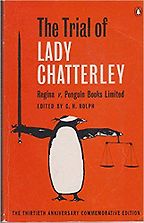
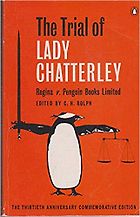
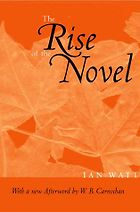
The two remaining books are Ian Watt’s The Rise of the Novel (still the most important book about the English novel, and one that has guided me through my thinking about censorship) and The Trial of Lady Chatterley’s Lover, by C H Rolph, which is a summary transcript of the trial.
Tell me about the transcript.
Well, of course, it itself represents an intervention in the censorship wars of the 1960s, because it was written from the point of view of the publishers. It was self-published by Penguin. There was a sense that everything that was good and healthy and forward-looking and unstuffy and liberatory about the possibilities in English culture attached itself to the defendants in the case. Everything that was obscurantist and stifling and reactionary and oppressive attached itself to the prosecutors and their champions, and that’s what this book represents.
It’s a wonderful, clear-throated song, like the one sung by Miriam, Moses’s sister. The Israelites crossed the sea, and she delivers this wonderful song of triumph and jubilation: ‘Sing to the Lord, for he has triumphed gloriously; / Horse and rider he has thrown into the sea.’ Rolph’s book is a bit like that! And then, almost in a blink, the cultural conjuncture changes, and the feminist attack, by Kate Millett and others, on Lawrence starts – the argument that Lawrence was a misogynist, and so on. Suddenly Lawrence becomes a representative of something very patriarchal and phallic and oppressive. That’s fascinating, how a book can be a champion of anti-censorship, but then also in a sense be the champion of censorship or oppression.
What do you think about the feminist view of Lady Chatterley?
I think it’s very compelling, but, in the end, wrong. It’s a somewhat reductionist reading of Lawrence. Though Millett’s reading is very sophisticated, it’s eventually reductionist. The point about Lawrence is that he’s constantly eluding these categories. He says himself: ‘Trust the tale, not the teller.’ He’s very sensitive to the risk of the novel being diminished to the level of a tract – as is Hardy, as is Rushdie. All three of them would say, ‘You’re quite wrong. You’re reading this is as though it’s an argument. It’s not. It’s an impression.’ That’s Hardy’s word.
That seems to be wheedling out of it, somehow.
Well, in one sense it is, but in another sense, it’s true. It’s just true. Novels are not tracts.
But I guess that’s why you’d write one instead of a tract – so that you could get away with it, and be more likely to be published and look less inflammatory.
Yes.
Tell me about Ian Watt’s Rise of the Novel.
It’s a remarkable work. It’s the first post-war conceptualisation of the English novel in its 18th-century inaugural moment, and it’s still the way in which one can think about the specific problems of English fiction – even though the novel is a highly international form, the literary form that is probably least inflected by specific national peculiarities. Vargas Llosa is writing in South America, Solzhenitsyn is writing in Russia, and you have this sense of a global community of novelists. While Ian Watt acknowledges that, he emphasises specifically English properties of the form. He helps me in my attempts to understand English national peculiarities…
Like anti-Semitism?
Like the English version or versions of anti-Semitism, but also the nature of the engagement between the English novel and censorship. I try to root that engagement in certain properties which are specific to English literature.
How do you think English anti-Semitism is different from other versions of it?
I could glibly say, ‘I refer you to my book.’
Don’t say that.
It’s different in many respects. It’s innovative – the blood libel first happened in England, the first national expulsion of Jews happened in England, so it’s innovative in the most lethal sense. But also in the sense that it’s in England that a kind of moderate and contained anti-Semitism takes root – one that is not threatening to the security of the Jews, although it’s somewhat diminishing of their morale. It’s also in England that the principal vehicle of anti-Semitism is literature. These are some of the ways in which English anti-Semitism is distinct.
Do you think it’s more subtle here than it is in other places?
In some respects it’s more subtle, and in others it’s not subtle at all. There’s nothing subtle, for example, about Caryl Churchill’s play, Seven Jewish Children. There is a minor spat going on in The Guardian between Jonathan Freedland and Caryl Churchill and me. Freedland wrote a piece on anti-Semitism, Churchill responded, I responded to her response.
Five Books aims to keep its book recommendations and interviews up to date. If you are the interviewee and would like to update your choice of books (or even just what you say about them) please email us at editor@fivebooks.com