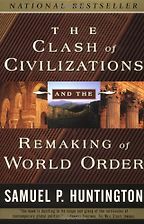
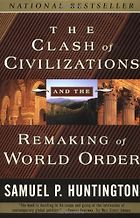
You’ve started with The Clash of Civilizations by Harvard political scientist Samuel Huntington. It was published in 1998, but its core theory first appeared as an article in Foreign Affairs in 1993, and was based on a 1992 lecture at the American Enterprise Institute where you now work…
This is a very important book on the post-1989 context, and what the new world order would look like after the fall of the Soviet Union. It was written almost 20 years ago now, and it seems as if Huntington’s hypothesis is getting more and more credit than Francis Fukuyama’s (The End of History) about what the world will look like.
It’s an academic book, but you feel you’ve personally lived The Clash of Civilizations?
I have moved from one civilization to another. In fact, according to Huntington’s definition of civilization, I have moved through three: the African, the Muslim and then I crossed over to the West. Huntington was actually a little reluctant to identify Africa as a civilization; he says that he wasn’t quite sure if Africa is a civilization, but just for the conceptual framework of his book he decided to call it one. But what I am mainly interested in is that I crossed from the Muslim civilization to the Western civilization. And maybe it’s not completely accurate to say that it’s a crossing, maybe it’s more of a criss-crossing. Because when I lived in Kenya, which was a former colony of Britain, I read books that were written by Westerners for Westerners. Books like Nancy Drew and George Orwell. It was a very British context – I read these books because I happened to go to school in Kenya, and the schools were modelled on the British system. The books they were offering, many of them were even published in Britain, because at the time Kenya didn’t have good publishing houses. But at the same time the Vatican of Muslim civilization, Saudi Arabia, had also come into our lives, through this woman called Sister Aziza. She came and made us aware of the fact that we were calling ourselves Muslims, but we were not true Muslims because we were not living according to scripture, we were not following the manual of what is permissible and what is prohibited, and a set of obligations and all of that. So there is that journey and I describe it in detail in my book Infidel and carry on in Nomad.
Do you want to give an example of when you really felt this clash? Something that happened to you personally, when you thought you really were stuck in the middle?
The entire book, Nomad, is about being stuck in the middle. Especially the beginning of the book, the first part that describes my family – I try to show just how stuck in the middle they are. I made the crossing because I didn’t want to be stuck in the middle; I wanted to belong to this side. And that’s a conscious choice. So, to give an example, there is my arranged/forced marriage. It’s the tradition, it’s the culture, that’s how it works: your father is your guardian, your guardian secures your future with a husband who is going to take care of you financially, for whom you will bear children and you will be an obedient wife. And I went through that and thought ‘I’m not going to do that!’ The second example I would give is September 11 2001, and that was more dramatic, because it brought home the clash of civilizations with a huge bang. It’s when people from my former civilization took airplanes and started diving into skyscrapers to make their point clear. It awakened not only me, but Muslims and Westerners all over the place, and, like everyone else, I struggled to understand it. The people who did it died, but the people who masterminded it, al Qaeda, called on all Muslims to stand with them against the Great Satan and the Little Satan [the US and Israel].
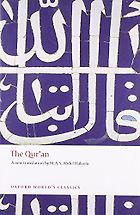
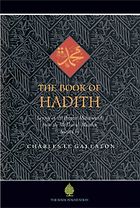
Let’s go on to your next two books, the Koran and the Hadith. Can you tell me a little bit about them and why you chose them?
The Koran is supposed to be the words of God and the Hadith are the sayings and deeds of the prophet. The Koran has the basic commands; the Hadith or the Sunna, is a sort of manual. It is supposed to be a guideline of how to understand the Koran, because people say that it’s not explicit enough. The Hadith is a compilation of six volumes and they are called the Sahith Sitta – Sitta just means six and Sahith means authentic.
So what I did after September 11 was I analysed bin Laden’s words, his quotations, his explanations, and his mission statement which is: ‘We are at war with the West. They want to destroy Islam and we need to fight back.’ I know scripture, and when Islam is attacked you all become warriors, all of you. And so I wanted to know, ‘Am I a warrior of Islam now?’ Also, are all these things that bin Laden is saying really in the Koran and in the Hadith? And, to my shock, they were. A lot of people say they are taken out of context, but they are completely not taken out of context. They are in context. They only thing that is out of context is the fact that this very old book which was put together by – well, we don’t know who the authors are, but it’s definitely more than one author – is considered to be valid in the 21st century. That’s what’s out of context. Everything else is consistent with what that book says, what the founder of Islam, Mohammed, envisioned, how he practised in his lifetime, with his religion, and the legacy he left behind. And the question that I had to answer for myself was, did I want to belong to that, or not?
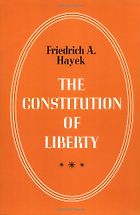
I decided I didn’t want to belong to it, so the question became what do I belong to then? I had already been to university and done a Masters in politics but I made an even more conscious exploration of Western civilization. What does it stand for? There are tons and tons of books on that. But if I am to limit myself to just one, I found The Constitution of Liberty by Friedrich Hayek to contain it all in a concise and a very clear way. And so if you say the Koran versus Hayek – that’s an easy choice for me.
What does the Koran say about women? If women are treated badly, isn’t that only because the Koran has been misinterpreted?
When I did the film Submission, with Theo van Gogh, I found several verses in the Koran. The most explicit were the following: firstly, chapter 4, verse 34 says ‘Men are the maintenance of women, from those you fear disobedience, warn them, leave them alone in their beds and beat them.’ And, as with all Koranic verses that are commands, like this one, there are several Hadiths that go on to explain what it means and how it should be interpreted.
There are four schools of thought in the Sunni (I was brought up a Sunni) and all four schools of thought agree it means: first of all, warn her, like a child. If she carries on this way, then the next step is not to share her bed, as a way of showing how disgruntled you are with her behaviour. Finally, there are the beatings, and the four schools of thought then go on to describe in detail how the beatings should take place. One shouldn’t leave wounds, the beating should be done with a small to a medium-sized stick, it’s to cause pain but not concussion, and so on. The same liberty is not given to women. And Muslim women I talk to say, ‘But we are equal in the Koran!’ But in my view, by no math is that any form of equality.
And then there is chapter 2, verse 223: ‘Your wives are as a tilth to you, Come unto your tilth from whenever or wherever you want.’ There’s a Hadith that goes on to explain what it means, which is that your wife is like an acre to you, and you can take her, you can have sex with her, at any time of day or night, when you please and how you please. And her consent is irrelevant. But her consent or lack of it, if you tie it to the previous verses, what it means is, that she’ll say no, and you’ll warn her and you just end up beating her. So beating and raping, marital rape in this case, are justified and sanctified.
But can’t you, as a Muslim, practise just some of the Koran and Hadith, and not all of it? Most Christians don’t take the Bible literally either.
It’s very good you brought this up, because people do that all the time. There’s a difference between Islam made up of the Koran and Hadith and all the other stuff. I make the distinction very clearly in the book. Muslims are very diverse, and I mean diverse in the sense of how much of the Koran and the Hadith they actually practise. For example, there are people who say the Koran is a good book, and it’s a holy book, and it’s the word of God. But they don’t practise everything it says. You’ll see Muslims drinking alcohol and having pre-marital sex and leading free lives.
But you didn’t want that to do that – you didn’t want to be a soft-line Muslim. You felt you had to reject it completely and became an atheist.
It’s not me who felt that. For the first ten years, from 1992 to 2001, before I got into this whole thinking about Islam, I was leading the life of a liberal, but I identified myself as a Muslim. The need for consistency came only after this whole debate that came about after September 11. And I would have continued to identify myself as a Muslim. At first I didn’t say I was an atheist, I started just by saying, ‘I am secularised.’ But more and more people that we call fundamentalists are trying to practise as much as possible of the Koran and the Hadith, and I was attacked and threatened for saying that I was secularised..
This is the difference between Christians and Muslims. If as a Christian today you decide not to practise your faith, you won’t have lots of people coming and telling you how wrong you are and how awful it is not to believe every word of the Bible and how you should go to church. It’s the opposite in Islam – there’s ever more people telling you that you are not a good Muslim.
Let’s go on to Hayek’s The Constitution of Liberty. Can you tell me a bit what it’s about?
It’s about why democracy is not just about elections. The meaning of freedom, Hayek says, is negative. It’s not about what government or others should do, it is about freedom from coercion. And that gets complicated when more than one individual, when a multiplicity of individuals, share a society. Who should lead? Who is to govern? What are the criteria? And obviously in Western society there are different ideas about who is to govern and in what way – but the basic themes are liberty, the rule of law, a government that is elected by the people and is for the people. You have the right to have an election and say we don’t want a leader if they screw up. There is a police, a military that is under the constitution. Everything, the whole arrangement, the infrastructure of government, is all about respecting, preserving and probably expanding the freedom of individuals as much as possible.
One of the things that I found really shocking reading Infidel was the chapter about how you came to be circumcised. It wasn’t some horrible stranger who came in and forced you to do it. It was your grandmother who did it, someone in your family who really loved you and cared about you. So what does freedom mean here?
That’s what government should be doing. In this case, its role should be to compel my grandmother to give this tradition up on threat of punishment, to make it unlawful. Just as child labour was made unlawful and so on. All forms of coercion were, in Western society, slowly made unlawful. So this is a step the government has to do where they have to intervene between a child and his parents or grandparents. That’s what Western governments have been doing – but now they are confronted with this new problem of immigrants from Muslim countries, where, within the intimate circle, things are really different because they haven’t been educated in Western society. So in these cases the government is being negligent.
Even in Holland you would say the government is being negligent?
In Holland, in the US, in all Western countries.
They turn a blind eye to what’s going on?
In all of these countries all of these atrocities are illegal, they are banned, and you have several different punishments for them. For instance, for causing bodily harm (because female genital mutilation falls under bodily harm) in the Netherlands, to a child, an individual, you could get a maximum sentence of 15 years. I’m sure you get more than that in the US. But the problem is that it is not enforced, so government is negligent in failing to devise a control system to counter that, to protect children. And the same applies to forced marriages, and honour beatings. For an honour killing the government will say that’s murder and the law will go after the murderer, and the murderer will be put in jail. But the government is again negligent in pursuing all the individuals that are involved in that murder.
But aren’t all these American right-wing books like Hayek’s about weakening government and not having it interfere in private matters?
Hayek later became an American. But he was born in Austria and lived in the UK and then finally came here. It’s quite the opposite. There are two kinds of human rights, classical human rights and the social rights. The disagreement is always on the social and not on the classical. So bodily harm is part of the classical – and there it is the government’s first and foremost task to protect her own citizens from internal and external harm. That’s why you have the police and the military – Hayek is very strong on that. But when it comes to such things as pensions and unemployment, and how much should the government then give, that’s where there is disagreement. If you look at the list of harmful practices against women, it’s all bodily harm and it’s about primary freedom. And then it becomes about secondary freedom, because girls are pulled out of school, they don’t get educated, that sort of thing. In the West there is no disagreement between conservatives and liberals on the primary tasks.
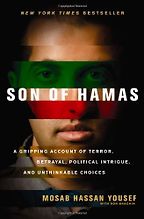
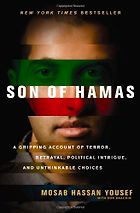
Let’s talk about the Mosab Hassan Yousef book, Son of Hamas. You say he came to the same conclusions as you did, but via a completely different route?
Yes. That is the good thing about it. I always get these accusations, ‘Oh, but you are just from Somalia’, your case is not representative. There are many memoirs, but again, if you tell me to reduce it to just one, I pick his. I read a review of this book and it made me buy it instantly. What I liked about it is that it is by a man. It is the story of a man who grew up as the son of a prominent person in Hamas, immersed in the doctrine and the suicide killings. But he ends up living in a US suburb and completely adopting American values.
Get the weekly Five Books newsletter
It’s not only timely [it has just been published] but a lot of people argue that ‘if only the Israeli-Palestinian conflict could be resolved…’ or say, ‘Maybe we should talk to the Muslim Brotherhood, we should talk to Iran, we should talk to Hamas. Why not talk to the bad guys? Talking is always good.’ But this to me does not address the fundamental issue. In this book, the author talks about the in-depth philosophy, the philosophy behind Hamas, about the constitution of Hamas, and why peace is absolutely not on its agenda. It’s about how that has first and foremost harmed the interests of the Palestinian people. It makes it clear that it’s a struggle for struggle’s sake, a kind of aimless and eternal struggle. He describes not just what was going on inside of Hamas, and what went wrong, but he goes on to describe what it did to him, and how he discovered an alternative philosophy, and why he chose it. He comes from a completely different background to mine, and yet he comes to the same conclusion.
Which is what? To move to a US suburb?
No, no. He had come to the US before. It hadn’t yet hit him, the whole idea of freedom, but he lived it. And then he decided to explore the Bill of Rights, the Declaration of Independence, and find out what it all means and how it works. And he came to the conclusion that this is really much better and superior to the Koran as a constitution and following the Prophet Mohammed’s example, which is Hamas’s way.
So the American way?
You can call it America versus Islam, but you can also call it Islam versus the West.
But you like being in America.
I love being in the United States. I should have come here to start off with. Elsewhere people talk about freedom; here you actually live it. And I love the American think-tank world – you don’t have to quote old books, you can experiment with your own thoughts. You don’t have to be a great scholar – the point is to show that you are grappling with problems and finding answers. At the American Enterprise Insititute, I can write anything – almost nothing is off-limits. Some people think my book Nomad is outrageous, but I’m just looking for answers.
In what way?
For example, I suggest Muslims should convert to Christianity, which is quite outrageous.
But can you really blame all the things that have happened to you on Islam? For example, isn’t female circumcision an African thing? Indonesian Muslims don’t traditionally circumcise.
That’s not true. The Muslim Brotherhood have also spread and established themselves in Indonesia. From Egypt they have exported the practice of female genital mutilation. The Indonesians never knew it, they didn’t practise it before, but female genital mutilation found its way to Indonesia through Islam.
So you are arguing that even if some of these practices predate Islam…
They were incorporated into Islam. In Islam, if you are a believer, you believe God brought the Koran and you get offended if anyone says anything about the Koran. But if you are not a believer, like me – I have left the faith. So I am able to think where Islam was founded, and what you see is that it was founded in an Arab, patriarchal, tribal, desert culture – and many of the practices and customs of that culture remain.
Five Books aims to keep its book recommendations and interviews up to date. If you are the interviewee and would like to update your choice of books (or even just what you say about them) please email us at [email protected]
Five Books interviews are expensive to produce. If you've enjoyed this interview, please support us by donating a small amount.