The New Yorker’s Ben Greenman selects books that get closer to the heart and history of the city. Street interviews, personal reflections and political struggles reveal NYC’s vibrant but troubled past.
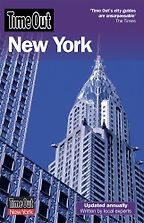
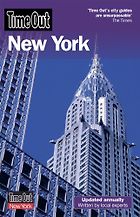
Why should a visitor to New York read your first choice, the Time Out guidebook?
This guidebook has a good mix of attitude and nice photography, and it also does something which some other books don’t do, because they are more staid or institutional: it finds some of the smaller places that you wouldn’t ordinarily think of, like clubs and less well-known galleries. There is a kind of big-lumbering-elephant way of doing the city, which is visiting the Met, Central Park, the Guggenheim, etc.—and this is not really that. (Time Out also do a separate restaurant guide, so if people are coming and they really want to eat their way through the city, there’s a separate book for that.)
But generally, I just think this is a good book that’s not cluttered by stagey history or long back-stories of buildings—and it’s very good on neighbourhoods. It’s smart about getting you through the actual geography of the city.
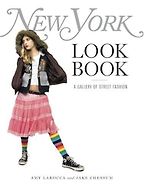
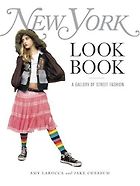
The New York Look Book seems an altogether different kind of guide.
‘Look Book’ is a feature that New York magazine ran for five, six years. This is a very active, vibrant city where a lot of things are happening, but two of the biggest industries are, of course, publishing and fashion. So, how people dress in the city, and the way they think they’re presenting themselves, is always a big deal. (I work in the Condé Nast building, and it’s a big deal here in the building, and in so many ways, it’s also a big deal in the wider city.) And so this book, published by—I should point out—a New Yorker competitor, highlights this, pulling together features from several years of the magazine. The contributors talk to people on the street about what they’re wearing, and do these quirky little interviews about their sense of style and clothing, with questions like, ‘Why are you wearing a rain boot on your head?’
So the subjects of these interviews are selected at random?
Yes – these are street interviews. As with the Time Out book, you get a real sense of the blood flow of the city. People you would think of as real downtown-y people are caught on a corner in the Upper East Side, for instance, and interviewed about why they’re there, and what they’re doing. There’s also a little guide in the back to buying costume jewelry and crazy shoes and whatnot.
People come here and they look at buildings and they look at art, but, as with any city, some of the things that really draw people are the more personal pleasures—food and clothes. I like the idea that guidebooks recognise that. It’s great to give people a sense of what they’ll be doing in between visiting major tourist sites and museums.
What do you think the Look Book says about New York?
Most of us wear clothes—I would say that’s generally true. So I just think it’s a nice lens through which to see the city. At the moment, with Project Runway and all these kinds of shows, people do think about the city in this way; fashion week has become a bigger and bigger thing. The good thing about the Look Book is that it’s so diverse; it really depicts a range of people.
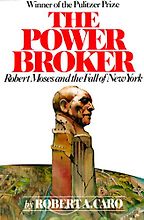
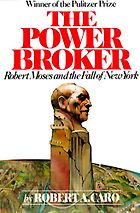
Your third choice, The Power Broker, has been called the greatest book ever written about a city. Why does it do such justice to New York?
Well, if you look at a picture of a place, you can normally get a sense of what it’s like. But hopefully what books do, or what thinking does, is to show you what that place is like underneath. The Power Broker is the definitive history of how, in modern America, cities get built, power gets thrown around, neighbourhoods are overpowered by developers and politicians. It’s gigantic and it’s a biography, but it reads like the most epic novel of building and money and power.
It’s by Robert Caro, who is a master biographer; he went on to write a definitive biography of Lyndon Johnson. And it’s about Robert Moses, the most influential builder and urban planner in the city in the middle of the century. He just decided he was going to do things, change the shape of the land and build a ton of roads and bridges. Whatever you see in the city that is the city—the shape of the city, the body of it—was his doing.
So you would say that this book gives you a view beneath the city’s veneer?
It’s like being in a surgical theatre, when they pin the body open—you’re the medical student up top, and you’re watching, and they show you: ‘Look, this is the lung.’ And there are incredible battles of incredibly powerful people. For example, Robert Moses had a major fight with Franklin Roosevelt before Roosevelt was president, about where they would build these parkways. Roosevelt wanted the Taconic, and Moses wanted another kind of parkway system, so he fought. In most cases, he was able to steamroll everybody and advance his own power.
Moses comes off as a villain—although I wouldn’t say exclusively. He obviously accomplished a lot of important things, but he was a problematic figure in power. Recently, people have been saying: look, he was able to keep things going, to keep bridges up and keep potholes filled . . . So in the last ten to fifteen years, there’s been a swing back to crediting him. He was able to maintain some things that have proven harder for other people to maintain. He really wanted to get things done.
When people who aren’t here think of New York, they think of the bridges and skyscrapers and the bigness of it all. But how does it all work? This is a great book for understanding how it came to be that way, what the monuments are and who was behind them. Very problematic, stubborn and sometimes crazy people, but people still.
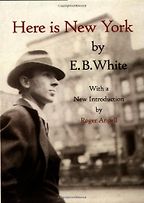
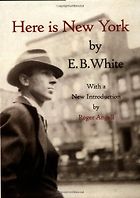
You’ve just written an epistolary short-story collection, What He’s Poised to Do. Your next recommendation, E B White’s Here is New York, has been described as a love letter to the city. Do you see it that way?
Because I’m a writer, I think this is a very important city for writers—and because I work at the New Yorker, I think it’s a very important city for certain kinds of writers. This book was part of a travel series, for which they had reporters and editors try to corral writers and have them talk about their travel. They might take Paul Bowles to northern Africa, for instance, and he’d guide them around. They wanted E B White to take part, but he didn’t really want to travel; he normally stayed pretty close to home. So he came into the city from Maine and walked around a little, and thought about what he had experienced here when he was younger.
It’s a great snapshot of how the city changes slightly over time, and I guess that’s why people say it’s a letter—because he’s revisiting it. It’s not formally a letter, of course, but White is coming back to New York, and he’s grappling with his own memories. In my book, I say a lot of letters are about longing and missing things, and that’s certainly the case here, in that White is having these memories and trying to square them with how things have changed.
It’s a very clear and interesting and multi-generational picture of the city through a certain kind of lens—through the eyes of a certain kind of writer. It’s obviously not reflective of everybody’s experience, but this kind of experience is very sharply focused, and very well drawn. White was writing post-war, and after he walked around he holed up in a hotel room and said, let me remember to myself what I experienced here.
It’s a strange travel book because, in a way, it’s sort of the opposite of a travel book. Most travel books are all about newness; this is a revisit instead of a visit.
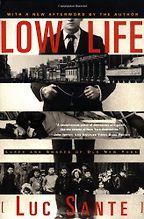
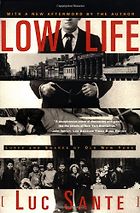
White’s book was once reviewed by Luc Sante, the author of your next choice, Low Life. How does Sante’s portrait of New York compare to White’s?
Well, I think when people come into New York, if they’ve never been here before, they think of all the possible dangers—purse snatchings and peep shows, that sort of thing—and that’s part of the appeal. In any giant city that has this many people so close together, those things are going to happen. White’s mission was to go out and make sense of all of it. It’s an extremely engaged, really fun and smart book about these things. (The movie Gangs of New York is in some ways a more political look, but it’s that sort of feel.) The book goes all the way up to the early 20s, but it starts in 1840, so it basically covers the Civil War, the turn of the century, and how the industrial shape of the city changed up to the 20s.
Support Five Books
Five Books interviews are expensive to produce. If you're enjoying this interview, please support us by donating a small amount.
When you read Power Broker, you can still see the traces of most of what Caro talks about in the modern city; the bridges are all still there, the buildings are largely still there. But if you peel away one whole layer, then you get to Low Life, and suddenly a lot of these things you’re reading about are not there; they’ve been built over, they’ve been paved over.
For me, the nicest thing about this book—and I want to say this as a compliment and not have it come off as an insult—is that it’s kind of ‘baggy pants’. Some books are really tight; they work like corsets, and are super-meticulously edited and pruned. This book has a lot of overgrowth. There are sections that are rambling, and there are these fantastic digressions. Sante seems to be on the edge between myth and true grad-student level three-source reporting. There are all these stories about criminals—here’s how this or that murder gang operated—and you think they’re probably true, but it’s not like these people had reporters embedded with them.
Words everybody uses when they talk about this book are ‘secret’, or ‘under’—those kinds of words. The idea is that Sante is bringing something previously unseen into the light, and I like that a lot. I feel that when you go to a city you should have that; you should have the ghosts around you. When you’re walking around, you should know if it’s the case that on this corner 150 years ago somebody got a bullet put in their head.
That brings us to the end of your official five choices, but you wanted to mention two further books. Tell me about Frederick Busch’s The Night Inspector.
Busch is a writer whom I especially like, but I don’t think he’s that widely read now. I don’t know if everybody wants to experience cities in the same way, but I like to read about the places I’m visiting. Then you can come at them weirdly sidewise.
This book goes right back into the middle of 19th-century New York City. When people think of the Civil War, I don’t think they think of it as affecting the northern cities, really—you always think of the big fields, and soldiers lined up on either side of a meadow. This book is about a guy who was a sharpshooter in the war who then returns to the city; it’s a good complement to E B White’s book, because it takes place 100 years earlier, and it’s fiction, but in a way it’s the same kind of thing. (What’s also interesting is that the protagonist lives in Five Points, which is the neighbourhood that’s very prominent in Low Life—it’s a crime-ridden, gang-infested neighbourhood in lower Manhattan.) It’s a very weird story. The guy is disfigured and he’s a war survivor. He meets Herman Melville as the story goes along… There’s a lot about the city’s literary heritage.
It’s a great book that’s very difficult to sum up, but I want people to read it. It’s filled with masks, and there’s a lot of strange violence in it. It’s sort of about what happens in cities after wars, when everybody comes back to them with all the things they can’t forget. It’s relevant now—people are coming back from wars now, obviously. One reason this book is good for me now is that it’s a very good post-trauma book. The city is still a post-traumatic city because of 9/11.
Everyone is still coming to terms with that day.
Yes. We’re coming up on the 10th anniversary next year. It’s not that people walk around with a weight on their heads, but it’s always there on some level, and, in a very different way, it’s there in this book. The way Fredrick Busch deals with these kinds of things—violence and disguise and all these grand literary themes—is great.
Finally, do you have a special interest in Harlem that led you to choose Gilbert Osofsky’s Harlem: The Making of a Ghetto?
I am interested in the period he describes, and in the way that certain kinds of culture began to spring up around then. It starts with the Harlem Renaissance [of the 1920s and 1930s], which you read about in high school—but then it goes outward from that and you start to see how all of the music, art and literature blossomed from that movement.
It’s a very good, very well researched history, a wonderful social history of the city. Rather than letting you limit your experience of the city to Soho, Union Square, and Times Square, this book gives you the idea that there are other places in the city that have incredibly rich histories—places where every building is interesting; places which have gone through many evolutions over the years.
Get the weekly Five Books newsletter
But it’s only one of a number of books like this. You can find equally good books about the Italian neighbourhoods in New York, or the Jewish neighbourhoods, or the Irish neighbourhoods, or the suburbs, or the Bronx. So I say, find the version of this book that will interest you the most. If you’re coming here and you’re Dutch, find a book on where the remnants of the Dutch settlement are in New York. If you’re coming and you’re Irish, find that book. New York is the most diverse city in the country, and there’s a book for almost every part of it.
February 25, 2011
Five Books aims to keep its book recommendations and interviews up to date. If you are the interviewee and would like to update your choice of books (or even just what you say about them) please email us at [email protected]
Ben Greenman has been editor of The New Yorker’s Goings On About Town section, which lists and reviews events in and around New York City, since 2000. He is the author of several books of fiction, most recently What He's Poised to Do and Celebrity Chekhov, both published by Harper Perennial in 2010. He lives in Brooklyn.
Ben Greenman has been editor of The New Yorker’s Goings On About Town section, which lists and reviews events in and around New York City, since 2000. He is the author of several books of fiction, most recently What He's Poised to Do and Celebrity Chekhov, both published by Harper Perennial in 2010. He lives in Brooklyn.