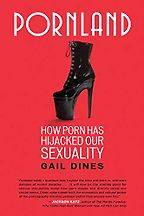
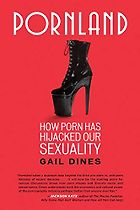
For your updated book list on gender politics, your first choice is Pornland: How Porn Has Hijacked Our Sexuality by Gail Dines.
Gail Dines is an academic, researcher and activist. Her study of the effects of porn culture is devastating, powerful and extremely relatable. She shows how, through the immediacy and availability of porn, women’s sexual experience is warped and degraded and men’s expectations of sex (and of their own experience and ‘performance’ in sexual scenarios) is similarly unrealistic.
She goes into some areas which are both horribly familiar and wincingly intimate as she traces how degrading, violating and coercive practices have been normalised. It’s an essential read —and we need it like never before.
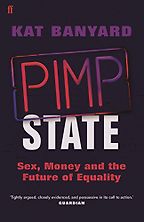
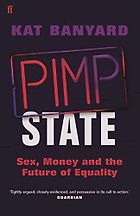
Next on your list is Pimp State by Kat Banyard.
Kat Banyard is a dedicated and highly respected activist and this clear, well-researched study shows how the sexual exploitation industry has become normalised across the UK. Her focus is on the purchase of women by men for sex, the choices of ‘johns’ and ‘punters’ to do so and their justifications for doing so, and on the structure of the industry which enables them to do so.
Banyard turns the focus of the debate on the sex industry onto the men, not the women within the industry, and asks: why does he choose to do that? She does not judge or stigmatise the women within prostitution and her clear-eyed study is all the more powerful for its restraint and its devastating accumulation of research.
Get the weekly Five Books newsletter
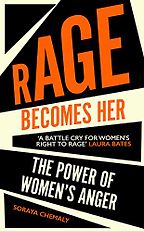
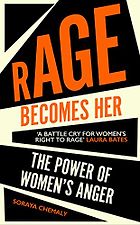
Tell me about Rage Becomes Her by Soraya Chemaly.
This is an invigorating, witty, inspiring book which reclaims women’s anger and energy for the next round of feminist activism in the 21st century. American activist Soraya Chemaly looks at female anger as a source of strength, a form of focus and a force for good as she traces the recent upsurge in feminist activism and the power of righteous anger to unify women in the the fight for equality.
The book is also a brilliant summing-up of contemporary inequality and misogyny (particularly in America) in the present day, and as such it’s a vital and contemporary read.
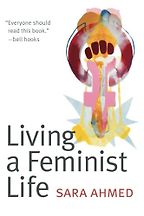
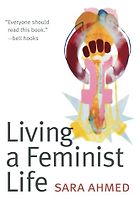
And Living A Feminist Life by Sara Ahmed?
This is a thoughtful, nuanced and well-considered book by the UK writer and academic. It goes well beyond polemic and has a literary slant which makes it extremely compelling in its contemplation of what it means, not just to believe in equality, but to live an ethical and principled feminist existence. In particular, it looks at the challenges of doing so within the institutions, organisations and structures of the real world, in which feminists are challenged by inequality, stereotypes, oppression and aggression.
At times, it’s a very moving read, as it takes into account the pain of being discrminiated against or misunderstood and weighs the cost of misogyny and marginalisation on women’s lives. This book will become a classic of philosophical feminist thought.
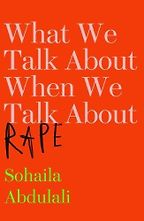
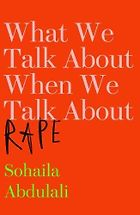
Finally, you’ve picked What We Talk About When We Talk About Rape by Sohaila Abdulali
This is a powerful and necessary book for the #MeToo era. In the last couple of years the media has focused on women’s testimonies of violation, harassment, molestation and abuse. This book goes deeper into the long aftermath of abuse, with its multi-layered and complex examination of mental. physical, social and spiritual trauma caused by the actions and choices of perpetrators.
It re-centers the victim within the narrative, and recenters her too within a society which is geared towards disbelieving her, excusing the perpetrator and minimising his actions. This book is not just a personal testimony —it looks at many victims’ experiences and as such forms an incredibly moving tribute to the power of survivors to overcome what has been done to us.
Five Books aims to keep its book recommendations and interviews up to date. If you are the interviewee and would like to update your choice of books (or even just what you say about them) please email us at editor@fivebooks.com
Five Books interviews are expensive to produce. If you've enjoyed this interview, please support us by donating a small amount.