Former Wired contributing editor and MIT Science Journalism Fellow, Bob Johnstone, explains why the Germans lead the world in solar energy and how financial innovation is changing the game in the US. He picks the best books on solar power.
Can you start by answering the question everyone wants to know the answer to: is solar power a viable alternative to coal?
Yes, solar power is viable. It works very well. You put a solar panel out in the sun and it will last for at least 20 years. There are only two issues with solar power – one of which will go away, the other of which is intrinsic. The only reason that we don’t have far more solar power than we do at the moment is that it’s been very expensive – this is the issue that will go away. Thanks to our Chinese friends investing very large amounts of money in very big factories, the cost of solar is coming down very rapidly. The net result is that it’s becoming economic to install it in a lot of applications where just a couple of years ago it would not have been.
The obvious problem with solar is, what happens when the sun goes down? There really isn’t an answer to that yet. Solar is not going to be the whole answer to our problems, until such time as, perhaps, we have better batteries. If you have good batteries then you can charge them up during the day and use them at night. That’s also coming along at quite a rapid rate, with the application of large amounts of money.
There’s already been a surge in solar energy use, hasn’t there?
Solar energy has grown 60%-plus, year-on-year, over the past decade, and it’s continuing to grow by leaps and bounds. When I noticed the up-tick, my initial assumption was that there had been a breakthrough in the technology. But it turned out it wasn’t that at all. It was to do with policy – in particular, a policy innovation developed in Germany that really kicked off the huge growth in solar energy. So I got really interested in this question of, ‘What makes technological change happen?’ And it’s not just the technology – it’s also the policy mechanisms that support the introduction of new technology.
So is solar energy very heavily dependent on subsidies? What was the policy innovation in Germany?
The Germans changed the nature of the game by saying, ‘We want solar, and we’re prepared to pay for it.’ They came up with an innovative way of paying for it, which they call the ‘feed-in tariff’. What it means is, if you put solar on your roof, and you feed your electricity into the grid, we’ll take all of it and pay you a premium for it. But that premium will come down year by year, as more and more solar power is implemented, and the price of systems comes down. The idea is that people who install solar panels and solar systems will be able to recoup their entire investment and make an appropriate profit, and that they will be treated exactly as if they were electricity companies/utilities. This was a radical notion back in 2000, when it was first enacted by the Bundestag. It takes away the uncertainty of investing. If you know you’re going to get your money back, why wouldn’t you do it?
Then it becomes a matter of how a country pays for it. The Germans came up with the idea of making it the electricity companies’ responsibility, not the government’s. Every time you have direct subsidies from government, it’s always a mess. ‘We’ve run out of money, we can’t do this anymore,’ etc. Or a new government comes in and cancels the program. That happens again and again here in Australia. But the German system just rolls on, because it doesn’t have anything to do with the government, other than setting, each year, the rate by which tariffs are reduced. This has been going down and down and down and down. And you’ll hear different answers, but some people say that as early as 2015 the price of electricity produced in Germany by solar systems will be equivalent to that produced by coal or nuclear electric stations.
That’s extraordinary. But what about in the U.S., where I live? Am I going to get any benefit if, wanting to be environmentally friendly, I decide to put a solar panel on my roof?
It varies from state to state. They’ve tried different ways of achieving the same goal. In a few places, one place in Florida, and one place in Canada – Ontario – they’ve even adopted the German system. But mostly, in America, what they do is use a system called ‘net metering’. Instead of feeding all the electricity that you generate into the grid, you use the electricity for your own uses, and then, if there’s anything left over, you can feed that into the grid. It’ll run the meter backwards, so that ideally you end up not paying anything to the electricity company. This isn’t enough of an incentive to make people really enthusiastic about doing it.
Another problem in the U.S. is that the utilities don’t like it. They don’t want to lose market share to individual producers of solar electricity. So they are making it as difficult as they possibly can. In particular, the way they do that is through grotesque bureaucracy. In California, if you want to produce solar energy, you have to fill in a 140-page form. The big solar installers have people whose entire job is to fill in these forms. In fact, some companies have more form-fillers than they have guys in the van who go out and install the solar.
And on the positive side?
What’s happening that’s really interesting in the U.S. is financial innovation. One of the most exciting areas for this is solar leasing. There’s a company called SolarCity which is expanding like gangbusters out of California. (Most of these companies started in California, because that’s where people are most enthusiastic about solar, and Arnold Schwarzenegger did a wonderful job of promoting it.) So these days you can lease a solar system from a company and put it on your roof, and they will guarantee you will get back more in money for the electricity you produce than you pay to them for the lease. In other words, you don’t have to outlay a lot of money to install a solar system, and you don’t suffer for your commitment to solar energy.
So solar is coming along in the U.S. – but it’s coming very slowly. The Germans are way ahead: they produce more than half of the world’s solar power. Some of the other Europeans are catching up; Italy is the big one at the moment, because in Italy ordinary electricity is very expensive, so solar makes a lot of sense. Spain, Portugal, and latterly the U.K. have, very belatedly, started to put in place the incentives that will presumably cause a lot of solar to be installed in the coming years.
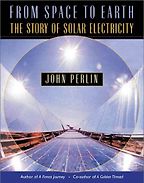
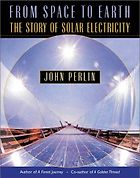
Your first book, From Space to Earth, is about the history of solar electricity.
This is a beautiful book. It’s everything an introduction to a subject should be. It’s structured in a very intelligent way; it has short chapters; it has a lot of good illustrations. It’s based on a lot of firsthand interviewing and research.
Solar cells were invented in 1954, but for the first 20 years they were only used for one thing: powering satellites. It was only around the time of the oil crisis that people started to think about what you could do on earth with these solar cells – hence the title of the book: From Space to Earth.
Pretty much all of the early applications of solar cells were ‘off-grid’. You had a remote application that couldn’t be connected to the electricity grid, and therefore it was wonderful to have a source of electricity on-site. The microwave repeater stations in places like Papua New Guinea were a classic example. You’re trying to get a telephone line over a mountain range that is completely covered in trees, and the only way to do that is to install repeater stations that carry the signal. If you do it the traditional way, you have to use diesel fuel, which means you have to hire a helicopter every month to take the fuel to refill the generators. Another group of customers for early solar panels were the marijuana growers in Humboldt and Mendocino counties in California. They like living in remote places, so were off the grid and didn’t have conventional electricity supplies. Solar was the way they got their ordinary electricity.
What year does the book go up to?
It goes up to the mid-1990s, so is a good complement to my own book, which takes you up the present. Perlin’s book is a history of the first 40 years of solar, when it was used almost entirely for off-grid applications. My book is about on-grid – things that you plug into the electricity grid.
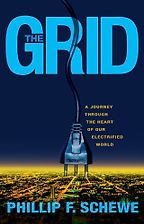
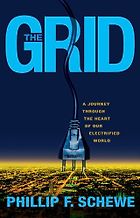
Tell me about your next book, The Grid: A Journey Through the Heart of Our Electrified World
I chose this one because we depend on electricity for just about everything we do, and yet most of us have absolutely no idea of how this stuff gets to us, or what it is, for that matter. Philip Schewe, the author, refers to it as ‘bottled lightning’. He quotes the National Academy of Engineering saying that the grid is the greatest engineering achievement of the 20th century, and also the largest industrial investment in history. That gives you an idea of the scale of the thing. And yet, it’s invisible. It’s something we take for granted and know nothing about. As part of my research I visited a power station, and it was very interesting. It was like going back in time, revisiting the steam age.
Is Schewe making a specific argument?
No. It’s a descriptive book. It’s about the grid itself – how it works, what it’s made up of. If you want to understand electricity, and how it’s produced and how it gets to you, The Grid is the book you need. One of the book’s foci is what happens when it all goes wrong. There’s a very good, very detailed description of a big blackout that took place in New York in 1965, and Schewe goes into how it happened and what the consequences of losing electricity were. I found it a very enjoyable book.
Isn’t part of the problem with using solar energy to supply additional electricity to the grid that you can’t just turn these coal-fired power stations on and off?
You have this extraordinary balancing act of supply and demand that goes on all the time. You can store electricity, but it’s very difficult. You have to resort to extreme schemes, like pumping water uphill when it’s cheap to do the pumping, and then letting the water come down through turbines when you really need it in peak periods. The book does talk a bit about solar, and what the advent of renewables will mean for the grid. There are issues there.
Support Five Books
Five Books interviews are expensive to produce. If you're enjoying this interview, please support us by donating a small amount.
But the utility world is being turned upside down at the moment. It’s interesting because, as Schewe points out in the book, the utility world has been a very dull one for a long time. There has been almost no innovation for 100 years. And now, suddenly, it’s becoming a very turbulent world. Innovation is happening left, right and center, and there’s this whole notion of the ‘smart grid’ – where the individual components of this vastly complex machine are interacting with each other, in a sense like the Internet. That’s probably a good analogy for the kind of world we’re heading towards. There’s the whole business of smart metering of electricity. Have you got smart metering where you are yet?
I don’t think so.
The whole idea is that thus far we have been charged an average amount for our electricity every month, which doesn’t reflect the spikes in cost – when it’s hot and you turn the air conditioner on, everyone else is doing the same thing. Smart metering means you get charged directly for the extremely expensive electricity, but ideally it also keeps you informed, so that you can adjust your usage to take advantage of cheaper times.
We live 60 miles outside of New York City, and I’m just happy if we have electricity. We have power cuts whenever there is snow or a thunderstorm.
It sounds like you’re a natural for solar! In addition to becoming cheaper, it’s also becoming more reliable. Investigate. Maybe you can even make some money investing in it.
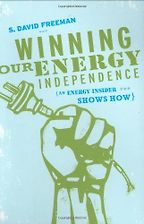
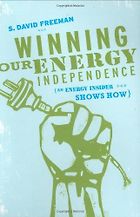
Let’s move on to Winning our Energy Independence, by David Freeman.
This book is not about solar specifically, but David Freeman has been in his time – and still is – a very active solar proponent. He’s a very, very interesting man. He’s been around forever and is now 83. I met him a couple of years ago in Los Angeles. He’s from Tennessee, although his folks are Lithuanian; his father was an umbrella repairman. He trained as a lawyer, and claims to have been the first energy policy person working in Washington – he goes back to the Johnson administration. When Carter was putting together his energy policy, it was based on Freeman’s work. What’s interesting is that after he left Washington, Freeman became a manager of utilities. At one stage, he was known as ‘the utility repairman’, because he was the guy who was called when something went wrong. One of the places he went to was SMUD – the Sacramento Municipal Utility District. They were having terrible trouble because their nuclear reactor was breaking down left, right and center. It was a twin of the Three Mile Island nuke, and eventually it was shut down.
Has he now retired?
He’s still active. When I saw him, he was running the Los Angeles Water and Power Department, the local utility, and ordering large quantities of solar power. The reason I love this book is that he’s really good with one-liners, like ‘Many professionals in the utility industry resist change as much as little boy resists a bath.’ And he really calls a spade a spade. For example, he writes, ‘The phrase clean coal is an insult to human intelligence. There is no such thing. Coal is inherently dirty.’ There’s no messing about with Dave Freeman.
What’s the book about specifically?
It’s about what needs to happen to the utility industry in order for us to get out of this mess that we’re in. The solution, of course, involves large amounts of renewables in general, and solar in particular. This book is beautifully done. It’s formatted in a really accessible way. It’s got little boxes in which he puts anecdotes, and, although the intent is serious, they’re almost always funny, or have a joke in them.
Has the book been persuasive? Is he having an influence?
He is, in California. He’s been tremendously influential and continues to be. My theory, which I hope will be correct, is that what California does today, the rest of the U.S. will do tomorrow – or the day after, in some cases.
And even if U.S. conservatives aren’t much interested in renewables per se, they are amenable to the idea of reducing dependence on foreign oil.
Yes. Although renewables in general, and solar in particular, are perceived to be Democrat/liberal issues, the whole energy independence bit plays well to a Republican audience as well. So solar tends to be supported across the board. It’s very popular with everybody except our friends in the oil and coal industry. The thing about Freeman is, he really knows what he’s talking about – he’s got more experience with running electric utilities than anybody else; he knows more about the energy business than anybody else. And he expresses it in such an entertaining way. So many books about serious subjects are insufferably dull, but this one is really enjoyable. It’s also quite an unknown book. I don’t imagine a lot of people have come across it, but it deserves to be widely read.
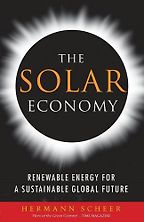
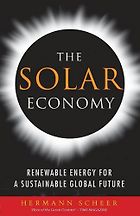
Your next choice is A Solar Manifesto, by Hermann Scheer.
In order for anything to be successful, you need supportive legislation, and to get supportive legislation you need politicians who are committed and informed. Herman Scheer was the great political champion of solar in Germany. He was the one who bulldozed the crucial legislation through the German parliament, against the wishes of the Schroeder government. Without him, the whole sea-change in solar in Germany would not have happened.
He wasn’t a scientist by background, but he recognised that there was a problem here – the problem of conventional fossil fuels running out, and nuclear having a whole set of its own problems. He was politically ambitious, and recognised that there was an opportunity for him to make his mark by championing renewable energy in general, and solar in particular. He was an autodidact, and he read up and was prepared to take on anybody – it didn’t matter whether they were scientists or economists. He would take them on head-on, and he would win.
He was a bulldog of a man, powerful and compact, a really dynamic individual. In his youth he played water polo, which probably was good training for the kind of political battles he subsequently fought. Tragically, he died late last year, at age 66.
Get the weekly Five Books newsletter
There are two books here – I originally chose The Solar Manifesto because it was the first, but Scheer also wrote The Solar Economy, which came out in 2004 and so is more up to date. It reinforces everything the first one said, but adds more detail and more practical material. The books reflect the author. They’re so strong. You can really believe, as he believed, that 100% renewables is a viable solution within a relatively short space of time. He quotes the example of the railways – how quickly they were built once people really got the idea that they were going to be useful. He says, ‘We’ve done it before; we can do it again.’
He’s a real visionary, then?
Absolutely. Without parallel. He was a one-off, Hermann Scheer. There is no one else like him, anywhere. We owe him a great debt.
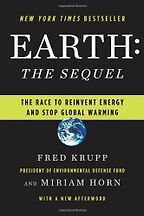
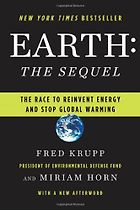
On to your last book, Earth: the Sequel: The Race to Reinvent Energy and Stop Global Warming
This book is only partly about solar, as one part of the solution to the energy issue. I chose it partly because it’s a relatively new book, but also because we’ve already had books by a historian, a utility manager, and a politician; the environmental NGOs are also playing a very important role in all of this – in getting the legislation changed, in running campaigns – and Fred Krupp is president of the Environmental Defense Fund. Fred is interesting because, unlike a lot of people in the NGO world, he’s prepared to get down and dirty with corporate types. He sees that working with companies is likely to have more of an effect than being righteous and holier-than-thou. The book provides examples of companies, of start-ups, that are doing good things, that might help in the grand scheme of things. From a reader’s point of view, it’s a good introduction to a range of potential solutions to the energy problem.
Five Books aims to keep its book recommendations and interviews up to date. If you are the interviewee and would like to update your choice of books (or even just what you say about them) please email us at [email protected]
Bob Johnstone is the author of five books, including most recently, Switching to Solar: What We Can Learn from Germany’s Success in Harnessing Clean Energy. His career in journalism has included stints as a correspondent for New Scientist, the Far Eastern Economic Review, and as a contributing editor for Wired. In 1990 he won a Knight Science Journalism Fellowship at MIT, and he has also been an Abe Fellow at the Japan Foundation Center for Global Partnership. His articles have appeared in Nature, Science, and the Economist, among others. He lives in Australia.
Bob Johnstone is the author of five books, including most recently, Switching to Solar: What We Can Learn from Germany’s Success in Harnessing Clean Energy. His career in journalism has included stints as a correspondent for New Scientist, the Far Eastern Economic Review, and as a contributing editor for Wired. In 1990 he won a Knight Science Journalism Fellowship at MIT, and he has also been an Abe Fellow at the Japan Foundation Center for Global Partnership. His articles have appeared in Nature, Science, and the Economist, among others. He lives in Australia.