Nonfiction Books » Science » Biology
The best books on The Strangeness of Life
recommended by Carl Zimmer
The science writer and award-winning blogger Carl Zimmer discusses the strangeness of life, from viruses to manipulative flatworms


The science writer and award-winning blogger Carl Zimmer discusses the strangeness of life, from viruses to manipulative flatworms
What is it that draws you to explore the ‘strangeness of life’?
The idea of the strangeness of life has been preoccupying me ever since I was a kid. I just didn’t articulate it until I was making a living writing about it. The most important thing science can do is to show that when you look around, you are only really seeing the surface of things. Reality is very different, and it is not what your intuition is telling you. You see the animals and the plants around you but there is also another world of life you can’t see. And even though you think you understand the animals and plants, you probably don’t.
Your first choice is Armand Leroi’s Mutants, which is about a biologist who recounts the lives of people with extreme deformities.
That’s right. Armand Leroi is a biologist at Imperial College, London. And this is a really wonderful book because Leroi takes what could have just been a freak show and turns it into a really amazing experience. He writes about these people as people. He finds wonderful portraits of individuals – for example, some of them are covered in hair and look like wolves – and he tells the story of their lives in quite beautiful prose. He also uses their conditions to talk about the rules of development.
And what does he reveal about those rules?
What is important is that mutants are not random. You don’t get a random range of deformities; they have certain patterns. So you don’t see people developing an eye on their hands, for example. That just doesn’t happen. But it is possible for two eyes to become one. So, why is it that you don’t see eyes developing on hands but you do see two eyes becoming one? And why do Siamese twins form in particular patterns and not others? You don’t see twins joined at the toe.
The reason is that our development follows a pretty tight path. When the genes that are governing our development are mutated, they don’t get disrupted in all that many different ways.
These regularities in disruptions can reveal to you what is going on underneath. This is a tried-and-true method in biology. When people are trying to understand how the brain works, one of the most important things they can do is to study people who have different kinds of psychological disorders. People can lose their ability to use language but not their ability to perceive music, and that starts to show that, actually, there are networks for these different kinds of cognition.
The same thing goes with development. Three biologists won the Nobel Prize in 1995 for studying how fruit flies sometimes develop extra wings or sprout legs on their heads. Those kinds of deformities let them zero in on genes that define a body from head to tail. They studied it in fruit flies – and then, lo and behold, it turns out that we actually have the same genes. They govern our anatomy. When those genes mutate in us, we can end up with extra fingers. And so again there is a hidden unity under there.
Which he is exploring.
Yes. And he does such a beautiful job of showing that and doing it with poetry. He is able to show the beauty in a birth deformity.
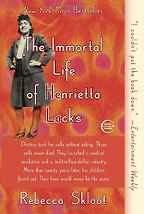
Your next choice is Rebecca Skloot’s Immortal Life of Henrietta Lacks. This is almost a detective story – it’s about the woman who unknowingly helped create the polio vaccine and uncover the secrets of cancer.
Yes. This is a fascinating book on so many different levels. It is really compelling as the story of the author trying to uncover the history of the woman from whom all these cells came.
Who was known as ‘HeLa’.
She had cervical cancer, and samples were taken from her body. Scientists who were trying to culture human cells discovered that her cells could just grow and grow and grow. It had never been seen before.
Why do you think that was?
That is one of the things that I find particularly fascinating. What happened to Henrietta Lacks is that she was infected with human papillomavirus. Now lots of people get infected with this virus. It is very common on people’s skin, for example. A lot of people carry it and don’t even know it; in some cases, it causes a small wart. But if it is spread sexually, women can develop cervical cancer from it.
And it is amazing what this virus does. We usually think of viruses as infecting cells and making new copies of themselves until the cells explode and die. All the new viruses then go off and kill other cells. But that’s not what all viruses do. I am obsessed with viruses.
I know you have just written a book about them.
For me, part of the fascination with Rebecca’s book is that it is the story about what viruses can do. The papillomavirus infects a cell in the skin or other kinds of lining in the body. But it doesn’t try to kill the cell; it actually does the opposite. It actually produces proteins that link onto the proteins in the cell and speed up its growth and division. Basically, its strategy is: If there are more host cells that are infected with the virus, that means there are more viruses.
Support Five Books
Five Books interviews are expensive to produce. If you're enjoying this interview, please support us by donating a small amount.
The reason most of us can have this type of virus and not be harmed by it is that we are constantly shedding the top layer of our skin. That’s what dust is. The viruses in these cells gradually rise towards the surface of our skin, and then we just get rid of them. So they don’t hang around long enough to cause trouble. There is this nice kind of balance between the virus and the host most of the time.
But with Henrietta, there was no balance.
Exactly. For people with cervical cancer, the virus just speeds things up too much. Once you get that kind of uncontrolled growth, you have cancer. In the case of Henrietta Lacks, the virus created a kind of super-cancer, because it could not only grow rapidly in her body, but also grow rapidly in a Petri dish. So it is continuing to grow today, even though she has been dead for some 50 years.
But her children and grandchildren live on – and the author actually tracked them down and went to visit them, to see how they are coping.
She did. One of the reasons I like this book and my previous choice, Mutants, so much is that they both recognise the human dimension of their story. They are talking about very strange biology, but there are people involved. And they are real people; they are not just cardboard cutouts. Henrietta Lacks’s family faced the strangeness of life in a very intimate way. Their mother dies of cancer, and yet years later they hear from scientists that she is actually still alive, and she is in a lab somewhere. And they try to make sense of it all, which is tough, because they are not scientists. Her husband only got a grade-school education.
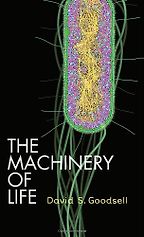
Talking to the scientists all those years later must have been some conversation! You said the reason you chose your next book, The Machinery of Life, by David Goodsell, is that it forces you to think differently. How?
Even when living things are operating normally and humming along, it’s still beyond our ordinary understanding. You really have to stretch your powers of imagination to try to get a sense of what it is like inside of a cell. Ironically, textbooks can make that imagination more difficult. If they want to show how genes are used to make proteins, they show a very tiny, isolated piece of DNA, and then an isolated strand of RNA, and an isolated ribosome that uses the RNA to make a protein – as if that was all there was in the cell. But the fact is that every cell is actually crammed with molecules, all of which have really important things to do.
And this book helps give a clear perspective on that?
Yes. I think that David Goodsell’s illustrations do a masterful job of giving you that sense of just what a mob scene it is inside of cells. It should raise some very important questions. Molecules actually have to move across the cell in order to do certain things. For example, in order to make a protein, you have to copy a gene, and then get that copy of RNA away from the DNA and off to other kind of factories in other parts of the cell.
Well, how are you going to do that when you are packed tight in this crowd of other molecules? Molecules don’t know where to go – they don’t have a map – so how does that work? Scientists have some ideas about it, but they are still trying to figure out many of the fundamentals. It’s a very hard problem, and I think just one look at one of David Goodsell’s illustrations really drives home just how hard it is.
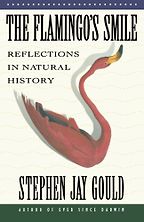
Next up is Stephen Jay Gould’s book, The Flamingo’s Smile, which includes essays that offer a look at strange animals around the world and their link to evolution. What are some of the strange animals he is talking about?
He will talk, for example, about a male spider that throws himself into the jaws of a female as they mate. She will actually devour him while he is still mating.
Why would evolution have evolved the spider to do that? It seems wholly bizarre.
It is bizarre. Gould would pick out these examples and write these essays to champion a particular view of evolution and to try to critique other views. Someone like Richard Dawkins would look at this as potentially being an adaptation, and would ask, ‘How does this behaviour raise the reproductive success of the male, so that natural selection favours that expression and it spreads?’ Gould likes to push people to think about other possibilities. Maybe some things are a fluke of history. Maybe something that looks like an adaptation is nothing of the sort. It might be a by-product of some other adaptation, for example. Gould wanted to get people to think more broadly. So he picked out these sorts of examples from biology which are really mind-blowing, and then used them to make his case.
Do you agree with him?
Gould’s legacy is huge, but it is certainly not uncontested. For example, with the spiders, Gould was effectively mocking the idea that they could actually have reproductive success. Scientists who have studied this process took this as a challenge. It was good, in the sense that it stimulated them to go out and do more experiments to make their case.
So it was a good catalyst.
Yes. And in that particular case of Australian redback spiders, I have to say that the evidence shows Gould was wrong. A lot of careful research shows that the males let themselves be cannibalised. The longer the female spends munching on them, the more sperm they get into her. These males only come across females infrequently, so the best strategy is to get as much sperm into them as possible. They are not living to mate another day!
By giving it all for their legacy.
Yes. There may be other cases in which cannibalism is just a side effect. But not this one.
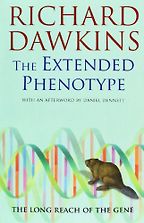
Another good example of the strangeness of life! Your final choice is Richard Dawkins’s The Extended Phenotype.
I chose this because I think it expresses a really important idea. Richard Dawkins wrote this book not long after The Selfish Gene came out. That was his landmark book, in which he argued for a gene-centric view of evolution. Genes build bodies. They build traits, which are known as phenotypes, in order to be replicated in the next generation.
In this book Dawkins took this argument to the next level. He said that when we think of the phenotype, we think about fur or eyesight or the red blood cell’s ability to take in oxygen. But genes influence behaviour, and so behaviour is part of the phenotype. And that behaviour allows animals to change their environment in ways that can then raise their reproductive success.
For example, a beaver can build a large dam. That dam is part of what the genes in the beaver are doing to get themselves replicated. The dam alters the whole ecosystem for the beaver’s benefit, so it can get the food it wants. If you look at the dam, you can say: This is really just an expression of beaver genes.
A particularly strange example that Dawkins used was the way parasites manipulate their hosts. I find this to be one of the weirdest things in all of biology. When some parasites get into their hosts, they actually alter their behaviour to benefit the parasite. For example, there are flatworms that get into ants and then go to the next stage in their life cycle in cows and sheep.
How do they get there? They influence the ant by releasing some kind of chemical that causes the ant to climb up a blade of grass and clamp down on the very tip of it. The ant sits there and waits to be eaten by the cow or sheep!
How amazing – that is evolution on full throttle.
Right. So the ant clamped there on the grass is an extended phenotype of the parasite inside of it.
September 7, 2012
Five Books aims to keep its book recommendations and interviews up to date. If you are the interviewee and would like to update your choice of books (or even just what you say about them) please email us at editor@fivebooks.com

Carl Zimmer
In his books, essays, articles and blog posts, Carl Zimmer reports from the frontiers of biology, where scientists are expanding our understanding of life. In addition to writing books, Zimmer contributes articles to The New York Times as well as magazines including National Geographic, Time, Scientific American, Science and Popular Science. He also writes an award-winning blog, The Loom.
Carl Zimmer
In his books, essays, articles and blog posts, Carl Zimmer reports from the frontiers of biology, where scientists are expanding our understanding of life. In addition to writing books, Zimmer contributes articles to The New York Times as well as magazines including National Geographic, Time, Scientific American, Science and Popular Science. He also writes an award-winning blog, The Loom.
© Five Books 2025