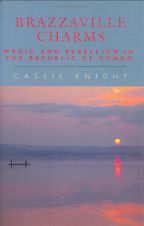
Let’s start with your own book, Brazzaville Charms. Please tell us about it.
I wrote it after living and working in the Republic of Congo, which is the smaller of the two Congos. It was a country I loved from the moment I arrived. Despite having a horrible government, it has a wonderful tiny capital city that is beautiful and French in its centre, with lively African districts where the majority of the population lives. The Congolese are great fun and there were many intriguing social issues and a history of some terrible civil wars. One ethnic group was led by Pastor Ntumi, who claimed he was the reincarnation a Jesus-like figure. His followers believed he had magical powers. It was a religious movement and also an armed rebellion and a political movement. The majority ethnic group were being sidelined from government and services and were fighting for their right to be equal citizens. But in terms of the actual leadership of the movement, it was a priestly figure who promised redemption and revelation as well as a change in social life.
The actual civil war Pastor Ntumi led started in 1998 and it was a terrible crisis because fighting took over half the capital, where the main ethnic group lived. They fled to the bush, which was essentially rainforest with a few patches of cultivation. Pastor Ntumi held that civilian population captive in the forest while his band of followers called the Ninjas fought against the army. For around six to nine months up to 400,000 people were trapped in the forest and there was terrible malnutrition. After the fighting finished people started returning to the city and it was one of the worst emergency situations that NGOs have ever seen. But because it happened at the same time as the Kosovo crisis the world just wasn’t listening, even though it was much more severe in terms of numbers and the humanitarian crisis that followed.
Could you describe the aid response?
The main response was to set up nutrition centres. Usually it is those under five years old who are the most severely affected by malnutrition. But this was the whole population. Adults were coming in looking absolutely wasted by malnutrition. A doctor showed me his ID card from just after the war. It was like looking into the future. His photo showed a shrivelled, ancient face and his neck was so thin. In real life he had recovered and was once again a strong, muscular, good-looking doctor. But he had come out of the forest as malnourished as everyone else.
The acute phase lasted for three months and then the CRS supported the health services as a lot of the clinics had been burnt in the fighting. We trained staff and gave families seeds and tools so they could start farming again. It was so moving because these areas were so desperate for assistance. No goods were reaching them because the roads were destroyed. The young men who had fought were waiting for life to get better and you knew that if it didn’t the fighting would start again.
There was officially a peace deal but the rebels were still there and fighting blew up again in 2002 with another civil war. It’s still in a precarious neither-war-neither-peace situation.
Your book also contains stories of sorcery – could you tell us about that?
I became really intrigued by the widespread belief in sorcery and magic. I met a famous sorcerer who was locally believed to be the most powerful sorcerer in the country. He was said to have played a role in the civil war. His city had escaped the war and he claimed credit for that because he put a magical barrier around the city and fought another sorcerer. People brought him tributes afterwards and even the president had called on him to keep him on side.
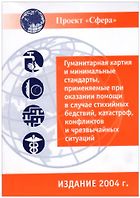
Why did you select the Sphere handbook on Humanitarian Charter and Minimum Standards in Disaster Response?
This is a very different type of book. It’s very practical for people working in emergency response. It was launched after the Rwandan crisis and it’s based on human rights – specifically that everyone has the right to live in dignity. This is enshrined in international law but the handbook tries to define what dignity is. When everyone is rushing to provide assistance as quickly as possible there is now a minimum standard for providing food relief, sanitation, shelter and so forth.
Particularly in the larger crises, such as the Rwandan genocide, there were lots of new NGOs and groups who just set up and did their best. But there was no real definition of what the assistance is or should be. Now there is and you can be called to account. Or you can just all agree on what the basis is without having to research it first. It’s a minimum standard and in a lot of emergencies it’s difficult even to reach it, but at least the standard is there. So it’s a very useful book and I have spent a lot of time training people on it. It is really helpful for everyone to know in advance what they are aiming to do. It has been translated into hundreds of languages and it’s used by thousands of different organisations and it’s recognised by donors as well as NGOs.
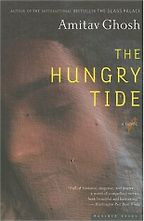
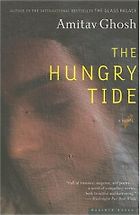
Tell me about The Hungry Tide by Amitav Ghosh.
I selected this book because it is set in the Sundarbans in Bangladesh, which is the mangrove coastal area that is prone to cyclones. It contains a vivid description of a cyclone. Just last week I was visiting the cyclone-hit area of the Sundarbans and to have an image of what it is like makes it so much more real. Even though I have spoken to people who have lived through a cyclone, I sometimes find that fiction can make me understand things more fully.
The area is still suffering the effects of cyclone Aila, which happened nine months ago and killed over 300 people. The damage it caused to the embankments that hold back the sea and protects the villages has not been repaired. So every time there is a high tide, the water rushes in again and destroys the houses a bit more. It’s an exceptional case and a desperate situation. We have funding to rebuild the houses but we cannot do so because the villages are still underwater. We are waiting for the government to rebuild the embankments. So we are trying to find out why there are delays and to push the slow bureaucratic systems to fix the embankments so that the aid can be delivered.
What are the main events of the story?
A woman goes to the mangroves to conduct research about the river dolphins and she works with a Bangladeshi man who knows their habits. It’s the story of her relationship with him and the story of his relationship with the environment because he knows and loves the mangroves and rivers. There are also wonderful descriptions of a royal Bengal tiger emerging out of the water and of a tiger attacking a village and the villagers killing it. Eventually, the story culminates with the cyclone.
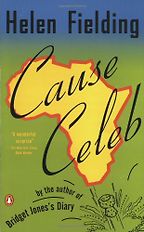
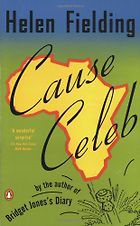
What made you choose Cause Celeb by Helen Fielding?
Because I believe it is the only novel about emergency response. This is quite odd, considering that it often dominates our news and so many people donate to aid organisations. And it’s written by Helen Fielding, who is best known for Bridget Jones’s Diary. She tells a good story. It is the story of a woman who drops her boyfriend and well-paid job in London and goes to a made-up African country. This part is slightly odd because it could very easily have been a real one. To me it seems based on Ethiopia as there is the background of conflict and it was published after the 1984 famine. The main character gets involved in the relief efforts after the famine and feels really strongly about it. She returns to London and to her previous business contacts and her boyfriend and persuades them to fundraise. She returns to Africa with money and a media team to publicise what’s going on.
It’s a slightly simplistic version rather than a complex account, but it’s a good read and having worked in emergency response myself I believe it’s a pretty accurate portrayal of what goes on.
There is also a scene that makes you reflect about watching these sorts of news stories every night on TV. The television crew are really excited because they catch a dying woman’s words on camera, which is morally ambiguous and quite painful to think about. The crew thinks of her as one of the ‘starving millions’. For the main character though it was very painful because she knew the woman, who was well-educated but trapped on the wrong side of the situation and, along with everyone else, could not afford to feed herself. It makes you think about what you’re watching.
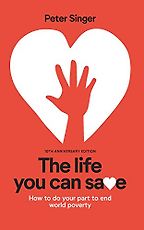
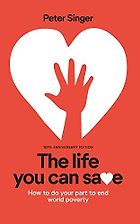
Why do you recommend The Life You Can Save by Peter Singer?
Because it’s a really inspiring read. It’s very nicely set out in terms of having clear arguments and picking up on things that are often said but not thought about. Peter Singer starts with a simple story – if you are walking past a pond and you see a child floundering and it looks likely that the child will drown, despite the fact that your new shoes may be ruined, you will automatically go into the mud to save the child. So he argues that if we all agree on this, why do we then buy new shoes and luxury goods that we don’t really need, when putting that money into an aid programme can save a life?
He asks how we can accept that millions of children are dying from curable diseases and poverty every year, when in many places we have more than we need. He looks at that premise under many different spotlights. And he examines aid in a way that I really appreciate. He looks at all the key questions and all the aspects of aid, such as ‘Can we be convinced that our money will be well spent?’ He examines the question very thoroughly and comes up with a resounding ‘yes’.
At the end he comes up with a practical plan as to how much people should give. And there are some really inspiring stories of people who have given almost everything they have. There is a group called the Fifty Percent Club. Some are rich whilst others are not, but they all derive great pleasure from donating half of their capital or income to good causes.
He does calculations looking at the millennium development goals for 2015, and works out that if everyone gave $300 a year we would be able to achieve them. This is great, because as we get closer to 2015 it had seemed that the goals are no longer realistic. I myself had begun to accept that we set targets in this world that are not achieved and that poverty will continue. But this book is great because he says no, we can do it, but we all need to take responsibility.
Five Books aims to keep its book recommendations and interviews up to date. If you are the interviewee and would like to update your choice of books (or even just what you say about them) please email us at [email protected]
Five Books interviews are expensive to produce. If you've enjoyed this interview, please support us by donating a small amount.