Tell me about Losing Control.
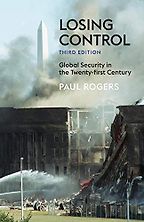
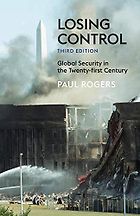
I used to work with the author, Paul Rogers, at Oxford Research Group and we ran the sustainable security programme together, and this book came out about ten years ago. The third edition has just been released this year. The reason why this is top of my list is that it introduces a key concept that was missing for this area and it’s a control paradigm, the notion of liddism. It’s basically a trend whereby Western states attempt to control threats to international security by military means, rather than understanding the nature of the threats and countering them at source. So, you can compare this to a pressure cooker where every attempt is made to keep the lid on, instead of turning down the heat.
Oh, I see. Liddism. The lid. Clever. So, what would be an example of trying to keep the lid on instead of turning down the heat?
Some of the policies pursued during the so-called ‘War on Terror’.
And how would you have turned the heat down?
Well, there you have to identify some of the specific sources of insecurity and attempt to address them. So, for example, in that instance you may try to look at some of the reasons why some Muslims are being alienated and marginalised, particularly politically and economically, and try to work with local governments, mosques etc, to try to resolve some of these issues. The key concept is about going to the source of the threat rather than trying to counter it and keep a lid on it. If you try to control it then you end up in a situation where the pressure continues to build and the lid might blow up in your face. Then there is the notion that irregular warfare from the marginalised communities may in the end prevent powerful states from maintaining their positions through military force. So that’s the key concept that Paul introduces, and it’s a wonderfully written book and captures the whole essence of this in a powerful way.
The second thing he draws attention to is the way that Western states very much focus on the wrong causes of insecurity: they are focused on traditional military causes, rogue states, terrorism etc, whereas the more pressing and fundamental causes are the widening socio-economic divide and environmental factors like climate change and competition over resources. Paul was ahead of his time in highlighting these issues. Nowadays these ideas are accepted. He is an academic but was aware that it is not enough to sit around thinking about these things. He understood the policy implications of his work and worked with think-tanks to try and push through recommendations based on his analysis.
It didn’t go very well then, given what happened in Iraq.
The thing with Iraq is that everyone was telling Tony Blair and policy-makers that this was a bad idea, but they pursued a different agenda. So what Paul was saying was unfortunately ignored. However, the flip side to that is that a million people marched on London to protest against the war and I think if the UK or America were thinking seriously about threatening military force against, say, Iran they would have to think twice. I’m not sure a government could survive politically if they were to do the same thing again. The sense of anger and injustice is too great.
Blair’s Wars, John Kampfner.
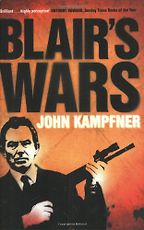
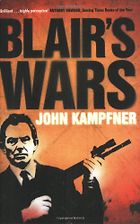
This is a great book. It came out just after the Iraq invasion. At the time John Kampfner was the editor of the New Statesman and his key question was: why did Tony Blair support George Bush and the use of force in Iraq?
And?
Well, to answer this question he goes right back to the beginning of Blair’s premiership and he makes the point that Tony Blair took Britain into five different conflicts. He goes right from the very beginning – he starts off with air strikes in Iraq, the Kosovo war, the dispatch of British troops to Sierra Leone in 2000, the overthrow of the Taliban in Afghanistan in 2001, the invasion of Iraq in 2003. He tries to pick apart a very human, psychological thing that was going on behind the policy decisions and talks about what happened in the shift, particularly in Tony Blair’s mind. Early on there was an emphasis on humanitarian intervention, but by the end of his premiership he was involved in the illegal occupation of Iraq with George Bush. Kampfner talks around these issues and about the style of government that led to some of these disastrous foreign policy decisions.
What was going on psychologically?
He talks about the failure of government decision-making and focuses on the fact that the style of decision-making was very presidential and involved a very small group of political appointees and civil servants. Cabinet and parliament were given a marginal role and Blair firmly believed that he was doing the right thing. He really did believe that Saddam Hussein was an evil man and that he was right.
That’s not that bad a point, is it?
No, it’s not, but when you start sending armed forces into another country based on purely moral, gut-reaction feelings of good and evil, we start to fall into a very dangerous policy-making process. And where do you stop? Saddam Hussein is not the only dictator who has repressed his people and done awful things. Also, there has been a lot of work done on humanitarian intervention, where the military has to be used to create a space for the aid to go in, and that wasn’t the case in Iraq and it wasn’t the point. All the excuses they used – WMD, terrorism, humanitarian need – they were talked about after the decision had been made and I think the decision was a very personal moral decision. It wasn’t a case of there being a hidden agenda – it was that simple. He believed it was the right thing to do and the more people tried to sway him the firmer he became in his belief, which is again a very human trait. To whoever tried to dissuade him, he just said: ‘Saddam Hussein is an evil man.’
All The Shah’s Men.
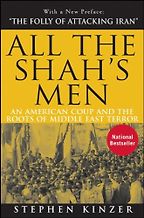
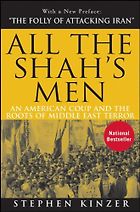
This is by a former correspondent for the New York Times who focuses on the 1953 CIA-backed coup that removed the democratically elected prime minister of Iran, Mohammad Mosaddegh, and replaced him with the Shah. This was at the behest of the British because Mosaddegh had nationalised the Anglo-Iranian Oil Company. What he does in this book is give a good and quick introduction to Iranian history and its relationships with America and Britain. He draws an admittedly tenuous line from the 1953 coup to the 1979 Iranian revolution and then to the 9/11 attacks. That’s the narrative framework, and one of its strengths is to show how covert and overt interventions against democratically elected leaders has turned opinion in the Middle East against America. It’s written for a Western audience and explains why there is so much anger against Western intervention, given the history from the end of WWII, through the Cold War to now, where the West is intervening again.
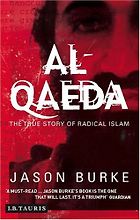
The Jason Burke book on al Qaeda.
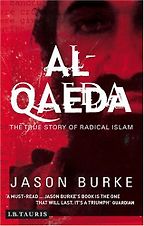
He’s a great writer and his other book, On The Road to Kandahar, is really good too. He was one of the only journalists who, right from the beginning, were saying: hang on a minute. It’s not that simple. What he does in this book is explain the history and significance of al Qaeda and the motives of those attracted to its violent ideology. Again, he was one of the earliest people doing this and it’s a very deep analysis and understanding drawn from an interaction with the people. That comes across in the book very, very well.
These kinds of books worry me. I always think they’re going to glamorise al Qaeda and the author somehow. ‘I went into a cave with my turban on,’ kind of thing. The machismo.
I think to try to understand it is not necessarily to condone it. In order to defeat something you have to understand it. He doesn’t do the machismo thing – this is an analysis based on personal experience and there are personal anecdotes in the book but it’s restrained and presciently written. He argues that al Qaeda isn’t a structured terrorist organisation. It’s a core of bin Laden and his closest supporters, then the wider network and then the ideology of it, of freeing Muslim lands and cleansing a corrupt world through violence. The last is the key thing he explores, and he presents bin Laden, in part, as this important countercultural symbol like a Che Guevara for the Middle East, representing the discourse of dissent for some young Muslims. This is how he is viewed by some people. The other thing he does is he explores the West’s misunderstanding of Islamic militancy and the fact that it is very diverse with lots of different local manifestations. The focus of America on al Qaeda is a distraction from examining why people are attracted to this kind of ideology.
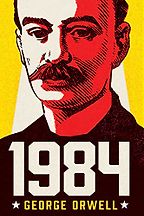
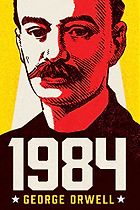
Now you’ve got Nineteen Eighty-Four
.
This is perhaps an odd choice for this list, but it’s just a brilliant book and I think fiction can explore human nature and the nature of government just as well as nonfiction.
I always thought it was about Communist Russia though. What can it tell us about today’s world?
Obviously, it’s a story about the dangers of authoritarian states, drawing parallels with Communism, but if you reread it today there is resonance. For example, Orwell talks about the perpetual war that exists between these three super-states and which drives the economy – that tallies with the long war against Islamo-fascism that the War on Terror became. And propaganda is very strong in the book and they have this concept of ‘blackwhite’, which is the ability to accept the ‘truth’ the Party puts out, however crazy it might seem. Also there’s the concept of the ‘unperson’ in the book, people who have been erased from history. This has parallels with extraordinary rendition and Guantanomo Bay where people were ‘disappeared’. Some of what he was saying back in the 40s has so much resonance now. Orwellian has come to mean the kind of surveillance state we live in today, with all the CCTV. It’s not a prophetic book but it’s a warning. The language of Newspeak has given us wonderful words, the language the government brings in to replace English in the book. The one I really like is ‘doublethink’ which is reality control and holding two completely contradictory beliefs in one’s mind at the same time and accepting both of them. It’s such a wonderful description of the way human psychology works, particularly when we’re duped into believing completely ludicrous things by governments.
These recommendations were last updated August 3, 2017.
Five Books aims to keep its book recommendations and interviews up to date. If you are the interviewee and would like to update your choice of books (or even just what you say about them) please email us at editor@fivebooks.com
Five Books interviews are expensive to produce. If you've enjoyed this interview, please support us by donating a small amount.