You’ve chosen what you regard as the best speeches of all time for us and Roosevelt’s Inaugural Address is your first choice. Tell me about this speech.
This was made at a very critical period in our country’s history. It was a speech that every American who had a radio was listening to. I thought it gave the country a sense of hope, when all around them there seemed to be nothing but hopelessness. There were 25 million people out of work and the stock market had collapsed two or three years before, so this speech summoned the country to a sense of hope.
What is it about the actual speech, about the way it’s written, that is so brilliant?
Well, what impressed me about the speech was that, to me, the measure of or index of a good speech is not merely the words that are festooned together and spoken – presumably by someone who has a good delivery or even an exceptional delivery – but the extent to which the text of speech, the substance of the speech, is responsive and addresses the major issues of the time. I wasn’t so concerned about Roosevelt’s delivery, but I measured the text against the magnitude of the problem to which it was addressed.
The famous line is: ‘We have nothing to fear but fear itself.’
The country was in great fear. The country was in great despair, so that phrase was trying to speak to the Everyperson, to address the issue that was on everyone’s mind.
Tell me about JFK’s inaugural address.
Well, JFK, as you know, or maybe you don’t know, won the presidential election by merely 120,000 popular votes over Richard Nixon. The country was clearly divided; we were in the apex of what one would now describe as the Cold War, the great competition between ourselves and the Soviet Union, and here this younger man had taken over from Eisenhower, a World War II hero. This young man, whose inauguration day was relatively cold, some would say freezing cold, gave the address with no hat on, no scarf on, signalling the health and vitality of the new younger generation. He enumerated the problems that the country was confronted with, and then, of course, came the classic line: ‘Ask not what your country can do for you, but what you can do for your country.’
“In my judgement, the measure of a speech is not merely the text or words, or even the person who delivers the speech, but the context of the speech.”
Just recently we had the passing of Sargent Shriver, who was the architect of the Peace Corps, the most celebrated form of government volunteer service that this country has ever had. The Peace Corps came out of the Kennedy administration. What came out of the address was that we could indeed be competitive with the Soviet Union, that this was a new generation coming into power and he wanted to say to the people that this new generation was ready – professionally ready, managerially ready, morally ready, militarily ready. It was up to the task.
Who wrote it?
Well, Theodore Sorensen contributed to it.
Did he write most of JFK’s speeches or help write them?
Yes, he helped write most of them.
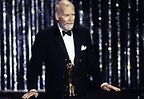
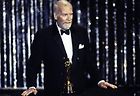
Tell me about Laurence Olivier’s Oscar acceptance speech (which I’ll quote for our readers, since it’s not very long).
“Mr President and governors of the Academy, committee members,
fellows, my very noble and approved good masters, my colleagues, my
friends, my fellow students: In the great wealth, the great firmament
of your nation’s generosities this particular choice may perhaps be
found by future generations as a trifle eccentric, but the mere fact
of it – the prodigal, pure, human kindness of it – must be seen as a
beautiful star in that firmament which shines upon me at this moment
dazzling me a little, but filling me with the warmth of the
extraordinary elation, the euphoria that happens to so many of us at
the first breath of the majestic glow of a new tomorrow. From the top
of this moment, in the solace, in the kindly emotion that is charging
my soul and my heart at this moment, I thank you for this great gift
which lends me such a very splendid part in this, your glorious
occasion. Thank you.”
It was a very short speech, and its power was in its spontaneity and its erudition. I don’t have to tell you that he was one of the great actors of the 20th century. A number of people who get Academy Awards come up and read from a written text or they say something that is kind of banal, but Olivier quoted some Shakespeare. It was very eloquent. It really spoke about the fact that he was honoured and humble – but it was just the way he spoke to this group of actors and actresses, and an example of the magnificent use of language.
What did he win for?
I think it was a Lifetime Achievement Award.
So, now we’re moving on to your speech. The Martin Luther King.
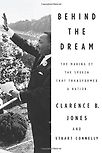
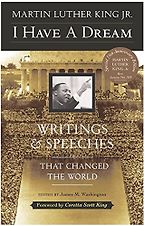
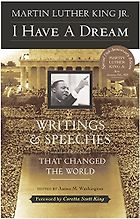
Well, the Martin Luther King speech, of course… To understand it, you have to see it within the historical context. It was made three months after a very successful and very searing campaign in Birmingham, Alabama, in April of 1963, when the country and the world saw pictures of young negro girls and boys being pummelled against a wall with fire hoses and police dogs nipping at their ankles as they were peacefully marching in opposition to racial segregation. So that was April 63, and then, in August, some four months later, King was speaking at the foot of the Lincoln Memorial to more than 250,000 people. He was speaking to celebrate and to validate the success of the civil rights movement at that point, but also speaking prophetically about his hope for a better America. The ‘I Have A Dream’ speech, the portion that is most talked about, was totally spontaneous and extemporaneous. It wasn’t written.
You didn’t write that bit?
No. The contribution I made was in the first nine paragraphs. What happened was that as he got through reading the first nine paragraphs of prepared texts to which I contributed some language and concepts, he was interrupted by his favourite gospel singer, Mahalia Jackson, who was on the podium with him, and he paused in the middle of his speaking and she shouted: ‘Tell them about the dream, Martin! Tell them about the dream!’ At which point he put aside the written text. I was standing about 15 yards behind him, and I saw him, I read his body language and I said to the person standing next to me: ‘The people assembled here, they don’t know it, but they’re about ready to go to church.’ It appeared to me that he had gone into his preacher’s body mode.
What did that mean?
Well, before, he stood at the podium reading the text and looking up, but once he decided to speak extemporaneously he assumed a pose I had seen so many times when he was preaching a sermon from a pulpit, being a Baptist minister. He was no longer just a speaker at a public assembly, it was like he was speaking to a massive congregation in a church. And that’s when he went off into this extraordinary ‘I have a dream…’
Get the weekly Five Books newsletter
What did you think? Did you think, ‘Oh no! What’s he doing to my speech?’
No! First of all, I didn’t consider it ‘my’ speech. I didn’t even know if he was going to incorporate and use the material in the first nine paragraphs. I didn’t know that until I heard it for the first time. I just thought it was rather bold and extraordinary for him to cast aside the written text, but Martin Luther King, Jr was a master orator. He didn’t need a written text to speak eloquently. Using contemporary parlance, I say to people that Martin Luther King, Jr was the only person I have ever observed or known – and I’ve never ever seen or heard anyone do it since – who could compose a speech extemporaneously in real time and while he was speaking. Like we use computer skills, he could cut and paste in his mind from previous speeches or writings and he could insert those excerpts into his real time speech. It was an extraordinary ability. It was a transcendental experience to be there. It was like watching lightning captured in a bottle.
I’m fascinated by what you say about him getting carried away and going into preacher mode, because I saw Bill Clinton speak at the London School of Economics, and he is a captivating speaker…
Yes, he is.
He got everyone in the room to fall in love with him, including an 80-year-old Republican oil magnate sitting next to me, but what he did was, he read slowly and falteringly for the first few paragraphs and then he put the speech aside and leant forward to go into preacher mode. He was probably trying to look like Martin Luther King.
That would be a very challenging task. I am frequently asked, since Dr King’s assassination on 4 April 1968: ‘Who today is most like Martin Luther King, Jr?’ I answer the question very quickly. I say: ‘Who today is most like Shakespeare, like Leonardo Da Vinci, like Michelangelo, like Beethoven, like Mozart? Who? No one.’
But they’re trying!
They try. Some people foolishly try, I believe.
I was just thinking about the wonderful oratorical techniques…
Well, Martin Luther King, Jr was a fourth-generation Baptist preacher, and I spent a good part of the 1960s not only around him but around a lot of other preachers. I would say during that period that there is a style, there is an inside way in which they talk about how they preach, and when you go and preach, they say, you have to be capable of telling them the story. You have to tell the story. The story is going to be whatever your text is going to be that day, but you have to tell it, in eloquent words, using various techniques, such as repetition. Some preachers will repeat a key phrase two or three times to make their point. Martin Luther King was the most gifted orator I had ever heard and that I can ever remember hearing in my lifetime. No one, no person I have ever heard, any place, any time, anywhere on this earth can speak as eloquently as Martin Luther King, Jr.
You sound as if you did know, while you were standing there, what kind of impact the speech was having. Do you think everybody did? Did it seem as momentous then as it does now, or did it seem more momentous then than it does now?
Well, when Dr King was introduced, he was the last speaker of the formal programme, and everyone had been waiting. So when A Philip Randolph said, in this deep sonorous voice, ‘And now, ladies and gentlemen, brothers and sisters, the man and the voice that we have been waiting for, the unquestioned moral leader of this nation – I am pleased to introduce the Reverend Dr Martin Luther King, Jr,’ the place exploded. The place was electrified; it was like he had dropped a match and more than 250,000 people exploded in public adulation and acclaim for the person who was about to address them. And then, while he was speaking, particularly when he began to speak extemporaneously in his Baptist preacher mode, it was transcendental. I had heard and seen Martin Luther King give many speeches, under many different circumstances, but this speech was extraordinary.
Five Books interviews are expensive to produce. If you're enjoying this interview, please support us by donating a small amount.
Tell me, lastly, about the Nelson Mandela. It’s not going to compare at all – I’m feeling sorry for Nelson now!
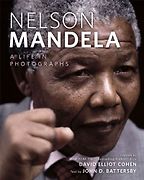
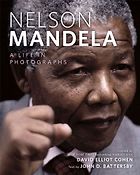
Well, you should not. Remember what I said earlier? In my judgement, the measure of a speech is not merely the text or words, or even the person who delivers the speech, but the context of the speech. And here the power of Nelson Mandela’s speech is not merely the words he has put together, but the power of the context. Here is a man who was in prison for 27 years, and now he is addressing the country on his inauguration as its president after a period of painful governance, a period of rigid, brutal apartheid. This former political prisoner is now president of the country, and he gives a speech in an effort to guide the country through a peaceful transition to a multiracial society. I mean, what a circumstance! The power, even the pomp and circumstance of the parliament and legislature, and you have President Nelson Mandela of South Africa addressing his country for the first time as president of the republic of South Africa. It’s the context! It’s the power of the moment!
Is it a good speech, though, in itself?
Yes. It’s a good speech. It’s a speech that is responsive and relevant to the particular historical moment in time. If you know anything about South Africa… When did he give the speech?
1994.
If you know anything about the preceding 25 years, that has to be an amazing speech. If I just say to you: ‘The former prisoner of Robben Island who was incarcerated for 27 years is now speaking as President of South Africa,’ that says it all.
It does. If you’re only allowed one of these speeches, I assume you’re taking Dr King’s?
If I’m only allowed one of the speeches…
Or you’re only allowed one line from one of the speeches.
Oh, then no question, Martin Luther King. There are two lines. First of all the beginning – and this is a paraphrase, it’s not exact: ‘We’ve come here to the foot of this great monument to redeem a promissory note that has been returned unpaid for insufficient funds.’ The promissory note is the guarantee of negroes’ freedom under the Declaration of Independence, and he says: ‘I refuse to believe that there are insufficient funds in the vaults of justice.’ That’s language that I crafted. And the other part I think is so moving if you know something about the history of the United States of America. ‘I have a dream that one day the great-great-grandsons of slaves and the great-great-grandsons and granddaughters of slave owners will sit down at the table of brotherhood. I have a dream, one day…’ Think about it. He dreams that the country will become one America, that it will become so reconciled that the descendents of former slave masters and former slaves will sit down at the table of brotherhood in our country. If you look at the speech or listen to it carefully, it’s all in the future tense. ‘One day I will…’ It’s always prophetic, always in the future. He reflected a more prophetic confidence in America than America had in itself.
Five Books interviews are expensive to produce. If you're enjoying this interview, please support us by donating a small amount.
This interview was published in 2011.
Five Books aims to keep its book recommendations and interviews up to date. If you are the interviewee and would like to update your choice of books (or even just what you say about them) please email us at editor@fivebooks.com