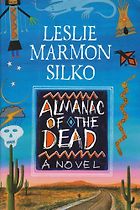
How does your first choice, Almanac of the Dead, illustrate the fragmentation indigenous peoples experience as the result of borders?
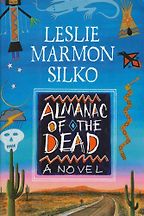
Even though native people do not recognise national borders, their lives have been impacted by nation states. National borders have made it harder for indigenous people in the United States to link their struggles to those of native people in other parts of the Americas or the world. Awareness of similarities has been emerging, and Leslie Silko is taking part in the movement towards the development of a consciousness of the global nature of indigenous struggles, and in her case in the hemispheric nature of those struggles. She’s one of the first ones to do this in fiction.
What is the allusion to an almanac in the title?
Silko is creating a fictionalised almanac that alludes to a pre-colonial artifact which was very important to Mayan tribes, the descendants of which live in present-day Mexico. Several of those almanacs have survived, and she is creating a fictionalised Mayan almanac that is actually the novel. Here she’s drawing on the idea of performative power that’s very central to native thought, where words are not just words but actually have power to create realities.
Silko’s modern-day almanac takes into account the long history of indigenous colonisation. She’s creating a vision of indigenous unity by describing a movement of landless refugees and indigenous peoples from the south that finds supporters in the United States. The main goal of the movement is the reclamation of lost indigenous land. But the movement is very inclusive. It’s not limited to indigenous peoples in the hemisphere.
Borders have been cemented in my reality from seeing maps as a schoolchild, with nations in different colours. How does Almanac of the Dead help readers develop a new interpretation of borders?
At the beginning of the book she gives you a map without national borders. On the map she locates the protagonists of her novel that are spread out all through the Americas. These characters move around a lot as well. The tricky thing is that Silko wants to present an indigenous world view that discounts national borders, but also show that borders matter and that they impact on the lives of indigenous peoples, mainly in a negative way.
Silko is drawing on myths that are central to the way indigenous people look at their history, the present and future – the way these times intermingle and transcend borders. So, for example, she develops a new view of Geronimo, a figure who symbolises resistance to the attempts of the US government and the army to put native people – Apache, in this case – on to reservations. She presents multiple versions of what may have happened to Geronimo. So she rewrites history in such a way that there is not just one version of Geronimo’s eventual surrender to the US army. Silko gives you multiple ways of interpreting what may have happened. She depicts Geronimo as a border-crossing trickster-like figure. He was trying to escape from the US army by going to Mexico, getting into skirmishes there and interacting with border tribes as well.
By putting the myth of a shape-shifting border-crossing figure in the place of the official version of what happened to Geronimo, Silko presents a different way of thinking about milestones in the interactions between indigenous people and colonial forces or, in this case, agents of the US nation state that were trying to delimit native people by putting them on reservations.
As you say, in Silko’s book we learn about Geronimo as a trickster figure. Why are tricksters so prevalent in border literature?
Mainly because these characters are able to transcend national borders. In our supposedly globalised world borders are no longer important obstacles for goods and ideas, but they are very important in preventing the free movement of people. And that’s the biggest contradiction in our global world. So to develop fictional characters that have the ability to play with these borders and that are not delimited by borders, that’s where the trickster figure is really attractive to several writers.
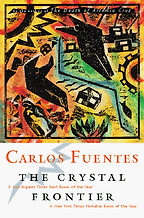
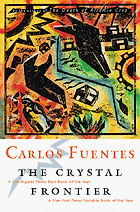
Your second choice is Carlos Fuentes’s novel The Crystal Frontier. He echoes the language of Gloria Anzaldúa in describing the Mexico-US border as “an enormous bloody wound”. How does Fuentes’s writing illuminate the metaphor?
He is one of the few authors from Mexico who places his writing in dialogue with Mexican American and Chicano or Chicana writers such as Gloria Anzaldúa. His novel echoes that metaphor. It’s not that he’s actually borrowing it from her because he has used it in his earlier work. Gloria Anzaldúa focuses mainly on the way the border has been a scar in the lives of Mexican Americans by keeping them separated from Mexico. But Carlos Fuentes shows how the border, as a symbol of the relationship between Mexico and the United States, affects people in Mexico. He’s very interested in what the border relationship has done to people in Mexico and how that then impacts on the relationship between Mexican citizens and Americans.
He develops a variety of characters. There are some immigrants from Mexico. There are also some characters visiting the United States – on lecture tours, or as students – or they live along the border. He focuses on the immense economic differences among Mexicans and the ways in which NAFTA [North American Free Trade Agreement] and the changing US-Mexican relationship manifested at the border have deepened those differences. We think about Mexico as a poor country from which immigrants come. But we don’t actually see how people, like the main character in this novel, Don Barroso – who lives in the border area – actually profit from the way the relationship between Mexico and the United States is playing out right now.
Barroso profits from the way in which the majority of the Mexican population is becoming increasingly impoverished by sending cheap Mexican contract labour to the United States and by building maquiladoras [factories] in Mexico that produce cheap products for the United States.
Fuentes’s reference to “lands baptised by migration” suggests that the movement of peoples has ritual components transcending nation state borders. Do Fuentes and others explicitly address the suppression of this truth?
The last story in the novel brings everything that happened before together in interesting ways. Fuentes blends in poetry and he brings in history. He’s trying to develop a different version of history, one that highlights how the migration of people from Mexico to the United States has been cyclical. Mexican people have always immigrated, just under different legal conditions, and the conditions have been laid out by the United States government.
For example, in the 1940s to 1960s there was a guest-worker programme, the Bracero Program. Before, people came from Mexico for seasonal work and then returned across a relatively open border. So immigration has always occurred. It’s just that now we are defining it in different ways, and the ways we legally define it shapes the way that the movement occurs. As there are now fewer options to migrate legally, the movement mainly occurs undocumented.
What is the border’s mexicanidad [Mexican-ness] that helps drive Fuentes’s narrative?
Fuentes grew up in the United States and Mexico, and now lives part-time in Mexico City. He’s seen as someone who writes from the centre. The centre has had a very problematic relationship with the northern border. That problematic relationship comes out a little bit in this novel. Fuentes realises that a new version of mexicanidad has developed along the US-Mexico border among writers and intellectuals there. For a very long time people in the centre of Mexico thought about the north as sort of barren and devoid of culture.
That has changed with NAFTA – starting in the 1960s and intensifying in the 1980s with the growth of border towns – the fact that so much foreign industry located to these towns and then attracted people to work there. What people in Mexico City were thinking was that folks living along the border were becoming too Americanised because of the increasing integration with the United States. They’ve had this problem with that part of Mexico not being Mexican enough.
Fuentes takes into account new ideas of nationhood that have developed along the border by focusing on characters that live in the border area and by tracing the diversity of these characters – the ones who profit from NAFTA and integration with the United States, and the ones who don’t.
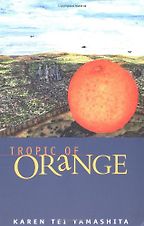
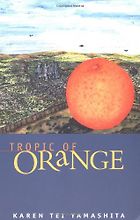
How does Karen Tei Yamashita in Tropic of Orange connect the Asian American experience to the Mexico-US border?
Her novel has seven characters of different ethnic backgrounds. Not one of them is Caucasian. One character is Chicano, who grew up in the United States, in Los Angeles. One protagonist is a Mexican citizen who has relocated to the United States as a permanent resident. Two characters are Japanese American. Another is of Chinese descent but came from Singapore and grew up in LA in a predominantly Latino neighbourhood. And there is an African American character. Yamashita also has one character named Archangel who is a mythical figure, very much a trickster as we talked about earlier, who claims to be 500 years old and remembers events central to the European colonisation of the Americas.
By bringing such a mix of characters together, Yamashita’s trying to show similarities between them. For example, many characters are immigrants. One of the most striking examples she gives us is a 12-year-old girl from mainland China who arrives on board a ship in Mexico. This character then has to cross the border between Mexico and the United States undocumented, just as many folks from the south do. So her story shows that it’s not just people of Mexican descent or Mexican nationals that are coming to the United States undocumented, but it’s a variety of people from different backgrounds, including people from China. The conditions under which these various people arrive and the reason they come are very similar.
As you suggest, borders and ethnic categories seem to evaporate in Yamashita’s Los Angeles. What place does Los Angeles have in Tropic of Orange?
Her novel develops a different map of the city. Again, maps are very important in her work, too, just as in Leslie Silko’s. She shows us how the city is fragmented and how there are internal borders among people of different ethnicities and class status. But she also develops characters that are able to move among these neighbourhoods and different economic classes. She also includes mixed-race characters, offspring of parents of different ethnicities.
One of the characters, Bobby, came from Singapore and grew up in a Latino neighbourhood in LA. He speaks Spanish and Mandarin, and incorporates different cultures and traditions into his own life. He’s married to somebody who is from Mexico. They have a son. But then there are also characters of upper or middle-class status who develop relationships with undocumented immigrants and homeless people. That’s where Yamashita is developing a different view of Los Angeles. It acknowledges distinctions within the city as another instance of how borders work, but at the same time her vision tries to overcome these borders by developing different kinds of characters.
Using Yamashita’s work as an example, what can you say about the capacities of literature to deal with ambiguities in immigration that policies of the nation state fail to address?
That’s one of the reasons we should be reading fiction. It has the power to develop a completely different version of not just the past and present, but also of the future in ways we can’t see – definitely not in political discourse. Even in social science research, some things that might manifest themselves as a minority phenomenon don’t always reach the level of acknowledgement. Fiction can do this.
Yamashita has said that her Chinese character from Singapore who speaks Spanish and has a Mexican wife was modelled after an acquaintance of hers. The fact that she fictionalises this character and makes him so central to the novel makes it possible to see that there are many more people like that.
There are many people of Asian descent in South and Central America, for example, and we have those communities here as well. To focus on these people who otherwise might not be given a voice or become the main focus of our research – fiction can do that in interesting ways. And fiction like hers can also point to similarities among individuals and communities that also have been overlooked.
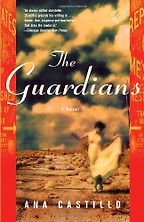
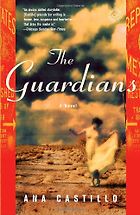
There do not seem to be any typical stories of migration. What are the unique qualities of Ana Castillo’s novel The Guardians?
Unlike the other novels, this novel is narrated in a realistic fashion. But Castillo does a couple of things that are very unique. She focuses on a part of the border near El Paso, Texas, that is actually in New Mexico and historically has been inhabited by Mexican and Mexican American people. She’s showing us in this novel that culturally the border between Mexico and the United States is really not significant for people who live in this area. The majority of the people living there trace their background to Mexico, speak Spanish or a mixture of Spanish and English, have relatives in Mexico and there’s constant cross-border movement.
Castillo also undermines our notions of strong distinctions among legal immigrants, undocumented immigrants, residents and citizens of the United States by focusing on a character Regina and her brother Rafa, who both came to the United States undocumented. But Regina and her mother were able to legalise their status through marriage to an American citizen or under Ronald Reagan’s amnesty programme. So they are now citizens, whereas the brother never got around to legalising his status.
Castillo shows what happens when Regina’s brother, who has been continuously crossing the border as an undocumented immigrant, at some point just disappears – the effect his disappearance has on her family and on the Mexican American community in this town. So it’s the absence of the brother that sets everything else in the novel in motion. That focuses our attention on the effects of people disappearing and dying in the act of border crossing.
One reviewer says that Castillo’s book helps expose the “dirty secret” of anti-immigrant feelings in the United States. How are the lives of Castillo’s characters shaped by such attitudes?
Interestingly enough, since the novel is set in an area that is dominantly Mexican and Mexican American, the characters do not experience negative feelings on a daily basis from other border residents. But their lives are shaped by anti-immigrant sentiments. These sentiments have manifested themselves in how the border has become reinforced since the 1990s. Rafa, Regina’s brother, used to move back and forth between Mexico and the United States for seasonal work, and it wasn’t a problem until the enforcement of the US-Mexico border made it increasingly hard for him to make this trek up north and then return home to Mexico.
To make the trip across the border, he now has to hire smugglers, coyotes. The really important point of her novel is that she shows how these coyotes, who in the past were largely mom-and-pop operations that helped people cross the border, are now functioning like cartels. Cartels that have been involved in smuggling contraband across the border have more recently become involved in smuggling undocumented immigrants. So undocumented immigrants are now exposed to danger, not just from the act of crossing itself, but from these coyotes, from these cartels. And that’s exactly what happens to the brother. The cartel that he gets involved with is also involved in drug production and smuggling. What happens to the brother is significantly worse than what happened maybe 10 years ago to immigrants making this trip.
Doesn’t border literature, such as Castillo’s novel, have to acknowledge the borders? Characters must exist on one side of the border or another.
On the one hand these authors are trying to show that borders are very important for their characters. In Castillo’s novel, the border endangers the life of one of the characters. But at the same time the authors are also trying to say that borders shouldn’t have this kind of power. There are characters kept separated from their families or extended families because of the border.
Five Books interviews are expensive to produce. If you're enjoying this interview, please support us by donating a small amount.
Rafa, who migrates across the border, has a family in Mexico. He just comes north, as a lot of people do, to make money and then return. His son, Gabo, who’s in the United States undocumented and lives with his aunt, can’t cross the border at all, otherwise he would put himself in danger of deportation. At the same time Gabo has all these relationships to Mexico. He also grew up in Mexico.
These border writers have the very difficult task of showing that the border is extremely important in the lives of these characters. But at the same time they’re also trying to imagine how it could be different. So that’s why they use devices like magical realism or the trickster figure. Or, in Castillo’s case, she highlights redemption and forgiveness as moral values that she thinks can help people overcome the power borders have in negatively shaping the lives of her characters. That’s the power of fiction.
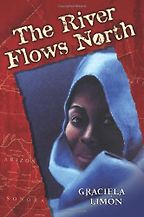
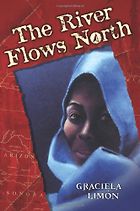
The River Flows North is a work that draws on tales of desert crossings near Sonora, Arizona. How does Graciela Limón’s novel address the ambiguity of those living in the borderlands, el pueblo sin fronteras?
It’s one of the few fictionalised works that really tries to trace the difficulties of crossing this particular region along the border. The border is made up a lot of different biotopes as well as urban and rural areas. What’s been happening since the middle of the 1990s is that because certain parts of the border became reinforced, especially urban corridors in California and in Texas, most of the undocumented migration now occurs in the desert areas of Arizona, because that part of the border is more difficult to enforce.
The idea was that migrants would not possibly want to come to the desert, so it would act as a deterrent to migration. But that’s not what happened. People continued migrating and now they come through the desert. It gets very, very cold in the desert at night, and it gets very, very hot in the day, especially in the summer. In the summer temperatures can go up to 120 degrees and higher. The desert has vegetation – cacti, trees, scrubs – but generally the desert looks very uniform. When you trek through the desert you don’t necessarily know where you are.
That’s what happens to many undocumented immigrants. They are left behind by the coyotes, or they can’t keep up with them. They get lost. In this novel the characters are trying to get to a popular highway in Arizona from which they think they’ll be picked up to go to other parts of the United States.
What is Limón’s contribution here to border literature?
She humanises the undocumented immigrants. She personalises their individual stories. When we read or talk about undocumented immigrants, we tend to talk about them as a faceless mass of people. We talk about their arrival here in the United States and what happens after their arrival. In this novel we don’t see their arrival.
I don’t want to talk about the ending, but it’s ambiguous. We don’t know if some of these immigrants ever arrive. But we see the sheer difficulty of their border-crossing journey – trying to get where they’re going after their coyote dies, trying to survive the heat, trying to survive not having enough water, trying to survive a storm.
Get the weekly Five Books newsletter
Graciela Limón also shows us a wide variety of characters who all have different motivations for making this trip. One of her characters is a Salvadoran immigrant who is the victim of domestic abuse. Some people come because they want to be with their family. There’s an old man and his young grandson, who come because they want to find the remains of his mother who died in the desert trying to make this trip.
How has the border influenced non-Chicano writers in addition to Yamashita and Fuentes?
There are a number of other writers who deal with the border as well, and one of the most famous ones is Cormac McCarthy. Others include Susan Straight and T Coraghessan Boyle. Thinking and writing about the border has been something that a variety of people have been engaged in, especially people who live in that area. Right now it’s become exceedingly clear that what happens at the border is not only a regional issue but has national and global repercussions.
Five Books aims to keep its book recommendations and interviews up to date. If you are the interviewee and would like to update your choice of books (or even just what you say about them) please email us at editor@fivebooks.com