You’ve spent 28 years representing defendants in US death penalty cases and 10 years representing Guantanamo Bay detainees, and you’ve just completed a book, The Injustice System, forthcoming this summer, that sums up your insights from representing the accused over so many years. Please give us a preview.
I was inspired to write the book by a client, Kris Maharaj. I’ve represented him since 1994. So that’s 18 years. Kris is a British guy who is on death row in Florida. He’s patently innocent and yet he’s still in prison. He is a self-made man from Trinidad who came to Britain when he was quite young, set up a business and became a millionaire. At one point he bought two racehorses from my father. He was investing in property in Florida and was ripped off by two guys he had been in business with, who ended up being murdered in downtown Miami. Kris was convicted of the crime. You can come to your own assessment at the end of my book about whether you think he did it or not, but there’s no question that he got the most unfair trial, and evidence was covered up that I think points very strongly to who really did it.
Kris is now 73. His wife Marie is the same age and has stood by him for the last 26 years while he’s been banged up, first on death row and now, after we got him a resentencing trial, he’s serving life. No sane legal system could uphold this conviction and that’s why I wrote the book. He’ll never get released. He’ll die there. Because I failed him in the courts, I wanted to write a book to at least get the public interested in him. The more I got into writing a book about Kris the more I realised it was about the flaws in the legal system generally.
In almost each step of the process, those involved in a capital case are precisely the wrong people for the job that they’re doing. I’m afraid it’s rather hard to put it briefly: I explain it in 110,000 words. Just to give you one example: The innocent defendant is the most useless individual in the world because a) he or she can’t tell you anything about what happened and b) the innocent person is incredibly impatient, and doesn’t want to have an investigation because they know that they’re innocent. So they think, how can 12 people possibly find them guilty beyond a reasonable doubt? So they’re useless and as a result they’re predisposed to get screwed by the legal system in ways that I don’t think the legal system truly appreciates.
How about the law enforcement?
If the goal is to make sure that the legal system does what we advertise – that 100 guilty people can go free rather than one innocent person gets convicted – then you need to have police who are constantly questioning whether they’re getting the right person. In truth – and this is not meant to be in any way a criticism of the human beings who are police – studies show that people who become police tend to be folks who believe in the system. They believe they don’t make mistakes. They believe that the system gets it right. As a consequence, they’re uniquely predisposed to get it wrong. I’ll give you an example: I had two delightful British police come to visit me not long ago, really nice guys. I was just testing out the theory on them. “In 54 years of service,” I asked them, “how many times do you think maybe, possibly you arrested the wrong person?” They didn’t pause for a breath before they said, “Oh, never!” They insisted that even the people found innocent at trial were actually guilty. To be that fantastically infallible is tremendous but of course it’s impossible. What you really want in the police are the sort of people who don’t want to be police officers – people who are sceptical about whether they themselves get it right.
It’s also true of defence lawyers. The defence lawyers in capital cases are generally the worst people you could possibly have in those situations. In this case it’s because of money. If you’re representing a corporation on some contract issue or whatever, you might charge up to $1,000 an hour. If you’re doing a death penalty case it wasn’t long ago that we got paid $1,000 for the whole case and it would come out to below minimum wage. So what we see is that in the cases where you might think you’d want the best lawyers in the world – life and death cases – you actually often get the worst. And the consequence is obvious.
In what jurisdiction and when were you paid $1,000 for a whole case?
Well, that was the rule across most of the South when I started doing trials there. So, for example, in Louisiana, in Mississippi that was what we were paid when I was doing capital trials to begin with. We used to sue them over it. One time we sued them in Mississippi, in part under the federal minimum wage law. They were paying us less than if we worked at McDonald’s. And we won. I don’t mean to say that lawyers are worth more than people at McDonald’s – frankly, they’re normally not. They then started paying $25 an hour. The average law firm, it costs you 40 bucks or more an hour to keep the doors open. It just doesn’t pay for lawyers to do those cases so they don’t.
How about the other lawyers, the prosecutors and the judges who oversee this whole system?
The prosecutors have very much the same profile as the police. There are reasons people become prosecutors. Those reasons tend to be fairly parallel to why people become police, though with the added notion that it’s designed as an adversarial system. So it’s designed to make prosecutors adversaries of defendants.
A prosecutor or even a judge never gets to meet the human being on trial. If you were interviewing me for a job, you would be crazy to make a decision about me without ever even meeting me. Yet that’s what prosecutors, judges and even jurors do in criminal cases. I’ve often asked prosecutors to just sit down with my client, go in a room and talk to them, use it against them if you want, I just don’t care. The reason for that is because I thought that if they met the individual as a person they would begin to see what I see, which is that this wasn’t the awful heinous crime that you think it was, there were reasons. Maybe not excuses, but whatever. The whole legal system tries to dehumanise the defendant. Many people think that’s a wonderful idea – I think it’s awful.
There are many other reasons. When you look at victims, for example, what we do with victims is horrible. The politicians and the media encourage victims to think they’re going to have a catharsis when there’s an execution or a really heavy punishment. They promise this false dawn to folks. The way one can look at it is: How did your parents teach you? They didn’t teach you to be vengeful; they taught you to be compassionate. Now it’s sometimes difficult to be compassionate but on the other hand it’s clearly what we all strive to do, but that’s exactly the opposite of what the government teaches us in the judicial process. That’s frankly quite sickening and it’s quite counterproductive for victims as well.
Let’s get to your books, beginning with one that seems to be an exercise in empathy, Ernest Raymond’s We, the Accused. Tell us about it.
Capuchin Classics sent me this, asked me to read it and consider doing a foreword. I thought: Oh God, I don’t like to read books about the death penalty; I like to read slightly more cheerful stuff when I’m not doing cases. But I did read it and I was absolutely captivated.
This was written in the 1930s but I thought it was a brilliant book that captured so much about the judicial process. And a very well written book as well. The title sums it up – We, the Accused – the way that the system accuses itself. And there are just lovely quotes in there about where the governor of the prison comes to see the humanity of the person he’s meant to be killing. That rang very true with me because it isn’t that the defence is the good guy and everyone else is a bunch of bastards – very often the governors of some prisons are fantastic human beings who really didn’t want to do some of the things that the politicians made them do.
The book is about how an ordinary person, given the right set of circumstances, could commit murder – is that right?
Yes, I suppose so. One of the crimes that I think we can all agree that everyone could do is homicide. Now whether it’s homicide by accident, when you hit someone while driving a car, or what we refer to as murder, everyone under the right circumstances, or perhaps I should say the wrong circumstances, could kill someone. What the book tries to do is to explore that in a context of someone who’s a human nonentity, accused of poisoning his wife.
You’re often faced with the same challenge that Raymond overcame in writing this book, which is engendering empathy for someone who killed another person. In the foreword you noted that evoking empathy and not sympathy is key to convincing a jury to reject the death penalty. Please explain what you meant by that.
Sympathy tends to dehumanise. If we ask a jury for sympathy because the prisoner was abused or because the prisoner is mentally ill, that tends to dehumanise them. Empathy is what humanises them.
The best example I can think of was a guy I represented years ago, who, according to the experts, the psychiatric experts, had no real defence. They said there was nothing wrong with him. I thought they were patently wrong but we were left without any way to explain what was a pretty terrible crime. The one thing that ultimately characterised this individual was his religious faith. Lawyers, particularly left-wing lawyers, tend to be a bunch of atheistic zealots who are very deeply uncomfortable when talking about religion, which I think is a terrible mistake. People can think what they like about religion but jurors understand the language of religion. I once made the mistake of quoting Shakespeare to a jury, and an old Georgia lawyer in the courtroom said to me, “Clive, I’ve used that quote myself but when I say it, I say I think it was in the Book of Job.” I don’t think that lying to jurors is ever good, but on the other hand I got his point. The language jurors speak is the language that means a lot to them, which tends to be the language of their religious faith.
In this particular case, my guy was a Pentecostal Christian. While Pentecostals very often in America would execute just as soon as look at you, according to what they initially say, when you dig into their beliefs they believe in redemption far more than the average person. Indeed if you ask a Pentecostal juror what the worst crime that you can commit is they won’t say murder, they’ll say, very often, the failure to accept Jesus Christ as your lord and saviour. Now in this case, pretty much all of the jurors were Pentecostal Christians. They really understood that my client was trying to climb the mountain and Satan would grab his ankle and pull him back down again. They understood him far better than the prosecutor and they came back very quickly, in his favour – avoiding the death penalty. That really taught me the lesson that it was their empathy for him. They understood where he was coming from. That was the key thing, not their sympathy for what he had been through as a child.
Religion can be one point of entry to empathy.
It doesn’t apply across the board. You have to know what the jurors’ language is. It’s a matter of making the decision-maker see the humanity in the individual. Sometimes it can be mental illness. For example, I had a case where we got 12 jurors all of whom had a deep personal experience of mental illness and so in that case they could really empathise with what the prisoner had come through because they had that in their lexicon. They saw him as being akin to their relative who had gone through the same thing.
Empathy starts in so many ways. It’s about stories that you could relate to. In America it’s often religious faith because religion is very important in America. They see churchgoing people as akin to them. It would be a very different story in Britain. Maybe you could base it on silly things such as what football team they support. Frankly, I would execute anyone on the spot who supports Arsenal. Only because of what they did to Ipswich Town last season, which is my team.
I hope you’re able to afford an outside sports consultant when you represent people in the United States.
I speak American sports language. I lived there 26 years. I can bore you about baseball as well.
Another time. In your introduction you credit We, the Accused, which was published in 1935, with helping to bring about the abolition of the death penalty in England. Can you tell us how this novel became instrumental in changing UK law?
This book was very widely read at the time and much admired. I think it helped people see even guilty people facing the death penalty as human beings. Raymond is a very fine writer.
When was the death penalty abolished in the UK?
Theoretically, it wasn’t abolished until 1997, when they finally got rid of it technically for treason or something. But in reality it was abolished in the 1960s.
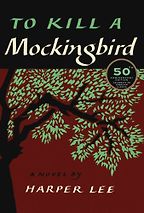
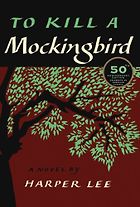
Let’s turn to a book that will be familiar to many English speakers from their school curriculum – To Kill a Mockingbird, a novel by Harper Lee, set in Alabama during the Great Depression. It’s an allegory about how bias in society perverts justice that is as potent as any parable from the Bible. Tell me about it.
Atticus Finch is a great hero of mine and of any criminal defence lawyer. There he is defending the underdog in a case where it’s intensely unpopular to do that. The book touches on so many issues and deals with so many prejudices – prejudices towards the mentally ill, racial stuff. It’s a book that was way ahead of its time in many ways. It’s also a wonderfully written book – a joy to read.
Just to backfill on the plot a bit: Atticus helps the jury to see that the African American defendant, Tom Robinson, was unjustly accused of rape. Still, he’s convicted and shot while trying to escape. It was published in 1960 but set in the 1930s. Aside from its allegorical power, what resonance does it have today? Is the bias that riddled the system still as pervasive today?
And the reason that the guy on trial tried to escape was because he was an innocent person who didn’t have faith in the legal system because the system was patently failing him. Yet they kill him anyway. Anyone who thinks the racial issues are past is simply deluded. We substitute one racial prejudice for the last. I’m not saying that we don’t make advances. I’ve run across far fewer Klansmen in Mississippi in recent years than I used to. But on the other hand, instead of picking quite so much on black people in the Deep South, we pick on Muslims. We have to have someone to hate because it suits the purposes of government.
Can we excise bias from a justice system? Supposing you would say no, which I think to be the case, how can any system operate justly?
Well, I don’t think we’ll achieve utopia this week or next, but a problem with most of society is we’ve long since lost the notion of what we’re aiming for. We’ve lost the ability to dream. We don’t know what our ideal society is. We have our noses down, either to the grindstone or in the trough, to such an extent that we really don’t have any idea where we’re going.
The purpose of the book I’ve just written is not to solve all of our problems, it’s merely to get people to recognise them so that we can have a debate about solving them. Will we excise bias from the world? Of course not. We need to recognise where bias comes from and do our best to counteract it. You look around the world and you see who’s most hated and you get between them and the ones doing the hating, on the principle that when hatred drives the forces of society it’s got to be wrong. Are we going to do away with all of those biases and hatred? No, of course not. But it’s our obligation to do what we can.
There are different hated groups in different societies?
Yeah, sure. It’s astounding to me who they come up with. I just can’t fathom how the Australians, who I think are basically such nice people, can hate Aboriginals so much. It’s amazing, isn’t it?
Maybe this is a good time to ask you about Reprieve, a charity you founded to combatant injustice around the world. Please tell us about its work.
Originally we founded it – it wasn’t just me, it was some other people as well – in 1999 to focus on the death penalty in the US. It was mainly to organise volunteers to come and work with us in the US because we were so underfunded. Then in 2002 I got involved in the Guantanamo Bay investigation, because what was going on in Guantanamo really pissed me off. Lately we’ve done a lot of drone work as well because what America is currently doing is, instead of banging people up in Guantanamo, they just kill them with Hellfire missiles in Pakistan’s border region. So those are really the three areas.
Our focus, as I mentioned, is on looking for people who are truly hated and trying to stop the people doing the hating from going around killing them or banging them up without a fair trial. We focus primarily on what the US does, on the principle that until we get the US to stop executing people, we’re going to have a terrible time persuading Belarus. Just the other day, the president of that country said they wouldn’t abolish the death penalty until the Americans did. I think if we don’t get America to stand up for what it really should stand up for and what America is really all about, as long as we have people like George Bush and the vast majority of the Republican candidates for president going around saying that we should waterboard people and things like that, what hope is there for the world? So we focus on things that the US shouldn’t be doing.
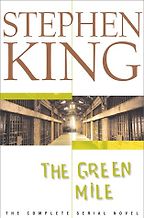
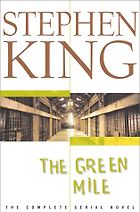
Next you cite Stephen King’s The Green Mile. The story is narrated, in retrospect, by the supervisor of the death row in a small Southern prison. The former jailer recalls the oddest among the 78 men he saw put to death.
It’s an immensely courageous book for such a famous author to write. It’s written from the perspective of the warder, whose job is to supervise death row and the execution of prisoners. The story is ultimately about a guy called John Coffey, a Christ-like figure who gets executed.
Five Books interviews are expensive to produce. If you're enjoying this interview, please support us by donating a small amount.
It’s a magical realist book in some ways, but in other ways it’s an intensely realistic book about many of the aspects of death row. It’s set in the thirties, in 1932 I think. Conditions are a bit different these days but the process of execution is very similar. I came at this book with a prejudice because, although I think he’s a brilliant writer, I hate scary books of the type that Stephen King often writes. My prejudices were proven very wrong.
It sounds like a tale well told, but what recommends it over that more famous story of unjust execution? What recommends this book rather than the books of Matthew, Mark, Luke and John?
I’ve sometimes thought that people who buy into the whole Christianity thing, surely the second coming would be someone despised by the hierarchy, so why not another guy who is sentenced to death, just like the first time? In that sense, I think it’s an interesting story and a very challenging one for some people who thinks that the world is ruled by the Old Testament.
As you mentioned, it’s narrated by a death row warder. What has your experience as outside counsel taught you about the people who work within the system that administers capital punishment?
Like everything else in life, there’s a huge range. I have met some wardens of prisons who are sociopathic. On the other hand, I’ve met some people who were doing it for the right reasons – trying to make the world a more humane place. As much as I may disapprove of the regime of prison in general, you’ve got to have good people doing it. In Britain you get relatively left-wing people who approach prison work in a way that is more enlightened than the politicians who are standing at their podium and banging it while trying to show how tough they are. The same is true in America.
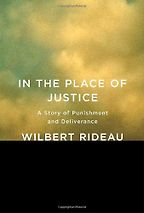
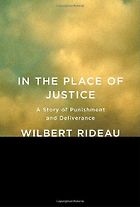
Let’s move on next to a book by a man who was oddly empowered by some of the wardens in the prison where he was an inmate, and became a famous journalist as a result. I was really fascinated by this book because it seems to be, among other things, a hybrid of fiction and memoir. Tell us about In the Place of Justice.
I don’t think there’s much fiction in that. Wilbert’s pretty straight up with what he does and I think in some ways he underplayed some of his own experiences.
You pointed out in the review that he was functionally illiterate when he entered prison and yet, in his gripping first chapter that he wrote 40 years later, Wilbert Rideau quotes at length the menacing men who surrounded him as he was taken into custody and his father’s cell-side renunciation of him right after he was arrested. So unless he has the most astounding memory in the history of time…
It may be that the quotes are not verbatim but I think they’re probably fairly accurate from what I know about Wilbert. It’s like anything… I hope to goodness the book I’ve just written is accurate – I’ve researched a lot but there are some things that are just from memory, and I don’t think that makes it fiction.
But to go back to Wilbert. His book is all about the world that I lived with for many, many years down in Louisiana and the Louisiana State Penitentiary in Angola. It’s called Angola because it was a slave plantation and it used to have slaves who had been seized in Angola and brought over to Louisiana. When they changed it from being a slave plantation to being a prison there was an awful lot of things that didn’t change, including the fact that there was an overwhelming number of black people who were being treated like slaves. You had a prison where people were riding around with shotguns and some of the people who were riding shotguns were themselves prisoners and if anyone escaped while they were on duty they supposedly picked up the sentence of the person who escaped, which gave them a hefty incentive to make sure no one escaped. It was incredibly brutal at the time that Wilbert went there, and at the time that I first went there, even though that was a bit later. Wilbert had been in prison since 1961 and he was there for more than 40 years. They talked about him being the most rehabilitated man in America because he started the Louisiana State Penitentiary’s magazine The Angolite.
I read that he was appointed to be an editor by the warden.
He was the editor the whole time I knew him. The point I was trying to make was a rather different one about the most rehabilitated person in America. I think Wilbert would agree that he wasn’t rehabilitated; he was really habilitated. He hadn’t had an education coming up; he had been brought up in a terribly racist community in Lake Charles, Louisiana. He really educated himself at Angola, after he got off death row. His case was a very celebrated one the first time around, when the Supreme Court reversed it because there was so much pre-trial prejudice and everyone in Lake Charles wanted to fry him before the trial began. He had a long battle to get off death row and then he got a life sentence at a time when life in Louisiana meant 10 years six months, and he should have been out of prison years and years ago but he was kept there for decades. He finally won a new trial on highly technical grounds and at the trial a friend of mine represented him, George Kendall. The jury compromised on a conviction for manslaughter, which meant they had to set him free right away. That’s how he got out – otherwise he would have stayed in prison his whole life. Since he’s got out, he’s lived a pretty exemplary life – going around telling people about prison and what it’s like. I think his book is a remarkable insight into the world that most people just have no inkling of.
His story fascinates me. He obviously an incredibly talented writer and yet he stabbed a woman to death and shot two others in the course of a bank robbery at 19.
There’s no question that he did it. He would never deny it.
And he seems to acknowledge in interviews that it was partially because of racial hatred.
I think that’s probably Wilbert being a bit rough on himself. I’m not sure it was that rational. I think his crime was more what happens to many people when everything gets out of control – you do something that you later regret. I think Wilbert has come to see it through the lens of his own racial views at the time because everything in Louisiana was about race. He would have been referred to as a nigger back then and no one would have thought twice about it. I think they would have been really hard pressed to charge this as a hate crime but nonetheless racism is what it was all about.
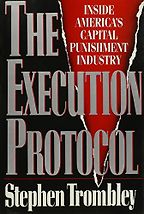
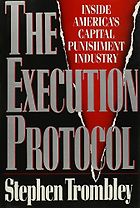
Your last book is The Execution Protocol by Stephen Trombley. It takes us through what Justice Harry Blackmun called “the machinery of death”. What will we learn by reading it?
I think the title says it all. One thing that people don’t understand enough about executions in general is what the protocol is and why we have protocol. There’s a protocol to death everywhere, for the simple reason that we’re all, at some level, terribly ashamed of what we’re involved in. If you don’t have a step-by-step way to do it I don’t think people could go through with it.
When you think about the Nuremberg Principles, the fourth Nuremberg Principle is that it’s no defence to a crime to say that your superior officer told you to do it. I always thought that’s a bit rough in a way because if someone ordered you to do something horrid and told you if you didn’t do it they’d shoot you then it takes a very courageous person not to do it.
But it is the process that makes it palatable for people to be involved in an execution. You’ve got to see what that protocol is in order to see what’s going on. So when you have for example the electric chair and you strap someone in very tightly, you make them wear nappies and you put a flap over their face. You’re not doing that for the individual who’s being executed – it makes no difference to him. We do that so that the witnesses don’t see what we’re really doing. The same is true in every execution process – we do the protocol to make it acceptable to the viewers. That’s what Trombley’s book is all about.
You’ve witnessed multiple executions.
Six.
Since the invention of the guillotine, societies that see themselves as civilised have been moving towards what they view as “humane execution”. What does the experience of seeing an execution impart – beyond what any book could ever tell – about this notion of humane execution?
This notion that there is a kinder, gentler way of killing people is pretty ludicrous. In 1987, the BBC made Fourteen Days in May about the execution of one of my clients [Edward Earl Johnson]. Viewers of that documentary saw the two weeks leading up to the execution – they didn’t actually see Edward being gassed to death in the gas chamber with the same gas that was used at Auschwitz. I dare say it would have added something to the documentary for people to see what really happened in the execution chamber. It sure horrified me. But people who watched saw all they needed to see in order to understand how horribly uncivilised it was. It’s the whole process of trying to pretend it’s civilised that really gives the lie to what we’re doing. Why do we have executions at night? Why don’t we have public executions? Everything we do is to try to cover up how ghastly what we’re doing is.
I’d like to go back to Wilbert Rideau’s story, because as a capital punishment opponent, I find it far from a poster case. He stabbed to death a woman, Julia Ferguson, whose name is now almost forgotten, and shot two others after committing a bank robbery. He was allowed to freelance for numerous publications from prison and was empowered as the editor of The Angolite. I read that the wardens allowed Angolite correspondents to carry cameras to document what happened within this prison. He ultimately won his freedom, after 44 years and he succeeded in bringing to light the injustice within the prison. It’s a success story. So in a way his story rehabilitates the reputation of the penal system.
I don’t mean for one second to take away the tragedy of the woman who was killed and the impact on her family because it’s horrible, but first we have to think: Tragedies happen. What we’ve got to figure out is how to best repair the damage. That’s all tied up in how we can best help victims and the victims’ families to deal with what they’ve been through.
Second, what we’ve got to do is prevent these things from happening in the future. What we can try to do is create a society where there are fewer of those victims. The way you don’t make society better is to encourage everyone to be harsher and more unpleasant. What you don’t do if you want society to be a better place is encourage people to ignore complicated and difficult solutions to societal problems such as drugs, guns and violence by saying if we execute a few people that will solve the problem. That’s what politicians do – they tell lies the whole time as if we can solve society’s problems with a few executions.
Get the weekly Five Books newsletter
What we need to do instead is recognise the very causes of those problems, which generally involve a lack of education and a lack of opportunity and, in the US, too many guns, too many drugs not being dealt with in a sensible way. If we carry on taking the inane approach to the world that we currently are in the US then we’re going to carry on with endless innocent victims being killed. So I guess that would be my answer.
Now coming back to what you said about how we should respond to Wilbert Rideau’s story, the problem is that he’s unique. There are 5,000 people facing effectively life without parole in Louisiana State Penitentiary. He’s one of the tiny group of people who ultimately had good lawyers and got what you might characterise as justice of some sort. But the other thing one needs to think about is this: If we judged everybody by the worst 15 minutes of their life we would all come out looking horrendous. We wouldn’t all come out as murderers, but we would all come out looking horrible. I think the key message I would hope that people take from reading Wilbert’s book is not that he’s a hero but that there’s an awful lot of decency in a person who committed a terrible act. If we could encourage people to look at others in that way – to look at others as they would look at people they love – the world would begin to be a gentler place.
Five Books aims to keep its book recommendations and interviews up to date. If you are the interviewee and would like to update your choice of books (or even just what you say about them) please email us at [email protected]