



I read your book, To a Mountain in Tibet, last night. It’s a different sort of travel book for you – a journey to Mt Kailash in western Tibet that was inspired by deaths in your family. What did you want to achieve with this book?
That journey, in part, was a kind of secular pilgrimage after the death of my father, mother and sister. One can’t explain why someone with agnostic tendencies such as myself should go to a mountain which is holy to others outside his tradition – moreover, all of the comfort that those in mourning are offered in the Christian tradition is denied in Buddhism and Hinduism. So it’s a very irrational journey, if one thinks of it as seeking intellectual or emotional comfort. I simply wanted to walk to an object of holiness in the landscape, and it seemed to me that Kailash was holy in itself, whatever that means.
In your previous travel books the attention is more simply focused on where you are. But is there a theme that ties them together?
Retrospectively, the recent ones have all been about the countries that we have been brought up to be afraid of. The first one being Among the Russians in Brezhnev’s Russia in the early 1980s, then the China one [Behind the Wall], then central Asia [The Lost Heart of Asia] and Siberia [In Siberia]. My parents were brought up to feel that Germany was the enemy, but my generation felt that the Soviet Union was the enemy. It was very forbidding and impenetrable, much more so than Nazi Germany to my parents’ generation. The Soviet Union was kind of occluded, and there were journalistic clichés about what it was, but they didn’t conform to the other Russia I knew from reading Dostoevsky or Tolstoy – these incontinently human people, all drunk and melancholy mad. Similarly, China was pretty enigmatic. When I went there [in 1986] it had just opened up, it had only been possible for a few years to go more or less where you wanted.
And so I had the instinct to understand these two great ogres of my childhood, the great bear of Russia and the yellow peril of China. I think it is cliché that understanding dispels fear – maybe it exacerbates it – but I wanted to humanise the map. That’s why I chose those places. It wasn’t a conscious, evangelical programme. I wasn’t going in thinking, “Ah, now I’m going to explain and humanise Russia and China to the West.” It was a self-centred instinct of my own, that this is worth doing for me. I’ve always needed challenge in my books. I’ve always needed to define that what I’m doing is difficult, and therefore that what I’m bringing back has the value of something that’s extracted from difficulties of culture, even geographical difficulties.
Do you travel, and write, for your reader or for you?
For me, I’m ashamed to say. Although the reader is always in my head. I say that rather self-scathingly, but I don’t do them consciously for the reader. I’m not setting out to explain a culture. Cyril Connolly said, “It’s better to write for yourself and have no public, than to write for the public and have no self.” I have to feel it’s right for me, even if it’s not a very promising book in other ways. The publishers weren’t keen on the Silk Road book [Shadow of the Silk Road], for instance, but the more I thought about it the more I wanted to do it. I feel that I’m doing what I love, and what’s meaningful to me.
What then is the function of travel literature?
The function of the travel book is not that of an academic treatise. It’s not saying, “This is how the world is, this is my theory about it.” It’s building up experience. It’s not the intellectual understanding about the subject, it’s the emotional experience of it. Experience not of any specific aspect of the culture, but a bit of everything. So you get history, landscape, chance conversations with people – a smell in the back of a train, the way people feel about their lives, even in some trivial fashion, plus a chunk of more serious politics. All of these things can follow on from one another in a travel book. By the end of it, you hope the reader has a kind of mosaic of what this country is, or what it was to you. It’s an accumulation of data of every different sort, such as no other genre is. And I think that’s what a travel book has to give, a sort of smell and feel of a culture – or how it was in one instance. It’s not going to be like that in 10 years time, or even five, but you’re catching the moment on the wing and saying, “This is how it was to me”.
Outside autobiography, travel literature is the only genre that invites the first person singular. You’re in the landscape, and dependant on the people (in my case, at least) for your survival and hospitality. You’re up for grabs. I think the personality of the writer in travel books is very exposed. And that’s good. In a way it’s an acknowledgement that this is a subjective experience. The moment you decide to write about one thing rather than another thing on your journey, it has become your account. When you talk with someone, what strikes you about the conversation is what goes down in the writing. So to pretend that it’s objective is ridiculous, more so than in most genres. Some writers write a great deal about themselves – that they had toothache and so on. To intrude yourself too much may be absurd. But personality comes through in a travel book. It’s a sort of tacit acknowledgement that we can’t be God. We can’t say, “This is how it is”. We can only say, “This is what happened to me. This is what I felt. This is what I thought. I may be wrong.”
Do you think you can really get to know a country by travelling in it?
That’s the hardest question. You mentioned you lived two years in China. I just went through it in four months. Always, I think, the travel writer feels that those who inhabit the land, the culture – whether they’re visitors or natives – know and experience things with greater depth and sophistication than we can possibly have. Travel writers can make horrible mistakes because of lack of knowledge. But often I feel that people who live there can’t see the forest for the trees. As a travel writer, you come, you see something, and it’s usually striking. You’re recording the superficials but hoping that they leak in, that they have a penetrative quality.
So someone passing through has that valuable freshness of impression.
Yes. I often find that after a few months in a country I’m already accepting so much which no longer seems strange or striking to me, so the moment I’m in a country I have to pour down impressions much faster than I can develop them later. I couldn’t write a book on London. I wouldn’t know where to begin. But I would always be interested in someone from, say, Czechoslovakia coming and spending a couple of months here, and giving their impressions.
How do you take notes on the road?
My writing is very small, it’s crammed into thin-lined notes, and the notes are very full. There are two types of notes that people take – those that jog the memory, and those that almost take the place of memory. Mine are the second. They’re very full of detail, because my memory is not particularly good, and I would forget everything within a month or two of travelling. You think you’re going to remember it and that you just need a few trigger words, but you don’t. I have to put down everything. Particularly things that give life to a detail – the texture of a rock, or the particular expression somebody used. A high percentage of the words that arrive in prose in my books are there in my notebooks.
What is travel literature, as opposed to travel guides?
I think it’s the personality of the writing which is crucial. Travel writing should be like travelling with an interesting person, whereas with a travel article or guide you’re not partaking of someone else’s vision (to use the pompous word). With a travel writer you’re travelling with this individual, which is why I think so many people buy travel books without actually going to the places – just seeing it through the eyes of a companion whom you like. So you’re going with the author’s knowledge, his particular sensibilities, sensitivity to landscape or his way with the people he meets. You’re seeing not through your own eyes, as you would if looking through a camera lens, but through someone else’s.
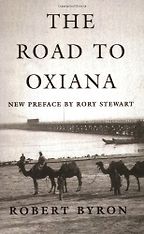
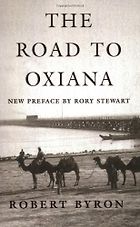
Let’s get stuck into your book selection, which covers the great canonical works of travel writing. Your first choice is Robert Byron’s Road to Oxiana. Where is “Oxiana”?
Oxiana is a coinage of his, and it doesn’t geographically specifically exist. It was a way of saying Persia (as it was to him) and Afghanistan. Byron’s journey starts in Venice and ends in what is now Pakistan. He went there in 1933-34, not long before he died in World War II, drowned when his ship was torpedoed. Although the book is terrifically chauvinistic – he’s appalling when he writes about the local people, almost always without sympathy and sometimes with extreme colonial arrogance – it’s full of wonderful descriptions. It’s rather like what I was saying about building a mosaic about a country. He does that marvellously, in a description of landscape, then a menu, then a conversation, often humorous or sometimes a bit mad, and then some of the finest architectural descriptions in the language. His passion was early Persian architecture.
Support Five Books
Five Books interviews are expensive to produce. If you're enjoying this interview, please support us by donating a small amount.
He strikes me as fitting the mold of traveller scholar.
That’s certainly one type of travel writer. The Paddy Leigh Fermor tradition, if you like. Byron was a serious art historian. He was a bit of a contrarian, a bit of a rebel. He hated the Omar Khayyám brigade – you know the rubáiyát of Omar Khayyám, the popular Persian poem translated by Edward Fitzgerald. “Awake! for Morning in the Bowl of Night / Has flung the Stone that puts the Stars to Flight: / And Lo! the Hunter of the East has caught / The Sultan’s Turret in a Noose of Light.” That sort of thing, very Georgian. And if you read the original, it doesn’t read anything like it, it’s completely different. Robert Bryon mocked this sort of orientalism, he wanted to get to the real thing. It’s an artistic and architectural pilgrimage, if you like. But the scholarship is combined with outrageous, funny interviews with people. In the Persia of the time, you couldn’t speak or write about the Shah openly, so he called him Marjoribanks, a silly name to make fun of pomposities.
Robert Byron was an old Etonian, as were you. Does this have anything to do with the notion of a “gentleman traveller”? What does that mean, anyway?
I don’t know what it means, really. I should think it means gentlemanly attention to scholarship, I dare say often too superficial. It’s the feel of a big literary tradition in the background, and of a slightly mandarin kind of writing. Paddy is certainly very rich in his style, and Byron too can be. I fear that it may suggest a certain superiority. That certainly shows in Byron – not in Leigh Fermor, he’s too generous, but Byron is typical of that post-colonial arrogance.
Do you think the tradition of travel literature is a British tradition, tied to a sense of colonial adventure?
Yes I do. I think that almost all of the travel writers we’re talking about are British public school people. And I think that system had a big effect. I was sent to boarding school at the age of seven. My parents were over in Canada, I was here 3,000 miles away. That sort of thing, for better or worse, makes you very independent – both psychologically and even physically. Just having to cope for yourself at that age makes a big difference, and I feel that is quite important in the tradition of travel writing being so British. There are very few other countries that produce the same travel-writing creature, and there’s an awful arrogance about the genre sometimes. But still, such writers have been given the self-confidence to feel that they’re going to be OK, so there’s not that degree of anxiety that so many people have when they’re travelling.
Do you feel that tradition is dying?
You always feel that something is dying, and then you realise that it’s just changed.
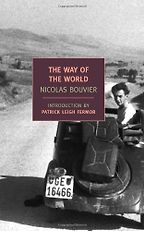
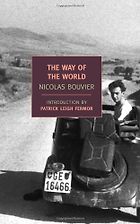
Let’s move onto the second book, Nicolas Bouvier’s The Way of the World.
Bouvier follows some of the trail of Robert Byron, travelling to the Khyber Pass in 1953-54. But the book is mostly set in Turkey and western Iran, where they get stuck. Bouvier never wrote another book comparable to this one. I loved it for its humanity, for its footloose feeling. He says somewhere, “You think you are making a trip, but soon it is making you – or unmaking you.” And you feel that he’s a very vulnerable traveller. I love that sense of not having a planned journey – it might go anywhere. He travelled in this funny little car, a Fiat Topolino. I travelled in Russia in a Morris Marina, which people laughed at, and it secures your independence.
We were talking earlier about a travel writer being a travel companion. But Bouvier had his own, Thierry Vernet, an artist who ended up illustrating the book with his drawings of what they had seen.
It’s surprising how many travel writers have travelled with a companion and not acknowledged them. I think Evelyn Waugh and Graham Greene both did so in the 1930s, and didn’t even mention in their books that the fellow traveller was there. I travel without, because I think you’re more sensitive without a companion. And the more the companion belongs to your own culture, the more insulated you’re likely to be in your own world. If you’re alone, you’re forced to get an understanding of where you are because you have no cultural references. If you imagine walking down the aisle of a ruined cathedral, and there’s someone with you, some of your attention is given to the companion and to their reaction. If you’re alone, the outside is pouring in on you and there’s nothing to give you comfort in the literal sense. You’re absolutely exposed. And that’s why I like to be solitary.
What I loved in this book were the quotidian moments. There are some wonderful descriptions of how bread is different in Turkey, Iran and Armenia. Or there’s a very true moment when he says hospitality is not endlessly questioning newcomers, but letting them sit down and drink their soup in quiet. How important do you think quotidian moments are in travel writing, or are they the boring bits one must leave out?
That’s been my instinct, for better or for worse. There are books that labour terribly, as if it’s a tremendous deal to be buying a ticket – as it can be in a Chinese provincial railway station – but I think after a bit that becomes tedious. I think you want it known what these difficulties are, but not to have it as a running theme. It becomes wearisome in the end. What’s important is the culture, not what the travel writer happens to be going through in terms of superficial difficulties. Something funny goes on in my case when I’m travelling to write a book. The hardships get very minimised, I don’t worry much about what’s happening. I feel it’s nice copy for the book, but it doesn’t occur to me as hardship. But it’s fun to write about it sometimes – to convey the mad bus with no glass in the windows and no springs in the seats.
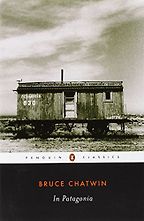
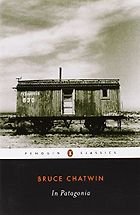
Your third pick is Bruce Chatwin’s In Patagonia.
This struck me as a rather different way of travel writing. It is very individual, with stark, short passages. There’s very little of him in it. This is his walking journey in lower Patagonia, split between the Argentine and Chile, published in 1977. I knew him slightly, and he wanted to do a Cartier-Bresson thing of encapsulating a society in a short, sharp photograph, as it were. And he was also fascinated by stories – especially those which are a little bit curious and sometimes grotesque. The left-over beliefs of strange spirits and suchlike. He starts the book with his childhood fascination with the skin of a giant sloth, which his remote ancestor brought back from a cave in Patagonia, and he searches for this sloth skin. He goes into the myth of Butch Cassidy and the Sundance Kid, and comes up with strange little anecdotes. His research isn’t a history of that area, it’s all about the strange inhabitants of it, and the weird leftovers. Anything that was incongruous he loved – a Welsh community in southern Argentina, that sort of thing. It was a world of oddities, of leftovers, of communities that had been isolated, people that had gone there for God knows what reason. He always felt himself to be an outsider in the world, and that’s what fascinated him.
He has been accused of some fabrication in this book and others. Some of the locals have challenged his descriptions.
At one time people rather pooh-poohed In Patagonia and said he must have made it up. But when Nicholas Shakespeare did a great biography of Chatwin and followed in his footsteps, it seemed that largely it was very credible.
There are other well-known writers accused of this, though – Greg Mortenson and Ryszard Kapuściński, for instance.
In Kapuściński’s case, I think it’s true. In The Emperor, in particular, or in the Africa book, The Shadow of the Sun. I still think Kapuściński is rather wonderful, because he’s so good psychologically. It’s very interesting what he’s got to say. In The Emperor, for instance, you still get a sense of isolation in this weird, ancient, Abyssinian court, with all of its protocols, so out of touch. These books have moments of great psychological truth, even if they aren’t always literally true. But in other instances such inaccuracies are a shame. If people are not giving the actual facts you immediately mistrust their insights into the country too. In general, if you make it up, it’s got to be stated somewhere in the book. If you don’t do that, you’re sending things into historical record which are conceived to be true and which are not. And yet I can’t help feeling that Kapuściński had some line on a sort of poetic truth.
I myself have jumbled people. It’s useful in some ways. In the China book [Behind the Wall], I wasn’t sure if some people or myself were not being watched, so you displace them in the narrative to somewhere else. I’m fairly sure that dissidents I spoke to in the Soviet Union [in Among the Russians] were being taped. I remember a wonderful hunchback dissident in Leningrad with a circle of followers about him, but I couldn’t possibly write about him, as he was too identifiable. And it’s futile to pretend you’re objective. If I were to recall later this conversation we are having, what I would remember about it would be different to what you would remember. Immediately it’s my choice, it’s coloured by my sensibility. You do a train journey, you decide to talk about this landscape rather than that landscape, you meet this person rather than that person. You can pick up any travel book and almost within a few sentences you know who the author is, because you sense their personality.
So it becomes not fictionalised, but framed with the same tools of fiction? Plot, perspective, characterisation.
Yes. It’s not that you create a plot, because the plot’s there, it’s the journey ahead. It’s more choice. It’s the stuff that you decide is important, and what isn’t.
Some journalists I’ve known talk about the temptation to make things up, or fudge quotes. Do you ever feel that temptation?
There’s been a temptation. But what would be difficult for me is that I don’t know the cultures well enough. I didn’t know China, or the Soviet Union, or central Asia well enough to be able to guess things. I think I’d be exposed almost at once if I did it. It also seems a very poor journey if you’ve got to make up things. Reality is so extraordinary that you really don’t have to. It’s fascinating enough what happens. If someone were to say I’ve got to make up somebody I met, I wouldn’t know where to begin – it would stick out like the most obvious fake.
I’ve got one or two friends who write about cultures that they really know – the States, for instance. And one friend – quite a well-known travel writer, I won’t mention his name – says it’s just a change of gear. He writes the facts, and then he goes up a gear and starts imagining from there on, and claims it’s fact. But for me, fiction is like getting into a different car. My imagination is working in a completely different way. I write novels in between my travel books, and that leaves fallow the travel writing field for a while, just as when I’m travelling the field for a novel is fallow. During the time I’m writing a novel some travel idea has usually appeared, and then I return from travel to my fiction, with a sense that it’s fresh.
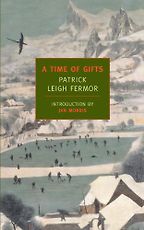
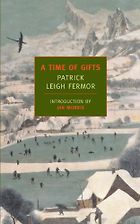
Let’s move onto the fourth book. Talk a little if you will about Patrick Leigh Fermor and A Time of Gifts.
This is the first volume of his journey in 1933-34 from the Hook of Holland, as he called it, to what he insisted on calling Constantinople (Istanbul). It was to be in three volumes. This one takes him beyond Vienna. The second volume, Between the Woods and the Water, takes him through Hungary to the Balkans. The third volume was going to get him across Romania to Istanbul, but he never wrote it. There is a very modified version of it, which will probably be published – people are so longing to see this third volume that even an outline of it will suffice. But it’s not finished by his standards, which were very exacting.
Like many people, I love the idea of this young 19-year-old gypsy going off on foot on his own, with just a pound a week, footloose and fancy free, full of delight at the world and fascination at where he’s going. That’s one of the lovely things about the book. It’s beautifully written, very rich prose. Have you read it? It’s model was Norman Douglas – rich in language, vocabulary, scholarship. It’s rather an acquired taste, and may seem to a younger generation old-fashioned.
Not at all! I love the prose. He’s very good at describing people, like the postmaster’s widow whose parrot keeps interrupting her with comic songs.
Good, because I know younger people may find the writing a bit much. I love the delight in everything, with all its byways in history or folklore, and the people he meets are so marvellously and generously described. He had such a big heart, a generous spirit. You feel he must have been a delightful companion for anyone to meet on the road. Some people find it a little bit showy-offy, because of all of the stuff he quotes as having by heart – but he did, it’s perfectly true. He had an excellent memory, and into his old age he was a great raconteur.
I know that you knew him quite well. Will you tell us about his character? He died very recently, of course.
Yes, he died about a month ago. Well, he was what you would expect. In some ways, he was rather an innocent. He wasn’t an intellectual, but he loved facts and data and history and architecture. He also loved show, and a good story. He was a delightful companion, very funny, and he was a bit original. He would sometimes say something rather fanciful, he had a marvellous imagination. But there was this innocence about him. It’s as if he was in a time warp, and in rejoining his youth in these two books he was rejoining somebody he still was, in a sense, his sensibility was so young. He hadn’t changed in many ways, he hadn’t been disillusioned. They are very “illusioned” books, if you like. It’s a very wonderful idea to go back to who he was, because he could so easily enter into the spirit of that liberated delight in the world which he kept with him always. He was very frail when he died, but he still kept that with him.
Leigh Fermor wrote A Time of Gifts in 1977, when he was 62, but the travel he describes he did when he was a teenager. What does that mean for the book?
Well, the problem of memory is horrific. He had notebooks, but they were stolen, so he had notes for some of the journey but not all of it. Of course it’s possible to revisit and reimagine, but I don’t know that he did that for A Time of Gifts. I know he did it when he was trying to write the third book, but it was a disaster because it was Eastern Europe and had changed so much. So it was an extraordinary feat of memory.
I gather some of his notebooks were returned to him after many years, found in a Romanian castle where he had stayed.
Yes, he had stayed with a painter called Balasha Cantacuzene, an older woman in Romania whom he’d fallen in love with. He was with her until the outbreak of World War II. And the notebooks he had then were returned to him after the war – I think she kept them. Amazing fluke. But those notebooks for the beginning of A Time of Gifts were stolen, lost forever. And in some ways the book is more free-flowing for it, because he was less tied down to them, going more on memory and general sweep.
How does travel change a person? It’s a platitude that a physical journey is also an inner journey, but many platitudes are true.
I don’t know really. It’s supposed to broaden the mind. If I look at the travel writers I know and have known, there’s a certain breadth of knowledge. One would hope there’s a breadth of understanding or of sympathy too. In my own case, it’s very hard to say what it’s done to me. Of course, it makes you a sort of amateur. You’re a free agent, you’re the oddball. One can understand why dictators find travellers a threat – you’re not beholden to anyone and you’re doing what you want, which is a marvellous privilege. But what it does to you character-wise, I don’t know.
The title A Time of Gifts comes from a line of poetry by Louis MacNeice …
“For now the time of gifts is gone / O boys that grow, O snows that melt.”
That certainly hints at growth of character.
Yes it does. This was his great extended epiphany, to be suddenly going out travelling. That was the time of gifts for him, when the world opened to him. He was obviously ready for it. He was always on the wrong side of authority in England, and he was expelled from school. He got into a rather posh artist society in London – people like Robert Byron – and he was enormously entertaining and fun, and very handsome as a young man. But he hadn’t travelled anywhere. So suddenly to loose yourself on the world was surely his time of gifts.
When he set out on this journey, he carried with him just a few clothes, an Oxford Book of English Verse and a copy of Horace’s Odes. What do you carry with you when you travel?
Nothing of that kind. Paddy’s Horace was stolen, along with his notebooks.I don’t take anything in my luggage which is not absolutely useful, because it’s just a little rucksack and I shrivel it down to the minimal. The only book I invariably take is a language manual for the country I’m in – so if I’m stuck in a hole I can always brush up on my language. I’ve struggled with Mandarin and Russian for half my life.
I love Leigh Fermor’s motto. Solvitur ambulando.
It is solved by walking.
Your final choice is something a little different. On the back cover of Italo Calvino’s Invisible Cities there is a wonderful quote from Gore Vidal: “Of all tasks, describing the contents of a book is the most difficult and in the case of a marvellous invention like Invisible Cities, perfectly irrelevant.” I found that amusing as on FiveBooks we describe the contents of books. Now I’m going to be a cruel interviewer and ask you to describe the contents of Invisible Cities.
Oh God. Well, officially it’s Marco Polo describing the cities of his travels to Kublai Khan. It’s been opined that every city he describes is a version of Venice, but I think that doesn’t really work. They seem to me to be marvellous imaginative fantasies, which sometimes reproduce states of mind. There are 40 or so cities described, all entirely imaginary I think, and that’s what’s so magical about them. But there are passages that are suggestive of something, and nearly always of the way memory works. It’s a very hard book to describe, because the cities are never just a description of a place. They all mirror states of mind and being.
Does Calvino draw on Marco Polo’s actual accounts of his travels in China in the 13th century?
Of course, Polo’s travels in China have also been questioned as to their truth, although I believe he did go. But as far as I can see, Marco Polo’s travels in the realm of Kublai Khan are not much echoed here. It’s more been felt that the cities are versions of Venice. Some of them – cities on water – very well could be, but others not at all. I think it’s purely a kind of gimmick, the structure that Calvino’s chosen, that they should be recounted in this fabulous way, from a fabulous traveller like Polo to a fabulous Khan like Kublai. It’s all in the realm of quasi-myth.
Why did you choose it? What does it say about travel literature?
I chose it for its sheer imaginative quality. I loved it almost as an extension of the travel book in the mind – the travel book that has no responsibility to where it has been because it hasn’t been anywhere real, it’s been in the realm of ideas and images.
Some of the phrases in the book would be absolutely beautiful pieces of travel writing, were they real – haunting descriptions of a city that “repeats itself so something will stick in the mind”, or of one that displays one face to the desert and another to the sea.
Yes, it’s remarkable. It does have that element of the concrete, or the illusion of it, so you do think sometimes that perhaps a city is out there somewhere, although clearly most of them can’t possibly be. As far as I know, Calvino didn’t travel widely or have any great fascination with the further world. It’s entirely an interior journey.
Part of the fun of the book is that Kublai Khan never quite understands what Marco Polo is describing, because of the language barrier between them, but also because it’s difficult to describe places you’ve been to. Do you sympathise with the troubles Polo has of describing locations to an audience which hasn’t seen them?
It’s terribly difficult to express something you’ve experienced, and get it down onto the page. And I don’t know any travel writers who don’t find it terribly difficult. I’m always very suspicious of a person who says “this poured out of me”. It’s a great romantic fantasy, but it doesn’t happen. They’re all hard worked at. Leigh Fermor’s manuscripts are covered in corrections, it’s nothing but corrections. And I know I have to struggle like hell. You start with the notebooks, and they seem to make sense. Mine are always very impressionistic, and you think that will probably do. But it doesn’t – it’s not in sentences, it doesn’t convey what you want sequentially.
How has the nature of travel writing changed in the 21st century, where every corner of the world is now accessible? I can look at Mt Kailash on Google Earth. I can read anecdotes of backpackers in Afghanistan on a travel forum. And I can travel to these places quickly and cheaply.
Huge question. It would be ridiculous to suppose it hasn’t changed. The era of geographical exploration has clearly gone. Travel writers can’t bring back, or imagine they are bringing back, knowledge that’s of any empirical use for the society where they have come from. You can’t pretend that you’re exploring, or finding the new, in any old-fashioned or Victorian sense. All that has been denied the modern travel writer, in the sense that the modern world is so accessible – you can Google up whatever and see the same things, up to a point, that the travel writer has seen.
It does throw back the onus on the writer himself. On his perception, his ideas, his experience. Travel writing increasingly has to be well-written by a person you want to travel with, to see things through their eyes rather than through your own. And there’s nothing that replaces experience on the ground. You can look at a screen forever, but nothing replaces what you are receiving when you’re actually there. That can’t be duplicated. There’s no virtual stuff for that. And it’s that experience which you’re transmitting onto the page. Also, it’s true that most of the world is accessible to easy travel, but quite a lot of it isn’t. I did a journey in the early 70s which is virtually impossible to do now – in eastern Turkey and Iran, then northern and southern Afghanistan, and around Kashmir, northern Pakistan. We’re not conditioned very well for the dangerous, maybe less well than the Victorian who had that explorer mentality. We don’t have that mentality, partly because things are so easy to Google up. There’s a reluctance to acquire them by any harder way.
The other thing is that the world’s changing all the time. It’s never seen once and for all, it has to be interpreted again and again, like Dante’s Divine Comedy. One of the possibilities for the modern travel writer is to look under the surface, interpreting what you find. You can Google up the image, but you can’t explore for yourself the society that is inhabiting the area. And increasingly, with a superficially Westernised world, a travel writer can find what is real under that superficial Westernisation. As you know, in a way China hasn’t been Westernised, it’s sort of sinicised the West. And one finds that again and again – things that look superficially like us are not, underneath, like us at all. That’s one of the great benefits of a travel book. It exposes what seems apparent to be just a veneer.
Interview by Alec Ash
July 22, 2018
Five Books aims to keep its book recommendations and interviews up to date. If you are the interviewee and would like to update your choice of books (or even just what you say about them) please email us at editor@fivebooks.com

Colin Thubron
Colin Thubron is a British travel writer and novelist. He has written more than 20 books, and been translated into as many languages. He has won many awards for his writing, and was named one of the 50 greatest British postwar writers by The Times of London. Thubron is Commander of the Order of the British Empire, and President of the Royal Society of Literature. He is a collateral descendant of the poet John Dryden, and lives in London
Colin Thubron
Colin Thubron is a British travel writer and novelist. He has written more than 20 books, and been translated into as many languages. He has won many awards for his writing, and was named one of the 50 greatest British postwar writers by The Times of London. Thubron is Commander of the Order of the British Empire, and President of the Royal Society of Literature. He is a collateral descendant of the poet John Dryden, and lives in London
