Who are the men and women in black robes who sit on America’s highest judicial bench? Legal correspondent Dahlia Lithwick recommends the best books on the Supreme Court justices of the United States.
Editor’s note, 19th September 2020: This morning we heard news of the death of US Supreme Court Justice Ruth Bader Ginsburg (1933-2020). With lots of people looking to find out more about her, we asked Dahlia Lithwick which books she’d recommend. The books she suggested are: Notorious RBG: The Life and Times of Ruth Bader Ginsburg by Irin Carmon and Shana Knizhnik as well as the biography of RBG by historian Jane Sherron De Hart, Ruth Bader Ginsburg: A Life, published in April.
[Editor’s note ends]
__________________________
In a previous FiveBooks interview I asked Justice Stephen Breyer what members of the US Supreme Court do. He replied, “Our job, the nine of us, is basically to create a uniform rule of law by ironing out differences.”
They serve as the final interpreters of what the US constitution says and means in any situation. And they sit as the final arbiters of what a statute says or means in any given situation. [Retired] Justice David Souter gave a really powerful speech at Harvard where he talked about how often those two things are in tension.
We pretend that there is one easy answer for every question that comes to court and we forget that almost every case that gets to the Supreme Court is a close case. In almost every case there are two competing answers or constitutional values that the justices have to chose between. Whether they use ouija boards to channel the framers or just look inside their hearts, what they do is the opposite of calling balls and strikes.
If you had to write a help-wanted ad for the position of Supreme Court justice, what would you include in the job description?
It would start with: Those who went to Harvard or Yale Law School need not apply. Every sitting justice went to Harvard or Yale. That tells you something about the very narrow bandwidth from which the members of the court are coming. And it’s not just the law school they went to – more and more nominees worked for the executive branch. Everybody who is on the court right now, with the exception of Justice Elena Kagan, came off the bench. Justice Ruth Bader Ginsburg is the only one on the court who was a civil rights attorney. Back in the day, we used to have people like Sandra Day O’Connor and Earl Warren, who served in elected office. Now none of those people could get confirmed. There is a narrowing in the backgrounds of nominees when what we need is diversity – diversity of voice, of belief, of career and of experience.
Beyond that, I think empathy got a bad rap. During Sonia Sotomayor’s hearings, the suggestion that Barack Obama should select someone who exhibits empathy was shot down as an unspeakable idea. Empathy shouldn’t be confused with sympathy and it shouldn’t be confused with bias. It means the ability to walk a mile in somebody else’s shoes. That may be the single most important quality going into a court where once you are seated you never walk anywhere in anyone else’s shoes. You are exposed to an extremely narrow range of people, you just think and write.
What do you learn from sitting in on oral arguments of the court that you can’t learn from studying case law?
The first thing you learn is that most justices don’t come to argument with an easy answer in their pocket. They don’t use it as a way to show off, they are incredibly well prepared. The problem with the way the court lets itself be covered in the US is this. If you only hear about a decision when it comes out those last two weeks in June [at the end of the court’s term], it pops out like a jack-in-the-box. It’s very easy to see the court as an ends-driven institution, because all you see is the end product, not the briefs, not the arguments and not the full decision or dissents. So for me the virtue of sitting in on oral argument is that you see the process. If each advocate does their job well, you see that these are extremely hard, nuanced questions, and that the answers aren’t as easy as they might seem if you only read about the decisions.
You also get to see the court work as a team. If you read about a five-four decision it’s easy to caricature the court as polarised, liberal-conservative, good guys-bad guys – depending on your politics. Watching oral argument, it’s clear that there aren’t two teams. Most decisions don’t come out five-four. Liberals side with conservatives on most cases and vice versa. The end product in no way tells the whole story.
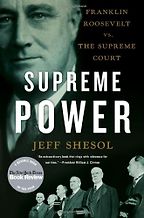
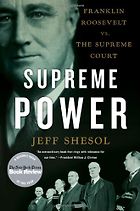
Let’s turn to books about the people beneath the black robes, beginning with Jeff Shesol’s history of Franklin Roosevelt’s 1937 Judicial Procedures Reform Bill. It provides plenty of personal background about the justices who sat on the Supreme Court when President Roosevelt tried to change the size of it, in what came to be known as the court-packing plan.
One of the reasons why I chose this book is that it evokes the same questions as with what is happening right now in American politics. It reminds you that everything you think is happening for the first time has happened before.
FDR, who was a very popular president, was elected presumably to get the country out of a horrendous recession. And he was faced, as Obama is, with a very conservative court. That court started striking down his New Deal [economic] programmes one after another. Although the bills were popular, the court said this is too much power to the executive branch [of the US government] or this is too much power to regulate interstate commerce. Stop me when this sounds familiar. It is exactly what’s happening right now.
So FDR proposed this sham plan that would allow him to appoint a justice to the Supreme Court to supplement every sitting justice who was over the age of 70. So the Court could go from nine to as many as 15 members. The pretext was that because the justices were old he wanted to lighten their workload. But it was clear that was not what was going on. He just wanted to pack the court with justices favorable to the New Deal, and he lost. He was faced with an astounding backlash, not just from Republicans but from the entire country. To me, it’s a really interesting book about the relationship between the president, Congress and the courts – which telegraphs so much about what we are seeing right now.
What do we learn about Supreme Court justices from reading this history?
One of the interesting things, which Shesol talks about a lot, is that Roosevelt lost the battle but won the war. Because the ultimate outcome of the court-packing plan was that several justices began to switch and vote with the liberal bloc to uphold New Deal legislation. This was known as the “switch in time that saved nine”. It was widely credited with saving the court and the Constitution.
This shows that the court is really responsive to public opinion and external threats. We have the notion that the court is completely cordoned-off from real life, and the justices are oracular beings who don’t care about what’s going on around them. But in this account of the court-packing episode, we can clearly see that the justices made the decision to preserve the institution by shifting when faced with external threats.
This was seen as the greatest misstep of FDR’s entire career. What fascinates me is that the country rallied around the idea that a nine-member court was inviolate – even though that number doesn’t appear anywhere in the Constitution. The number of justices had changed widely in earlier court history, up until 1869 when the number nine became fixed. The American people developed the quasi-religious notion that you don’t mess with the court. Even this incredibly popular president couldn’t get them to change their need to believe that what the court does transcends politics.
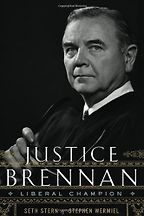
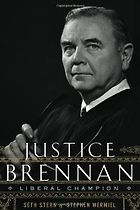
Let’s move onto a biography of Justice William Brennan, who sat on the court from 1956 to 1990. Justice Antonin Scalia says Brennan was “probably the most influential Justice of the [20th] century”. Although appointed by Republican President Dwight D Eisenhower, Brennan was the leading liberal on the court during an era of landmark decisions.
Brennan became emblematic of the court’s massive move to the left from the 1960s through 70s, and the tendency to constitutionalise every question that came before the court. When people criticise the “activist” terms of Chief Justices Earl Warren and Warren Burger, they mean the court’s move to find in the constitution the right to an abortion, the defence of affirmative action, support for [desegregation] busing. Brennan’s fingerprints are on that move. He had a hand in every single case that made conservatives crazy for decades. More so than anyone of that era, Brennan was seen as the mastermind – the one who was behind the scenes, working the room, getting the votes. He is thought of as the guy who choreographed the liberal takeover of the court. Ronald Regan’s attempt to course-correct from what was seen as an overreaching liberal court was a reaction to what Brennan succeeded in doing.
What do Brennan’s life and this biography tell us about what it takes to succeed as a Supreme Court justice?
One of the reasons I chose this book is that there was a version of Brennan that was firmly fixed in people’s minds after the book The Brethren came out. People saw Brennan as a back-patting, twinkly-eyed Irish guy who knew how to work a room. It became a caricature portraying Brennan as almost unprincipled, so ends-driven that he didn’t believe in anything.
This is by far the most comprehensive Brennan biography to date. Stern and Wermiel go beyond the clichéd view of Brennan as someone who would make any deal with anyone to achieve five votes. Brennan was deft at getting consensus – there were certainly moments in his career where he would compromise on some principle that he held dear – but the caricature of him as the consummate politician isn’t right.
The other thing about this biography that’s very interesting to me is the tension between Brennan the person and Brennan the jurist. It’s fascinating reading about Brennan’s support for choice and his discomfort with the idea of female clerks. You think of Brennan as the figure racing to liberalise the country, but in his personal life he was deeply religious and quite conservative.
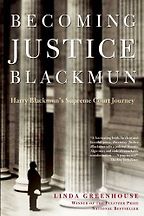
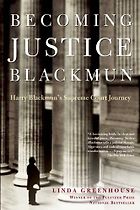
Next, you name a biography by Pulitzer prize-winning court reporter Linda Greenhouse of Justice Harry Blackmun, who sat on the court from 1970 to 1994. Tell me about the man and the book.
This is another book that I chose because it tells us a lot about the court today. In researching the biography Linda went through 1,600 boxes of Blackmun’s papers, 1970 to 1994. Blackmun most famously was the author of Roe v Wade, and this book in some ways is an exploration of how the casecame to define him. He spent the rest of his life being either feted or tarred-and-feathered, even though he only wrote it for the majority. This biography shows that the justices are in touch with what the public thinks. Blackmun was affected by his fan and hate mail.
Blackmun’s story brings home the human nature of the Supreme Court. He was nominated by Nixon based on the recommendation of then Chief Justice Warren Burger, who had been Blackmun’s best friend since kindergarten in Minnesota. They drifted apart after Blackmun began to side with the more liberal justices, such as Brennan and Thurgood Marshall. What does Blackmun’s story tell us about how human experience shapes a justice’s jurisprudence?
Blackmun is a fantastically interesting character. He and Warren Burger were meant to be the “Minnesota Twins”. They were best friends, but their friendship disintegrated on the court. His story highlights something that puzzles Americans – the tendency for conservative justices to drift to the left. There are far fewer examples of liberal justices drifting to the right.
Blackmun was supposed to be a conservative jurist, but over the course of his career he became the strongest voice for upholding Roe. Originally, he voted to support the reinstitution of capital punishment in state courts across the land. But years of confronting a legal system unable to fairly prosecute and sentence criminal defendants forced Blackmun to face the fact that the system could not operate in a just manner. In 1994, Blackmun renounced support for the death penalty, famously writing “from this day forward, I shall no longer tinker with the machinery of death”.
Why did he drift?
Some of the answer is that he was responding to criticism. There’s an amazing Blackmun quote that I’ve been thinking of all week, as the US was roiled by the execution in [the state of] Georgia of Troy Davis after seven of the nine witnesses against him recanted their testimony. There’s at least a claim that he was factually innocent. The whole country, if not the world, has gone completely bonkers trying to make sense of the death penalty in America. Years ago Blackmun wrote, “There is a world ‘out there’, the existence of which the Court, I suspect, either chooses to ignore or fears to recognise… This is a sad day for those who regard the Constitution as a force that would serve justice to all evenhandedly.” When justices join the court they can close themselves off or they can find a conduit to what Blackmun called “the world out there”.
Several justices on this current Supreme Court have made cracks about how they don’t bother reading law reviews or the amicus briefs [information volunteered by someone not a party to a case] anymore. Several of them brag about not reading the newspaper. Some are ambivalent about whether porousness is good for the court or whether it’s best for justices to remain cloistered. Blackmun stands as an example of someone who paid attention to the world out there. Who said: I thought we could fix the death penalty, we tried to fix the death penalty, we haven’t fixed it at all, I changed my mind, I’m not doing it anymore. Blackmun had the willingness to see and say that he was wrong, and that his mind changed over time. He is a really interesting contrast to someone like [Justice Antonin] Scalia, who hasn’t moved at all.
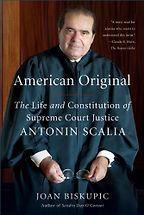
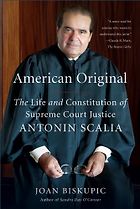
Scalia is the subject of your next choice, American Original by Joan Biskupic. Opposition to Roe v Wade fueled the conservative movement and led to Ronald Reagan’s appointment of reliably conservative jurists, such as Scalia in 1986.
If you are going to read a biography of a sitting justice, you can’t go wrong with Scalia because he’s a flamboyant literary character. Joan Biskupic is one of my favorite court watchers because she really tries to understand the psychology of a justice. She goes back in Scalia’s biography, and pretty much confirms that the Scalia that sits on the bench today is the same Scalia who grew up in New Jersey, the debate champ who couldn’t get into Princeton. He was sealed in amber at pre-adolescent age as what he is now – a brilliant, passionate and deeply gifted writer and thinker. Joan goes back and figures out what made him such a Shakespearean character on a court of people who sometimes seem like black-and-white characters.
What is it? What’s the secret?
One of the things that she mines is that although Scalia has nine kids, he was the only child in a whole generation of his Italian immigrant family. His mother was an outgoing, gregarious storyteller and his father was scholarly, withholding and demanding. He’s a blend of both of them. He’s a devout Catholic who had a really adverse reaction to the 60s and 70s. He’s so certain of himself, so brilliant and so bombastic. I would say that he is the most influential conservative justice on the court, because his writing is so persuasive, but he’s written so many blistering lone dissents over the years that he has angered some colleagues. He always says, “I’m just writing my dissents for the law students; I gave up on persuading anyone.” But the fact is that he has a huge impact on the direction of the law.
Can you encapsulate his influence on the court?
For instance, he is seen as the prime mover in District of Columbia v Heller, the case that tested the DC handgun ban and addressed, for the first time in decades, the question of whether there was a fundamental right to carry a gun [in the US]. For years people said don’t even bother bringing that to the court, because there’s no plausible argument that the Second Amendment, on its face, allows for an individual’s right to bear arms. Scalia wrote the majority opinion. Biskupic ends her book with this tour de force of his constitutional views, in which he divines the original intent of the framers and mines constitutional history for the original meaning of their words, while railing against living constitutionalism or jurists’ attempts to keep up with modern values. Helleris a triumph not just of Scalia’s political view that we should have the right to bear arms, but also of his interpretive method. He has five votes now for his way of reading the constitution.
Whenever I think about Scalia, the duck-hunting incident jumps to mind. He unapologetically traveled with Vice President Cheney to a duck-hunting retreat at an estate owned by an oil titan, just weeks after the court took up a case involving Cheney’s refusal to release records of who he met with on energy policy. As federal law says that “any justice or judge shall disqualify himself in any proceeding in which his impartiality might be questioned”,it impresses me as the stuff of a PJ O’Rourke satire.
The most interesting thing about the duck-hunting extravaganza is Scalia’s memo to the American people, explaining at length why he wasn’t recusing himself. It was incredibly persuasive. What he said was: Look, Supreme Court justices have been palling around with presidents and vice presidents since the founding. If you think this is the first time a justice has ever socialised with someone important, think again. Then he makes a persuasive case for why there’s no conflict.
Scalia is brilliant at convincing you that you’re wrong about something that you know, in your heart, to be right. He’s better at that than anyone. In that memo you also see his pugilism. He refuses to retreat into the court. He could have just said, I’m not going to respond. Instead he reached out and wrote this detailed letter explaining himself. That, to me, was the real importance of the duck-hunting scandal.
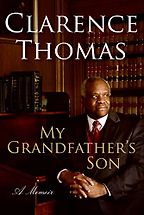
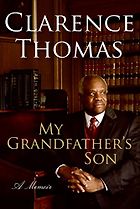
Finally, Justice Clarence Thomas’s deeply personal autobiography. Tell us about My Grandfather’s Son.
I am always astounded by how much mail I get from people who think that Thomas is a “moron” or a “Scalia clone”. He famously hasn’t asked a question at oral argument in over five years. People write that’s because he’s an “idiot”. When I get those letters, my response is – read his autobiography. Thomas is an extremely polarising figure. Conservatives revere him. He is distinctly to the right of Scalia on many issues. He is an original thinker. He has a constitutional architecture that is fully worked out in his mind, whether you like it or not. He is simply not incompetent or unworthy of serious scholarship.
There are so many biographies I’ve left out of this list, including several amazing books about Clarence Thomas that are very worth reading. But I love this because it comes from him, mid-career. Most justices don’t say anything. But here’s Thomas, on the bench, writing this blistering autobiography in which he gives his frank thoughts about his critics, about liberals, about the people who shamed him during his confirmation hearing. The other justices who write books on the bench either write wonky books, in the manner of Stephen Breyer, or historical books like Chief Justice [William] Rehnquist used to do. But Thomas – he’s just tellin’ it all. It’s a departure from other judicial autobiographies but gives such powerful insight into how he thinks about the world, the court and us. Americans need to read this book. They need to understand who he really is before they judge him.
His wife’s well-remunerated work for Tea Party organs and other opponents of healthcare reform has led many to call for him to recuse himself when health care comes before the Supreme Court. Please give us your take on this controversy.
We need to make space for judicial spouses. Let’s go back to the Brennan biography. Marjorie Brennan slowly drank herself to death, in part because she didn’t like what was said about her husband but couldn’t speak publicly. She had to be a silent helpmate. There is a long tradition of expecting judicial spouses to be silent, pretty and supportive. Whether Ginny Thomas’s all-out political activism is an over-correction, I don’t know. But we need to let high-powered spouses of high-powered people have their own lives.
There are legitimate financial issues raised about Clarence and Ginny Thomas. For instance, their failure to disclose her income from working for certain partisan political groups. But it would be unfair to put wives back in a box where they are not allowed to work or voice opinions.
To me, what’s most interesting about the controversy is that Ginny Thomas shows the justices to be what they often are – partisans, and advocates for political goals.
It’s true that what Ginny Thomas does, Clarence Thomas doubles down on. He overtly allies himself with her. In a speech at the University of Virginia this spring, he basically said they’re a team, working for the same thing, the Tea Party constitution.
The real issue is that when Justice Thomas, and to a lesser degree some of the other justices, engage in overtly partisan conduct, they smoke out the lie that is at the core of the bargain we have with the court. We give these people lifetime tenure and are only able to impeach them for unspeakable acts. In return, we like to believe that when they put on that black robe they become neutral, or at the very least open-minded. Not that they don’t have lives or opinions, but that they look at each case simply for its merit and not filtered through their own ideologies. What is most problematic about Justice Thomas, for many people, is that he seems unwilling to go along with that illusion.
The Stern and Wermiel biography points out that Justice Brennan stopped giving speeches when he became too much of a lightening rod, even though he loved to do it and needed the money. He realised it was in the best interest of the institution for him to look more judicious. On this court there are justices who don’t even pull back when they are accused of partisanship. They say: If they accuse me of partisanship then they’re partisan, so screw them. That defiant approach taken by some justices when they are called out for crossing boundaries is new. And technology is new, so justices get caught doing and saying things they didn’t before.
It seems that members of the Supreme Court will have an opportunity to rule on the constitutionality of healthcare reform before the 2012 election. Is it possible that the court will play as decisive a role in the next election as it did in 2000?
It’s more likely than not that the court will take up the case by the spring and decide it by June. Some justices will consider whether they really want to take on the president’s signature legislative act in an election year. Others will say in response to that question: Bring it on.
I don’t think this will be a five-four decision to strike it down. If you look at Justice Scalia’s comments about the necessary proper clause and the commerce clause, it’s hard to see this coming down to a Bush v Gore five-four smackdown. But above and beyond the legal questions, this court – and particularly Chief Justice John Roberts – realises what the risk is if this gets decided on five-four lines. Chief Justice Roberts is savvy about the need for the court to remain above partisan politics.
Justice Breyer has always made the point that the reason why people didn’t riot in the streets after Bush v Gore is because over centuries, the court built up credibility with the American people. That’s because there is usually a majority on the court that is careful about not grossly violating that trust. Whether the court decides not to take the case, or finds a lawyerly reason on which to decide it, I’m not sure the court will deliver a body-blow to Obama before the November election. There are several small “c” conservatives on this court who won’t want to insert the institution into that kind of a roiling public fight.
You’ve noted that because of Bush v Gore and conflicting opinions over the constitutionality of healthcare reform, among other factors, we’ve reached a point of constitutional nihilism. Please explain.
Until this summer, every judge who voted on the constitutionality of healthcare reform voted for the party that appointed them. Republicans voted to strike it down, Democrats upheld it. The American public began to see the constitutional question as a smoke screen, and began to think judges voted to support or oppose Obama. That changed when, at the Courts of Appeal level, we saw a conservative jurist – a former Scalia clerk – vote to uphold and a Democratic appointee vote to strike it down. That restored the idea that what justices do is at least somewhat different from what politicians do.
Five Books aims to keep its book recommendations and interviews up to date. If you are the interviewee and would like to update your choice of books (or even just what you say about them) please email us at editor@fivebooks.com
Five Books interviews are expensive to produce. If you've enjoyed this interview, please support us by donating a small amount.
Dahlia Lithwick
Dahlia Lithwick has been watching Supreme Court justices from their courtroom for 10 years. Her dispatches for Slate earned Lithwick the Online News Association’s award for commentary. A graduate of Yale and Stanford Law School, and a former Ninth Circuit clerk, Lithwick has also been a guest columnist for The New York Times, remains a contributing editor at Newsweek and often provides legal commentary for NPR
Dahlia Lithwick has been watching Supreme Court justices from their courtroom for 10 years. Her dispatches for Slate earned Lithwick the Online News Association’s award for commentary. A graduate of Yale and Stanford Law School, and a former Ninth Circuit clerk, Lithwick has also been a guest columnist for The New York Times, remains a contributing editor at Newsweek and often provides legal commentary for NPR