We can all be more aware of our surroundings and our decision-making process, says the professor of psychology and behavioural economics, Dan Ariely. He recommends five books to help us maximise our prosperity and well-being.
I have just read some of the behavioural economics books you’ve chosen, and I found them almost impossible to put down. It’s fascinating how people behave in these experimental situations – whether they’re eating huge quantities of soup without realising it, or failing to see a gorilla. I was wondering, more broadly, what you are trying to get at with this choice of books?
For me, it’s very interesting to try to figure out where we go wrong. In my general approach to life, I think of myself as a social hacker. Life has been designed around us in a way that is not necessarily the best way to maximise our health, our well-being or our prosperity. If we understand where things are going wrong, we can also figure out how we can fix them. That’s my first concern.
Social science is incredibly interesting because it’s the science of everything we do. We used to think that the big mysteries in the universe are the stars, or maybe molecular biology – things that are outside our reach. But the more we get into it, the more we realise how little we know about the things around us, which can include eating a bowl of soup or what’s happening to us at work. So there is an element of self-improvement in these books, but there’s also a fascination for its own sake about what’s going on around us. Each of us can become more of a social scientist by being a bit more aware and a bit more thoughtful.
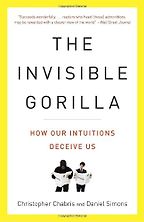
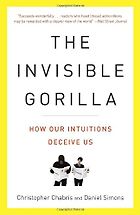
Let’s go through the books, and you can tell me what’s important about them and why you like them. The first one on your list is The Invisible Gorilla: How Our Intuitions Deceive Us, by Christopher Chabris and Daniel Simons.
These are the guys who did one of the most important pieces of research in social science, which is to show how little we actually see in the world around us. The basic demonstration of this is a movie in which there are two groups playing basketball. One group is wearing white t-shirts and the other group is wearing black t-shirts. They are passing the ball, and the viewer is asked to count how many times the people in white t-shirts pass the ball to each other. What then happens in the background is a gorilla passes through. He stops right in the middle and thumps his chest.
When the clip is over, the viewer is asked, “How many times did you see the people in white t-shirts pass the ball?” Sometimes they get it right, sometimes they get it wrong. But when you ask, “How many of you saw the gorilla?” it turns out very few people saw the gorilla.
I didn’t see the gorilla.
There’s also another demonstration in the book that I really like. This involves going up to someone on a campus with a map and saying, “Excuse me, can you help me figure out how to get to the student centre?” They take the map from your hand and start explaining it to you. While they’re explaining, two people in workmen’s clothes come between you with a door. For a moment, they obscure your view. What the person you’ve asked for directions doesn’t know is that you’re going away. You’re walking off with the door and a new person is standing in front of them. The question is, do people notice this change? And the answer is, again, no.
“We think we see with our eyes, but the reality is that we largely see with our brains. Our brain is a master at giving us what we expect to see”
These are findings that are incredibly powerful and important. We think we see with our eyes, but the reality is that we largely see with our brains. Our brain is a master at giving us what we expect to see. It’s all about expectation, and when things violate expectation we are just unaware of them. We go around the world with a sense that we pay attention to lots of things. The reality is that we notice much less than we think. And if we notice so much less than we think, what does that mean about our ability to figure out things around us, to learn and improve?
It means we have a serious problem. I think this book has done a tremendous job in showing how even in vision, which is such a good system in general, we are poorly tooled to make good decisions.
Can you give an example where you think this failing has been particularly important?
If you think about the financial crisis, it was to some degree caused by conflicts of interest. You pay a group of people a lot of money to see reality in a distorted way, and lo and behold they are able to do it. Now you would think that in the case of people working for Lehman Brothers, for example, that the firm wanted them to see reality correctly. But they paid them to see reality incorrectly. What ended up happening is that people saw reality as they wanted to see it, not as it really was. This is an example of this issue coming into play in a big, important and quite devastating way.
I also liked the chapter about how someone being very confident is often not a sign of skill.
Yes, and this again is partly because we have such a hard time learning. Because we have a hard time figuring things out and learning from experience, the connection is not that good. We’re going through reality, but nothing we do ever registers, and so we never know that we are wrong. I’m exaggerating, but that’s the basic idea.
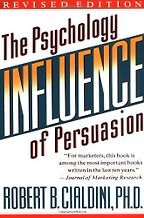
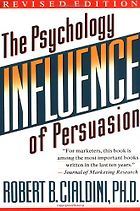
Your next choice, Robert Cialdini’s book Influence, is all about persuasion techniques. I loved how he even managed to apply his principles to the Watergate scandal. A group of people were persuaded to go ahead with what was really a very stupid and pointless plan to break into Democratic National Committee headquarters, just because of the way it was presented to them.
The Cialdini book is very important because it covers a range of ways in which we end up doing things, and how we don’t understand why we’re doing them. It also shows you how much other people have control, at the end of the day, over our actions. Both of these elements are crucial.
The book is becoming even more important these days. Firstly, because electronic communication now gives us the ability to tailor messages. We have more ways of reaching people. Secondly, because we need to persuade people to start behaving differently – for example by saving energy. There’s a very nice company called Opower, which prints out information about your energy bill. They are trying to use the Cialdini principles to get you to behave slightly better.
Does this approach work? I thought in New York, where they started printing calorie counts on menus in restaurants to get people to eat more healthily, people ended up ignoring that information and continuing to order high calorie foods as much as ever.
This is very important. The New York intervention was based on the idea that all people need is more information. People don’t know how many calories this food has, we only need to tell them and everything will be fine. This was the theory. The Cialdini approach is not about information. It’s not saying that people don’t know that there are a lot of calories in this food, and if you only told them they wouldn’t eat it. We have learned that there are very few things where just by giving people more information, you can get them to behave better. What the Cialdini approach says is that people need to be pushed into behaving better. In particular they need to have social proof. They need to be told something like, “Smart, intelligent people choose this.”
Which is what the Opower energy plan does?
Yes. People are already getting their energy bill. They know what it is. What Opower does on top of that is give people a little note that says, “This is how much energy you are using compared with your neighbours.” They also give you a smiley face, or a sad face, to reflect your performance. It turns out that this makes a huge difference.
The Cialdini book dates from the 1980s.
These are old techniques, but they’re finding new ways to apply them. In the past, it was difficult to print an individually tailored energy bill for every person. Now we can do it. There was an experiment recently by one of Cialdini’s former students, Noah Goldstein. He went to look at hotels, which are always begging us to recycle our towels. He tried to figure out what message would be the most persuasive.
“We have learned that there are very few things where just by giving people more information, you can get them to behave better”
They decided that if you applied the Cialdini principles, you would need to have a message that appeals to people, and tells them that other people like them are behaving in this way. What they came up with was the message, “76% of the people who have stayed in your room have been recycling their towels.” And it turns out that that was the most successful intervention.
Get the weekly Five Books newsletter
And if you just say that recycling towels helps the environment?
It’s much less successful. It’s not zero. But if you compare something that has an environmental appeal with something that has a social appeal, the social appeal wins hands down.
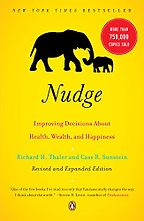
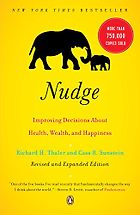
Tell me about your next book, Nudge.
Nudge is also a very important book. One of the reasons Nudge is so important is because it’s taking these ideas and applying them to the policy domain. Here are the mistakes we make. Here are the ways marketers are trying to influence us. Here’s the way we might be able to fight back. If policymakers understood these principles, what could they do? The other important thing about the book is that it describes, in detail, small interventions. It’s basically a book about cheap persuasion.
What’s your favourite example in there?
My favourite example is the little fly when men pee [a painted fly in urinals which reduces spillage]. It’s not a big example, it’s not a hugely important social innovation. But it’s significant because it shows that in many cases – such as peeing – we are just not that thoughtful about what we’re doing. And because of that, we could take those cases and think about small ways to change the environment to get people to behave better.
“We don’t say to sociologists that they should stop studying sociology just because it doesn’t describe 100% of the variants of human behaviour. The same can be said about economics”
The other interesting thing about Nudge, which goes beyond its application to policy, is that it brings up the philosophically difficult debate about behavioural economics: How much do you really want to push people? What level of pushing is OK, and what level of pushing is not OK? That’s a very difficult discussion.
Imagine I taught you some tricks that allow you to persuade people to do what you want them to do. Up to what level is this OK, and up to what level is it not? Sunstein and Thaler take a very strong position on that. They call it “libertarian paternalism” [nudging behaviour without eliminating free choice]. At the end of the day, I don’t really agree with their position. But that doesn’t take away from the fact that they are the first ones to bring the discussion to the forefront.
Is there, in your view, a better way of doing it?
I don’t have a complete philosophical position on this. I actually don’t think there is going to be one answer, because it all depends on the cost, and how much danger people can get themselves into. For example, I don’t think that nudges are relevant to the domain of drinking or texting while driving. Sunstein and Thaler think nudges are enough to make people save for retirement. I don’t think so. I think we need to mandate saving for retirement.
With the concept of nudges you’re basically saying, “People know what the right thing to do is, and as long as we push them a little bit it will be OK.” It’s a nice philosophical position. Because as a policymaker it’s hard to say, “People are really stupid, we need to protect them from killing and hurting themselves.” But often nudging may not be enough. It’s an empirical question. There are some cases where nudging might be sufficient. Sadly, in other cases where it’s not sufficient, we basically need to think about how to force people to do the right thing.
So straightforward paternalism, rather than the libertarian variety.
That’s right. And if I were a politician, it would be a tough sell. I don’t want to say to my constituents, “Look guys, I think you’re idiots. You’re incapable of making decisions, so I’m going to make them for you.” But I think there are many cases where this is the right thing to do. Maybe we could force people but allow them to appeal, so that not everybody is forced 100%.
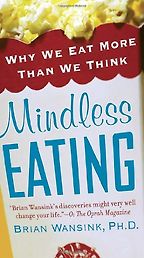
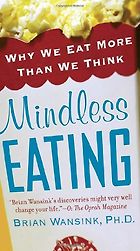
Let’s go onto Mindless Eating by Brian Wansink.
This is one of my favourite books. He takes many of these findings about decision-making and shows how they work in the domain of food. Food is tangible, so it helps us understand the principles. It shows all the kinds of mistakes we make – like the endless soup bowl you mentioned. It’s a really nice experiment with a soup bowl [that self-replenishes without the eater noticing]. It’s easy to visualise and we can imagine how it works in other parts of life. But also, as obesity becomes a bigger issue, the book has a lot of practical things to say about the obesity epidemic. It’s full of lots of very simple lessons.
And while he shows how we mindlessly put on weight, he also shows us that we can mindlessly take off weight. So there is a positive message at the end.
That’s right. Once you understand your mistakes, you can also think about how to correct them. That’s very useful.
So is the problem that we do things without thinking? Is that what all these books are saying?
Many times it is. I’m hesitant to say always, because there are many things that we overthink. But to a large degree, our actions are not consequences of deep, elaborate thinking. They sometimes involve some thinking, they sometimes involve no thinking. They often involve habitual decisions, and because of that we have a good chance of getting things wrong.
What struck me about these books is that they’re describing weaknesses in us that companies and individuals selling insurance, popcorn or used cars have been exploiting for a long time. The whole market is acting against us in a way, so who is going to help us make the right decisions?
You can think about the market economy in this way – almost nobody wants you to do something that is good for you in the long term. The incentive of everybody else is to do something that is good for them in the short term. It’s important that we as individuals understand this, and that we as individuals demand something better. I also think it’s important that we have regulators that understand these problems, and can help us.
Ultimately, is that what we’re talking about here – government regulation?
Yes, it is. But remember that sometimes it’s the good guys who are trying to influence us. There may be a company promoting long-term savings accounts. What’s implicit in what you’re saying is that it’s a market with zero sum games.
“Remember that sometimes it’s the good guys who are trying to influence us”
That’s not the case always. In healthcare, for example, everybody wants you to be healthy. Your family, yourself, the healthcare system. There are cases where the incentives are aligned. They are often not, but there are cases where they are.
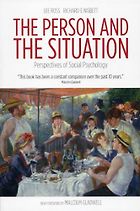
What about your last book, The Person and the Situation by Lee Ross and Richard Nisbett?
This is an oldie but a goodie. It’s a book that shows how when we make decisions, we think personality plays a big role. “I’m the kind of person who does this, or I’m the kind of person who does that.” The reality is that the environment in which we make decisions determines a lot of what we do. Mindless Eating is also about that – how the food environment affects us. Nudge is also about that – how we can actually design the environment or external influences to make better decisions. But The Person and the Situation was the first book to articulate how we think we are making decisions, when the reality is that the environment around us has a lot to do with it.
Again, can you give an example?
My favourite example of this is a recent one, by Dan Goldstein and Eric Johnson. It involves looking at whether people donate their organs after they die or not. It turns out that that decision hinges mostly on whether the form at the DMV is an opt-in form or an opt-out form (i.e. whether you need to tick a box in order to donate your organs, or whether you need to tick a box in order to not donate your organs).
When people come out of the DMV and you ask them “why did you donate?” they will have ideas about why they did it. But the reality is that the real reason has very little to do with internal preferences, and a lot to do with whether the form was opt-in or opt-out.
The Nobel prize in economics was awarded in 2002 to a psychologist, Daniel Kahneman. That indicates some appreciation of the contribution of psychology to the economics field. But do you think that the economics profession has adequately taken on board the insights of behavioural economics? Is there a particular area of economics where you think it could be more usefully applied?
I don’t think economics has taken much of behavioural economics into account. In one sense I think that’s OK, in another sense I think it’s terrible. It’s OK for economics as an academic discipline that is interested in creating a simple, parsimonious description of the world. Different disciplines – sociology, anthropology, philosophy, psychology and economics – have different approaches to how they think about human behaviour. Each of them has the right to view human behaviour from their perspective. We don’t say to sociologists that they should stop studying sociology just because it doesn’t describe 100% of the variants of human behaviour. The same can be said about economics. Economics is a discipline that describes human behaviour from a certain perspective – a very rational, basic approach – and this view has some insights and valuable notions. For that reason, economists should continue doing what they are doing.
Where economics should take behavioural economics into account is when it comes to implications and applications in the real world. Unlike other disciplines, economics is not just a descriptive study, it’s also a prescriptive study. It tells policymakers, businesses and individuals what to do. That’s the difficult step. Once you take an academic discipline and say “this is not just a description of a part of human motivation, this is how you should actually do things”, it becomes more dangerous. It’s one thing to say I have a model to describe 25% of human behaviour, and another thing to say you should take only that model into account when you establish policies. It becomes much more important that you are comprehensive and 100% correct.
“Unlike other disciplines, economics is not just a descriptive study, it’s also a prescriptive study. It tells policymakers, businesses and individuals what to do”
I’m happy for the descriptive part of economics to stay as it is. The prescriptive part, when we tell people what to do – that one should be much more broad. In fact, we should stop using just economics and take all kinds of ideas from psychology, sociology, anthropology, philosophy and economics, and test which ones work, which ones don’t work and under what conditions.
There is no question that behaviour is the ultimate goal – to try to understand behaviour, and how to change or modify it. I hope we can create a discipline that is much more empirically based and data driven. Maybe we can call it “applied social sciences”. It will draw from all the social sciences equivalently as we approach problems in the real world, and try to find solutions for them.
Five Books aims to keep its book recommendations and interviews up to date. If you are the interviewee and would like to update your choice of books (or even just what you say about them) please email us at editor@fivebooks.com
Five Books interviews are expensive to produce. If you've enjoyed this interview, please support us by donating a small amount.
Dan Ariely
Dan Ariely is an Israeli American professor of psychology and behavioural economics at Duke University. He is the author of two New York Times bestselling books, Predictably Irrational and The Upside of Irrationality, and a popular blog
Dan Ariely is an Israeli American professor of psychology and behavioural economics at Duke University. He is the author of two New York Times bestselling books, Predictably Irrational and The Upside of Irrationality, and a popular blog