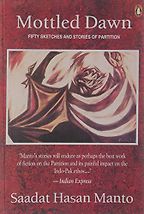
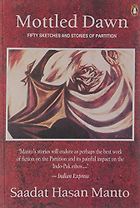
Tell me about your first book, Mottled Dawn.
All of these stories are brief, violent, hastily written and stark. I think this is very fitting to the period which he was describing which is around the time of the Partition. It’s similar to Pakistan today which has become a more violent place than a few years ago. I particularly recommend his story, “Toba Tek Singh”, which is about how two or three years after Partition, the governments of Pakistan and India decided to exchange lunatics. In other words, Muslim lunatics in Indian madhouses would be sent to Pakistan, while Hindu and Sikh lunatics in Pakistani madhouses were handed over to India. But, one lunatic – Toba Tek Singh – ended up in no-man’s-land between India and Pakistan.
For me, Saadat Hasan Manto is important as a writer because you see with stories like this there is nothing prettied up about his writing. One of the things that I object to about most of the people who write about Pakistan is “the scent of mangoes and jasmine school of writing”. I think that does a disservice to the country and plays into the stereotypes that most Westerners have about Pakistan, and he certainly doesn’t do that. He tells it like it is, with all the violence, madness and political turmoil that involves.
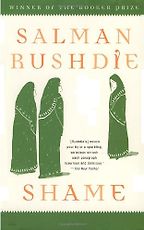
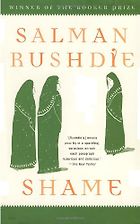
Your next book is Shame by Salman Rushdie, which was written after Midnight’s Children.
Yes. This is the only one of his books which is set in Pakistan and it’s a political story. The protagonist is the Bhutto family. Benazir Bhutto features in it as this virgin smarty-pants. A lot of the stories in the book are actually true. For example, the description of relations among various members of the family and the descriptions of the corruption and bribes going on are all true. I was too young to remember all that, but my mother took great delight in the book because she very much lived through that era. It’s a much harder book than other books that Rushdie has written. It’s less fantastical and a more vigorous book. It certainly describes the craziness of Pakistan in an accurate way. Again, it’s not prettied up.
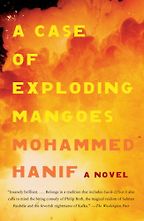
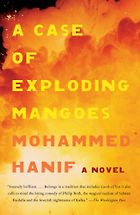
Next, A Case of Exploding Mangoes. The title suggests it will be a light summer’s read and very much a comedy. Is that the case?
No. This is a book about the assassination of General Zia. Nobody really knows who killed him, but the suggestion is that a case of mangoes was loaded on to his airplane and inside the case of mangoes was nerve gas which knocked out the pilot and caused the plane to crash. In a way it’s a comic book because it pokes fun at the General. I think it’s a useful book because of that. People like General Zia shouldn’t be taken seriously. They are comical figures who converted the country into some sort of banana republic. And poking fun at them is a good way of deflating them.
Another part of the book is the role the Americans were playing in Pakistan. In the Afghan war the Americans were talking up people like General Zia and giving them anything they wanted in return for their connivance in helping with the war in Afghanistan. The Americans certainly weren’t complaining about the General’s undemocratic ways because they needed people like him.
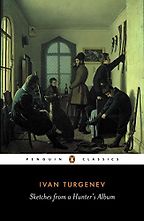
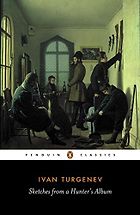
Sketches from a Hunter’s Album takes us away from Pakistan. How does this fit into your choices?
The Pakistan in my stories describes the fading feudal structures and that’s the same with Turgenev. What you see in Pakistan these days is a country which is transforming incredibly rapidly. If you live somewhere like England which is very stable by comparison it’s very difficult to understand how quickly things are changing in Pakistan. I was living there for a year and just came back and this whole thing that is happening in Swat burst out on us. Suddenly the country rapidly changed and I’ve become very aware just how grave the threat to that part of the country is. And these surprises come at you all the time. The country is like living in a film that’s on fast forward.
And you think the people are changing as well, don’t you?
Yes, they are. For example, with the locals who live in the area of my farm – their views regarding the Taliban have completely changed in the past year. Before, they were very sympathetic towards them. There’s a local madrasa, a religious school, which is producing wahhabi, Islamic fighters, and people were pretty sympathetic towards them. That was because of a lack of confidence in the government and a belief that the Americans shouldn’t be in Pakistan. They also thought these fighters were fundamentally OK. They were religious and people were sympathetic to that. But, because of all the violence around, that has changed and some people are taking a much dimmer view of the Taliban. People get jerked around and their thoughts, ideas and feelings about who’s up and who’s down change incredibly quickly.
Ten years ago the political structure in my area was entirely different to what it is now. There was a settled group of people who had been running things for a long time. But then people in the towns and cities suddenly had more power. There is this new governing class, which derives their power from money which they have made in business and they are in the process of replacing the old land-owning powers.
And how does Sketches from a Hunter’s Album fit into that?
Turgenev is describing a feudal system which is very similar to the one I describe in my book. It’s very hierarchical. Also, I think it’s a sympathetic portrayal of the peasants, a class of people who had never before been described with that degree of intimacy. Apparently the Tsar at the time, Alexander the Third said that one of the factors that motivated him to abolish serfdom was reading this book. It made a huge splash at the time. And that’s because it was much more difficult not to grant these people more rights when you’d put a human face on them. And I hope that my book does the same. I am describing groups of people like the electrician on the farm and the poor servant woman who haven’t really been represented in Pakistani literature before. I don’t have any political intentions but I hope at least I can give them a voice.
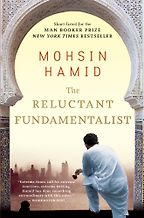
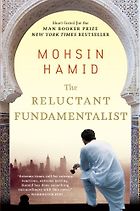
Your last book is a bit of a puzzle, The Reluctant Fundamentalist.
Well, it’s an odd kind of book. I think what’s especially useful about it is the way in which it describes the transformation in this man’s thinking. The protagonist is somebody who had been living in New York and been a banker and he gradually turns into, as the title says, a reluctant fundamentalist. This is something that I have seen among my friends in Pakistan. People who I have always thought of as very, very Westernised. They went to school abroad and certainly didn’t have the habits of religious types. But they are increasingly angry with the West and sympathetic to an anti-Western agenda and propaganda and very receptive to all kind of thoughts. These are really rational people who will now tell me straight out that September 11 was actually perpetrated by the Israelis and had nothing to do with Al-Qaeda. To me their theories seem absolutely loony and yet these guys have come out with something radically different.
Get the weekly Five Books newsletter
Why do you think that is?
I think there is this real sense that we Pakistanis and Indians don’t have a place at the table. The types of things that radicalise someone are, for example, going through passport control in JFK and they take you into a little room and start grilling you. And, clearly, the way that the Bush administration prosecuted the “War on Terror” with things like advocating torture in Guantanamo Bay – people have really taken this to heart and it’s led to a very sympathetic view of the radicals. I think to an American or English person it might be difficult to understand how it feels when your people are getting put in these kinds of situations. This is all about feeling solidarity with our fellow countrymen and it’s important for Westerners to try and understand what it feels like.
Five Books aims to keep its book recommendations and interviews up to date. If you are the interviewee and would like to update your choice of books (or even just what you say about them) please email us at [email protected]
Five Books interviews are expensive to produce. If you've enjoyed this interview, please support us by donating a small amount.