So how does a political commentator end up at neuroscience?
It grew out of my normal day work, which obviously involves politics, but also human capital development. Why, for example, 30 per cent of high school students in the United States drop out, why we got Iraq so wrong. A whole series of policy failures which, in my view, grew out of getting human nature wrong. So I began studying the issue of why so many people drop out of high school, when all the economic incentives are in favour of going to high school. And that took me into the work of an economist called Jim Heckman, at the University of Chicago, who focuses on the first few years of life. And it turns out that already, at age four, you can predict with about 77 per cent accuracy who is going to graduate from high school – based on childhood patterns and things like that. So that got me involved in how these childhood patterns form, which got me involved in brain science, which got me involved in cognitive science…
As it’s the one that got you into all this, what’s the title of the Heckman book?
It’s called Inequality in America and it’s by James Heckman and Alan Krueger. Krueger is an economist at Princeton, and presents an opposing point of view. But Heckman’s focus is on what he calls non-cognitive skills. And, basically, cognitive skills are things like IQ, things we’re used to counting. What he calls non-cognitive skills are what the rest of us would call character or personality. And the name non-cognitive is very misleading, because they are cognitive, they are just not conscious, and also not easily quantifiable. So one of the things he looks at is people who, instead of going to high school get GED degrees, which are high school equivalency degrees, degrees that people take if they haven’t been able to go to high school. And often they get test results that are just as high as people who do get high school degrees. But they do much worse in life. In fact, they do no better than high school dropouts. And that’s because they don’t have persistence, they don’t show up at jobs, they don’t have self-control – this is on average, of course. And so his main point, which is obvious to everybody – but not so much to economists – is that having things like persistence and self-control are really important. So where do those things come from? They’re sort of a black box.
And does he answer that question?
No. He is an economist, not a neuroscientist, but he leads us in that direction.
So Krueger is offering another point of view, but you find that section of the book less convincing?
Right. He is more in the ‘inequality is a matter of economic structure’ camp, less to do with human capital.
So in your efforts to answer the question Heckman poses, you ended up reading books about neuroscience proper?
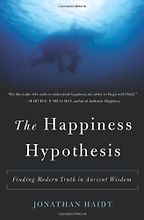
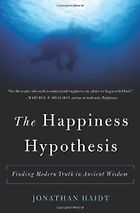
Right. And I started with the easy ones. One very accessible one, but by a guy who is very serious, is a book called The Happiness Hypothesis. It’s by Jonathan Haidt, who is a psychologist at the University of Virginia.
People seem to absolutely rave about this book. One online reviewer says: ‘This is my all-time favourite book. It contains the most practical advice for daily living I have ever seen.’ And a lot of them seem to be like that: ‘The most entertaining, interesting, educational book I have ever read,’ etc, etc. So what does it reveal about the working of our minds?
Haidt uses the metaphor of a boy and an elephant. He says our minds are structured like a boy riding an elephant, and the boy is the conscious reasoning part, the cortex-based brain. And it can see very far, and make certain steering decisions. But most of the work is done by the elephant, which is the unconscious part of the brain. His work is to try to explain what the elephant is doing.
In his research, he focuses especially on moral judgments. So he tells his students the story of a brother and a sister who are off on a trip somewhere. They decide one night they’re going to have sex with each other. They do it, they find it pleasant, and decide they’ll never do it again. But they are glad they did it. And he asks: ‘Is that wrong?’ And most people say it is. But they can’t really explain why they feel that way.
He says that feeling of disgust that we experience is a moral feeling that flows unconsciously, it’s not based on conscious reasoning. And he argues that most of our moral decisions are that kind of an instant reaction. It’s like aesthetics: when we see a scene we know instantly if it’s beautiful or not. We know instantly if something feels moral to us or not.
So the idea that it might be as a result of our upbringing, that we’ve been told that a brother and sister having sex is wrong, but it becomes so firmly ingrained that we don’t even understand why it’s wrong?
I think I would say, and he would say and most scientists would say, that it’s the result of two flows of information. One is the genetic, and in every culture under the sun, incest is regarded as wrong. There is no human culture that really tolerates incest. There’s that sort of knowledge. So we do have some moral knowledge that just comes to us genetically: a sense of fairness, a sense of reciprocity. All humans have these, except psychopaths. So some of that is genetic. But then it’s underlined by cultural things; that’s the second flow of information. And those cultural things may be learned consciously, but are also stored in the elephant.
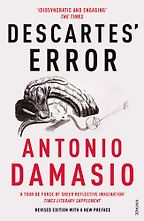
So what about your next book, Descartes’ Error by Antonio Damasio, who is Director of the Brain and Creativity Institute at the University of Southern California.
This is also a book – like most of the books I have chosen are – on the distinction between subterranean mental processes and conscious processes. And Damasio’s work concerns emotion and the role of emotion in decision-making. We have an idea that every day decisions are shaped by rational thinking, Dr Spock-type logical thinking. But Damasio worked with people who have suffered strokes and as a result are incapable of feeling emotion. And far from making good decisions, they make terrible decisions, and their lives fall apart.
His theory, which has now been widely accepted, is called the somatic marker hypothesis. So the basic idea is that emotions is how we value things, it’s our GPS system. When we see something as trivial as an ice-cream cone or as important as a potential spouse, our emotions say we either want that or we don’t, it’s going to lead to pleasure or to pain. And we follow that emotional signal. So the error Descartes made was to separate the mind and the body; the idea that the mind can exist without the visceral emotional reactions of the body. Because you actually can’t have a brain thinking without those visceral reactions.
Why do these things matter to you as a political columnist? What’s the practical application of a book like this for you?
The application for me is that it gives me a new view of how human beings make decisions and operate. We believe that people make decisions based on rational and clear responses to incentives. But in case after case they don’t make decisions that way. And I think most of us understand that the economic model of human nature is not really accurate. And yet all our public policies are based on that model. Economists have tremendous sway over public policy, over foreign affairs. Game theorists impact on our international relations people, they train our public policy figures. And for me, as a result of these books, I just observe and place a lot more emphasis on unconscious decision-making. I’m interested in cultural influences that shape our behaviour in ways that we don’t understand, and even the way that genetics can shape our behaviours in ways that we don’t understand.
What about your next book?
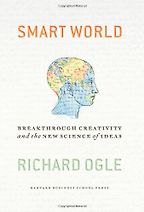
My next book is called Smart World and is by Richard Ogle, who is a private consultant and entrepreneur. And he takes some of these ideas that I’ve been talking about and translates them into the world of business and creativity. And his book is very underappreciated, I think. The other books I’ve chosen are very famous, but this one hasn’t got the attention it deserves.
Ogle is a populariser of the work of a philosopher named Andy Clark, who emphasises that ideas don’t just exist in one head, but they exist outside the mind, in a whole bunch of minds at once. And one of the traits of unconscious thinking is that we’re intensely social, we catch ideas and thoughts in ways we’re not consciously aware of from each other. According to Ogle, we’re embedded in what he calls ‘idea-spaces’, what most of us would call culture. So, for example, the simple illustration is Picasso, who existed in one culture, the culture of western art. He came across a separate culture, of African masks, and he really merged these two cultures to create Cubism. The creativity came from these two idea-spaces merging together. Ogle’s book is really about how that happens, ranging from Picasso to the invention of the personal computer.
Two books to go.
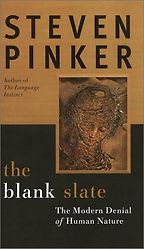
Yes, so these are two gigantic books, both very famous, which really should be read by anyone interested in this world. And the first is called The Blank Slate by Steven Pinker and the second is called Consilience by Edward O Wilson. And these books are both landmarks of our time.
Stephen Pinker is a psychologist at Harvard, though until 2003 he taught in the Department of Brain and Cognitive Sciences at MIT.
Yes. Blank Slate is an argument against the old view that there is no such thing as human nature, that we’re all culturally determined. He brings together a ton of evidence that that’s wrong. Some of it involves brain structure, a lot of it involves genetics. He doesn’t really think of it this way, but a lot of it is about the unique qualities that guide behaviour that we’re not aware of. I would say that he is overly reliant on genetic explanations, but it’s still a very important book.
So, although the book is called Blank Slate, he’s actually arguing the opposite. Would you say it’s accessible to a non-scientist?
Yes, all of these books I’ve chosen are very accessible.
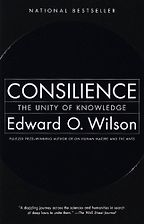
Finally, Consilience, which was published in 1998 and is by the Harvard biologist and twice Pulitzer Prize-winning Edward Wilson.
Wilson makes the argument – or rather the prediction – that a lot of the disciplines we have separated human behaviour into are obsolete, and that we are on the verge of unifying knowledge in an interdisciplinary way. And that’s important because if you look around at various fields, what Wilson predicted a decade ago is actually happening with neuroscience. There’s a field of neural economics, which is a combination of economics and neuroscience, there’s neural this and that, basically neural everything: literary critics, historians. People in many different disciplines are using this work on the brain to illuminate their thinking. And in this way, I think what they’re finding in our unconscious mind will have the same sort of influence that Marx had, and that Sigmund Freud had, namely an entire new vocabulary, that will help define a lot of different fields.
So this belief in the unity of knowledge, that there is one theory that will explain all we know and don’t know. Is this the return of the Renaissance man?
Well, except that in the Renaissance we thought we were masters of our destiny, and the whole idea was ‘what a glorious thing man is, with limitless capacities’. But here, each individual is not so special, we are shaped by genes, by social trends; individual decision-making is bounded. There are severe limits on free will.
Five Books aims to keep its book recommendations and interviews up to date. If you are the interviewee and would like to update your choice of books (or even just what you say about them) please email us at [email protected]
Five Books interviews are expensive to produce. If you've enjoyed this interview, please support us by donating a small amount.