The best books on Non-Military Solutions to Political Conflict
recommended by David Cortright
David Cortright, Notre Dame peace studies expert, identifies and rejects one of the myths about non-violent action: that it only works in liberal democracies. He outlines that non-violent protests can achieve their aims, that terrorism can only cease through negotiation, and that wars rarely have winners.
First of all, can we just talk briefly about the revolution in Egypt and how what went on there fits with your area of study?
Yes. The struggle in Egypt was extraordinary and one of the most dramatic examples of people power in history. It’s always exciting to see dictatorship crumble and people courageously pouring into the streets to demand freedom. Part of what we saw in Egypt was the way in which the methods of non-violent social action that have been increasingly utilised all over the world to bring freedom and overthrow dictatorships have now taken root in the Middle East, in Arab Muslim countries. This shows us that these ideas do have a universality, and can work even in a country like Egypt, which had a very stern authoritarian system where people had not had any political freedom up until now.
But it did get violent.
The protesters were attacked by the pro-Mubarak demonstrators and by the army and police. Non-violent protesters may still suffer physical attack and, indeed, they often do — even if you look at Gandhi’s freedom movement or the U.S. Civil Rights movement. It doesn’t mean there are no casualties, but it does mean that all or most of the casualties are on the side of the non-violent movement. It also means the overall amount of bloodshed will be much less, provided that the demonstrators are committed to non-violent protest.
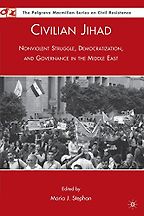
Tell me about your first book, Civilian Jihad.
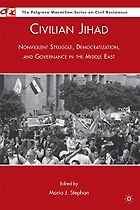
A colleague of mine, Maria Stephan, edited this book. It’s a collection of essays about the Middle East. They reveal different groups’ approaches to their disagreements, including those by the Palestinians. We think of the latter’s protests as violent – and they certainly were during the second Intifada. But there are many heroic examples of Palestinians resisting the separation barrier in a non-violent way, in the face of constant attack.
The book dispels one of the myths about non-violent action: that it only works in liberal democracies. Gandhi could use it against the British because Britain had a developed legal system. Martin Luther King had a voice because the United States is an advanced democracy. And so on. In fact, we have seen that it also works against repressive and authoritarian regimes, as demonstrated in Egypt and Tunisia and in other parts of the world.
So as far as protests are concerned, it’s really about numbers.
Numbers matter tremendously. Historically, much depends on having a mass mobilisation of people.
“The book dispels one of the myths about non-violent action: that it only works in liberal democracies.”
In the 2004 Orange Revolution in Kiev, more than 100,000 people turned up day after day. They showed the authorities that theirs was a movement that would not be suppressed. The military and police were reluctant to use force against such a vast crowd.
Let’s move on to Beebe and Kaldor’s The Ultimate Weapon is No Weapon.
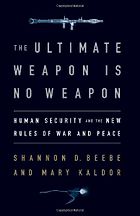
This is a wonderful review of how military doctrine is changing. One of the book’s authors, Shannon Beebe, was a U.S. army colonel. He read some of Mary Kaldor’s earlier books and wrote to her. ‘What you’re saying about the nature of warfare is true,’ he said, ‘because I’m experiencing it.’
In essence, war has changed. Most wars are now civil conflicts. The combatants are civilians by day and insurgents by night. The casualties are civilians. This means that the response cannot simply entail military bombing or heavy artillery. It has to be a measured one and win hearts and minds.
The book analyses incisively the situation in Afghanistan. The theoretical doctrine of the NATO forces is to cooperate with people to improve governance, provide economic opportunity and win people away from the extremists. But in practice, U.S. and NATO forces have focused on combat: searching and destroying, killing insurgents and breaking into homes.
We know from experience, and this book says it so well, that you can’t win these campaigns by just trying to kill the insurgents. A political bargain has to be struck. You have to convince people that there’s a better route than extremism. For that, you need to have better options in terms of governance, economy and education.
I think the ideas in this book are wonderful – if only the world could be like that. What worries me is that I think people want to fight. Young, adrenaline-pumped men aren’t looking for a peaceful solution.
If we can give young men attractive socio-economic and educational opportunities, they are less likely to gravitate towards violent insurgency. There is aggression in many people but there are also cooperative instincts. Part of the challenge for society is to structure the options so that the cooperative impulses get more emphasis.
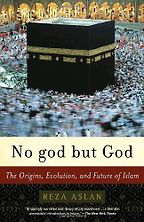
Let’s turn to Reza Aslan’s No god but God.
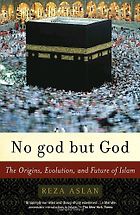
For me, this is the best introduction to Islam. I think all of us in the West are trying to learn more about Islamic culture and religion. Aslan writes so beautifully about what Islam represents – its theological, cultural and economic dimensions. It’s the most eye-opening and illuminating book I’ve read on the subject. It gave me a sense of respect for Islamic culture and the great scientific and cultural contributions of its past.
Support Five Books
Five Books interviews are expensive to produce. If you're enjoying this interview, please support us by donating a small amount.
Why is it so important that we increase our understanding of Islam?
Because we have invaded or attempted to occupy Islamic countries and the al Qaeda movement has emerged. There’s a strong perception in the Islamic world that the West is waging war against its very religion. There’s so much anti-Islam feeling, particularly in the United States. We need to understand and respect this great religion and the traditions of Islamic societies.
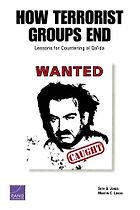
Tell me about your fourth choice, How Terrorist Groups End.
This is an interesting book from the RAND Corporation, a long-established think-tank. It addresses a very important issue. Jones and Libicki examined hundreds of cases and found that terrorist groups are defeated not, generally, by military means but through other processes. These include law-enforcement measures – tracking down the terrorists and prosecuting them – and political ones, such as negotiation and power-sharing arrangements.
Like Sinn Fein?
Yes – Martin McGuiness is now a minister. We’ve seen this in other parts of the world, where terrorists agree a political bargain and become leaders. Some of the early political leaders of Israel once bombed the British forces.
This sounds dicey, as if terrorist groups end by taking over. They’re no longer terrorists because they win.
They don’t win entirely. There’s a power-sharing arrangement in Northern Ireland but it’s certainly not a military victory for the IRA. There are winners and losers in politics. But it’s a political struggle, not a military one.
So they don’t win – they are ‘incorporated’.
Exactly. Wars and terrorism usually end through a negotiated bargain. You have to sit across the table from those you consider terrorists and murderers and come to an agreement.
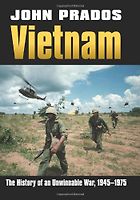
Tell me about John Prados’ Vietnam.
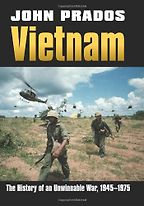
This is one of the best histories of Vietnam. As someone of the Vietnam generation, I’m addicted to the historiography of the war. This is a monumental book, stretching from 1945 to 1975. It addresses some of the misperceptions that have arisen over the years and clarifies that, despite some revisionist thinking, the United States never won.
Despite massive firepower and 50,000 U.S. casualties – not to mention the two or three million Indochinese who lost their lives – the war was ongoing. It was not possible to defeat the insurgency militarily. It’s an important lesson. You can achieve tactical success here and there. But you can’t defeat an insurgency like the Viet Cong, which had deep roots and was capable of sustaining itself for many years.
Does that include a civil insurgency?
Yes – the same rules apply. They can suppress the Egyptian protesters by beating them up but the protesters are not going to go away. Only a political solution can address a relatively peaceful insurgency.
Why on earth can’t we learn that lesson? Why do we continue to go for military solutions? Is it because we’ve spent so much money on military equipment that people think: we might as well use it?
That’s part of it. When your main tool is a hammer, every problem looks like a nail. The United States spends a staggering amount of money on its military. When a problem arises, it’s the main solution. There’s also a cluster of economic, social and political interests that keep the military going.
Get the weekly Five Books newsletter
Then there are the basic human impulses. After 9/11, there was a strong sense that we should take some sort of action. Bush’s war on terror seemed like a good thing to many Americans. It might have been a good political slogan. But it turns out that, as policy, the idea of waging war on terrorism is foolish, counterproductive and dangerous.
The consistent lesson is that non-violent, non-military solutions are available. They don’t work every time, of course. But on most occasions, if we seriously utilise our non-violent tools, we can bring about a peaceful result and a freer and more democratic society.
February 23, 2011
Five Books aims to keep its book recommendations and interviews up to date. If you are the interviewee and would like to update your choice of books (or even just what you say about them) please email us at [email protected]
David Cortright has been involved in peace-related issues since enlisting in the U.S. Army during the Vietnam War. He teaches Peace Studies at the University of Notre Dame and has published 16 books. He has advised agencies of the United Nations, the Carnegie Commission on Preventing Deadly Conflict, the International Peace Academy, and the John D. and Catherine T. MacArthur Foundation.
David Cortright has been involved in peace-related issues since enlisting in the U.S. Army during the Vietnam War. He teaches Peace Studies at the University of Notre Dame and has published 16 books. He has advised agencies of the United Nations, the Carnegie Commission on Preventing Deadly Conflict, the International Peace Academy, and the John D. and Catherine T. MacArthur Foundation.