The CNN columnist and former speechwriter for George W Bush, David Frum, recommends five conservative books that transformed the way we think about fundamental problems.
I love this list of books: between Friedman and Schwartz at the beginning and de Soto at the end, it pretty much demolishes every liberal shibboleth for a generation or two. Let’s start with Milton Friedman. Why A Monetary History of the United States and not one of his more popular books?
The idea behind my list is that these are five conservative books that changed the way we think about fundamental problems – and changed them so powerfully that there was no going back. The highly intrusive regulatory redistributionist state that was built in the 1930s was founded on an analysis of what went wrong in the horrific trauma of 1929 to 1941 in the United States. There was an accepted understanding of why it was that the economy went into this searing experience for a generation of Americans and what it was that got the US out again. That legitimated a quarter century of public policy afterwards. Friedman and Schwartz did many things in this book but the most powerful lesson for its readers is they debunked all the previous explanations of what had caused the Great Depression and showed that it was the product of a failure of monetary policy. So when the US had severe economic problems in the 1970s, it opened the way for Friedman to win that argument about how to stop the great inflation – just as he had argued that better monetary policy could have stopped the Great Depression.
How does monetary policy tie back into the conservative political movement?
Capitalist economies go through cycles, good times and bad. Democratic capitalist societies will not take the same amount of pain from those cycles that pre-democratic capitalist societies did, so we are going to have to do something about these cycles. If the cycles are caused by government taxing and spending, then the answer is that in order to avert cycles, or mitigate them, the government is going to have to have a direct active response in the economy. What Friedman showed is that government can have an impact on these cycles in a much less intrusive way, through the regulation of banking and credit. By the way, this is not a call for classic laissez-faire, for doing nothing, because one of the lessons of the Friedman book is that the federal government did exactly the right thing in 2008 when it intervened to save the banking system. All these people today who say, ‘Well, the conservative thing to do would be to let the banks go under,’ will have to argue with Milton Friedman, because that is what turned the ordinary recession of 1929-1930, which was nasty but ordinary, into the extreme crisis of 1931, 32 and 33.
Government is a part of the solution but it shouldn’t be a knee-jerk Keynesianism.
The book is an answer to Keynes, but Friedman doesn’t refute Keynes’s book, he absorbs Keynes. That’s what great minds do with their predecessors – just as Keynes did not refute Alfred Marshall’s ideas, he absorbed them.
One other lesson from Friedman is that it’s a good idea for governments to run a deficit. The people who in 1929 said the answer to the Depression was to balance the budget, Friedman thinks are just as wrong as Keynes does. According to Friedman, the reason you want the government to run a deficit is not because you want government adding to demand, but because the deficit creates money. The government is able to finance the gap between what it takes in and what it spends by creating various forms of money – whether it is cash or whether it’s bonds. It’s that addition to the money supply that stimulates the economy and not the government’s purchases as such. As often happens with policy arguments, people can converge on the same answer for radically different reasons.
It’s hard to imagine Reagan without this book. People remember Reagan as a supply-side, low-tax guy but that period was actually more about inflation than any other single issue.
One way to think about what Reagan’s great contribution was in 81 and 82 is that he stood unflinchingly by the Federal Reserve as it imposed some very painful measures to squeeze inflation, not only in the US economy but in the world economy. A lot of other people would have flinched from that and his tax cuts helped to soothe the pain of the monetary policy. But it was the monetary policy that stopped inflation.
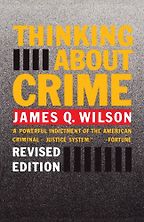
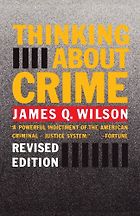
On to James Q Wilson’s Thinking about Crime from 1975. This was a very controversial book at that time because people still thought crime was a side effect of poverty. Why is Wilson on your list?
In 1974 if you asked Americans what their number one concern was, it wasn’t energy, though that was a time of gas lines. It was not unemployment, though there was a terrible recession. It was not inflation, though inflation was accelerating. It wasn’t the war in Vietnam; it wasn’t Watergate. The number one concern was crime.
Really?
Yes. Up until 1973 the way the government kept crime statistics was by the FBI calling local police departments and asking, ‘How many crimes have you had recently?’ Some police departments would report as best they could, but others didn’t do a good job. Others knew that their mayor wouldn’t want big numbers reported, and as the crime wave grew throughout the 1960s, crime statistics became less accurate. So in 1973-74 the Department of Justice introduced a new measure, a statistical survey of households to find out if you or a member of your household had been the victim of a serious crime in the past year. What they discovered in the first year of the survey was that one out of every three American households had been the victim of a serious crime.
Wow.
It was a huge, huge deal. And, as you say, in those days it was liberal thought that was riddled with taboos: things that couldn’t be said, thoughts that couldn’t be pronounced, all these gatekeepers to shut down open discussion of important social problems. One of the fundamental rules of liberal discourse was that you mustn’t do anything that blames the victim. And the victim of crime is, of course, the criminal – so we won’t blame the criminal for what he did.
What Wilson did in this book was to bring unsentimental social science to bear on the problem of crime: to analyse it as a social science problem, why it happened. He had a series of insights – the book is not one grand theory, it’s many multiple insights. One of the things he argued is that the supply of crime is not infinite, that is, the crimes are done by relatively small numbers of people. If you can get those people off the streets – incapacitation is the technical term – you can make a big difference and that’s, in fact, exactly what happened. What he also did was he provided a corrective to those conservatives (conservative thinking can be emotional too) who thought the answer was that if you electrocute enough murderers you can reduce the crime rate. You don’t have to do that. If the punishments are certain and you remove enough people from the streets, you have a big impact. The whole debate over the death penalty has become much less passionate as the crime problem has receded.
Why is this a conservative book?
It’s a conservative book because of its mood. Its mood is unsentimental. It does not believe there is greater virtue at the bottom of society, it doesn’t accept conventional excuses, it doesn’t make racism the centre of the American story. Also, because it’s willing to contemplate the effective use of state punitive power to solve a social problem.
And in some sense it argues for the economic rationality and individual responsibility of criminals?
Actually, he argues against the idea that criminals are economically rational. This was the previous teaching – that criminals were very sensitive to costs and benefits of their crime. Wilson says, ‘No they’re not, they’re not good calculators.’ That’s why incapacitation is so important. Because if they were good calculators it would just take making the sentence a few months longer: ‘Gee, that means 22 months in jail for stealing that car! The car’s worth $12,000 and then 22 months in jail, that makes $18,000 in foregone income, no I won’t do it.’ He’s arguing against that. His argument is that this guy is a bad calculator, but this one guy is going to commit a lot of crimes. You take him off the street and that one jail sentence can eliminate many, many crimes.
It’s interesting that you cite unsentimentality as a conservative virtue in these books. It’s partly the way these people are thinking and not just what it is they’re thinking that seems to be on your mind.
When the term neoconservative was originally introduced into American speech back in the 1970s, the distinction was often drawn on the right between the neoconservatives and the older conservatives. The older conservatives were primarily literary intellectuals – Russell Kirk, Richard Weaver. They were themselves great writers – certainly Kirk was. They were people whose first interest was the analysis of literature; they were imaginative writers. What the neoconservatives brought to politics was the application of social science to social problems. What made them conservative was, as Mrs Thatcher said, that the facts of life are conservative. They are social scientists, they use social-science methods, they are interested in the governance of society and public policy.
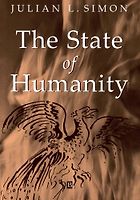
Which brings us naturally to Julian Simon. I remember having an argument with you back in our undergraduate days at Yale. You insisted that oil was never going to run out, I insisted that that was insane because it’s a finite resource so of course it would run out. You had read Julian Simon, I hadn’t.
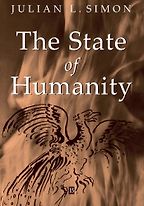
Simon’s point is that there is nothing less natural than a natural resource. All of these things are developed by an investment of knowledge, effort and labour. People do that according to whether it pays. The natural way to think about natural resources is that there is so much copper in the ground and then, after you’ve dug it all up, you don’t have any more. And what he argued is no, the world’s supply of copper is like the grocery store’s supply of cans of tomato sauce. So long as people are buying the cans of tomato sauce the store will maintain an inventory of tomato sauce. If there is more of a demand for tomato sauce, then the store will invest more capital to maintain a bigger inventory of tomato sauce. But the idea of how many cans of tomato sauce are there in the world, that is not an answerable question. How many do people want? What will they pay?
This was a book that was powerful because it destroyed another core liberal or prevalent belief of the late 1970s, which is that command and control was the way to mobilise scarce natural resources most effectively. Everyone who is buying gold today would do well to read this book because one of the lessons of this book is that people will say, ‘Hey, gold, which used to be worth $300 an ounce, is now worth $1,400 an ounce – let’s make a whole bunch more.’ Right now people are digging this stuff up all over the planet and Julian Simon would be the one to tell you, if you are banking on $2,000 an ounce gold, don’t.
First Simon demolishes the myth of scarcity for ever and second he says when there is scarcity, command and control is the wrong way to deal with it. Is that fair?
The ultimate resource is the title, The State of Humanity, the ability of human beings to re-imagine, and he’s got lots of great stories in the book. One is the great pine tree shortage of the 1830s and 40s. If you have a war ship, you need to have great big sails to make it go faster and if you need a big sail, then you need a big mast, and the way that you get that is by having a very, very tall tree. The British preserved these tall trees, first in Scandinavia and then in Canada, and they got worried because people were cutting down these tall pines faster than they would grow. And the question was, how would you have masts and then how could you have sails and how could you have battleships? But now, no one knows how many pine trees there are in the world and no one cares – because we thought of a better way of making battleships than of having them with masts and sails.
So is this book also on the list mainly because it entered at a moment when the temper of the times was very much in the other direction? It’s not inherently conservative is it?
All these things become the common property of everybody. I don’t believe two eternal categories – one called conservative, one called liberal – exist, and that you can look at people from 1950, or 1930 or 1900 and project forward and backward. Questions get resolved, new questions get opened, intellectual resources become the common property of everybody and also we see things from different points of view. One of my favourite books is Robert Skidelsky’s biography of Keynes. He rediscovers Keynes as a profoundly conservative thinker and that’s not the way people wanted to read Keynes in the 1960s and 70s. It was a way to read Keynes that made sense in the 1990s. In the same way that Simon, at the time, was very much a creature of the right. Right-wing people liked him and left-wing people didn’t. By the way, I don’t think he was completely right about everything. In some ways he was cavalier about population growth and immigration – people are not just fungible economic units. But his insights are available for all, just in the way that Friedman and Schwartz insights are available for all. Just as when good, liberal social science is done, it’s available for all.
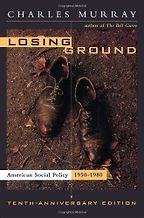
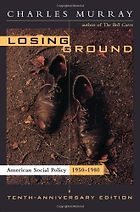
Simon’s book was very controversial and remains so to this day but I would nominate the next book on your list, Losing Ground by Charles Murray, as the most controversial book of all and maybe the most controversial conservative book of the past century (unless you count The Bell Curve by the same author). Why is Losing Ground important enough to be here?
By 1984, conservatives had won a lot of important arguments about public policy. But there are real problems in the mid 80s for Americans that conservatives don’t have the answers to and one of them is the urban crisis that started in the 50s and 60s and was only getting worse. Welfare dependency was getting worse; there was a new problem of homelessness that was very shocking to people living in big population centres. This was regarded by many people as a big indictment of the new, more open economy. This book is not exactly social science: in many ways it is a work of imagination. It relies on what he calls his ‘thought experiments’, where he invites you to look at problems from very different angles and other people’s points of view. He suggests thoughts in your head that you can’t prove exactly but seem persuasive when he shows them to you. What he tried to show was that the intensification of welfare dependency was not a result of the economy malfunctioning and that, paradoxically, the solution to the problems of the extremes and very ugly forms of poverty that were becoming visible was not greater support from government but less. These were ideas that had been germinating in conservative minds in one way or another – George Gilder’s Wealth of Poverty, published in 1981, had some early sketches of some of these ideas. But Murray really sealed the case. This is the book that was the intellectual antecedent of the welfare reform of the middle 1990s that now most people regard as one of the great successes of American public policy.
Signed by a Democratic president on the third attempt. Murray – again a very unsentimental kind of thinking?
Very unsentimental thinking, yes. And later on he goes in some directions that are more questionable. A lot of people would not want to follow down those paths to The Bell Curve. Just because you recommend one book by an author doesn’t mean you have to endorse every one of them.
This book kept conservatives off the defensive on perhaps the single most morally empowering issue the liberals have had, which is poverty.
And, by the way, the idea works. One of the things we have seen happen since welfare reform is an increase in labour force participation among black families, especially black men. You saw very rapid rises in black incomes in the 90s and in certain cities, like NYC, black households earn as much as white. Those gaps have been closed – which is not to say that there don’t remain huge gaps in wealth as opposed to income.
Would it be a stretch to say that Murray and welfare reform is to the Gingrich generation of conservatives what Friedman and the supply-siders and the attack on inflation was to the Reagan generation?
I would say is that we have had two great spikes of conservative domestic policy creativity. One in the late 70s and early 80s and another in the middle of the 1990s. Obviously more things happened between 1975 and 1983 than happened in 1994-1995, so they are not equal spikes, but it’s at the core of what you might call the silver age of conservative policy achievement.
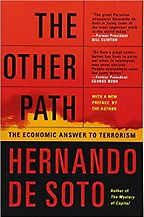
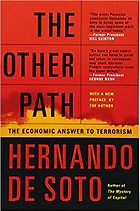
The one book on your list that I did not hear about when it came out is Hernando de Soto’s The Other Path, published in Spanish in 1986 (if we can believe online sources) and in English not until 1989. Why a book on the Peruvian economy?
The Other Path is not a book on the Peruvian economy: it’s a book on Third World economies. I should mention that I haven’t met Simon and I haven’t met Friedman but I know most of the people on this list personally and Hernando de Soto is probably the one I know best and admire hugely. In this book, he does an experiment. His team’s mission was to start a small textile factory with a dozen workers and their job was to get the permits for this factory and to do so completely legally. They were not to pay any bribes, unless not doing so put an end to the experiment – so if they got a flat demand saying, ‘You can’t proceed without paying the bribe,’ they would pay the bribe in order to keep going. But they would in no way use bribery to accelerate the process. They did this in the US, they did this in Germany, and then they did it in Peru. I don’t remember exactly how long it took but in the US it took about a day and a half, in Germany it took three and a half days and in Peru it took a year.
His point was that what is crushing economic activity in the Third World are these weak, huge but spreading governments they have. He also thinks we should conceptualise these Third World countries, and especially Latin America, as dual societies. There is a European elite at the top who participate in one economy, a formal economy, and then there is an indigenous or non-European group underneath, who have an informal economy. Not a black market – these are people engaging in normal activities. He argued that they are not doing anything wrong, they are not illegal – but they are outside the law and that has tremendously negative consequences for them. He doesn’t romanticise this informal economy either. But that is the great problem of underdevelopment, especially in Latin America.
In another book, he did another fascinating experiment. He sent teams into four Third World cities including Port Au Prince and Cairo. What they did was go into a slum, find a shanty, and find out how much this shanty was worth. If I wanted to buy it, what’s it worth? $300? OK. Then they would take an aerial survey of one square kilometre of this slum and count the number of shanties that were there and then do an aerial survey of the whole city and find out the square kilometres of shantytowns that were there and then determine the capital value of this housing stock. While the individual houses were worthless, the aggregate value of their worth was colossal. But nobody could monetise it. You couldn’t get a loan against it, you couldn’t use it as capital to support a business, and what was even more startling was that because you didn’t have title, you couldn’t rent it to anybody outside your family. If your cousin comes in from the countryside, you can rent it out to him, but you can’t rent it to a stranger because you have no confidence that when the lease is up the stranger will relinquish it – because you don’t have clear ownership. Poor people are trapped in a face-to-face economy, whereas the achievement of the modern world is to emancipate most of us to participate in an impersonal economy spanning half the planet. These ideas have very profound implications.
Why is The Other Path on a conservative book list? Why is it relevant to conservatives in developed countries with well-established legal systems and property rights?
I think because one of the concessions that liberalism began to make after the Reagan/Thatcher era. Back in the Depression days, people who advocated a controlled economy said, ‘We know we’re right because we know how to make people more affluent. You conservatives with your free market ideas don’t know how to do that.’ After the 1970s people who advocated a more controlled economy said, ‘OK, OK, you people who are in favour of free markets know how to create wealth for the already wealthy, but the problem of poverty, that’s our problem – you don’t have answers to how to deal with that.’ Hernando de Soto, and in a way Wilson and Murray, showed that actually we have answers for that. We have explanations and policy solutions that apply not only for making the already wealthy rich but also solutions to the problem of poverty. What a country like Peru needs is to extend the market and legal principles that govern the lives of its top ten per cent to find ways to bring those down to touch everybody.
Another thing that the books you have chosen have in common is that they all develop the theme of liberal counter-productivity, which for a long period became a major arrow in conservatism’s quiver, the idea that liberalism is no good if it’s hurting the people it’s trying to help.
All the books have positive points but they all have debunking points. They are all written from a minority and contrarian point of view. I think they all take for granted that the other side of the argument holds the upper hand. The impact of this book is suddenly to transform and upend what was the conventional wisdom and create a new consensus in place of the old consensus.
Are there books in the last ten years that you could name that have the same revolutionary, paradigm-shifting kind of effect?
I would say in the past ten years, while there has been conservative intellectual productivity and there have certainly been good books written, it has not been as fertile as when these books were written. There are a lot of reasons that this is so. For one, these are icon-busting books, these are books that turned things upside down. So when the conservative side is on the ascendancy, as it really intellectually has been, there are fewer such books. In fact, the books that have tended to turn stuff upside down have tended to be liberal books. And the areas where books can have this impact have become smaller and smaller.
So do you imagine that ten years from now, when the Obama reforms have worked their way through, we’ll see another wave of debunkings flowing out of that or do you think we’ve seen a diminution in conservative intellectual capital?
That’s another problem we now have. One of the reasons these books have the philosophy and force they did was because they were arguing with people who are constrained by a whole series of taboos, clichés, slogans, and compulsory beliefs. Once conservatives have built a similar structure of taboos or an opposite structure of taboos for themselves, it becomes harder. Once you have your own gatekeepers, and certain lines of research can’t be pursued, then you are in danger. We also have, as the conservative world has grown, a lot more people in it, we have a lot more friendships, a lot more relationships – and people understandably become less ruthless in their criticism of less than perfect work.
Five Books aims to keep its book recommendations and interviews up to date. If you are the interviewee and would like to update your choice of books (or even just what you say about them) please email us at [email protected]
Five Books interviews are expensive to produce. If you've enjoyed this interview, please support us by donating a small amount.
David Frum
David Frum is the editor of FrumForum.com. He is a columnist for CNN.com, a frequent guest on TV talk shows, and a former speechwriter for George W Bush. He is the author of a brilliant and underrated history, How We Got Here: The 1970s, and more recently Comeback: Conservatism That Can Win Again.
David Frum is the editor of FrumForum.com. He is a columnist for CNN.com, a frequent guest on TV talk shows, and a former speechwriter for George W Bush. He is the author of a brilliant and underrated history, How We Got Here: The 1970s, and more recently Comeback: Conservatism That Can Win Again.