The best books on Immigration and Multiculturalism in Britain
recommended by David Goodhart
Managing immigration has become a key political question of our times. The author of The British Dream tells us about the British experience, and what helps multiculturalism succeed or fail.
We’re talking about hugely divisive issues here – will you begin by summarising what multiculturalism is?
Multiculturalism is an enormously contested term. In everyday use, what many people really mean by multiculturalism is multiracialism, i.e. living in a multiracial society. It isn’t that. It’s a term describing the management of majority-minority relations and immigration. Britain is multicultural as opposed to France being, supposedly, assimilationalist. And usually it is not meant in a neutral way. Multiculturalism implies an accommodating attitude to newcomers and minorities – giving people space in order to remain different, up to a point. I think it’s usefully subdivided into soft and hard, or liberal and separatist, multiculturalism.
Hard multiculturalism puts your ethnic identity before your citizenship. Soft multiculturalism ensures citizenship comes first. Liberal multiculturalism is about giving space to newcomers to adjust themselves over time to a country. Separatist multiculturalism says that so long as you do the absolute minimum – obey the law and pay your taxes – then you can use that space to barricade yourself off and create a sort of internal colony. That’s a problem, and I think it has happened to a certain extent with some groups.
So multiculturalism both works and doesn’t work. The space metaphor is a useful one. Some groups have used their space to better become British, or British Pakistani or British African. Even the laissez-faire form of multiculturalism works for those who use it to launch themselves into British society. But other groups have not been so successful. Separatist multiculturalism doesn’t work for either the minority or the majority.
In a nutshell, what is the historical context of today’s multicultural Britain?
Britain had an open door policy from 1948 to 1962, when anybody from the empire or Commonwealth could come and live in Britain. That is essentially saying to some 600 million people around the world, most of them from the working classes or the peasantry, that there are no restrictions on their entry. Which was a magnificent idea, but also a bit of a disaster. Those who framed the legislation thought that no-one would come, but they did – half a million came between ’48 and ’62, albeit a small number compared to today’s figure.
Which is over half a million during the last year alone.
Yes, in terms of inflow – although there is also quite a bit of outflow. We had a parallel situation two generations later in the early 2000s, with Eastern Europeans coming to Britain from the EU. Only 15,000 were meant to come, but in reality a much larger number did.
What are some of the problems thrown up by large scale immigration?
If immigration levels are too high, or it happens too quickly and the pace and scale of change is too great, then it causes people to turn in, to hunker down as Robert Putnam puts it – they become less willing to share resources and do all the things we require of people in a modern welfare state. In the long run, that is a problem. Because of our laissez-faire multiculturalism in Britain, we have never been very good at integrating people. That goes all the way back to the way British colonialism worked.
We had a light touch to our colonialism, often ruling through local elites like maharajahs in India. We had, if not an equal philosophy, then a respect for different cultures. We didn’t want to turn everybody into a Brit, and we brought that idea back to post-war immigration. When the empire came home, we had the notion of the imperial family. We assumed that because of our colonial relationship with people from Pakistan, for instance, they would be absorbed into British society and the white working class would embrace them. The reality was very different.
What is to be done?
I think levels of immigration must be reduced. I certainly favour a cap, although it’s a little arbitrary and difficult to manage. But we also need to relearn how to encourage people to join in. We need to develop better ideas of integration and of what it is to be a British citizen, particularly in areas with high immigration settlement like Tower Hamlets in London, dominated by Bangladeshis, or Bradford in Yorkshire dominated by Pakistanis.
Britain has not set up patterns of residence, schooling and employment that make it easy for people to join in. Certain groups that have the cultural resilience do join in and often flourish, even if they often remain residentially segregated. But other groups tend to live separately in all areas of life, and have reproduced many of the institutions of their home country in England.
So the point is that as well as privileges, there are responsibilities to being a British citizen. But what does it really mean to be British?
I hope it just happens organically in everyday life. It’s about creating a common life. And that common life remains completely compatible, in my view, with hanging onto most of the traditions of where you came from. Obviously we believe in freedom of religion and cultural expression, but within the context of a British system and polity – a British way of life.
National identity is an invitation to become more alike over time. That obviously conflicts with many of our modern liberal notions of diversity. I think national identity and a degree of diversity are compatible, but you have to be careful about the relationship between them – particularly if you are a supporter of a generous welfare state, or of a political system without too much balkanisation or voting by ethnicity, which is the case in the United States with ethnic lobbies fragmenting the notion of citizenship.
Separatist multiculturalism has allowed – even encouraged – people to live apart. It also says that in certain areas the majority must change to accommodate the minority. We saw that over censorship, in the fatwa against Salman Rushdie or the Danish cartoons. Or often you see it in trivial ways, like not serving alcohol at a party because there are Muslims coming.
On top of that, there’s a feeling among many majority taxpayers that their money goes into a welfare state which is drawn on by a minority who are somehow less British.
One of the models we don’t want to follow is that of the United States. The US has a relatively ungenerous welfare state, by our standards anyway. That is partly because of a historic anti-state sentiment but it is also because of racial segregation. Too many people on benefits are African Americans or Hispanic. That’s why a lot of the US social security budget has been very unpopular. It is seen as funding minorities.
The welfare state in Britain is seen by most people as a cross-generational club, where you give in what you have to and draw out what you need. It’s a perfectly reasonable, common sense idea that you have to pay in first for a period before drawing out. There is also a separate issue about who is using the system. About 40% of minority Britain is classified as poor, compared to 20% of white Britain. This is why I worry about the American trend – that a disproportionate number of minorities are in poverty and therefore drawing disproportionately, one assumes, on the welfare state through housing benefit, income support and so on.
And that feeds resentment among other Brits.
Yes. I do think people are reasonably fair-minded. They see immigrants as coming here, working, and paying into society. But they also see others coming here and immediately becoming unemployed – which is not always their fault. If immigrants are well integrated this all doesn’t matter so much. But too many are not.
Let’s continue this discussion by way of your first book selection.
This book is an extremely impressive summary by a Canadian political scientist of the politics of immigration, particularly from 1948 to 1962. A lot of this field is dominated by a rather simplistic leftism that sees the immigrant as a modern hero with Britain as implacably and peculiarly racist. Of course there was and is racism in Britain, but it’s often exaggerated, or it fails to explain why certain minority groups do so much better than other groups if Britain is such a racist cesspit. Randall Hansen is a liberal but he rejects the idea that Britain was this monstrous place.
He is arguing that we ended up with large scale immigration sort of in a fit of absentmindedness. It flowed from the 1948 British Nationality Act, and it is him who saw that not a single politician at the time raised the possibility that the ordinary people of Commonwealth countries could use it to come to Britain. The great national project was to show that just as we ran an empire, now we could show the world how a multicultural society should be run.
And did we?
No we didn’t. Or we did so very patchily. Initially multiculturalism was promoted in a very decent and liberal form, but then when that was seen to have not worked for some groups it mutated into a more separatist form. It wasn’t that the theory was wrong, but there was a lot of prejudice and racism in Britain at that time, and some immigrants felt their relative failure was attributable to the system not bending sufficiently to their needs.
Hansen defends a more integrationist policy. He subscribes to the view that in a multicultural society, a common core of values is not redundant but all the more necessary. Is that something you agree with?
I’m not fond of talking about values, because one of the points of a diverse society is that you have lots of different values. I think the debate is more about institutions, and forging common interests between people that give them the confidence to be different in their values, although obviously up to a point. I think to be British is to share an allegiance to a common way of life. That obviously includes accepting democracy, the rule of law and tolerance to others. But that is almost too basic, in a way. To work well, a multicultural society also requires a critical mass of people to be committed to a common way of life, in which you see your fellow citizens as special.
A shadow looming over this debate is former British conservative MP Enoch Powell, and his hateful remarks about Commonwealth immigration. What is his legacy?
His legacy has been a powerful one in many ways. He made it very difficult to have a rational discussion about immigration. The Powellite heresy created a great fear at the top of both British political parties about raising the issue. A lot of people identified with him in the late sixties to seventies. He spoke for many millions of people who felt that their anxieties about immigration were not being recognised. He was also an extremely egotistical and slightly dotty politician. It was his famous “Rivers of Blood” speech, with its colourful and in some cases racist language, that created the problem. His legacy is that, while liberal Britain did win the argument, it was at the expense of having an open, clear discussion about it. Too many things were taboo.
Imperial Britain created a very baggy and loose notion of British identity. When you’re an expanding imperial power you need to have a loose definition of who you are. Then the empire came home, and we continued to have a baggy, loose British identity – but now it was accommodating the minorities at home as opposed to the peoples abroad. You might say there are good things about that bagginess, rather like the multiculturalist idea of finding your own way to a hybrid identity. Capaciousness can work. But a lot of people – particularly low and middle income white Brits – felt that they hadn’t been consulted about this and weren’t in the game.
I like the notion of “Baggy Britain”. Something tells me it’s not going to be David Cameron’s next catchphrase.
No, indeed.
What is the scene of the next book on your list?
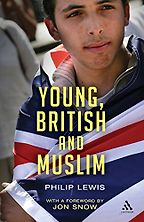
Philip Lewis is an extremely knowledgeable and interesting writer. He lives in Bradford, which is one of the epicentres of Pakistani Muslim Britain, and is seen as a hotspot for segregation and failed or bad immigration. He is not unsympathetic to the Pakistani position but he is very good at explaining how this came about.
Many first generation post-war immigrants thought they were only coming for a short period of time, to earn money. But then they established roots, settled in Britain and formed communities. They couldn’t speak English, they didn’t know much about Britain. And because we had no integration strategy, the idea of the imperial family completely fell apart. The people of Bradford hadn’t been prepared for their arrival. Lewis also explains how a lot of these problems have been passed down the generations. Even third or fourth generation Kashmiri Pakistanis in Bradford, 75 to 80% of them still have one parent born abroad. Their native language is spoken at home. That obviously interferes with the integration process.
Not to overcloud the varied issues of immigration, but the 7 July 2005 bombings on the London transport system did change the debate. What are the dangers of Islamist radicalisation when integration fails?
It has become a cliché of the terrorism analysis, but I think it is true that what contributes to radicalisation is the generational gulf that has opened up between first and second or third generation Muslims. On the one hand they reject their parents’ often rather simple, rural version of Islam and strict morality, and want the desirable things of living in a Western society. On the other hand they often live quite segregated lives, and don’t feel wholly accepted in Britain. Out of that generational divide and the alienation created by it comes a desire for certainty, which means that a lot of young men in particular seek almost a substitute family. That is often provided by radical groups, which can then be a transmission belt to even more radical, violent groups.
We were talking about hate legacies earlier. What is your view of far-right anti-immigrant street groups like the English Defence League?
The EDL is quite a new creation. Going back to the sixties, you had teddy boys, then skinheads, then the National Front which was run by overt Nazis. They waxed and waned in terms of political influence, although people forget that the BNP [the far-right British National Party] got nearly a million votes in the 2009 European elections, despite being an offshoot of the National Front themselves.
The EDL is a more interesting product of modern Britain. It claims not to be racist – it is anti-Muslim but welcomes into its ranks people of other races. But in practice, on the street it’s the same skinhead mentality, often drawn from the football terraces. The level of harassment and violence faced by minority Britain is comparatively less than it was back in the sixties and seventies. The remarkable thing about the 7/7 bombings is how muted the response was.
What does Paul Scheffer propose in Immigrant Nations?
Scheffer is a Dutch academic who played a large role in the debate about multiculturalism there, fearing that it was leading to two separate, parallel lives. What’s good about this book is that it’s written from the perspective of a liberal sceptic about multiculturalism and large scale immigration. He sets out to neither stigmatise nor sentimentalise the immigrant – as so much other writing about immigration does. He has great international sweep and the book is a nice mix of writing styles. A lot of writing on immigration is pretty dire, but he writes very confidently about America and Europe, as well as giving an overview of the literature.
We must look at the interests of the majority too. Multiculturalism is too asymmetrical. Minorities are encouraged – indeed funded – to express their identity while the majority is written out of the script. They are assumed to have either an unproblematic sense of their identity or possibly an oppressive one, in which case it is seen as almost right that that identity should be self-suppressed to allow the minorities to better express themselves.
Scheffer also talks about how immigration alienates both newcomers and natives.
Exactly. Of course, he doesn’t say immigration is all bad – there are great benefits to be had from it, both for the majority and the immigrant – but he also sees the dark side. He talks about the alienation effect, and how everyone becomes homesick. The immigrant is homesick, and the native population is homesick for the time before the immigrants came. He’s very astute on the psychology of the immigrant, and some of the self-righteousness. He’s got a lovely phrase that sums up a certain immigrant attitude: “Don’t judge me by my background but never forget where I came from.”
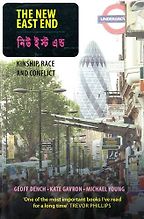
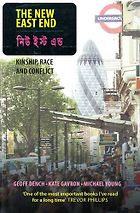
Let’s press on with The New East End, by Geoff Dench with Michael Young and Kate Gavron, which looks at immigration in the East End of London.
Michael Young was a great sociologist who studied kinship and family in East London in the 1950s. And Geoff Dench updates the story to look at the sense of dislocation among the old East End working class created by immigration. It would also be good to mention his earlier book MinoritiesintheOpenSociety – a fascinating collection of essays and a really brilliant introduction to the issues, particularly the colonial story and its legacy in modern Britain.
In The New East End, Dench has a thesis about how the East End came into its inheritance after the Second World War. It had been a pretty tough and excluded part of Britain, populated by outsiders – poor itinerants and immigrant groups, and the unskilled native working class who worked in the docks. Then in the Second World War the East End heroically kept the docks open, while being heavily bombed.
But after the war it became an epicentre of the new Jerusalem. The working class was coming into its inheritance for all those centuries of being excluded. Finally they had their reward, but within a few years of the shiny new council estates being built, all these people from somewhere else turn up. Dench describes the enormous resentment, as if their reward had been taken away from them. There were big battles over public resources.
How is that resentment felt in the East End today?
That particular story is largely over. A lot of working class white people moved out anyway. But many of them went feeling as if they had been displaced by a new population – with a granny left behind who is suddenly isolated in a mostly Bangladeshi housing estate.
An immigrant in their own country.
Precisely. A Labour MP I know was telling me the other day about a constituent of his who had been in a minority part of East London. She walked for 20 minutes without seeing another white person. Then when she did see one she said they smiled in recognition, like you do when you see a British person on holiday. That is quite a nice way of putting it.
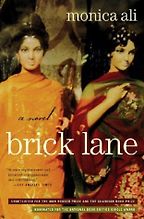
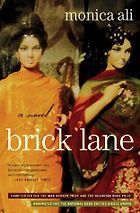
The New East End has been aptly described as the non-fiction Brick Lane. Which brings us neatly to your fifth choice. The novel opens in Bengal before moving to London’s East End – so we empathise from the get-go with the immigrant perspective.
I thought Monica Ali was brilliant at getting under the skin of a Bangladeshi woman brought to England as part of an arranged marriage. There’s a spirit in her that wants to break out. In that sense it’s a very Western, Hollywood narrative of breaking out from constraint. I wasn’t quite sure about the communication with the sister in Bangladesh, which I didn’t feel quite worked. But I thought it was a fantastic read – a sweeping, Dickensian novel. Monica Ali has lived in Britain most of her life, middle-class and completely Western. But she is herself from a Bangladeshi background, and brings insights from that world.
A lot of people say we will have problems integrating immigrant groups into British society, for instance because of their attitudes towards women – the purdah notion of not having contact between women and non-family men, and other traditions that we see as constraining and discouraging gender equality. But equally, I’ve heard it said many times that the great hope for improved integration in Britain are the young women who do well at school and go to university. But then they don’t want to marry the young men from their community. Nazneen, the protagonist of this novel, is an emblem of that. She breaks out and wants to take part in the fantastic freedoms and opportunities that British society offers.
As Monica Ali did.
Absolutely. It would also be good to mention the other novels about these issues that I’ve read and learnt from. Andrea Levy’s SmallIsland is one, about the Caribbean experience. It’s particularly brilliant on what I call the original sin of immigration, which was the appalling way that we treated Caribbeans when they first came to Britain – exacerbated by the fact that they came with such high expectations, expecting to be embraced because they had invested part of their national identity in Britain.
MapsforLostLovers by Nadeem Aslam is another great Dickensian novel that I enjoyed, about Pakistani life in the north of England. And I would also like to mention Zaiba Malik’s poignant memoir about growing up in Bradford, We Are a Muslim, Please.
What must we remember about the human element of immigration and multiculturalism, lest we get bogged down in numbers and policy wonkery?
That every immigrant story is different. One of the things that I’ve really enjoyed about writing my own [forthcoming] book on post-war immigration is travelling around the country talking to people, and feeling that I’ve got a good excuse to ask anyone who is evidently not white British to tell me their story – which people generally like doing.
Another human element is that we have tended – out of liberal guilt or minority victimhood – to write out the white side of the immigration story. Post-war, immigrants invariably went into the working class districts of Britain. These were pretty rough areas. Up to 20 or 30 years ago, Britain was a violent place for everyone. If you went out on a Friday night there would be punch-ups all around the country. There was a lot more violence everywhere, some of it was racist, and we shouldn’t forget that. But it was only one part of the story.
The locals in these districts were often poorly educated, low status people within British society, who accommodated this massive and unrewarded change to their lives. They or their descendants get bad press but while some of them responded very badly, the critical mass of them responded pretty well. We have to appreciate the sense of displacement and loss that these people felt.
Finally, what were some of the striking immigrant stories that you heard during your travels around Britain?
I was talking to a group of people in Wolverhampton of Asian background – Sikhs and Hindus – who were pioneer, second and third generation immigrants. We talked about national identity, the importance of a national story that included everyone and what its contours might be.
Get the weekly Five Books newsletter
A woman came up to me afterwards – mid-twenties, a lawyer, educated in an elite university. She said that in her family they always felt gratitude towards her grandfather, who came to Britain with £10 in his pocket, did well and bequeathed his success to them. But thinking of the bigger story, she said: I now realise it wasn’t just my grandfather. What allowed my grandfather to do well was the opportunities that Britain provided him to flourish. With all its blemishes, faults and racism, she said, Britain has been a land of fantastic opportunity for me and my family, and we need to think of it that way.
So it comes back to the notion of a national story, and the rather over-baggy identity that Britain inherited from the empire. I think we need to spell things out more, and have a positive British dream or story to tell. And that woman’s success is a part of that national story. But because we have this rather oblique notion of national identity, we don’t tell these stories of why this is still a good society, with opportunities to give to both native and newcomer. We should be telling those stories more.
Five Books aims to keep its book recommendations and interviews up to date. If you are the interviewee and would like to update your choice of books (or even just what you say about them) please email us at editor@fivebooks.com
Five Books interviews are expensive to produce. If you've enjoyed this interview, please support us by donating a small amount.
David Goodhart
David Goodhart founded the British magazine Prospect, and edited it for 15 years. He has written for publications including the Financial Times and The Guardian as well as producing several BBC radio documentaries. Goodhart is currently director of the London-based thinktank Demos.
David Goodhart founded the British magazine Prospect, and edited it for 15 years. He has written for publications including the Financial Times and The Guardian as well as producing several BBC radio documentaries. Goodhart is currently director of the London-based thinktank Demos.