We're richer and freer as a society than we used to be but it's now clear there are downsides too. The MP for Tottenham, where the riots began, says we've created a hyper-individualistic culture and explains how we must change it
You were born in the London borough you now represent, Tottenham. When you were a kid, you witnessed the Broadwater Farm riot there in 1985. Last August, now an MP, you saw the first of the UK riots again strike Tottenham. What was it like on the ground?
I was 13 during the Broadwater Farm riots. I remember how painful and challenging the stigma that attached to Tottenham was. I was away from home during the riots because I had won a scholarship to go to school. It was very difficult having to explain to new friends in a very white environment what was happening in Tottenham.
I never dreamed that 25 years later I would find myself as the member of parliament for my home, yet again articulating what was happening but this time to a wider world. What I struggled to convey when I was 13, and wanted to convey this time, was that 99% of the community of Tottenham was not on the streets and was not rioting.
As I walked up Tottenham High Road on Sunday morning [6 August 2011] when the riots first hit, through the rubble, the glass and the smell of what looked like a war zone, to see buildings that I’d grown up with – the post office, the supermarket, the shop where I bought the lino for my kitchen – burnt to the ground, with fellow constituents standing next to me in their nightclothes, that was the most stressful experience I’ve ever had. It was humbling and emotional.
Three months later you’ve written Out of the Ashes, which I read last night. Besides making the point that the N17 postcode is more than a stamp of criminality, what did you want to get across by writing it?
I started writing this book in the dying days of the Labour government. I became convinced that we would lose the general election, and writing became a form of therapy for me. I was writing about how I thought the government was no longer in touch with the people and the communities on the ground. I came to the view that the two big themes or revolutions of the 20th century – the social liberalism of the 1960s and the economic liberalism of the 1980s – have made us richer and freer as a society, but at this point it’s clear that there are downsides. They have combined to create a hyper-individualistic culture in which we don’t treat each other well. Then the riots happened and my thinking fell into place. The riots are that writ large. And in a sense, recession and riot go together.
In a sentence, how do we change the situation?
We have to give people a stake in society. We have to create and moderate a responsible society against the backdrop of those two revolutions.
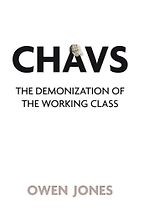
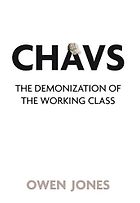
Let’s get stuck into your book selection. In Chavs, Owen Jones condemns the demonisation of the working class. And in your own book you criticise the Conservative front-bench talk of “Shameless Britain” and the “Jeremy Kyle generation”. I take it you agree with Jones?
Owen has written an outstanding book that is doing extremely well at the moment. It is seminal in the sense that it has captured the zeitgeist and is reaching deep places. That is because he taps into what is going on in Britain. More and more people define themselves as middle class, and as a consequence there is what appears to be an emerging “other” class. Class remains the unresolved wound that runs throughout British history, in the same sense that in the US, race is the subtext. Class is that for us.
In Chavs Owen defines this idea and how the word “chavs” is entering our lexicon as an underclass. He says it is becoming de facto acceptable to treat and talk about a certain kind of person in a certain kind of way. I agree this is not about a feral underclass, and it’s not about “sick Britain” as it was described by the prime minister. When David Cameron used the phrase “broken Britain” that was fine, because it meant all of us. When he started talking about “sick Britain” he was basically saying that a group of people at the bottom of society are sick.
I think what we’re really talking about is the workless poor. The best way to think about this is to remind ourselves of the housing estates and tower blocks in our major cities. They were built after the [Second World] War to accommodate people whose homes had been burnt out or destroyed in the bombing, and they were largely made up of the working class. What has happened is that because of the huge inequality in our society – because of the way that economic liberalism has worked and because we haven’t managed to give people a stake in society – they have largely become estates of the workless poor.
It’s well-trodden territory that Cameron and his top ministers come from privileged backgrounds. Do you feel, as Owen Jones does, that the workless poor are under-represented in government?
We’ve got to be careful when we talk about class not to enter into a class war. We must face up to class divisions and inequality, but avoid a politics of them and us. I’m interested in giving the working class a stake in capitalism, and restoring a middle class trust in the welfare state.
I do think that we’ve had a real emphasis in politics on Middle England, on the centre ground, on soundbite politics, on spin and on being a politician – ie the art of argument in the amphitheatre that is the House of Commons. So Owen touches on something when he talks about representational politics. The most successful democracies have that sense of representation, that you are representing all people. That is a challenge for our democracy at this point. It’s not just about class – there are subcultures, young people, regional issues.
Instead we have a politics that has become very technocratic, very bureaucratic, very policy wonk and that has lost a kind of authenticity. That’s not to say you have to be poor to represent somebody poor, or rich to represent somebody rich, but empathy is essential. I’m concerned that hyper-individualistic society affects politicians as much as anybody else. It’s easy to become detached because we’re no longer relational. We’re not encountering one another, and trust is breaking down as a consequence.
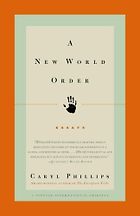
Moving from issues of class and representation to those of race and immigration, your next choice is Caryl Phillips’ A New World Order. A Caribbean-born British writer, Phillips writes about race and identity. His “new world order” here is one of cultural plurality.
I first read this book on entering Parliament in 2000. I thought it was a wonderful collection of essays that spanned the black diaspora. I reread it recently and it is still incredibly fresh. Caryl Phillips writes beautifully, and he is gentle in approaching what is a very difficult, complex and easily caricatured subject. Some of his writing feels like fiction, some of it is academic and some is more journalistic in feel. So he’s a very versatile writer. He explains issues of race and plurality incredibly well.
In his introduction “The Burden of Race” he talks about Ralph Ellison, and how Ellison understood that race is potent and racism is present as a force, but culturally it can shut out any other discourse and be incredibly stifling. Caryl, while he doesn’t talk about the riots, does get into the depth and complexity with which class, culture and race intersect and have done so throughout time.
He also talks about immigration and his own experience of coming to Britain in the 1950s. You yourself write about immigration that “new arrivals can and should add new layers to national culture, and not just be seen to be pulling it apart”.
In my book I get into the policy detail of the immigration tensions in a country like Britain. Month by month there are tensions for the welfare state between a communitarian understanding of fairness – where if you pay into a welfare system and fall on hard times then you can take out of it, for instance by getting into the queue for a council house – and a needs-based understanding of fairness, where if you arrive from a foreign country with nothing, ie as an asylum seeker, you are at the head of the queue.
Both systems are fair, but we need to better understand where priorities lie when there are limited resources. And also how immigration can reduce wages at the bottom end. We live in a society where if you’re middle class and your cappuccino is being served by a new arrival to the country, it’s all great. But if you are on a housing estate sharing scare resources, there are real tensions.
Back to the riots, you cite that contrary to public perception less than half of the rioters were black. How important is it to look at the UK riots in the broader context of race, or is that missing the point?
Riots, wherever they happen, usually begin with an act of brutality – and it is usually an act of police brutality. The riot in Tottenham began in the same way [after the police shooting of Mark Duggan]. But the UK riots had different characteristics. Across the country, we saw people of different races rioting. We did not see a pitched battle with the police. We saw a nihilism that was an attack on the community itself – an attack on their neighbours’ shops and their neighbours’ homes. Arson was not confined to police cars. There was even a London bus that was set alight, and a local post office brought to the ground.
We also saw widespread looting that began that first night in Tottenham. Running out of [electrical goods shop] Comet with a DVD player or an Xbox, whole families were caught on CCTV helping themselves to loot. That struck me as incredible hyper-individualism. Just as the banking crisis is not only about regulation but about selfishness and greed, it seems to me that the riots too were not only about race or the police but about selfishness and greed.
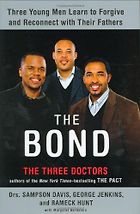
Your third pick is The Bond, a memoir by three black Americans with absent fathers who make a pact as young men to become doctors. Tell us about the book and what it contributes to our understanding of youth and role models in Britain.
This is a deeply personal book that paints a picture of growing up in Newark in New Jersey, America. It speaks to me deeply, as I think it would to most young men who have grown up without a father. The writers of The Bond discuss why you might join a gang or peer-group to discover your masculinity, and why you might feel inadequate in relation to it. They talk a lot about mentoring. They themselves mentored each other, and signal the individuals who helped them along the path. All of them make it to university in the end.
The latest figures suggest that 59% of young Afro-Caribbean boys in Britain are growing up without a father. I have continued to come back to this in my political career, and absolutely not because I want to demonise single-mothers – I was raised by one and I experienced some of that. It is rather to challenge communities, public services and the country to support their families and their responsibilities. Because both financially and emotionally being abandoned by a father is deeply problematic.
In my own book I also talk about mentoring. For me, it’s not a black-white thing. I want corporations with the chief executives really engaged in communities. I talk about tax rebates, or whatever, to encourage that and make it happen in a deep and real way. And I talk about the fundamental assumptions you’ve got to have about mothers. At the moment you don’t have to put a father on a birth certificate, and that is a real problem.
You also talk about the negative influence of popular culture and rap lyrics.
Yes, I put some lyrics into the book that I think many readers will be startled by. This is the latest grime – as it’s called these days, not just gangsta rap – that young people are listening to, and it’s really disturbing. I talk from my own experience of living on a diet of purely that. It’s very easy to forget that while there are kids up and down the country who listen to this music, if you’re middle class then you can interrupt that singular, narrow experience with other culture – books in your home, [BBC] Radio 4, museums and all the rest of it – and it’s fine because you genuinely have a choice. But in my constituency many young people have only that music as their whole diet, alongside absent fathers and a ramped-up, turbo-boosted materialism. So what we see with some of these young people is a toxic mix that comes together.
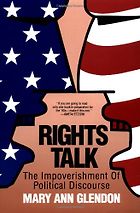
The thesis in Rights Talk by Mary Ann Glendon is that political discourse emphasises rights but not responsibilities – that there is a “missing language of responsibility and sociality”. How do you put that in context of what we saw last summer?
Rights Talk is a seminal book. In a sense it is about the other side of the hyper-individualistic society that we’ve arrived at. Now let’s be clear. I wouldn’t be talking to you, as a black MP who’s grown up in Britain, were it not for the huge advances of the sixties and for the socially liberal environment. But that kind of freedom alone is not the answer to the problems that we saw during the riots. The answer is responsibility and a society which is more relational.
Mary Ann Glendon challenges how rights can morph from a signal of individual dignity and respect for each other to create a society in which people become intransigent and uncompromising. She is clever in her analysis of everyday language – “it’s within my rights” and so on – and how we have backed away from moral judgments that go beyond discussions of law. Rights cannot be something that you just leave to the lawyers. It’s got to be owned by the people, and therefore in Britain by parliament.
Rights was running through the riots. Both the “right” to help yourself to someone else’s goods, and also questions like: Should you show the faces of rioters on posters? Should you deny rioters their homes? It was those sorts of issues writ large. I got involved in a row because I said that the company which runs Blackberry should turn off Blackberry messenger for a night, just so that we could get some order. People said that would be against their right to free speech. This kind of question is very important to discuss.
We’ll close with Naomi Klein’s book No Logo, about anti-corporate youth attitudes. Only in the UK riots, it wasn’t “no logo” for the looters, it was any and every logo. How does this book fit onto your list?
This is another modern classic worth revisiting. It charts how brands have become tangled up with identity – how they stopped being markers of quality and became symbols of identity and markers of status. Logos have moved from the inside label to being splashed all over products. Having a coffee in Starbucks is an experience not a product. What you wear helps signal your worth.
For certain groups of people these are real questions about how you get your worth in society if you don’t have a job, don’t own a home and feel like you’re in a depressed environment. This is some of the context of the scenes from the riots of people looting Footlocker, trying on shoes while they were waiting to use the de-tagger. For most people across the world, those images were deeply challenging. No Logo is definitely an informative book in relation to our times.
Naomi Klein predicted that “this [anti-corporate] outrage will fuel the next big political movement”. And in Out of the Ashes you write, “We cannot live in a society in which the banks are too big to fail but whole communities are allowed to sink without a trace.” I want to ask you about Occupy Wall Street and its British cousin outside St Paul’s. How, if at all, do you tie this movement in with what we’ve been talking about?
I think that they are related. If you are young, the prospects of work are grim, the prospects of owning your home are beyond you, and you are expected to pay the baby boomer generation’s pensions for them. We live in times where the inequalities in our society – because of problems in our economic liberal model – are sharp, and so young people feel they are exercising their rights justly by pitching a tent and protesting.
This is directly relevant to where we are in Britain, and I think we will probably see more unrest in different ways. Obviously I don’t want to see more riots, but I’m saddened that I predicted the riots, in parliament, on several occasions before they happened. I didn’t know they would happen this summer, and of course I didn’t hope they would happen in my constituency. But we are living through very turbulent times, and the books that I’ve recommended here chart aspects of that story. My own book, I hope, also fits into that canon.
Can you offer more specific solutions to our problems?
We’ve got to give people a stake on the board of companies, to reduce the inequality between wages. We should not be selling off £9bn of private land, we should be creating community trusts for land so that people can actually get on the ladder. We should definitely, it seems to me, ban advertising targeted at children. We should be concerned about the Internet and advertising, and the details that modern companies seem to have on all of us. We should be very concerned about a workless society, and ensure that the young generation is occupied in work. And we need to ensure that the breakdown in masculinity in some communities is being moderated by mentors in society.
How do we create jobs for young people in the middle of a recession?
They’re not going to get work in the private sector, but I think it was a mistake to scrap the Future Jobs Fund. The scarring effect of generations of young people doing nothing active with their time is disastrous. So I do think that the state has to step in to keep young people accustomed to the business of getting up and doing something, then going home at the end of the day. Better that, it seems to me, than queues on the dole.
Is David Cameron’s government doing a good job of this all, in your opinion?
I didn’t want to write a partisan book, as far as I could. David Cameron has talked about a moral capitalism, but I don’t see him giving people a stake on our boards and I don’t see him dealing with the housing crisis. His answer to all this is the big society. But the big society is not enough. It doesn’t challenge the banks – and these are banks who still expect families who had their houses burnt out in Tottenham to pay interest on homes that no longer exist!
The problem with the big society is it’s not very big. The big society is confined largely to the public sector. It doesn’t really want to see the rest of our environment. So I am doubtful. I can see why the Lib Dems [Liberal Democrats] and the Conservatives have come together at this time, but I think that their combined liberalism is precisely not the answer that we need.
Five Books aims to keep its book recommendations and interviews up to date. If you are the interviewee and would like to update your choice of books (or even just what you say about them) please email us at [email protected]
Five Books interviews are expensive to produce. If you've enjoyed this interview, please support us by donating a small amount.
David Lammy
David Lammy is a British Labour Party politician, the member of parliament for Tottenham in London since 2000. He was born in Tottenham to a Guyanese family, studied law at the School of Oriental and African Studies, and received his master’s from Harvard Law School. His book Out of Ashes: Britain After the Riots was published in November 2011
David Lammy is a British Labour Party politician, the member of parliament for Tottenham in London since 2000. He was born in Tottenham to a Guyanese family, studied law at the School of Oriental and African Studies, and received his master’s from Harvard Law School. His book Out of Ashes: Britain After the Riots was published in November 2011