Race is a real and powerful force and one he has spent his adult life trying to understand, says Anglo-Nigerian historian, writer and producer, David Olusoga. He talks us through five books on the tragedy of slavery—from the horrors of the gulag, to the plantations of Virginia, to the Islamic slave trade.
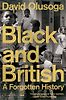
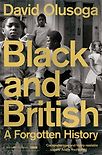
Black and British: A Forgotten History by David Olusoga
For very personal reasons. As an adult I’ve tried to make sense of the experiences I had as a child. Experiences that came out of being brought up on a council estate in the northeast of England where it was quite obvious, through the experiences of my African family, that race could be a very real and powerful force. Racism brought violence into my life and shaped parts of my childhood, so when I went to university and on to become a journalist and a historian I was determined to study and understand the power of this thing called ‘race’.
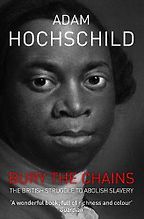
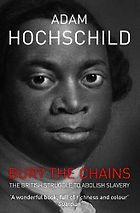
Let’s look at some of the books that have inspired you in your journey to find out more about race. Your first choice is Bury the Chains: The British Struggle to Abolish Slavery by Adam Hochschild.
This book came out at the moment when many of us in Britain were busy marking the bicentenary of the end of the slave trade in 2007. In all Adam’s books he places character and biography at the very heart of his stories and this is another example of him doing that brilliantly. People are perhaps hard-wired to love story, so putting people at the absolute centre of a narrative is a very powerful way to write. In some ways I think maybe it took an American, an outsider to the British story of race, slavery and abolition, to see these characters afresh. Adam looked again at people like William Wilberforce and Thomas Clarkson and tried to discover who they were, and through their biographies he explored the bigger, overarching and convoluted story of the rise and ultimate fall of British slavery.
I admire Adam as a writer enormously. I met him in San Francisco a few years ago, and rather unprofessionally I sort of interrogated him about how he writes, asking him for lots of professional secrets. He’s quite a remarkable guy. He was very early on involved in campaigning against apartheid in South Africa and was a civil rights campaigner in the United States. He lives and breathes these stories and I think this comes across in his writing.
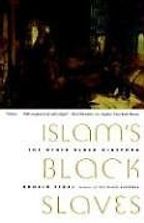
Your next book is all about an area of history that many people don’t know much about – Islam’s Black Slaves by Ronald Segal.
I read this book when it came out and did a radio interview with the author. A few weeks later he asked, very kindly, if I wanted to be the facilitator when he discussed the book at the Hay-on-Wye book festival. Well, I’d never been to Hay-on-Wye and I also didn’t really appreciate who Ronald Segal was, and I was going to a party that weekend, so I said ‘no’. I then learnt who Ronald was and really regretted it.
Ronald was one of the great intellectual campaigners of the anti-apartheid movement. He was born in the 30s in Cape Town and was involved with people like Oliver Tambo and the ANC. He became a great writer about South Africa’s history and returned to South Africa in 1994 having been invited by the ANC to help with the first free elections. He also founded the Penguin African Library. When I was a small boy those little brown Penguin books about Africa were really important to me.
Support Five Books
Five Books interviews are expensive to produce. If you're enjoying this interview, please support us by donating a small amount.
But, getting back to this book, what it does is to tell the story of the other half of the Atlantic slave trade. I think we’re now very familiar with the story of the transportation of an unknowable number of millions of Africans through the Atlantic trades to the Americas. What we are less familiar with is what happened on the other side of Africa, on the East Coast. Eastern Africa was the hub of a slave trade that was already centuries old when the first Europeans landed in West Africa. It drew enslaved Africans up into the Islamic world and into a slave system that was very different from the one that we’ve come to know in the Caribbean and United States. This book tells that story in incredible detail, painting a picture of forms of slavery that most of us are unfamiliar with. It is in some ways an historical balance.
In what way a balance?
It is the other side of the tragedy of slavery and it has left a legacy on the Islamic world and Asia, just as much as slavery has shaped the modern Americas. As in the West, a negative view of blackness and dark skin colours continues to this day in parts of the Islamic world, especially Arabia, which is one of the world centres of skin bleaching. But Islamic slavery was different from slavery in the West. What you get in the Islamic world is enslaved people rising out of slavery into positions of power, sometimes military power. The slave wives of important men were on occasions able to become extremely powerful people, so you haven’t got the situation as in the Americas where to be black is to be a slave and to have little chance of rising out of that status. So there is a different approach to race in the sense that slavery was not regarded as a category only applicable to one race: it was a status defined by the law and by religion.
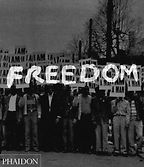
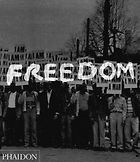
Back to America for your next book – Freedom: A Photographic History of the African-American Struggle.
It might be slightly unusual to pick a photographic book but this really is a striking book. What makes it work so well is that the early decades of photography in America overlap with the last years of slavery. So starting in the 1840s it charts the experiences of African-Americans from them being regarded as property to their rise out of slavery, Jim Crow and oppression.
The genius of this book, in my view, is that it intersperses positive pictures of the long struggle for civil rights and equality with really shocking images. It never allows you to escape from the brutality of the American racial system. The story of lynching is one of the most important and central stories of the African-American experience in the years after 1865 and the end of slavery. And there are repeated pictures of lynchings – those ‘strange fruit’ images of black men hanging from trees. They are truly shocking partly because you keep thinking, as you move through the book and get into the 1920s and 1930s, surely we’re past that, yet you turn a page and there is another photo of a lynching.
It shows just how organised, vicious and concerted the terror ranged against African-Americans was during that century in the darkness from the end of slavery in the 1860s to the civil rights movement of the 1960s. To me this book, more than any other, captures what it was that African-Americans were struggling against.
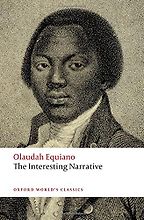
Your next book is an autobiography, The Interesting Narrative of the Life of Olaudah Equiano, or Gustavus Vassa, The African, Written by Himself.
This is a unique and really special book, a full-length autobiography of a man who experienced every aspect of what slavery was. Equiano was born in the 1740s in what is now Nigeria. He was captured and taken to Virginia. Yet by all sorts of cleverness and cunning he managed to buy his own freedom. When working as a sailor in the Caribbean he used the opportunity to engage in trade between the islands using the tiny amount of money he had to buy and sell goods. Through his own entrepreneurship and the help of others he managed to raise the money to buy his own freedom.
Get the weekly Five Books newsletter
Then he went to Britain and became heavily involved in the abolitionist crusade. He wrote his narrative partly as a biography but also partly as a campaigning tool for the battle against slavery. The abolitionist movement was a movement of oratory and Equiano read passages from this book in tours across Britain. He spoke in Bristol, where I live, and travelled the country talking about the experiences of slavery. The meetings of the abolitionists had a real religious fervour to them and this Igbo Nigerian, who had been a slave and seen the horrors of slavery at first hand, must have been an extremely powerful figure to turn up in Bristol or Bath and amaze an audience with his eloquence and charisma.
The last book you’ve recommended is Varlam Shalamov’s memoir of his experience in one of Russia’s forced labour camps, Kolyma Tales.
Of all the books of the Gulag, the one that struck me the most is this because it is just so brutally matter of fact. It is estimated that some three million people died in the Soviet forced-labour camps of Kolyma, in Russia’s polar northeast, and Shalamov himself spent 17 years there. This is not an overtly literary description of his experiences: it is written with such clarity and coldness that the brutality and the dehumanisation of the Gulag is palpable.
This interview was published in October, 2010
October 12, 2016
Five Books aims to keep its book recommendations and interviews up to date. If you are the interviewee and would like to update your choice of books (or even just what you say about them) please email us at [email protected]
David Olusoga is Professor of Public History at the University of Manchester. In addition to writing history books, he is also a BAFTA-winning TV presenter and producer.
David Olusoga is Professor of Public History at the University of Manchester. In addition to writing history books, he is also a BAFTA-winning TV presenter and producer.