You’ve chosen books on Mediterranean cooking but only one on Italian food: Sicilian Food by Mary Taylor Simeti. Is there any reason for this?
I’ve lived in Italy for nearly 40 years. But I don’t like English-language books on Italian food. I don’t really enjoy Italian cookbooks either. Most of the time, I learn from people in food markets and restaurants and other places I visit on my travels.
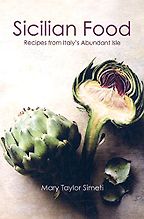
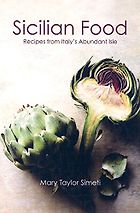
But this particular book is fascinating. Mary Taylor Simeti, who I’ve met, went to Sicily as a young graduate to work as a social activist. She met and married a Sicilian and brought up a family there. She got interested in food as everyone does who raises a family.
Sicilian Food is not just a book of recipes. Simeti writes about food in a very interesting way, explaining the origins of some dishes and the different versions. This is my kind of cookery book. The American version originally had a lovely title: Pomp and Sustenance: Twenty-Five Centuries of Sicilian Food. The title points to the book’s rich details of Sicily itself. Writing about food is, after all, social history. And that’s what I find most interesting.
Why pomp? Is Sicilian food particularly festive?
When the south of Italy was known as the Kingdom of the Two Sicilies, the Spanish king brought over lots of aristocrats as back-up. This was in case the local people got fed up with him. And these nouveaux riches decided they should have French chefs, who each insisted on being called ‘Monsieur’. The local people couldn’t get their tongues around it so they called them ‘Monzu’ instead.
The locals wanted their pasta: their great love. The chefs thought they should start with a French soup. But they then invented festive dishes of pasta and rice that could be made in advance, moulded and cooked at the last minute. There’s a lovely scene in Il Gattopardo by Giuseppe Di Lampedusa where they are all sitting down expecting to be served a French soup. They are on tenterhooks. A wonderful timballo of pasta comes in and they relax.
“I learn from people in food markets and restaurants and other places I visit on my travels.”
As in Spain, there is great ceremony attached to everything in life in Sicily and Naples, including food.
What are your favourite foods in this Sicilian food book?
I was doing a cooking school in Sicily recently and I discovered a different version of these moulded dishes, done with rice. It’s great for dinner parties. You cook risotto beforehand and, while it’s still hot, you stir in fresh tomato sauce and some parmesan. You line a mould at the bottom and the sides and fill the middle with anything you like: meat or crumbled Italian sausage. Top that with slices of cheese. In Sicily they use hard-boiled egg, which doesn’t really appeal to me. Then you cover it with rice again and pop it in the oven for 20 minutes. When you turn it out of the mould it looks spectacular.
On our tour of the Mediterranean, where are we going next?
If we’re travelling anti-clockwise we should head to Morocco. The great thing about Moroccan food is that you can go off and do your own thing once you’ve learned a bit about it. You can make up your own versions because the spices and colours are so enchanting.
Five Books interviews are expensive to produce. If you're enjoying this interview, please support us by donating a small amount.
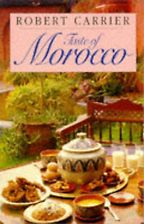
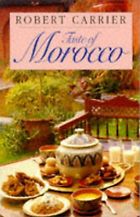
With Moroccan food, I always go back to Robert Carrier. There’s a very beautiful illustrated edition of the book. You turn over a couple of pages and you can’t wait to start cooking. You feel you’re going to be able to conjure up all this magic and colour from it.
Although he can’t show the extraordinary smells of Morocco.
That’s true. But the publishers will get around to that eventually! The other thing about Robert Carrier is that he makes it manageable. Many ‘ethnic’ cookbooks are so complicated. My pet hate is when they tell you to take a portion of a recipe from one page and use it with a recipe from another. In the end you give up.
What’s so appealing about Moroccan food?
The fact that you have a lot of lamb and chicken but also a lot of fruit. And the spices are slightly different from the Middle East. But the main thing is the sensation of the fruit and nuts with the meat protein. You don’t really get that with European food.
One of my favourite recipes from the Carrier book is his version of harira soup – the lentil broth Muslims drink during Ramadan. This soup is also alluded to in the Old Testament. Esau is said to have ‘sold his birthright for a mess of potage’, which always fascinated me when I was young. In Italian we call it un piatto di lenticchie.
Many Muslim communities have different versions of harira. But Robert Carrier’s is probably the first version I made. The lentils, ginger, saffron and other spices take on a completely different character. It’s a meat soup, made with pieces of lamb and a meat stock. But you can do a vegetarian version.
So you think Carrier stands the test of time? Wasn’t his heyday the 1970s?
The dishes in some of his other books are certainly the things that people would eat in restaurants in those days: steak diane or something like that. But he had a house in Morocco and lived there, so this particular book feels different.
We are moving on around the rim of the Mediterranean. Tell us about Claudia Roden’s Middle Eastern Cooking.
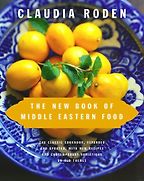
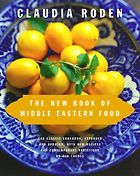
Claudia is Egyptian-Jewish, born and brought up in Cairo. She was educated at art school in England but her family is impeccably Middle Eastern. A lot of the cooking in the Middle East originated from Persia. And, like the languages, the various cuisines still have much in common. This book travels across the whole area – in fact, there are some Moroccan dishes in here. She talks about the different versions of a dish. It might be prepared differently in North Africa, for example.
The great thing about Claudia Roden is that she never makes the food sound too complicated or impossible. She gives you enough of the background to get you interested. It’s terribly approachable.
And, crucially, the recipes work. My favourite is the orange and almond cake. People who know this cake don’t always realise it’s Middle-Eastern. You boil oranges whole until they are soft, then put them in the food processor with eggs, sugar and ground almonds. There’s no flour, which of course makes it great for people with allergies. It’s wonderfully moist. I like to serve a small slice of it with some chocolate-covered orange segments as a dinner-party dessert. Delicious.
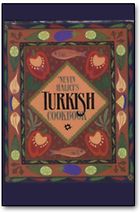
On to Turkey with Nevin Halici.
I first met Nevin at a conference of the International Olive Oil Council in Istanbul. She’s probably the person who has done the most in bringing Turkish cuisine to light. The thing about Turkish food is that there are so many different influences. Geographically, the country stretches from right down on the Syrian border to the Caspian Sea and Russia. So you’ve got all the regional foods, the religious foods like the Sufi cuisines, the Ottoman cuisine and the palace cuisine of the caliphs.
Food has been so important in Turkey that even the janissaries’ titles were the titles of cooks. It’s very strange. And when they were annoyed with the ruler they would symbolically kick over one of the great kettles of the sultan’s food to show their displeasure – because the food was all prepared for them in the imperial kitchens. Until I read Nevin’s books I hadn’t realised that the whirling dervishes’ dance is connected to certain dishes. I’ve been cooking from this book for several years and I’m currently preparing for a cooking school in Istanbul. I’m indulging myself and reading all this background information.
In spite of the different regional and religious foods, some people have the impression that Turkish food is not very varied – certainly not in Turkish restaurants in the west.
Like anywhere, people think the food is terrible because they go and eat in the touristy places where it’s always the same food. It’s a transaction: the restaurants are giving people what they want. If you want to sample all of the different Turkish foods you have to do your research. The mezze in Turkey is more varied than anywhere else. But you have to go to a place that specialises in it.
What are the most intriguing Turkish foods?
I like dishes with a history or story behind them. For example, in the time of the caliphs it used to be said that the Circassian girls were the most beautiful and prized in the harem. They would sometimes have special dishes cooked for them. Circassian chicken was one. You poach a whole chicken, take all the flesh off the bone and put it on a platter. Keep the stock and add various spices to it. Then grind up this paste with lots of walnuts, some stale bread and add some of the stock. Mask the whole platter of chicken with the sauce so it’s completely covered. Serve it cold and all you see is this flecked expanse. It’s got the most incredible flavour. I tend not to do it as a mezze. I eat it with a knife and fork.
And this dish was served to the Circassian girls in the harem?
Well, maybe. I like the story anyway – I always like a story. People ask me why water buffalo, used for making mozzarella, ended up in Italy. What I tell them is possibly true: no one knows for sure why these buffalo are in Italy because they are not a native species. But when Hannibal was attacking Rome he brought them for milk. They encamped in the hills above a swampy area in Battipaglia, near the Greek temples in Paestum. And the elephants, as engines of war, were killed. But the buffalo, as domestic animals, ran away, found this swamp and survived. So there we are: it’s Hannibal we may have to thank for mozzarella.
Is the Turkish food milder than North-African food?
Yes. But you do get spicier food, particularly near the Syrian border. There are so many strata to Turkish food. Years ago, I was researching my book on Mediterranean food. I was in the south of Turkey and saw the village women making the bread on a tandir. It was very much like the Indian tandoor. I think it all originally came from Persia.
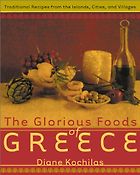
We end in Greece with Diane Kochilas.
When I first came to Italy I took my three small daughters to the seaside. It wasn’t the sea we wanted to enjoy. In Italy, you have the expensive umbrellas, the sun loungers and all the rest of it. People come with enough equipment for three months. You’ve got to stay in the position you reserve. It just wasn’t for us.
So every summer I piled the children into the car, drove down to Brindisi and got the ferry to Igoumenitsa. We would drive around the Greek mainland, stay in little tavernas and eat very simple Greek food – the sort of food that everyone thinks of as Greek food. And we did this every year.
As we knew a bit more and had a bit more money, we started renting places in Greece. So then, of course, you start cooking. I looked around for Greek cookbooks. But every Greek cookbook I found – they had to be English-language cookbooks because I couldn’t read Greek – seemed to repeat the same limited recipes. Things were fairly undeveloped at that point in the 1970s. At the tavernas, they would march you into the back kitchen and show you all this lukewarm food in oil.
But my approach to Greek food changed when I was deputy head of St George’s English School in Rome. We organised social events for the parents; the students decorated the refectory and the parents cooked. We had a lot of Greek evenings in the summer: the Greek fathers would dig a trench and roast a whole lamb on a spit. And I learned from all of them, quickly realising that Greek family cooking was incredibly interesting and not really what you eat by the seaside in holiday tavernas. I became more adventurous. I now do a cooking school on the island of Siphnos.
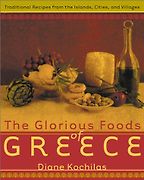
I’ve probably got all of the Greek cookbooks in English. But the most friendly and authentic one – the one that doesn’t make you throw your hands up in the air – is by Diane Kochilas.
Why do you like Greek food so much?
I suppose it has a lot of the qualities of Turkish food but without the spices. The same recipes exist in both places but you wouldn’t dare point this out in either country. Greek food it almost an emotional thing: it makes you think of the landscape and the turquoise sea.
Get the weekly Five Books newsletter
One of my favourite Greek dishes, which I put in my Mediterranean cookbook, is a lamb dish cooked in an earthenware container. Traditionally it would be sealed with flour and water paste so that the freedom fighters could take it with them when they were fighting the Turks in the War of Independence. Up in the hills, they didn’t want the smell of the food to give away their position. I think the Cretan guerrillas in the Second World War used this technique during the German occupation.
It’s simple, good food. And a lot of it can be prepared in advance and cooked slowly. Another thing to consider is the oil you use: I always buy some Greek olive oil to take home with me. I also buy Spanish olive oil when I’m in London. And, of course, here in Italy you can only buy Italian oil. As soon as you smell a particular region’s oil, you begin to want the food of that particular Mediterranean country.
Five Books aims to keep its book recommendations and interviews up to date. If you are the interviewee and would like to update your choice of books (or even just what you say about them) please email us at [email protected]