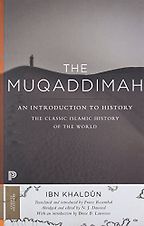
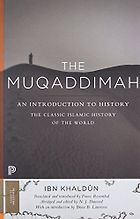
Tell me about your first choice, The Muqaddimah: An Introduction to History by Ibn Khaldun.
Ibn Khaldun began writing the book in 1375 so it’s certainly the oldest on my list. It is also a unique work from that period in its attempt to analyse the context of history by understanding how societies organise themselves and how different modes of organisation can affect the interactions amongst people.
The book has had a really powerful influence on me, in part because I began my work by studying nomads similar to those Khaldun writes about and calls desert people. Although Bedouin nomads are his prime example, he explains that it is a way of life that encompasses all the people who live at the margins, whether that be the mountains, or the steppes or the deserts and he asks the basic question: Why could such people who come from the margins and aren’t particularly sophisticated manage to form so many dynasties of the Arab Near East and North Africa?
He looks at how their form of socialisation in a tough environment gives them a group solidarity that can be a great military advantage in times of conflict, and, when the opportunity is ripe, allows them to conquer more populous regions. But these opportunities are rare because sedentary civilisations, areas of urban high culture and irrigated agriculture, are generally economically more prosperous and politically powerful. People there have weak social solidarity but strong economic integration. They therefore maintain complex political organisations and professional militaries that can fend off these people from the margins. But he notes that their lack of internal solidarity creates a vulnerability when incompetent ruling dynasties become bankrupt – no one is there to defend them from outside invaders. As Khaldun saw it, it was charismatic leaders from marginal regions that restored order and founded new dynasties; dynasties that then also decline in four generations and themselves are replaced by new outsiders. So for a person who looks at Afghanistan, there are some wonderfully interesting parallels that he describes.
So you definitely see echoes of what he was talking about centuries ago still happening today?
There are echoes but it is not entirely similar to his Bedouin groups because Afghan history is also affected by people coming out of Central Asia that have a different model of tribal organisation which is more hierarchical. They are more willing to accept leadership. They have ruling clans as opposed to everybody believing that he can be the ruler and that sets up a different political dynamic.
That is why you get the long-lived dynasties like the Ottoman Empire, which lasted 800 years, and the Mughuls, who lasted more than 300 years. Obviously they lasted for more than four generations. So what I wanted to see is what happens in this interaction zone, and what we find is an Afghan dynasty that lasts for 230 years – which is much more like the Turks. But if you look at it internally you see that it follows an Ibn Khaldun cycle, which is that clans within the royal élite fight and replace each other on a four generation cycle just as Khaldun describes in his book. So we see this interesting dynamic in which the highly egalitarian Pashtun tribes find it easier to accept the legitimacy of a royal clan because they could never agree on who had the right to replace it. It was finally overthrown in 1978 by communists attempting to topple the entire system. After more than two decades of war, it is interesting that the Bonn Accord chose Karzai, whose ancestors first founded the Afghan state. The interesting thing is that Karzai comes out of that descent group. In other words, while thinking we were creating a new democracy we were in fact helping to restore the same sort of ruling dynastic élite that had previously governed Afghanistan.
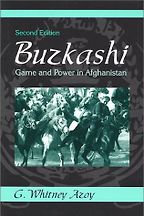
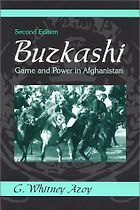
Your next book is all about the intriguing game of buzkashi. This is G Whitney Azoy’s Buzkashi: Game and Power in Afghanistan.
Buzkashi means, literally, goat-grabbing. It is a very famous game played in North Afghanistan which is a bit like polo played with a dead goat, or rather a calf because the Afghans say a goat is too fragile and the game ends too fast! In this type of polo a scrum of horsemen battle to grab the carcass and break free with it to win the round. It is a very exciting game because there are no rules, no teams and no boundaries. People can go in any direction including into the audience. The game goes on until the carcass is gone or the prizes are exhausted. The Afghan government adopted it as their national game with rules, boundaries and teams, which most aficionados thought missed the whole point of the game.
And there are parallels between how the game is played and Afghanistan is ruled?
Yes, there are a number of parallels that Whitney Azoy looked into. We worked in the same province. He came a year after I did, so he was focused on the organisation of this game – not just how it was played on the field but how it was organised. People often talk about Afghan politics as a buzkashi, by which they mean a free-for-all. What he noticed was that it was a non-violent way of doing politics.
It was a way of working out who was powerful and who wasn’t. You look at the game and you don’t know what is underneath it. What you discover is that the riders are a bit like footballers. They don’t own the horses but are paid to ride them. It is all about the prestige of the player and the horse owner. Horses are very important in Afghanistan. Just after the Taliban was overthrown I went to meet the warlord of Northeastern Afghanistan and the first thing we did was go down and admire his buzkashi horses. The Taliban were never into buzkashi because they are from Southern Afghanistan and puritans who weren’t into game playing. That was to their detriment because the game allows networking to take place.
In addition to playing for prestige the games have to be organised. That is one of the most interesting parts of Azoy’s book. He points out that this is a high risk thing because you have to get people to come. If they don’t come or the game goes wrong it’s an embarrassment that shows the organisers up as weak and they lose power and credibility. Another problem is that your enemies are going to try to thwart you. So organisers will never announce the exact date until the last moment. Otherwise someone might try and organise another game on the same day. Once you’ve done it, people will ask, How well did it go? Will people remember and talk about it? So people’s reputations are on the line.
This helps to explain Afghan politics today. If a politician proposes something, people wait to see if he can carry it through. That is one of the things Karzai has a problem with – he promises big and doesn’t deliver. His credibility is undermined. People who want to know why he has such problems with getting people to co-operate need to understand that people in Afghanistan willingly follow success and flee failure. Of course Karzai’s enemies want him to fail, but the bigger audience (as in buzkashi) are the spectators on the fence watching how well he gets on and then deciding whether or not they should risk their own credibility by joining with him. There is a bit of the chicken and the egg situation here: they won’t help until he proves himself, but he cannot succeed unless they do.
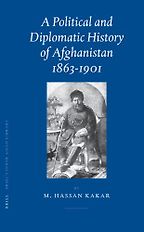
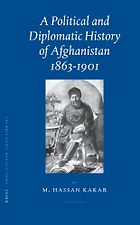
Your next choice is A Political And Diplomatic History of Afghanistan, 1863-1901 by M Hassan Kakar.
Hassan Kakar was one of the first professionally trained historians in Afghanistan. He got his degree from SOAS in London in the late 1960s and was also one of the first to give equal weight to both British and Afghan sources. I have followed his work for close to 40 years. It is a synthesis that manages to show how both internal and external dynamics have shaped the course of Afghan history. What you discover is that Afghan rulers play two types of games. They had to be effective rulers internally to convince the Afghans that they could keep foreign powers out of the country. At the same time they had to be highly sophisticated in terms of dealing with the outside world – the British Raj and the Tsarist Empire – convincing them that supporting an independent Afghanistan was in their own interests.
Kakar knows the material extremely well. He looks through 19th-century Afghanistan in a very professional way. It is a very detailed history which helps you understand that Afghanistan’s interaction with the international community is not recent. There is a tendency to think – Oh, the Afghans have never really dealt with foreigners. In fact successful Afghan rulers specialised in dealing with foreigners by getting them to fund their states and equip their militaries.
This is very much the time of the Great Game.
It is that classic time of the Great Game and it is an excellent study from both perspectives of how that works. Kakar understand the British imperial attitudes in history but he also understands and explicates the problems of Afghan rulers.
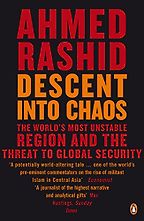
Your next book, Descent into Chaos: The United States and the Failure of Nation Building in Pakistan, Afghanistan, and Central Asia by Ahmed Rashid, is also looking at Afghanistan’s international relationships, but this time in the modern day.
Ahmed Rashid is a well-known writer on Afghanistan. His book about the Taliban came to prominence after 9/11. What Rashid manages to do is to show that this is a transnational problem. You cannot understand what is going on in Afghanistan without understanding the politics of Pakistan. He is able to explain to some extent the double game Pakistan has always been playing in Afghanistan. It wants to install and dominate a Pashtun Afghan government in Kabul.
Five Books interviews are expensive to produce. If you're enjoying this interview, please support us by donating a small amount.
They were strong supporters of the Taliban, helped bring them to power, but after 9/11 they were confronted with an American threat. The US demanded that the Taliban turn in Osama bin Laden or face destruction. Pakistan was asked to choose whether it wanted to be an American ally or an American target in the Bush administration’s new War on Terror.
Hoping to save the situation, Pakistan pleaded with Mullah Omar to give up Osama bin Laden, promising him that the Taliban regime would then not be a target if he did. But the Taliban weren’t quite as co-operative as they expected and refused. While Pakistan abandoned the Taliban when the Americans invaded Afghanistan, they never dropped their covert support for the movement. Thus Pakistan showed little hesitation in going after al Qaeda members who fled to Pakistan but gave refuge to Mullah Omar and his followers in Quetta, Baluchistan. For that reason the insurgency in Southern Afghanistan had its roots across the border in Pakistan. Since Pakistan denied it was aiding the Taliban, Ahmed Rashid was one of the few people with the contacts necessary to sort out such a transborder conflict and the ability to sort through the complexity of Pakistani politics.
Rashid also knows the Afghan side well, Karzai in particular. So his descriptions of the political factions there are also good and he can put them in a longer-term context. It gives a really good understanding of all the different problems which make it so difficult to bring peace to Afghanistan.
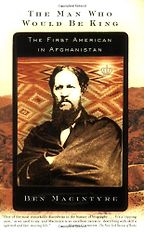
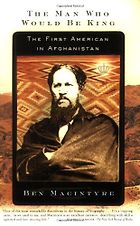
Your last book is Ben Macintyre’s The Man Who Would Be King: The First American in Afghanistan.
The title is taken from the Kipling novel of the same name, in which a Westerner goes to somewhere like Afghanistan and is made king. The idea for the story came at least in part from Josiah Harlan, the first American in Afghanistan. He served as a general in the pay of the Afghan amir Dost Muhammad in the 1830s until the British invaded Afghanistan and expelled him. He was very anti the British and they later did their best to discredit his writings by labelling him a liar and braggart.
What this book shows are a couple of things. Harlan claimed that he was offered the kingship of Central Afghanistan, which his critics said proved he was a fabulist. But Macintyre managed to go back to Harlan’s family home in Pennsylvania where he actually found the original Persian document that made the offer and was signed by the tribal leaders of the region. So it turned out he wasn’t lying. His papers also showed what a wild place the Afghan borderlands were in the early 19th century. The British hadn’t yet controlled the Punjab and the Sikhs were rising under Rangit Singh. Josiah Harlan was one of many Westerners who went to work for Indian rulers who used them to modernise their armies.
Get the weekly Five Books newsletter
He first began in the pay of the exiled Afghan ruler Shah Shuja, who gave him money and an army to go to Afghanistan and recover his throne. The army falls apart but Harlan goes to Afghanistan alone where he meets Shuja’s rival Dost Muhammad. He likes Dost better and, keeping Shuja’s money, decides to work for the Sikhs. He becomes governor of Sind and helps the Sikhs repulse an Afghan attack on Peshawar. Falling out with the Sikhs, he joins with Dost Muhammad – no hard feelings – and becomes his right-hand man. Because Harlan is living with all these cultures and serving in the palaces of their ruler, it is a wonderful picture of what it was like at the time. Expatriates of all types – French, Irish, Scottish and Italian – were working, at high wages, to thwart British ambitions in India.
As the first American in Afghanistan he is very unusual. He crossed the Hindu Kush in command of an Afghan army but put up an American flag and made everyone salute it. They probably didn’t know what flag it was but they did it! Of course his American relatives must have been equally puzzled. Harlan came from an old Quaker family in Pennsylvania, so the army business did not run in the family, and they must have wondered where all this money being sent to them was coming from.
This is the type of thing that if you were a novelist your editor would ask you to tone it down a bit – but it really happened.
Five Books aims to keep its book recommendations and interviews up to date. If you are the interviewee and would like to update your choice of books (or even just what you say about them) please email us at [email protected]