You’re an energetic exponent of urban living. Please would you encapsulate the central contention of your recent book Triumph of the City?
Humanity’s greatest asset is our ability to learn from the people around us. Cities enable that. They empower us to become smarter and more creative by borrowing ideas from people that are near to us. Cities create conditions that are fertile for the growth and spread of innovations. They are really responsible for humankind’s greatest hits from Athenian philosophy to Renaissance painting to Ford’s Model-T and Facebook.
Let’s start with the Bancroft-winning portrait of Chicago you’ve cited. Nature’s Metropolis shows how cities shape their hinterlands and whole countries.
Nature’s Metropolis tells the story of Chicago’s relationship with the great American hinterland. It certainly shaped my understanding of the role that cities played in the 19th century. William Cronon tells this story through a series of commodities, from the timber of the early forest that came down through Lake Michigan, to the corn of Iowa that produced the pigs that were slaughtered in Chicago and then shipped back east. He tells the story of the triumph of Chicago over the earlier porkopolis Cincinnati, which was due to the fact that Chicago enabled America to access the wealth of the Iowa farmland, which was significantly more productive than the old hinterland of the Ohio River Valley.
He also makes the case that even when cities form for utterly prosaic reasons, like the fact that when the Illinois and Michigan Canal and the Erie Canal were completed, Chicago became the linchpin of a great watery arch that spanned all the way from New York to New Orleans. Even though there are prosaic transportation-cost reasons why Chicago came to be, remarkable things happen when smart people get together in urban areas. He tells the story of the creation of the Chicago Board of Trade – where smart people are innovating because they are next to each other, because they actually see opportunities because they get ideas from each other.
But Cronon also brings to light the darker side of cities, doesn’t he? How cities encouraged the destruction of forests, the displacement of native people and the repackaging of nature’s wealth as paper commodities. What does Cronon say about how cities despoil countries and how do you fit his points into your master thesis?
Cronon was originally a landscape historian. Though it is certainly true that the economic progress of the last century led to enormous changes in uses of the land, I’m not sure that I would lay the blame on cities. Cities certainly enable progress; they were part of that change. And any time we have development there are environmental challenges that must be managed. But people tend to do less damage when they are concentrated on less land. So I tend to think of the options facing America and the world not by comparing urban living to the pre-agrarian existence of Native Americans – I don’t think that’s a viable future even though it would be environmentally sensitive.
Next, the digested discourses of George Washington Plunkitt – a 19th-century New Yorker and a prominent member of the Tammany Hall machine, who held as many as four public offices simultaneously. His rostrum was a shoeshine stand in a downtown courthouse. Tell me about Plunkitt of Tammany Hall and what you drew from William Riordon’s book.
This is sort of a primary source. Plunkitt, a somewhat corrupt politician, unabashedly defends the system he was part of in his own words. It’s a wonderful picture of how [the New York Democratic party organisation] Tammany Hall worked and how New York worked. It’s not filtered through the lens of either later historians or through the lens of progressive muckrakers. His humanity, his life, comes out in the book.
Plunkitt famously made a distinction between honest and dishonest graft. Dishonest graft, explicitly getting paid for some public service or taking from the treasury – was explicitly not allowed, even by Tammany Hall. But honest graft, which is buying up land that he knew would be needed for some public improvement project and then reselling the land to the government at a profit, was OK by him and something he became rich by doing. Voters, ethicists and anyone in government today may not see the distinction as being all that material. But you’ve got to admire his pluck.
Why are the century-old musings of a cynical politician central to understanding cities?
Cities require government. There is a huge externality when you crowd people together in dense urban areas. There are costs associated with crime, disease, infrastructure and traffic congestion. There is a reason why people in New York like government more than people in Montana: they need it more. But because they need government they also reveal the weaknesses of the public sector. This is particularly obvious in the developing world today, where municipal governments are so tragically unable to provide decent services. Tammany Hall is a place that, after [its mid-19th century leader, William] Tweed, seemed to be all right at providing services – although there were a lot of transfers that went along with them to Tammany Hall’s friends. Plunkitt reminded us of how challenging it was for America to come to a place where there was a modicum of honesty in our municipal governments.
Using Plunkitt, you argued in one paper that support for public ownership of municipal services, such as waterworks, was prompted by the corruption once associated with private ownership.
Public ownership is one of the ways that people historically tried to deal with the corruption within our cities. Now privatisation is seen as the solution. But certainly the private provision of things like street sweeping were a bonanza for corrupt politicians during the Tweed regime. Politicians would award the contracts, the services would be badly performed, and money would flow back to the corrupt politicians who handed out the contracts. Having public services obviated the need to award contracts to private companies, which essentially made it more difficult to steal.
This is a very live issue in the developing world. The question is whether the public failures in the developing world should prompt the provision of things like water services from purely private providers. Or are we afraid of creating exactly what happened in
New York in the 19th century, where a lot of money was paid out of the public purse with little actual provision of services?
Plunkitt saw a lot of good in graft. Do you see any? Was honest graft in any way a good incentive for the creation of city infrastructure?
Tammany Hall spoke up for poor New Yorkers and produced some legitimate politicians. But I’m sorry, I can’t provide a full-throated defence of graft like Plunkitt.
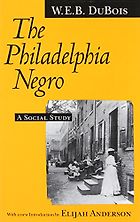
Let’s move on to your next choice: an early work by WEB DuBois. Many know DuBois as an activist and might not be aware that he was such a pioneering scholar. You cite The Philadelphia Negro, which he published in 1899, shortly after receiving his PhD from Harvard. Please tell us why this book is so central to understanding cities.
It’s a landmark book in the history of social science and the history of cities. It’s a look at the African-American community in Philadelphia 110 years ago. DuBois spent 15 months personally canvassing Philadelphia and analysing census data. It’s an amazingly good piece of quantitative social science research. It set an example that was much followed by people doing research on cities. That’s one reason to admire it: its place in intellectual history. Because DuBois’s later work The Souls of Black Folks is such a transformative and transcendent piece of literature, that is seen as being his legacy. But for those of us who crunch numbers on a daily basis, as social scientists, The Philadelphia Negro is as great a legacy.
There have been many great books written about urban African-American communities. There have been great books on Chicago. There have been great books on Harlem. But DuBois was first and in many senses his work was as good, if not better than, anything that followed. He provided a deeply insightful view into the community. He was very focused on the problem of nonfunctional single-parent families, which seems particularly prescient.
How does this book help us understand cities?
Cities, of course, do tend to attract poor people. I think that’s a sign of success, not failure. Poor people are attracted by the economic opportunities offered by cities. In the case of the African-American community in Philadelphia, they were also attracted by the promise of a freer society. I think that is another asset of cities. You can’t understand cities without understanding the diverse motives that draw people to them. DuBois helps you do that.
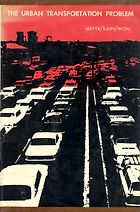
Let’s talk about The Urban Transportation Problem. A recently deceased colleague of yours from Harvard wrote it. You’ve called John Meyer the father of transportation economics. What can we learn about cities from reading this book?
Today we think about the extension of economics into other fields in the context of psychology and economics, or law and economics. Transportation economics was an early attempt to merge wisdom from multiple fields. This book marries economics with engineering. It’s a great example of how two fields can be brought together to add tremendous insight to an enormously important issue, which is how to provide transportation in a dense urban core.
The most striking conclusions were that unless drivers pay the full cost of driving, urban roads will always be congested and that at all but the most extreme densities buses, with dedicated lanes, are better than trains. There is an old saw that 40 years of transportation research at Harvard can be summarised by four words: bus good, train bad.
And car worse?
Cars do create the biggest environmental challenges, but they are particularly well suited for low-density living. Meyer, Kain and Wohl were focused on higher density areas, which are rarely ideal for private automobiles.
But the book is so much more than a discourse on cars, buses and trains. It’s a central book in the history of transportation economics and it’s a central book in the history of cities. And its central contention is that the transportation technology, which is dominant when a city is built, shapes the city itself. For instance, the older parts of New York are filled with narrow streets that date to an era of pedestrianism. And the newer areas have wider streets that were built when wheeled transportation, such as streetcars and overhead railroads, became dominant. So cities are always structured around the transportation technology that exists in the era in which they are built.
It’s a brilliant examination of the changes that were happening in the American city as the car replaced public transportation. And it’s filled with information about how transportation shapes city life. For instance, John Kain, one of the co-authors, made the case that African-Americans were suffering because of the distance they lived from their jobs. The book demonstrated that transportation is integral to thinking about cities.
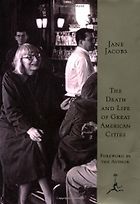
Jane Jacobs resuscitated America’s romance with cities at a time of dramatic urban decay. TheDeath and Life of Great American Cities has had a robust afterlife since its publication in 1961. What did it teach about cities and why is it still worth reading?
She describes the beauty of ‘the ballet of the sidewalks’. She pointed out innumerable ways in which people are connected by proximity and the virtues of dense living. How urban inhabitants, for instance, worked together to keep cities safe. Eyes on the street in a dense neighbourhood make sure that if something is happening to a kid, someone is going to see it and stop it or report it.
She pushed us to think of cities as not just an idle engineering problem that’s about putting up taller shinier structures, which is the direction we were heading in. She pointed out that older buildings and mixed-use buildings allowed people to connect with each other and create livable spaces.
My first urban research paper, which was the beginning of my work on cities, tested some of the ideas expressed in her book, about the value of small firms and diversity. Her ideas seemed to be borne out by the data.
Although you walk in her footsteps, you write that she ‘made mistakes from relying too much on a ground-level view and failing to use conceptual tools’. Please explain how you disagree for her prescription for cities and why.
She observes that old buildings were cheap and new buildings were expensive, which leads her to conclude that the way urban policy should change is by not building new buildings on top of old buildings. Unfortunately, that’s not how supply and demand works. But it led us to positions that ended up being very costly. When she lived in Greenwich Village, it was affordable to ordinary income people like her and her husband. Jane Jacobs was never ordinary, but she was middle income. Now that area has become unaffordable to new entrants other than hedge-fund millionaires, in part because it has been a historic district and hasn’t allowed enough new building for 40 years.
So many cities have made growing within them difficult by putting overly restrictive land use controls in place. I think these restrictions are not in our overall best interest.
So, how can policymakers help to resuscitate cities? And what lasting impact would you like Triumph of the Cities to make?
Cities are incredibly important to America and the world’s future. And yet we’ve had very little debate about policy for our cities. Although, there have been encouraging things that came out in the last few days about the administration’s budget.
The national policies that I would like to see include cutting the subsidies for sprawl. On average, more than 85 per cent of the occupants of unattached dwellings are owner-occupiers. And more than 85 per cent of people who live in multi-family buildings, with five or more units, are renters. So subsidising home ownership pushes people out of urban homes to suburban homes. Likewise, transportation policy is biased towards building highways in Montana. That’s just the way our political system works. We need to correct that bias.
Most importantly, so many parents perceive a huge gulf in quality between city schools and suburban schools. There is nothing more important to the future of our cities than making sure that kids who grow up in cities are able to access a great education. More than any infrastructure project, great public education can resuscitate cities.
Five Books aims to keep its book recommendations and interviews up to date. If you are the interviewee and would like to update your choice of books (or even just what you say about them) please email us at editor@fivebooks.com