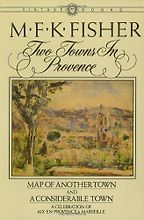
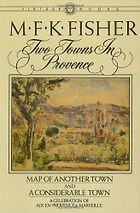
The first book on your list is Two Towns in Provence.
Do you know about M F K Fisher? She was an American writer who was working in France in the pre-war years, and she went back to the US and wrote these marvellous stories about life and food and living in Provence, and she is pretty much credited with telling the Americans that they had to shape up and get into the war. She was very influential. We don’t have the same appetite for food writing like this now. We read recipe books but we don’t like those narratives that have everything in them – the place, the people, the food itself. She wasn’t strictly a recipe writer but she was extraordinarily adept at telling people how things were. A marvellous book.
What kind of food is in it?
Basically, classic French food, the traditional French food. It hasn’t changed much. There’s a lovely description of eating sea urchins in Aix-en-Provence, eating them fresh. She’s able to conjure up the taste and the sense of things and the physical presence of them. So, it’s sort of lovely stories like that, almost entirely food-oriented.
How do you eat sea urchins fresh? Just like that?
The seller will sit there with this bucket of prickly sea urchins, still alive, and then there’s a special coupe-oursin, something that looks like a pair of scissors, and he’ll just snip them open and hand them to you and you eat them with a little plastic spoon. Probably in those days it would have been a wooden spoon. You can have them with lemon but it may not be worth spicing up their flavour – they’re very sea-y and lovely.
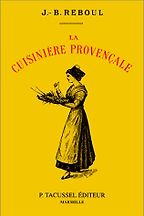
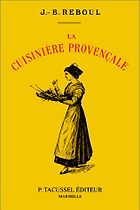
Tell me about La Cuisinière Provençale.
La Cuisinière Provençale is basically the re-establishment of the identity of Provence which had pretty much disappeared. It was one of the Languedoc-speaking places and it was pretty much destroyed in the 14th and 15th century, and I think we were quite responsible for it. Anyway, there was a big sweep to bring back language and customs of the Mistral, around the time when the Impressionists were getting going in that area and J B Reboul gathered together all the remaining Provençale recipes and wrote them down in very simple form, but knowing exactly what he was doing. Mine’s in French and I don’t know if it was ever translated.
What kind of recipes? What’s typical?
It’s bit like a Mrs Beeton this, but it’s all Provençale cooking, so masses of tomatoes and aubergines and garlic and olive oil and recipes for aioli and all those classic things that you get in Provence. I think he’s got one of the first recipes for tapenade in here. There’s a strong sense of place which didn’t exist before in terms of people having been slightly ashamed of it in the way that you are when you’ve been suppressed.
What do you most like cooking from it?
I’ll always look up how to do a tapenade or what to do with a cardoon.
What do you do with a cardoon?
Well, it’s a sort of winter artichoke and it’s kind of furry and you buy a huge bundle of it and the thing is that, unlike the artichoke, it’s the stalk that you eat and you have it with something like the Italian bagna cauda, which is salty anchovies melted into olive oil with a bit of garlic.
That sounds lovely.
It is! It’s a Christmas thing. It’s a really important Christmas thing. There is a very eccentric museum in Aix, set up at about the same time, and it has panoramas, life-size panoramas with people eating the fasting supper of the Eve and there are cardoons there, so it’s all of a piece.
The fasting supper of the Eve?
Before Christmas you don’t eat meat or anything creamy or rich or red. They have a prejudice against tomatoes at that time. And very often you’re eating sea snails, prickly things that look like an ordinary land snail but with spikes like a Roman chariot and salt cod. It’s very ritualised and subscribed. When people think they are going to lose their identity, domestic habit is where they remember who they are. So, this book is very interesting. He has marrons glacés for dessert, lots of syrups, jams, quince. Mostly you’d go to the patisserie for dessert, the best one, and you’d order something and you tell everyone how clever you are because you’ve gone to the best patissier. I mean, he has flan and things like that, but he doesn’t even do a caramel custard, I don’t think. No need! You’ve got fruit – it’s the Mediterranean!
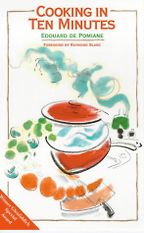
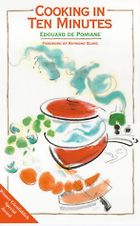
Cooking in Ten Minutes, by Edouard de Pomiane.
He was a Pole and he went on the radio immediately after the Second World War and basically he taught the French housewife how to cook. He was a member of the Institut Pasteur and he was completely, brilliantly hilarious. Cooking in Ten Minutes was written for a bet, and what he says is: ‘First you need to hang your hat on the hook in the hall and put on a kettle of water.’ And he takes it from there.
What does he cook in ten minutes?
Oh, you know, petits pois à la française, little peas with lettuce, white wine and butter.
Mmmm. What else?
Well, mostly things just slapped in, like escalopes. Things you can shove in a frying pan and it’ll work. Very simple stuff.
Do you use it? If I bought it could I make these things in ten minutes?
Yes, I do. Well, I think you’d be a bit pushed in ten minutes. It’s the one I always used to give my children when they went away to uni.
Are there puddings?
I don’t think he does much more than strawberries and crème fraiche.
You’ve got six books here. Which one do you want to lose?
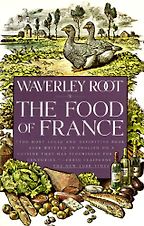
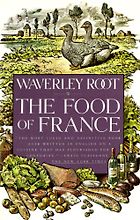
Well, let’s lose the Larousse then. It’s very basic. I mean, if you want to know how to make a crème anglaise, which is an English custard eaten by the French, then you’ll go to the Larousse. If something is called ‘à l’indienne’ you know it will be Indian-style French and not remotely like the Indian. But the thing about Waverley Root is that he is very, very regional.
OK. Waverley Root. Amazing name.
He’s an American and you can travel with him. Outsiders always observe and know exactly what’s going on. He goes through all the regions and he writes about the regions and chooses recipes. He’ll tell you about the people, the landscape, the architecture and from that the food. In the Touraine you’ll get woodcuts of a beautiful château and you’ll be told: ‘Touraine is the heartland of France and the heartland of haute cuisine.’ He’ll give you the classic haute cuisine recipes. What he mostly describes are the ingredients you’ll find and what you do with them. ‘The difficultly of obtaining chicken blood at the corner grocery doesn’t quite account for the disappearance of the perfectly made boudin.’ So, he very often looks at the white and black puddings in the charcuterie, and if you’re travelling you’ll know what the basic language of gastronomy is in that area.
So what is the basic language of gastronomy in, say, Lyon?
A lot of guts, tripe and andouillette and lots of imported spices, wonderful dairy, cheeses. It’s very rich land. Lots of pigs.
What’s your favourite region?
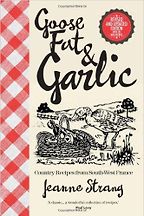
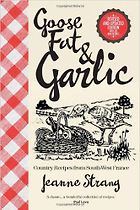
Well, the last book, Goose Fat and Garlic, is about the Languedoc, Gascony and the Dordogne. I go to that area of France like a homing pigeon. That middle bit. I live in Wales but I go there for Christmas! Hooray! And I shall take this book with me. Jeanne Strang is a very clever lady. It’s foie gras, it’s goose, it’s wonderful apples. They have a form of baking that is very like the Turkish filo because the Moors got that far up. So they stretch their pastry there.
What will you cook for Christmas?
Well, I sent my children to school there, I don’t know… pot au feu, a daube, a slow cooked stew with beef and maybe pork and masses of black red wine and it reduces until you can eat it with a spoon!
And that’s Christmas lunch?
No. Christmas lunch is less interesting than Christmas Eve. Christmas Eve will be an aioli and plain cooked vegetables, cardoons. It’s meatless. Then you come back after midnight mass and you’re allowed to eat sweets and get pissed and have roast meat. Pheasant is what everyone round about will be eating. Do you know the concept of the treize desserts?
No, but I like it.
It’s a sort of open larder. The Christmas period lasts from the Eve until Twelfth Night and during that time you set out an open larder, almonds and walnuts and dried fruit and apples and pears and oranges and pomegranates and quince and quince paste. There are 12 of those dishes and then you have a sweet bread that symbolises Christ. It’s an ancient tradition with a Christian overlay. You will go and order from the patisserie a beautiful apple tart with this puffy filo pastry, replaced when it’s eaten. Maybe nougat or almond sweeties and marron glacés. Then you tell the children stories about what they all symbolise. There are nice stories about dates looking like the Christ child’s mouth. A little bow. I usually pad around asking people what things mean to them in particular.
All this stuff is in Goose Fat and Garlic?
Yes. And there will be a lot of cabbage, partridges cooked in cabbage. Hare, rabbit, venison, wild boar…
Five Books aims to keep its book recommendations and interviews up to date. If you are the interviewee and would like to update your choice of books (or even just what you say about them) please email us at [email protected]
Five Books interviews are expensive to produce. If you've enjoyed this interview, please support us by donating a small amount.