Ella, you’re a bibliotherapist – what exactly is that?
Bibliotherapy is the art of prescribing fiction for life’s ailments. People come to us and tell us about their issues – be it getting married, getting divorced, having children or needing a career change – and we prescribe books to help them through life’s hurdles. We also talk about reading ailments, such as not being able to concentrate on reading because there are too many other distractions, or being overwhelmed by the number of books in the world.
That’s an ailment we’re familiar with at Five Books, with our archive of more than 5000 recommended books.
It’s a common problem. We also look at how people can bring reading into their relationships. For instance we suggest reading aloud to your partner, making time to read together, or memorising passages of literature for moments of stress.
So an individual or couple comes to you with a problem, which you diagnose and address by recommending books rather than through talking?
Yes. We obviously talk about the problem, but we’re not psychotherapists. It’s not a medical cure, it’s a reading cure. Our remit is to come up with a few perfect books which are going to help them address their issues. Our prescription is normally eight novels. We suggest some books that look at their problem in a way that they can empathise with, by seeing how someone else deals with the same problem. But we also might recommend a book that acts as a balm, simply by taking the person out of that mindset.
Escapist fiction as a cure?
Exactly. So if someone has been bereaved, they might want to read a book that is going to take them to completely another place, like a Jilly Cooper or a Dick Francis, to get them out of their mood.
And why do you feel that reading therapy is as effective as psychotherapy?
When you read fiction, you actually take on the persona of the author and the characters. You effectively live another life through reading a book. And by inhabiting the psyche of another person you are fundamentally changed. It might be temporary, but by living that other life for a short time you can alter your own personality and perceptions.
You must get this a lot, but your library must be huge. Is it part of your job to read a lot?
Absolutely. In order to do that I listen to audiobooks all day when I’m doing other things – because I’m also a mother and a painter. I try not to neglect my children when listening to literature! I also read all night long, if possible.
Here you’ve chosen five novels about love. Indeed, love is one of literature’s greatest themes – along with death. But is love describable at all?
I think all the books I’m suggesting do that in very different ways. And there are a lot of other fantastic books not on this list which analyse love in even more detail, such as Alain de Botton’s Essays in Love. Or Ivan Turgenev’s First Love, an amazing description of the total loss of power in the presence of someone else. So yes, I feel great writers can capture the feeling of being in love. That’s partly why we like to read them – through them we can experience love without having to actually be in love ourselves.
Yet we inevitably view love through the prism of our own experience.
I agree, but I do think you can get into the skin of another person in love. That’s the greatness of literature – you can suspend your own sense of self. Most people who come to bibliotherapists want that sense of losing themselves in fiction. They often miss the ability to do that, which they had as a child but have lost as an adult and are trying to get back. Some of the best works of literature about love work so well because you lose your own sense of self, and effectively fall in love with the characters in the book.
Let’s get stuck into some of those books. Beginning with The Enchanted April.
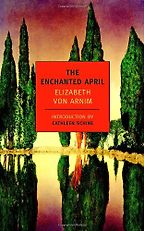
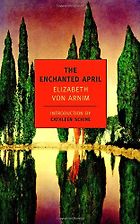
At the beginning of this book, two women in the 1920s are in a club in Hampstead [London] on a rainy day. They see a newspaper advert: “To those who appreciate wisteria and sunshine. Small medieval Italian castle to be let for the month of April.” Both go off into a reverie, and talk themselves into squandering their nest eggs on a month in this castle. They find two other people to join them – a deeply beautiful heiress called Lady Caroline, and a really annoying older woman.
So off they go to this beautiful castle in Italy, leaving their husbands behind. They all go through different transformations as the castle works its magic on their souls. And they write to their husbands, saying they must come too. One of the husbands is a writer of terrible romantic fiction, and actually comes out there on a totally different mission – to seduce Lady Caroline. But he falls back in love with his wife instead.
It’s about love rediscovered at a later age?
Yes. If it was written now these women would all be in their late forties, but because it was written in 1922 they’re in their thirties – terribly middle-aged and pastured. They rediscover and rekindle their love for their husbands.
So would you prescribe this book to a married man or woman who feels the romance has dwindled?
That’s exactly the kind of person I would recommend this book to. It gives you renewed hope and faith in a longterm relationship. I would say: Read this book to remember the joy of falling in love with your partner, because that is what happens to these people.
Obviously it’s a fairy tale situation and not very realistic – most of us can’t afford to go to a castle in Italy for a month. But the realism is there underneath, because what the women feel for their absent husbands and vice versa is exactly what people feel now. That we don’t understand or love each other any more. That we don’t seem to have anything in common, or spend any time together. All these things are reawakened in this novel by the beauty of the surroundings, and they see the positives in each other again. It’s a very happy, healing, uplifting tale.
You need a catalyst to relight the spark.
Precisely.
Next on the therapist’s list, tell us about Greengage Summer.
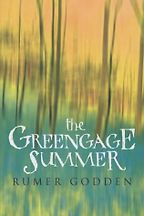
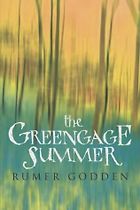
This was published in 1955. It’s a coming of age story narrated by a 13 year old girl called Cecil Grey, about her family going to a hotel in France. The father has gone off exploring in Nepal or somewhere, and the mother is bitten by a horsefly on the way down and is hospitalised for the next six weeks. So their five children find themselves temporarily parentless, in a hotel in France where no-one speaks English, suddenly having to deal with a very adult world.
The oldest girl, Joss, is 16 and just becoming a beauty. She has a profound effect on all of the men that she meets, which her 13 year old sister observes. There’s this rather renegade Englishman called Eliot who is having a fling with the owner of the hotel, Madame Zizi. Eliot takes a big fancy to Joss and it all goes pear-shaped. Joss is flattered and interested, and ends up snogging Eliot. But it’s actually a rather touching moment of becoming an adult. And that night she also “becomes a woman” because she gets her first period. It’s quite a lovely sexual awakening. To read this as a girl, you will remember your own sexual awakening.
There was a hint that Eliot was planning more than a kiss, but luckily it doesn’t happen. The only sex in the book is between Eliot and Madame Zizi. Then it all gets a bit ridiculous at the end, when Eliot turns out to be a jewel thief.
Is teenage love really such a world apart from the maturer love in your first book choice?
This particular book is about discovering love for the first time, almost as a concept in itself. I do think it’s such a totally different experience. The Enchanted April is about mature love, with the longevity and the tedium that can go with it, and the patterns and habits that it forms. But there’s also something comfortable and comforting about that kind of love, albeit sensible and lacking passion. Whereas the love in Greengage Summer is all about passion and unfulfilled desire, and that is what’s compelling about it.
This is a book to recommend to people who are either very young, discovering love for the first time, or older and want to remember that feeling of first love and discovery of sexuality. It’s an invigorating book that makes you feel young again, and full of potential.
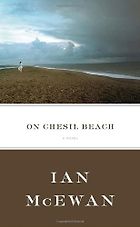
Moving onto On Chesil Beach. Will you set the scene please?
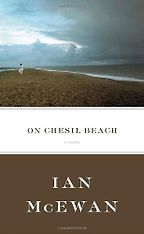
This short novel is set in July 1962, when Edward Mayhew and Florence Ponting are just married. It’s about the first night of their marriage, on honeymoon in a Georgian hotel next to Chesil beach on the coast of Britain. The book describes their courtship and how they got to this point, then the crucial scene is what happens on their wedding night. Edward climaxes much too soon in his excitement, and somehow they don’t get over this.
Because they hadn’t slept together before – this being one year before sexual intercourse began, according to Philip Larkin. But is it simply this disastrous shag that splits them apart, or do you feel there was something else lurking under the surface?
I think it’s a unique conglomeration of circumstances. Florence has quite a deep fear of sex – she almost can’t bear to be touched by anyone – while Edward is really looking forward to total sexual abandon. It’s obvious to the reader that this is not going to happen, because they’re so completely different in their feelings about sex. And their lack of communication causes this unbearable tragedy. It does seem to me a uniquely English tragedy and very much of that time, just before sexual liberation. Ten years later they probably would have been able to deal with it. This book is a great warning for not holding back on sex before marriage.
Do you think that it works describing sex in books?
Well, there’s a lot of bad sex in books. On Chesil Beach takes the biscuit for one of the most awful sex scenes in literature.
There’s an annual Bad Sex in Fiction
award
by the Literary Review.
But I think sex can also be brilliantly evoked in fiction. Often, the less graphically it is described the more enjoyable it is to read. There’s a lot to be said for sex in books, because you can learn from people writing about it. When you are a teenager it’s a great way to discover about sex.
Even better than from the Internet?
Exactly! I also think, as an adult reading about sex, it’s interesting to identify with the different emotions that other people are feeling. So sex can be a really useful tool – for want of a better word – in literature.
Have you ever recommended erotic fiction?
Yes I have, to people who aren’t getting enough sex and need to find some kind of outlet. And also to people who are stuck in a dull relationship and need to spice it up. I’ve recommended books like The Bride Stripped Bare by Nikki Gemmell – which goes into immense graphic detail about a journey of sexual discovery. I’ve even recommended the Marquis de Sade a couple of times, to get people more aware of sex in literature.
What would you recommend to a sexaholic?
Quite a good one for sex addicts is Lady: My Life as a Bitch by Melvin Burgess. It’s about a 17 year old girl who by some stroke of chance is turned into a bitch – as in, a dog. She’s got sex on the brain before she becomes a bitch – a dog – but once she is she has lots of sex with other dogs. It’s quite shocking and hilarious. She has a great time, but it’s an interesting exploration of what it’s like to constantly have sex on the brain. It won’t necessarily put a sex addict off, but it will show you your bestial side.
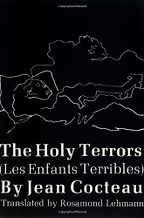
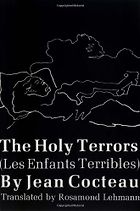
Your fourth choice is Les Enfants Terribles by Jean Cocteau, published in 1929.
This is a fantastic book which is also incredibly erotically charged, and explores the darker side of love. It’s about a brother and sister, Paul and Elisabeth – without a father and with an invalid mother – and the different romantic obsessions that they have. At first Paul is obsessed with another boy, Dargelos, who looks very feminine. Paul becomes very ill when Dargelos throws a snowball at him that has a rock inside it, and Elisabeth looks after him. She is fairly obsessed with Dargelos herself too.
The brother and sister start this activity that they call “the game”, in which they try to hurt each other psychically. It’s baffling to other people to watch, and their friends and lovers are intermittently excluded and brought into this game. A girl comes into the story called Agatha, whom Paul falls in love with. Elisabeth is jealous of her, and tries to put an end to that.
So it’s about hurting the people you love?
Yes, it’s a sadomasochistic novel. Not in a sexual way, but emotionally. The writing is very poetic and sparse. Jean Cocteau is an artist, and reading the book is a little like looking at a beautiful painting, where a lot is left out and you don’t really know what is going on half the time. It is evocative and poetic and beautiful and strange.
It’s also very incestuous seeming. Elisabeth and Paul are completely obsessed with each other and might as well be shagging, but they’re not. There’s no actual sex in the book, but there’s a lot of admiration of beauty of all kinds. It’s just restrained enough for them not to be having sex with each other. I think incest is a good thing to explore in literature, because it’s such a taboo that where else can it be explored? There’s no harm in reading about it.
Nevertheless, I’d be interested whom you would prescribe a book such as this to.
It’s a great book for younger clients in their early twenties, because it’s about people of that age. It shows the dangers of having too obsessive a love for any one person – and particularly avoiding it with a sibling! It sets alarm bells ringing for people who have an obsessive love of someone, which does happen particularly at that kind of age, in university and just after.
It’s also a book I have prescribed to older, more jaded clients, as a way to reignite their own feelings of love and desire for their partners, or even just for life itself. And for younger people to fall in love with youth again. This book is a great paean to youth. It’s a book that loves beautiful, young people, and it can reawaken that love of beauty.
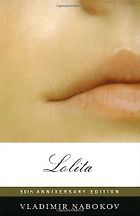
I can’t help but notice that we’re descending, in your book selection, from pure romantic love to a more dangerous and transgressive love – perhaps reaching its apotheosis in your final pick, Lolita.
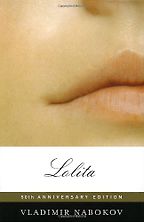
Indeed. Lolita is narrated by Humbert Humbert, an older man in his late thirties. He is obsessed with young girls – he calls them “nymphettes” – and he self-confessedly makes it his mission to seduce a nymphette. Sinisterly, he rents a room from a widow called Charlotte Haze, whom he marries basically in order to be near her daughter, Dorothy or “Lolita”, who is only 12 at the start of the story. He eventually seduces her – or in fact she seduces him.
It is a very dark novel, but the reason I chose it is because his love for Lolita is so all-consuming that he still loves her when she isn’t a nymphette any more. In some ways I feel he is redeemed by that. Once she is past the nymphette stage of beauty – which he eulogises in a very convincing way, talking about how girls can only be beautiful at that prepubescent moment – he does eventually get over that obsession for what she is as a grown-up.
So is this another warning about obsessive love?
I wouldn’t call it a warning, because it’s so much more of a brilliant book than just being an example of what not to do. Humbert Humbert’s love of Lolita is something epic, and although at heart it is sick because he seduces a young girl, he justifies it to the reader. Even though it’s wrong, you sympathise with him because he can’t help himself and writes about it in such a passionate and empathetic way. Reading Lolita we’re not all paedophiles, but we can understand what he’s feeling. It’s not a justification for what he is, but you can empathise totally.
So I’m holding this up as an example of a dangerously powerful but thrilling love. It’s a book that you finish feeling wrung out and saddened, but also with a little bit of admiration for the power and strength of his love for her.
In so much literature, as film, romantic love is idealised and put on a pedestal. That’s convenient for the purposes of catharsis and book sales, but do you think it has created a false impression of romantic love to which we’re all in thrall?
That’s such a huge question. You can of course read more realistic novels which don’t romanticise love. But I agree to some extent that romantic love is far too idealised, and turned into something hideously commercialised for Valentine’s Day. But I’m still a great believer in romantic love. Call me an old sentimentalist.
How do you think we should express our love to our valentines today?
Either give your partner one of these books – they’re brilliant love gifts – or choose a book to read aloud to him or her. There are some fantastic love stories that you could read together this evening. One good book for this is Anthropology by Dan Rhodes, which is 101 short true love stories, each of them 101 words long. So they’re very short reads, funny and interesting, covering different aspects of love. That would be a great Valentine’s activity.
Certainly cheaper than a meal out. But what bibliotherapy can you offer all the single souls out there?
Go home and read Proust! You will get lost in the remembrance of things past, and cheer yourself up by it.
Five Books aims to keep its book recommendations and interviews up to date. If you are the interviewee and would like to update your choice of books (or even just what you say about them) please email us at editor@fivebooks.com
Five Books interviews are expensive to produce. If you've enjoyed this interview, please support us by donating a small amount.