Historian Eric Foner chooses five books illustrating how concepts of American liberalism have changed over the past 50 years, and about the tension that lies at the heart of liberalism today.
As a historian, what do you make of the American left’s turn back to the term progressivism?
Ever since Reagan and the first Bush turned liberal into a term of abuse, it’s very hard to find politicians who will forthrightly proclaim themselves liberals. The term progressive is a substitute. It sounds good. How can anyone be against things that are progressive as opposed to retrograde? Of course, the term progressive relates to the Progressive Era of a century ago, when certain views that we associate with liberalism entered the political spectrum. Things like governmental regulation of corporations and provision of basic social security for people. If you read the platform of Theodore Roosevelt’s 1912 Progressive Party, it laid out much of the agenda for 20th century liberalism through the New Deal.
Modern liberals and turn-of-the-century progressives share a similar view of the role of government in society. But going back to the term progressive is a little misleading. Earlier progressives had no interest, by and large, in race issues. They accepted segregation. And they were uninterested in civil liberties, which has become a basic element of modern liberalism. They were statists – they weren’t interested in standing up against the state. So today’s progressivism is different from what progressivism meant a century ago.
What would you define as the core tenets of today’s progressivism?
As I see it, the core tenets are somewhat at odds with each other. On the one hand you have the belief in governmental assistance to the less fortunate, governmental regulation of economic activity and very modest governmental efforts to redistribute wealth to assist those further down the social scale. So it’s active government, in the pursuit of social goals, when it comes to the economy. On the other hand, modern liberalism emphasises privacy, individual rights and civil liberties – keeping government out of your life when it comes to things like abortion rights. In other words, in the private realm liberalism is for autonomy and lack of government intervention. And also I think today’s liberalism is strongly identified with the rights of various minority groups within American society. This multicultural element was not really part of liberalism until the radical movements of the 1960s. One of the reasons I chose these books is that I think liberalism has changed significantly since the 1960s. It is no longer the same thing it was in the era of Theodore Roosevelt or even Franklin Roosevelt.
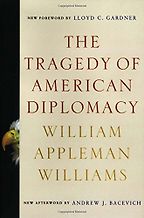
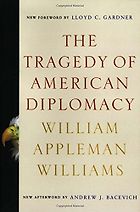
Let’s begin with a revisionist history of American diplomacy that was first published in 1959. The Tragedy of American Diplomacy by William Appleman Williams.
The reason it’s well worth reading, half a century after it was written, is that the messianic view of the world it critiques is one of the elements of 20th century liberalism. Stretching back to Woodrow Wilson, people who believe in a strong state have been tempted by the idea of spreading the American way throughout the world. It’s not enough for the government to improve American society; they want to remake the world in our image. Liberals generally embrace this Wilsonian vision. Indeed, Obama is a good Wilsonian.
Williams’s book remains important because it shows that foreign interventionism and free trade is deeply embedded in liberal history. Williams critiques American foreign policy as a foreign policy of good intentions. Liberals want to improve the world beyond our borders and broaden the rights of people overseas. The imperial temptation is something that liberals succumb to as much as conservatives.
How did the book help shape the agenda of the American left?
It challenged the Cold War mentality. Williams was one of the first to challenge the premise that the expansion of American power is by definition the expansion of freedom. He pointed to the fact that we intervene in all sorts of countries in support of tyranny. It’s one of those books whose importance was magnified by the events that came after it, like Rachel Carson’s Silent Spring. During the Vietnam War, as people became more aware of the fallacies of American foreign policy, they turned back to Williams for an explanation.
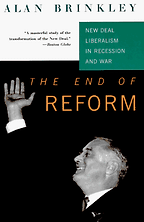
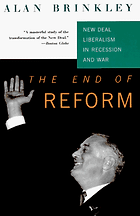
Let’s move on to a revisionist account of liberalism development during the Roosevelt administration – Alan Brinkley’s The End of Reform.
It pinpoints an important shift in the liberal outlook on the economy. Brinkley argues that at the beginning of the New Deal the government adopted the notion that it should reorient the economy in a more equitable manner. But, by the middle of World War II, the notion that the structure of the economy should be altered faded away.
Brinkley highlights a very important moment in the history of liberalism, a moment that plants the seeds for where we are today. For example, President Obama, whom I admire in many ways, quickly gave up the idea of actually changing the structure of our economy. Obama entered office in the midst of the most serious economic crisis since the Great Depression. He could have said: We gotta rethink things. Or he could have said: We gotta get things back on track. He took the second option. That replays what happen in the Roosevelt administration and what Brinkley is talking about – the abandonment of the notion of structurally changing economic life.
Why did that shift occur?
Partly because of the resurgence of Republicans and conservative Democrats. Partly because the government had to work hand-in-hand with the corporations to mobilise resources during World War II. During the depths of the Depression, in the early 1930s, the reputation of big business was at its lowest ebb. The war effort re-legitimised big business and created what came to be called a military-industrial complex. Changes in Congress and wartime conditions pushed policy in a different direction. There probably are many other factors as well. For instance, the rise of different views on the economy and particularly the influence late in World War II of Friedrich von Hayek and other critics, arguing that government should not try to direct the economy from the top.
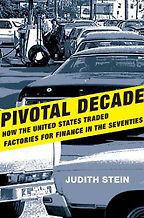
In his conclusion, Brinkley argues that by the 1970s it was evident that liberalism failed its working class constituency. That leads us directly to your next choice. A review in The Nation called it an “illumination of how the American Century collapsed”. Tell us about Judith Stein’s Pivotal Decade.
It pinpoints the problem of Keynesian liberalism. In the economic crisis of the 1970s there were serious structural changes going on in the economy that liberals found very difficult to come to terms with, including deindustrialisation, the shift of manufacturing overseas, the decline of labour unions and the weakening of traditional centres of industrial production, which were bases of liberal support. Stein’s critique is that liberals embraced the shift from a manufacturing-based economy to a finance-centred economy, which undermined their own political status.
In Stein’s view, President Jimmy Carter is a pivotal figure because he failed to support American manufacturing and failed to come up with an effective way to cope with the economic crisis that followed the oil shock of 1973. Frustrated with the failures of Keynesian liberalism, Americans were attracted by the conservative approach: Cut taxes, cut regulation and cut back on the liberal state to reinvigorate the American economy. In Stein’s telling, Carter opened the door for the conservative revival epitomised by Ronald Reagan’s election. Pivotal Decade is an important explanation of how liberal became a dirty word and how conservative views came to dominate American political life for so long.
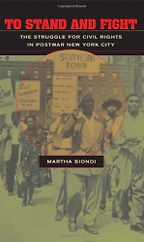
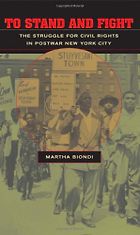
Let’s move onto To Stand and Fight. Tell me what we can learn from Martha Biondi’s book.
Biondi’s book makes the counterintuitive point that the modern civil rights movement began in the north, not in the south. It did not begin with the Montgomery bus boycott; it did not begin with the Supreme Court desegregation decision of 1954. In the aftermath of World War II, the civil rights movement came alive in northern cities. She focuses on New York City.
Biondi highlights the moment when racial egalitarianism became a core element of modern liberalism. It wasn’t before. In the 1930s Roosevelt worked closely with racist, segregationist Southern Democrats who controlled important committees. He needed them to get measures through Congress. In other words, you could be a good New Deal liberal and be a total racist. Many liberals were racial egalitarians but many liberals were racists. Views on race were not part of the definition of liberalism. Today you can’t be a racist and a liberal.
Can you identify the historic forces that caused liberals to incorporate racial egalitarianism as a core element of their platform?
There are two key elements. Number one, the black migration to the north, which begins around the time of World War I and then accelerates during World War II. Suddenly blacks are a major voting bloc in northern cities and an important political factor in the Democratic Party. Labour unions also wanted to organise these new migrants to manufacturing centres, so they too became forces for racial justice. Secondly, after the war against Nazism, racism of any type became intolerable for large numbers of whites, particularly communists and Jews.
In this period, New York also passed discrimination laws that became models for the nation.
As did many other northern states. State-level civil rights legislation preceded federal laws by two decades. And, in many ways, were much stronger than the federal laws eventually passed during the 1960s. Southern control of Congress blocked federal civil rights reform, so the movement had to deal with these issues on the state level.
Biondi also underscores that in the late 1940s liberalism went way beyond desegregation. In the North, the issue was not whether you could sit at a lunch counter: It was access to jobs, housing discrimination, police brutality and numerous other issues. She shows that there was this broad coalition of groups – African-American groups, but also labour unions, church groups and civil liberties groups – united in fighting for greater rights. That coalition basically falls apart during the Cold War. In the 1930s, communists were almost the only white people who gave a damn about the condition of black people. But the involvement of communists opened the civil rights movement to considerable criticism during the Cold War and led to the fragmentation of the emerging civil rights coalition.
Your father and uncle were both dismissed from university teaching positions during mid-century, McCarthyite purges. And, by my count, this is the third book you’ve cited which argues that intellectual backlash weakened liberalism. Is that the story you think history tells as a whole?
That’s a good question – the answer is complicated. The Cold War stultified political and social thinking in the United States for a decade or more. The 1950s was often called “the decade of conformism”, when criticism of American life was considered subversive or unpatriotic. Congress had an Un-American Activities Committee that investigated people on the left, not segregationists. People were putting out alternative visions of America, but they were very marginalised. The culture of conformism made dissent more difficult, no question about that.
Support Five Books
Five Books interviews are expensive to produce. If you're enjoying this interview, please support us by donating a small amount.
On the other hand, the Cold War in some ways encouraged civil rights activism. Segregation and racism embarrassed the United States on the world stage. Particularly as the United States was vying for influence over the newly independent nations of Africa and South Asia, the treatment of non-white people in America became a liability for this country. So when the Brown vs Board of Ed case came up before the Supreme Court in 1954, the State Department filed a brief saying segregation is a big problem for American foreign policy. On that level the Cold War actually encouraged racial progress. But while the Cold War might have encouraged racial progress in some ways, it discouraged structural critiques of American society. The bigot became the problem but the structural reasons for black unemployment were beyond comment. So the Cold War encouraged civil rights progress but closed off a broad critique of postwar society. That’s what Biondi writes about.
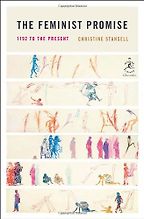
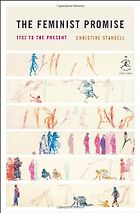
Finally Christine Stansell’s The Feminist Promise examines the sweep of American women’s history. What can we learn by reading it?
Stansell shows why women’s rights became a central element of modern American liberalism. And she helps us understand how liberalism evolved to embrace individual rights and privacy in the most intimate areas of personal life. That came through the women’s movement. Stansell gives a very good account of how these feminist issues, on the one hand, go very deep back in American history, and, on the other hand, reached a critical mass of popular engagement during the 1960s.
Why did women’s rights become so aligned with the left?
In the 1970s social issues became more important to the Republican Party, and the notion that the women’s movement was a threat to the family and the stability of society became a mantra among conservatives. I think it’s important to remember that it wasn’t always that way. A century ago the movement for women’s suffrage was just as likely to get support from Republicans. Even in the 1960s plenty of conservatives supported legal equality. But today women’s rights are a dividing line between liberalism and conservatism.
This interview series is an effort to examine the progressive canon. Do you think liberals have a canon?
I think liberals have a strong canon and in my own historical writing I’ve tried to suggest what that canon is or ought to be. I wrote a book called The Story of American Freedom, which, in a way, is a history of the origins of modern liberalism. It’s a history of social movements that have contributed to the expansion of liberty in our country, including abolitionism, feminism, populism and the labour movement. These movements form the foundations of modern liberalism.
As I argue in The Story of American Freedom, the idea of freedom is the central concept in American political culture. Yet the concept of freedom has changed over time – different groups attribute different meanings to freedom. Throughout our history, there have been conflicts over not only what freedom means but also who is entitled to freedom. Modern liberals adopted the cause of expanding freedom to groups who were denied its full benefit.
Get the weekly Five Books newsletter
Who are the most important forebears of American liberalism?
You can go back to Thomas Jefferson. His ideas about government resting on the will of the people and opposition to large-scale economic interest are antecedent. But I think modern liberalism really comes out of the Progressive Era, not just Presidents Woodrow Wilson and Theodore Roosevelt, labour leaders like Eugene Debs and social reformers like Florence Kelley and Jane Addams. Then in the 30s we have Franklin Roosevelt, and in the 60s Betty Freidan and Martin Luther King. Different elements have individuals who have pushed them to the forefront of liberal thinking at one time or another.
We’ve talked about a very diffuse volatile history, the history of liberalism. If you had to provide a dictionary definition for what it means to be a liberal, what would you say?
I’m not sure that I can do that. Historians always see things as evolving and changing. In the 19th century, liberalism was virtually the opposite of what it is today. People who called themselves liberals were believers in laissez faire and limited government and often very elitist in their outlook. Twentieth-century liberalism is much more interventionist, redistributionist, and state-oriented. Twenty-first-century liberalism could be a new breed. On the one hand, liberals retain their belief in an activist government stimulating greater equality. On the other hand, liberals believe in dissent, individual liberties and retaining an area of life sealed off from governmental intrusion, surveillance and intervention. Modern liberalism combines these two conflicting tendencies. It’s a somewhat uneasy marriage.
Five Books aims to keep its book recommendations and interviews up to date. If you are the interviewee and would like to update your choice of books (or even just what you say about them) please email us at editor@fivebooks.com
Eric Foner has taught American history at Columbia University since 1982. The author of 22 books on American history, Foner has served as the president of the American Historical Association and as a historical consultant for the National Park Service, the Public Broadcasting Service and Walt Disney World. In 2011, Foner won the Pulitzer and Bancroft prizes for his most recent work, The Fiery Trial: Abraham Lincoln and American Slavery
Eric Foner has taught American history at Columbia University since 1982. The author of 22 books on American history, Foner has served as the president of the American Historical Association and as a historical consultant for the National Park Service, the Public Broadcasting Service and Walt Disney World. In 2011, Foner won the Pulitzer and Bancroft prizes for his most recent work, The Fiery Trial: Abraham Lincoln and American Slavery