If someone were to read all of these books you’ve chosen, would they come out with a good idea of how to write? How did you select them?
I’ve been going through them the past couple of days, just refreshing my memory, and looking at them all in one big chunk. What a young or beginning writer is going to get out of all of them is how similar all writers are in many regards – when it comes to process, fear, neuroses, and the pleasures that are derived. These are books by well-known writers; they give examples of other well-known writers. They show how writers, at even the highest level, obsess about the same things that the rest of us obsess about.
I was going to ask if they contradict each other. But you’re saying they’re actually surprisingly similar in terms of advice?
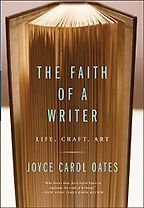
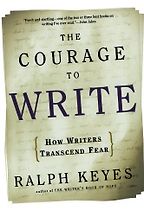
When we did the interviews for our book We Wanted to Be Writers, several people talked about the pleasure in losing control as you write. The work begins to write itself. Ralph Keyes, in The Courage to Write, makes note of the fact that writers have huge egos, which is true. But what a lot of the writers that I spoke to said is that they try to reach a state where they’re not an ego any longer, the work takes over and the writing begins to write the writer, rather than the other way around. One of the points of difference that struck me is that in one of these books, The Faith of a Writer, Joyce Carol Oates talks about how the writer has to be in control. But other than that one point, everybody had the same basic things to say about what’s important in writing and what a writer faces on a daily basis. The Courage to Write by Keyes is different from the other four books in that it’s dealing specifically with fears, the others are more “how to” books. But otherwise they all get at the same points.
You’re a graduate of the Iowa Writers’ Workshop, probably the most prestigious writing programme in the United States. Is writing something you can learn?
Boy, that is the question. On the workshop’s own website, the introductory paragraph says (and I paraphrase) or used to say: “We agree, in part, with the consensus that writing can’t be taught.” In one of the chapters in our book, We Wanted to Be Writers, we begin with that statement and discuss it. More recently, Samantha Chang, the workshop’s director, was interviewed on PBS and the moderator asked her, “Do you think writing can be taught?” Sam’s answer was something like, “Not really. If I just brought chicken soup to class every week the writers would get better.”
This is an ongoing debate, which has been going on since the workshop was first started 75 years ago. Among the people that we interviewed, the consensus was that there are a lot of aspects of writing that certainly can be taught. You can speed up the process of maturation of young writers, by talking about the mistakes you made in your career. As a teacher, you can speed up the process towards getting better. When I was an editor, the consensus was that a good editor could improve a piece by 15%. In the realm of teaching and learning writing, there’s a general consensus – among those who think it can be taught – that you can take a good writer, and make him or her a little better. There are always ways that you can help a writer along. You’re not going to take a mediocre writer and turn him or her into a great writer, and there are also some things that can’t be taught, like the basic desire to be a writer. That seems to be a given. You’re not going to make someone want to be a writer. Sometimes what goes on in a writing workshop is that you convince the writer that he doesn’t want to be a writer. That is a kind of teaching too…
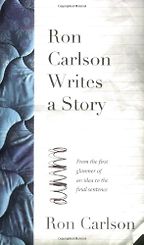
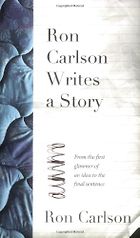
Your first book is the Ron Carlson book, Ron Carlson Writes a Story. It’s very practical, isn’t it?
Yes, that’s what I love about it. This whole book is, “Look! Here’s how to be a better writer.” I love how he uses one story, The Governor’s Ball, and his own experience of writing that story, to talk about the process of writing. What I found fascinating too is that he does such a neat job of talking about letting the story write itself. Here’s a guy for whom each sentence that came next was a total surprise. It was an exploration – he was just following the story as it went along. When I’m doing my writing, this is what I long for – those moments when I don’t know what is going to come next, and the story tells me what comes next. I write novels, which I don’t think write themselves quite in the way a really short story, like the one Ron is writing about, might. But I just love his very clear and precise description of the way he puts the story together.
Including even mundane things, like how you name your characters…
Yes, that’s really interesting, as is his emphasis on the importance of detail, and the inventory that he talks about. This is a terrific book for any young writer or even a not-so-young writer. Even if you’ve been writing for years, it’s good to be reminded of these things now and then.
I like Carlson’s take on the rule about writing that we’re all taught in high school, that you should “write what you know”. In the book, he says that whenever he’s asked about this, he replies: “I write from personal experiences, whether I’ve had them or not.” He argues that teachers are trying to prevent students from writing a crazy science fiction story or some cliché they saw on television, but not, in fact, to completely restrict writing to events that have happened to you personally.
Ron talks about three sources of story idea. In describing how he wrote The Governor’s Ball, Ron talks about how he drew on his own experiences, the experience of others, and stuff he just made up. Some of the authors, like Joyce Carol Oates, are, I think, of the school that serious writing is done from your own personal neuroses and experiences and fears and torment. That’s where the serious stuff comes from, or so we’re told by serious, “literary” writers. The guys that write science fiction and mysteries, they just make everything up, and that’s not as important as the other kind of writing. I’m not sure I’d go along with that.
So they disagree with Carlson and say you really do need to stick to your personal experience to write well?
Yes, and when I was at Iowa as a young writer, in the mid-1970s, I didn’t want to write about myself, or my life. I got some crap for that in the workshops, because the real serious stuff was supposed to be people writing about their dysfunctional families. Because when you’re 22 years old and starting to write, what can you write about from personal experience except your own dysfunctional family? I didn’t want to write about my dysfunctional family. I wanted to write science fiction. But you couldn’t submit science fiction at Iowa (except Joe Haldeman, who’d already published). It was forbidden. So I would write other stuff, but it was never about me, or drawn from my own experience.
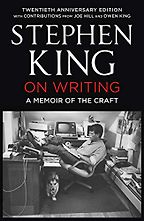
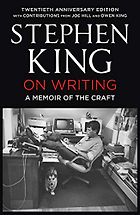
Let’s talk about the Stephen King book On Writing. This is such a good read. It’s part memoir and I didn’t realise a lot of the stuff about his life – like what a difficult background he came from, and that he’d had problems with alcoholism and drug addiction. I couldn’t believe the bit where he drinks the mouthwash, and his wife calls him on it…
Now I’m getting into my dysfunctional family. My old man had some issues with alcohol, too. I remember once, when he was on the wagon, that he also had a momentary lapse involving mouthwash. Yes.
You also live through it all with King, as he makes it as a writer – all the rejection letters and then, his first acceptance letter for a story. Also, later, when he gets the telephone call the first time he is paid a lot of money. It’s really moving.
Yes. This book is like Ron Carlson’s only three times longer. What I love about it is that King really takes you into his own process, and then leaves you these little titbits of “how to” stuff. There was one in particular I made a note of, on page 175.
Tell me.
“Good description usually consists of a few well-chosen details that will stand for everything else. In most cases, these details will be the first ones that come to mind.” That struck me. A lot of writers pile on details. This notion, just pay attention to your own thought process. What are the first details that come to mind? Those may be the best. That’s tremendously helpful advice. It had never occurred to me before, and I’ve been writing for 30-odd years. This book is full of little things like that about how he works, just tossed off.
He also really hates adverbs, doesn’t he?
Oh, everybody hates adverbs!
That’s normal is it?
Yes, all writing teachers hate adverbs. I don’t know why. What’s wrong with a little adverb every now and then? Actually, somewhere not too long ago I read a defence of adverbs. I don’t know what to think of adverbs. Why does our language have adverbs if we’re not supposed to use them?
Explain this part of the King book to me. He doesn’t like plots, but instead talks about uncovering a fossil. But the fossil struck me as rather like a plot. I wasn’t quite sure of the distinction.
My feeling is that it gets back to writing as discovery. For instance, I’m working on a novel at the moment, as I always am, and I’ve been trying to outline it. Even though I’m trying to outline it, I know that’s a mistake. For one, if an outline gets too detailed it takes away the discovery. Two, when I start to write, if it goes well, I end up tossing the outline. Stories have plots, you have to have a vague idea of where you’re trying to get, but I think what King is getting at is that you have to be open to discovery. When I interviewed John Irving for our book, he told me that he writes the last sentence first. And then he writes towards that. I imagine that’s exactly the opposite of what Stephen King does. Maybe what King means is that if, as Ron Carlson describes, you really open yourself and let the story take over, it will plot itself.
For example, the novel I’m working on is a murder mystery. From the start, you have to know the particulars of the murder, so you can work your way toward it. But along the way, even though I’m trying to get to a particular end, I’m praying for those moments when the story starts telling itself. Out of that, however chaotic and uncertain it might be, you get a plot. But the plot is the structure of the narrative. Things happen to people, you have surprises, and you have a beginning, a middle and an end. In a way it’s how King defines plot. I don’t know if I’ve addressed the issue of the fossil or not – but I think it means openness to the possibilities.
King also has tips on where to write – your desk should not be in the middle of the room, for example.
I love that stuff.
Is that the consensus? Do you learn that at Iowa as well?
No! But we were always asking one another, where do you work? When do you work? What is your room like? What is your desk like? Trying to get clues… I love it when writers talk about where they write, when they write. In the book, I ask people about it, and then I tried to take pictures of them, sitting at their desks. Joyce Carol Oates, in her book, talks about where she writes, which is a big glassy, open porch. I’m sure she looks out on trees…
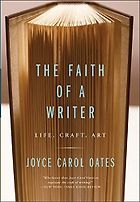
Yes, so tell me about her book, The Faith of a Writer.
When I started reading it I thought it read like something she might have tossed off on a Saturday morning. Actually, it’s a series of essays that she wrote over several years. It’s a little bit like King’s or Carlson’s books – it’s her talking about how she works and it’s full of really nice little details. With Joyce Carol Oates, you’ve got to figure, OK, whatever she’s doing, it’s the right thing to do for a writer! She also talks a lot about other writers.
I noticed bits in the book about James Joyce and DH Lawrence.
Yes, and there’s a chapter in there called “Reading as a Writer” which, for me, is the best part of the book. I really recommend it to young writers. The whole book is about reading as a writer, and all the stuff Joyce Carol Oates has been reading. When does she find time to read? It’s about what she’s reading, how it influences her writing and what insights she gets about the creative process from what she’s read. She not only reads all these great writers, but she also reads their diaries and criticism about them. She just has a wealth of insight. She emphasises again and again just how important it is for a writer to read. And to read not only good writers, but bad writers as well. Stephen King says the same thing. There’s nothing more heartening for a young writer than to read a bad published novel, because you read it, and you think, “My God! I can do better than this.” How exhilarating! “This got published? I can get published too!” So you read good writers to see how they do it, and bad writers to see how not to do it.
It seems so self-evident, that if you’re going to be a writer, you need to read. But a lot of the people I interviewed for our book teach writing. Several of them commented that many young writers don’t read that much, which seems insane. I reread the chapter “Reading as a Writer” last night, and by reading what she says about her reading, you can see how as a writer you’re supposed to read, which is just a nice thing to be reminded of.
Stephen King is also this obsessive reader, who just sits there in his room and reads and reads. That wasn’t my image of him.
Poor Steve, he’s a terrific writer, and writes a lot, but the mainstream literary world doesn’t take him all that seriously. I haven’t read anything by him in a long time, but what pieces I have read by him I really liked. I like science fiction and mysteries – that supernatural kind of stuff just never did it for me. But, like Oates, whatever King is doing, it’s sure working. Let’s learn from him!
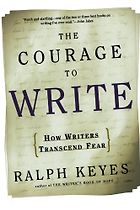
Let’s talk about the book by Ralph Keyes, The Courage to Write: How Writers Transcend Fear.
This whole book is about all the things that writers are afraid of. I think if you’re a young writer you have all these anxieties, which just gnaw at you constantly, and you think, “My God! What a neurotic wreck I am.” But what you get from reading Keyes is that all writers are neurotic wrecks. And beyond that, you need to be a neurotic wreck to be a good writer, because the fears and the anxieties you have energise the prose. That’s Keyes’s whole point. It’s really an interesting thing to read about. I love the fact that a big chunk of the book is this inventory of fears, and all the things that writers are worried about and scared about. Right now we’re at the stage with our book, We Wanted to be Writers, where I’ve already gone through several different fears. Now it’s been printed, I’m scared to death that the first call I get from somebody who knows me is going to be, “Hey! Did you know about the typo on page 38?” Because then, for the rest of my life, the only thing I am going to remember about this book is the typo on page 38. Keyes talks about that particular fear. There are dozens of things writers have to be afraid of, from the start to the finish, and I got a big kick out of it because it was so true. To have someone articulate these fears for you, and list them, is comforting. It’s not nuts. This is what it means to be a writer. So I think it’s a really good book. Then he has a section about how to put the fears to work.
How does one put them to work?
I’m not sure that section works quite so well. It’s more words of comfort: “OK, you’re nervous, you’re facing a blank page, you’ve got page fright (like stage fright). Use that anxiety to focus your work on the moment.” It’s easier said than done. But it’s comforting to know that you’re not alone.
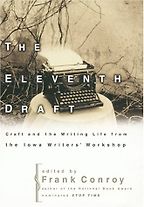
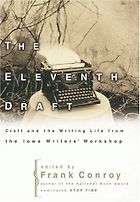
Your last book is Frank Conroy’s The Eleventh Draft. He is a former director of the Iowa Writers’ Workshop and he invited 23 former professors and students to write essays about the craft, with “deliberately vague” instructions to write about writing.
Yes, and some did and some didn’t. A couple of the people in here are people I interviewed – they were my classmates when I was at Iowa, like TC Boyle and Jayne Anne Phillips. Frank wasn’t the director of the workshop when we were there, but I got to know him later when he was. This book is all over the place – each person’s contribution is unique. A lot of the writers talk about the workshop itself, the experience, the workshop method. I think for a young writer in particular, who may be contemplating going to the workshop, it’s a good book to turn to, to give a taste of what it’s about. Because I don’t think it’s changed all that much.
There’s one chapter, by Francine Prose, called “On Details”, which is one of the most “how to” chapters. Like Carlson and King, her chapter talks about the importance of detail and how you handle detail. This is a particularly useful chapter, again, for young writers. In picking these books I was thinking of young writers, but every time we start writing something, we’re starting out again, so in a way we’re all beginners.
Can you give me more detail on how to do details?
My son is an investigator for a public defender’s office. His job is to interview alleged perpetrators of crimes and victims and witnesses, and get their stories. He’s dealing in detail all the time. They’re always looking for ways to get their clients off. How do you know when a person is lying? If you’ve been accused of a crime, you have the right not to talk. But he says that people always start talking and talking, thinking they can talk themselves out of the rap. They give all these details, and they start lying. You can tell a person is telling the truth when the details are fairly limited. Usually when we experience or observe something, we don’t really remember that much. When you’ve done a lot of these interviews, you begin to know that when there’s a paucity of detail – maybe just one or two little details that stand out in the person’s mind – you can be fairly confident that this is the truth. But if there are a whole lot of details it’s usually a lie. That is exactly what Francine Prose is talking about, when she writes about good detail in fiction. It’s exactly right. How do you know if you’ve got the right amount of detail? Which goes back to Stephen King and what he said about detail – that usually the first details that come to mind are the right details. Once you have those, stop layering on. Which actually is good advice to liars, too. The first details that come to mind, as you lie to the police, are the best details. Stop there. Stop elaborating. Otherwise they’re not going to buy it.
Five Books aims to keep its book recommendations and interviews up to date. If you are the interviewee and would like to update your choice of books (or even just what you say about them) please email us at editor@fivebooks.com
Five Books interviews are expensive to produce. If you've enjoyed this interview, please support us by donating a small amount.