Politics & Society » Feminism
The best books on Women in Society
recommended by Erica Jong
The celebrated feminist gives us her view of essential reading for women – and says the gender revolution is far from over
Interview by Anna Blundy


The celebrated feminist gives us her view of essential reading for women – and says the gender revolution is far from over
Interview by Anna Blundy
Can you describe to me what it is that links these five books?
These are all books that try to make sense of women’s place in society. Two of them are fiction, three are non-fiction, but they are all books that try to explain women’s lesser power in society. They all do it in different ways and it seems very sad to me that a lot of the issues that were debated many, many times in history have been forgotten by the present generation, which seems often to be quite illiterate. They don’t realise that feminism has been going on for 230 years and that they are following in the footsteps of so many women who looked at these issues – and men who looked at these issues, like John Stuart Mill. There is a kind of illiteracy in modern writing, as though modern writers have discovered all these issues themselves.
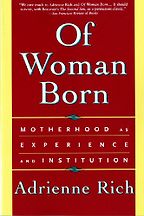
Your first book choice is Of Woman Born by Adrienne Rich. Can you tell us about this one?
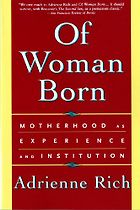
One of the reasons I put Adrienne Rich first is that I am aware that so many of the contemporary debates about motherhood are issues raised in Of Woman Born, a kind of memoir and history of motherhood. Adrienne Rich had three sons back in the 1950s and early 60s, and she describes her transformation from the young poet who won the Yale Younger Poets prize and launched on a career, was recognised by many important poets, into the mother of three boys, whom she had in rapid succession.
She describes her feelings in a very frank way – her ambivalent feelings about her sons; her love for her sons; the difficulty of raising three small boys and writing poetry. She touches on so many of the issues that women go on debating today, and it seems sad to me that a lot of the young mommy bloggers don’t even know about her. They ought to know about it.
To my enormous shame, I haven’t read it, but I’m definitely going to. I found exactly the same. I had this huge career and then I very suddenly had two children, when I was 29 and 30, and it was just all over. The loss of status, or the self-perceived loss of status, was very difficult to deal with.
You know, people prate about how important motherhood is, but they treat mothers like shit. That is a huge hypocrisy in our culture. The other huge hypocrisy involves men making laws about women’s uteruses. I was sitting in the hospital after giving birth to my daughter, and I remember turning on the TV and seeing a Catholic priest and right-wing politician discussing abortion and how it should be outlawed, and I slung a cut-glass ashtray into the screen, I was so angry. How can people who have never gone through the process of birth try to legislate for those who have?
It would almost be funny if it wasn’t so tragic.
Exactly. And after you’ve gone through a birth – in my case an emergency Caesarean, because my cervix wouldn’t dilate – I thought: who are these assholes, telling us what we can and can’t do with our uteruses?! They don’t even have a uterus. The rage that I felt – I found that my feminism was greatly enhanced. Even now, I’m a grandmother of four, and being with those children absolutely makes me feel fierce about changing the world.
Yes. One of the things that I find frightening now is that people don’t even want to say they are feminists.
That is beginning to change, I think. I was in Copenhagen to speak on International Women’s Day on March 8th, and I had an enormous audience there! You know, women in Denmark have crèches, have a year’s maternity leave, but they perceive that women are being held back. Officially, the excuse is the mothering. In a country like that, where you have childcare and maternity leave – even there you have the perception that the revolution is unfinished.
I have been astonished myself, having had children. My mother brought me up by herself and had to work, so I never had a model of a woman who stays at home doing all the housework unpaid, and yet I ended up finding myself pretty much doing that as well as working. I am much more of an angry feminist since having my children, though I was always a feminist.
It does make it much clearer to you what women are up against, absolutely. I also found when I got to Italy on my last trip, the women in Italy were up in arms about Berlusconi because he seems to mock all their aspirations. Women in Italy are in a much worse situation than women in Denmark.
Italy can be a horrible place to be a woman. I live there half the time and the lessons my daughter was learning about femininity there were not very helpful.
There is much to be done in Italy, but once again, women are on the march, and Berlusconi, we might say, by being such an asshole, is a boon to feminism. It has become clear to Italian women that they are being mocked and derided. He has prostitutes to his villa and laughs about it. You might say that he is helping Italian feminism with his behaviour.
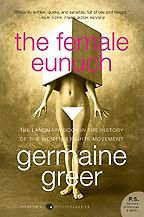
We all know The Female Eunuch.
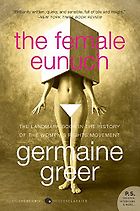
Yes. When I read Germaine Greer back in 1971, I was just delighted, because here, suddenly, was somebody saying all the things we felt in our bones but didn’t dare say. And she said it with humour and outrageousness and I loved that. I think Germaine has written many important books. One of the ones that has been most neglected is The Obstacle Race, about the fortunes of women painters. I adore that book. The Female Eunuch is a very exciting book. It was to me. It made a lot of sense to me and I loved her witty treatment of these issues.
I’ve met her a few times and I’m worried about what she stands for now.
Germaine has become very bitter and angry. I’m not sure why. Maybe it has to do with having been a sexy beauty and having to accept age.
She didn’t have kids; she has never married or anything, and it seems to me that she has had to reject everything about femininity in order to be a woman – and that’s quite a scary message.
I agree with you. Of course, you can’t psychoanalyse everybody…
Sure you can!
Well, maybe you can, but I think she’s not come to terms with many things. I really believe that knowing yourself is the goal of any kind of happiness you achieve in life. Unless you deal with your own issues, you can’t live your life with joy. She seems to have a lot of unresolved issues.
Nonetheless, The Female Eunuch is an iconic feminist text.
And I think people should read it, without a doubt.
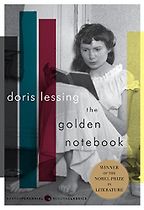
Now, The Golden Notebook.
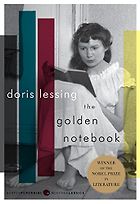
The thing that I thought so fabulous about Doris Lessing was that she created a heroine who was intellectual and sexual. Always in the past, the sexy heroines of men’s books have been idiots, but she asserted through her character of Anna that women were brains and bodies and that their brains and bodies interacted. I think that was so revolutionary.
Was it? That’s desperately sad that it was revolutionary.
I was just in Rome, taking my seven-year-old grandson through Roma Antica, and I reread Memoirs of Hadrian by Marguerite Yourcenar, written in 1951; she says in an afterward to the book that it was impossible to imagine a female hero. I have to say that when I was at graduate school we didn’t read about female heroes. We didn’t read Emily Dickinson.
It was so important that Doris Lessing came along and wrote a heroine who was sexual and intellectual; she grappled with the issues of socialism, communism, Africa in turmoil, and yet at the same time she lusted for men and talked about the confusions of her love affairs.
That’s fascinating, because, certainly in the UK, the modern popular feminism seems to mean that girls feel like feminists because they are proudly stupid and sexually active, and being proud of that alone is enough. They are reclaiming the bimbo for themselves, but that’s not quite the same as being a whole woman.
That is very sad. The bimbo doesn’t necessarily represent freedom. It might, but being a slave to wearing four-inch heels and see-through blouses doesn’t equal feminism. It equals an obsession with being noticed by men and defining yourself by men’s rules. I used to be deeply criticised in the 1970s for being a feminist who liked men. They used to boo me off the stage. Feminism at that time was so angry and so focused on wearing ugly clothes that people were furious at me. I was considered an anti-revolutionary. So, to see these shifts is fascinating. One of the wonderful things about growing older is the way you see these circles.
I suppose the tragedy of reclaiming the bimbo is that you can’t grow older in that role. It is a static role that’s frozen under 25.
Wearing net stockings and these horrible platforms. Do you remember when there were lots of fashion models falling on the runways?
Yes. Naomi Campbell fell, didn’t she?
And many others. The Internet was full of videos of women falling and I thought, that’s what we’ve come to. Wearing shoes that are dangerous.
When I wear them, and I do, I wonder what I’m doing. I feel like I’m someone from the Qing dynasty, actually crippling myself. It’s an amazing symbol of something awful.
I’ve taken to buying the prettiest flats I can. I live in New York and it’s a great walking city. When I go to a party, I take the fancy shoes in a bag and sometimes I don’t even change into the fancy shoes because I know how miserable I’ll feel.
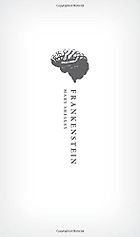
That’s rather wonderful – to just carry them into the room. Tell me what Frankenstein is doing here.
I think it’s a revolutionary book, but not for the usual reason, that it started the Gothic horror novel. We never give credit to the fact that women have started whole genres of fiction, but a very interesting literary criticism once written on Frankenstein pointed out that Mary Shelley had many, many babies who died.
Like so many women in the 18th century, she was always grieving the loss of another child. When you read the letters of these women, it just breaks your heart. They say things like, ‘I hope this one will live. He’s such a dear.’ They lost baby after baby in the days before Pasteur, before they understood the diseases of women and childbirth.
I find that even now, if you speak to a very old woman, you almost always find that she has lost a baby. It’s only so recently that we are mainly surviving this.
Exactly. It’s changed our lives completely. Anyway, Mary Shelley lost many babies and then at a very young age lost Percy Bysshe Shelley, who drowned and whose body was burned on the beach at Lerici. The critic Ellen Moore suggested that this attempt to reanimate the dead was Shelley’s deep fantasy of wanting to restore life to all these lost loved ones.
“This attempt to reanimate the dead was Shelley’s deep fantasy of wanting to restore life to all these lost loved ones”
I think we have that in Frankenstein – buried, of course, under all the Gothic stuff. If we think of Frankenstein in terms of reanimating the dead – finding a scientific, a magical way to bring back the dead – we can understand it in terms of Mary Shelley’s life. It reminds us, as women, of how new it is to be able to count on our children surviving.
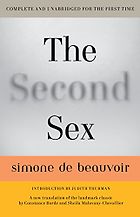
Next: Simone de Beauvoir.
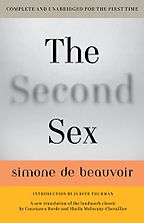
She asserts that women are made, not born. Her arguments are very interesting and it is interesting to consider her views. But I have watched my three-year-old grandchildren – twins, a girl and a boy – since they first emerged from the womb, and they have been raised the same, yet the boy started saying ‘car, car, car’ and the girl started saying ‘pink, pink, pink’. They are three years old, but Darwin is fiercely masculine and Beatrice is fiercely feminine. Watching them grow, I doubt Simone de Beauvoir’s point.
I don’t think we’re making her a girly-girl; I think she came out of the womb a girly-girl. Darwin is very interesting because he loves putting babies to bed. He lines the babies up in a row, the dolls and toys, and he says, ‘Now I will read to them.’ He’s mad for cars and trains, but he understands that boys can put babies to bed and read to them. Their daddy reads to them and is the model for what daddies do.
This book was viciously attacked, like many classics, when it first appeared. The French literary world is incredibly sexist and here was one of their darlings pointing out how much they discriminate. It’s just like Tahrir Square in Egypt – freedom is for everyone, but not for women. Simone de Beauvoir pointed that out in a million ways. It is a seminal text for feminists to read, even for the sake of arguing with it. She deals with the sexism that still exists in the literary world.
Yes. I write novels and, by virtue of being female, I get pigeonholed into writing what they derisively call ‘chick-lit’. You can’t proudly write for women. I want women to read my books, but the idea of chick-lit is always derisive.
The irony of it is that women are the ones who read novels. If you sit on an airplane, the women are reading novels while the men are reading business books. So it’s ridiculous. And the guys who write for the TLS! When Fear of Flying came out, Martin Amis, Paul Theroux all those literary chaps ganged up on me and wrote the most horrible things. Remember that when Charlotte Brontë published Jane Eyre, one of the reviewers wrote, ‘I would not hire Jane Eyre as a governess.’ This is how women’s fiction is received.
What is so bizarre is that equally frivolous crap – I write commercial fiction, it’s not Crime and Punishment – written by men, that’s meant to be read on the beach, it’s all taken rather seriously and they wear thick glasses and are interviewed about it.
Well, they’re defending their territory. They believe the world belongs to them; they believe the phallic pencil belongs to them; but more than all of that, remember that, for centuries, male writers wanted women to be their muses. They don’t want us competing.
Okay, we’ve done the books. What advice will you give your granddaughter about life and men when she’s 15?
Ha! Well, when you’re 15 you know you can get anything from men. I have to say that goes on in our lives until we’re at least 40. When led by their cocks, men are so incredibly foolish, which is sad because they do sometimes go for women who rob them blind.
I’m 41 next week. So now what shall I do?
I’m sure you still look beautiful and I’m a great believer in doing everything you can to continue to look beautiful, but you have to understand that the most important thing a woman has is confidence. If you are gorgeous but have no confidence in yourself, then it doesn’t look good. I mean it. The most important thing is to know your own worth. How old are your kids now?
Ten and twelve. But it’s my boy who finds life more difficult. He’s the one who needs the help and advice!
That’s so true of many boys. It’s hard to be a woman and it’s hard to be a man. Both are true. It’s hard to be a human being.
Interview by Anna Blundy
August 17, 2012
Five Books aims to keep its book recommendations and interviews up to date. If you are the interviewee and would like to update your choice of books (or even just what you say about them) please email us at [email protected]
Support Five Books
Five Books interviews are expensive to produce. If you've enjoyed this interview, please support us by donating a small amount.

Erica Jong
Erica Jong, author of Fear of Flying, is a novelist, poet, and essayist whose work helps provide women with a powerful and rational voice in forging a feminist consciousness. She has published 20 books, including eight novels, six volumes of poetry, six books of non-fiction and numerous articles in magazines and newspapers such as The New York Times, The Sunday Times of London, Elle, Vogue and The New York Times Book Review.
Erica Jong
Erica Jong, author of Fear of Flying, is a novelist, poet, and essayist whose work helps provide women with a powerful and rational voice in forging a feminist consciousness. She has published 20 books, including eight novels, six volumes of poetry, six books of non-fiction and numerous articles in magazines and newspapers such as The New York Times, The Sunday Times of London, Elle, Vogue and The New York Times Book Review.
© Five Books 2024