Evan, you’re the author of a book called Gangsters in which adultery figures largely. Adultery’s also the subject you’ve chosen to talk about today, and of course it’s a provocative subject. But is that why you’re interested in it? Do you think of yourself as an iconoclast? What does adultery permit you to think about that other subjects might not?
(Laughs) Well that is a provocative question. This may come as a surprise, but I got into Gangsters, not because of the adultery, but because of the theology. So in other words, what I was doing before I began work on it was to join a study group of writers and biblical scholars who came together to talk about different parts of The Bible. And I had never done anything of the kind before. I’d never read The Bible, never considered it an interesting book. In some ways I still don’t. But I got drawn into it and spent about a year with this group, and realized at some point that I was extremely interested – and that the key to it was studying Hebrew. I joined a women’s Yeshiva and studied the Talmud. I became fascinated by the Rabbinical system of law – the ‘codes’ – and Gangsters came out of that study. The protagonist there, Nicole, knows all about that system, but she remains sceptical of it. She’s asking, ‘What are the loopholes? How do I get out of it?’.
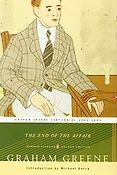
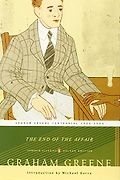
Let’s talk about the first book on your list, which is Graham Greene’s novel, The End of the Affair.
The novel’s set in the Second World War during the Blitz. The protagonists are Morris Bendix, who is a very sarcastic, satiric, almost nasty kind of writer, and Sarah Miles, whom he falls in love with and who is married to a civil servant. It’s always interesting, the careers that writers give to their characters – he’s a paper-pusher, a bureaucrat, boring. But she’s full of passionate life. She doesn’t have a career, and her lover, Bendix, is a writer, so his career is just to be a lay-about and sort of watch other people. So you watch the two main characters have what St Paul would call a conversion experience. They’re both very sarcastic, but it’s pretty clear that he, Bendix, who tells the story, has had a conversion experience.
Because of her?
It’s hard to say if it’s exactly because of her. Religion works in strange ways. Of course it’s certainly partly because of her. But just to give a little more detail. A robot bomb falls on the house where they’re making love. He’s downstairs and when the bomb falls he’s pinned under a door. She runs down and finds him pinned there with his hands sticking out. She’s sure that he’s dead and she goes back to her room. She’s naked, presumably, because they’ve just been making love and she prays, and the prayer is, ‘Make him live! I love him so much. Make him live and I will give him up. I’ll know to believe.’ She makes that vow and then he turns up and he’s pretty much unscathed. So right away from her point of view she has to keep the terms of the vow. She must give him up because he’s been given the gift of life. He’s been restored to her but she must give him up.
And is she consoled by faith?
She doesn’t really have faith at that moment. It makes an inroad into her scepticism, but it takes a long time for her to believe. She has a really Christian struggle. In some ways she doesn’t want it. She’d rather not have it; disregard her vow and have her lover back. And she says at one point “What I want is ordinary corrupt human life”. Which is a wonderful thing to say.
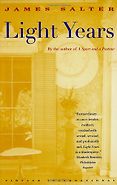
You’ve put three books by James Salter as the next choice on your list. But while you talk about him I’d love it if you could expand on why you are so fascinated by parallels between faith in the divine and commitment to a worldly erotic passion.
My first James Salter novel is A Sport and a Pastime. It’s short and amazing. It’s not about adultery, it’s about a passionate love affair between a young, callow American guy and an even younger French woman. And the idea of the affair is that they just completely surrender themselves. And that is a religious idea. But what they surrender themselves to is what Salter calls “incandescent sexuality”. They are just illuminated by it. And the more transgressive the sex, the more incandescent. Salter, when talking about this novel, says he wanted to contrast or explore the elicit and the divine. To show that you could have purity within licentiousness. I don’t think Salter is necessarily a religious writer. I don’t think of myself as a religious writer either. But he’s obviously intrigued by the idea. He uses sexuality, completely unbridled sexuality, not so much as an affirmation of self but as a way for the two characters to completely expose themselves to one another. To give that gift of surrender. The man calls it “throwing away the oars”.
Total abandonment?
And it is a kind of religious idea. Even if you’re not religious. Salter and Greene are both interested in the way the lovers are catapulted into something beyond reason. But they retain that recognition – a sort of criminal recognition – of the other person.
A lights out, talking when nanny’s out of the room recognition?
Well there’s nothing childish about it, but it’s true that adultery abstracts the adulterers from ordinary life. There’s almost no ordinary life in A Sport and a Pastime. The two antagonists live as though they have no jobs. They drive around France for what seems like a century. They spend a lot of time in their car, go from hotel to hotel…. It’s almost like Lolita. They’re always talking about the cost of petrol and so on. It’s part of the romance. And the hero, the young man, at the end of the book he dies in a car accident. Adultery novels all end in death. This is what’s so grim. Why? I’d like to see an adultery story end with the characters going on their way, but there’s always a death. It’s just an obsession. I didn’t want to talk about Madame Bovary or Anna Karenina on this list because I just found those books so grim.
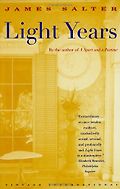
And Salter’s other books? Light Years, Dusk and Last Night …
Oh they’re wonderful. Salter says in Light Years that people lead two kinds of lives. There’s the life that people believe you’re leading and then there’s something else. He doesn’t say exactly what it is, he just says it’s what we want to know about. That’s what he does in the short stories – Dusk and Last Night – and that’s what he does in Light Years too. He projects you right away into that something else.
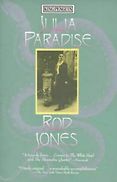
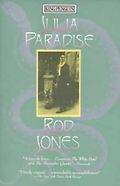
Tell us about Julia Paradise by Rod Jones, which is about a woman who’s married to a Christian missionary…
She has an affair with a Scottish doctor – a very unpleasant Scottish doctor – a disciple of Freud. She’s an hysteric and he wants to find out the etiology of her hysteria. And he does it, basically, by ass-fucking her.
And how does he think this is going to unlock the secret of her etiology?
Because it turns out that her father used to do that. Or at least that’s what she tells the doctor. In fact she fabricates an entire childhood for him in which her father sexually abused her, and they lived in this very lush place in China. A place that you can’t find on the map. She talks about animals and the vegetation and the mould in the house. Anyhow, it turns out that the whole thing’s a fabrication anyway. She’s trapping him in a completely different way.
A fantasy of control.
Well it’s interesting because it’s the male writers who like to do this. Male writers all talk about anal sex. It’s the fundamental exposure of the body. Rod Jones uses it in Julia Paradise and Salter uses it in A Sport and a Pastime. And it has such strangely mystical overtones. Salter’s character claims after anal sex to understand “the meaning of numbers”. Where does this come from? All I can imagine is that this is what men think about.
I guess each gender is bound to have a different set of fantasies. Curious how often they match up in practice. But that aside – here we have a woman fabricating her past in order to trap a man, but in fact that fabrication is being imagined by the author, who is a man. Why is this book of particular interest to you?
For the same reason as the others. It’s about people doing things almost beyond their will. They have secrets, both of them. And they have these perverse, taboo desires. And they recognize each other. They fall into adultery almost without any conversation. It’s like they know a secret handshake, a secret code. And then the novel takes a terrible, political turn.
Political in what way?
The murder of a young girl. They live in a lawless culture in Shanghai, these expats. So what the doctor does with a friend who’s a painter is that they hire a young girl prostitute – a twelve-year-old. And then they get the prostitute to pose for the painter and then both men rape her. And then the girl dies. It’s horrible. And you suddenly realise that Rod Jones is talking about the cost. Not just the fantasy, but the cost of the fantasy. It makes the novel a much, much darker thing than you were expecting. It’s about real brutality and also about indifference to that brutality.
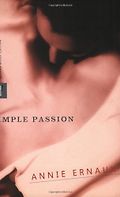
Your next book, Simple Passion is by a woman.
And the sensibility is totally different. Nothing is in the present. It’s all about waiting. There’s a lover, who’s never named, or rather only as ‘A’: a cipher. And the protagonist is waiting for him to phone, waiting for him to come up the stairs. You hear almost nothing about the sexual act. The pleasure is instantly pain, because it’s about loss. And this is what adultery is about, particularly for women. It always ends in loss, in devastation. And there’s always the anticipation of the loss. So there’s no real sense of pleasure. The woman in Simple Passion spends her entire life consumed by waiting for her lover; sitting by the phone, waiting for him to say “I’ll be there in five minutes”. And then as soon as he comes there’s an inevitable end, not only to the affair but to that particular assignation. He’s going to go back to his wife, to his job, to another country.
A tale of feminine passivity?
Yes, the woman is all anticipation. There is no engagement, no conversation. Loneliness has to be one of the major themes. You see that the characters can never transcend that loneliness. It’s engulfing. That brief moment of whatever their sexual passion is gives way to a loneliness that’s all-consuming.
And it’s obviously very lyrical.
That’s what I’m interested in, it’s the lyric quality in all this.
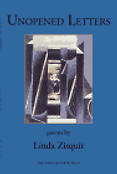
Which leads us to Linda Zisquit’s Unopened Letters….
Oh she’s a lovely lyrical poet. And she’s not confessional, so it’s not exactly clear that she’s talking about adultery. You can make that assumption. She’s talking about transgression and about guilt. It’s not a novel and its certainly not a memoir, so it’s quite elliptical. She talks about “a woman with no boundaries” and a woman with no boundaries can do anything. That’s what’s so seductive about all these stories is that they hinge on people who will do anything. None of the characters have boundaries. Zisquit explores that idea and writes poetry about the inevitable loss. Whenever there’s love it will lead to the loss of that love and the only question is how long and when. You’d never say that about marriage. Marriage is very stable. It’s there, it’s enduring – one hopes. You don’t think about the end of the marriage from the very moment it begins. But with these love affairs you think there’s inevitably going to be an end. So how long is it going to take?
So everything co-exists in a classic affair – a heightened sense of life and death, loneliness and this extraordinary intimacy with another person.
But always the conflict between the loneliness and the affinity. A really catastrophic sense of identification and awareness and understanding of the other person. But you never know the other person and Zisquit gets that very specifically.
I suppose anybody who has fallen in love will understand the comparison to a religious conversion. But is it not wholly narcissistic? The emotions that one experiences are so transforming. The whole thing is about transformation. And yet for the same reason one cannot know who you love, because they are also transformed from their ordinary selves. And therefore all you understand through them is what it means to be in love.
But you still have the obsession of wanting to know everything about them, in every possible way. Graham Green’s character, Bendix – that’s his obsession. He wants to know every little thing about Sarah Miles and he’s completely shocked when he discovers that he’s misunderstood her totally. He thinks she’s having lots of affairs whereas in fact she’s just been completely consumed by her love of God – or what she hopes will be her love for God. So he’s completely misinterpreted her.
And got her exactly right at the same time.
In a way, yes. But the question is, which way does the conversion go? To the ordinary, corrupt life of human beings, or to the divine? St Paul supposedly said that “to the pure all things are pure” and I think that’s what a lot of these writers are saying, in terms of the sexuality. Certainly Salter is. That the more licentious it is, the purer it is, because the characters themselves are pure. The characters in Julia Paradise aside, nobody is evil. These are good people.
So the more carnal, the purer. Like a kind of rendering? But tell us more about Linda Zisquit.
(laughs) She lives in Israel. She’s been there for maybe thirty or forty years. She has five children and they’ve all been in the Israeli army. But her poems are set in the Israeli landscape. They’re not political, they’re very private – you have this sense always that she’s talking in this very intimate way to you.
And what’s she saying?
She’s saying, you’re the only person I’m talking to. She’s telling you things that should be hidden, the cost of the love. And at the same time she’s telling you about a life deeply rooted in the very mundane aspects of Israel; in being the mother of five children. So there’s a poem that begins with a woman lying on the bed of her lover’s wife, but she has to go home early and make Shabbat dinner before sundown. There’s marketing and food and vegetables and at the same time she’s just left the bed of the wife of the lover. She talks about children and her own parents and her husband. But again it’s not confessional, so nothing is specific.
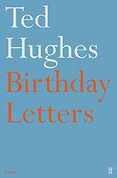
Your last book is Ted Hughs’s Birthday Letters. Sylvia Plath said that he smelled like a butcher in bed, and she meant it as a compliment. And yet Birthday Letters is a very tender collection. It’s a retrospective piece published long after Plath’s suicide, and I think it reinvented Hughes in the popular imagination, or ensured one side of him would be remembered over the other. Instead of the butcher he became this very tender, wounded person.
I never bought the whole Sylvia Plath thing from the beginning. I think he’s a fantastically interesting poet. I loved his first book The Hawk in the Rain – but this is a lovely, tender chronological collection in which he relives their original love affair and then their marriage. And he incorporates her work in his poetry, and everything is about “remember when we did this” and “remember when I bought you daffodils”, “remember when I made you a table”, “remember when we had chickens”. It’s this wonderful, elegiac re-evocation of their relationship. And one could be cynical about it but I’m not. He does represent himself as much more fragile than you would have imagined. He says “you were auditioning me for the part of your father”. She was obviously a very sick, very rapacious, very hostile person.
I once thought I’d write a play about Sylvia Plath called “This Bell Jar Ain’t Big Enough For The Both Of Us”.
I think that’s true. She was impossible to live with. The depression has to have been genetic and powerful – her son just killed himself. Isn’t that awful? He was in Alaska researching fish, which was a love he inherited from his father. Just an awful story. Some of the poems in “Birthday Letters” talk about what it was like for Hughes after she died and they’re so heartbreaking. Feeding his little son in his high chair, noticing the glitter in his eyes. Seeing the daughter, Freda, becoming paler and more wounded. Seeing the legacy of that horrible feud for your children. Brutal. And then of course he chose another woman who went and did the same thing.
Get the weekly Five Books newsletter
Coincidence?
I think you do have to be a little curious about that. There’s one poem in the collection about the adultery – the woman who he’s brought into their lives. He talks about her as a “filthy erotic Jewess” and you know that that’s something he must have said to her. And of course there’s a huge, erotic historical charge there.
Well that’s the erotic fascination of revelation maybe – dirty talking. But what about the dull stuff? Because if you reveal yourself honestly, you reveal yourself at every level. In savage anal sex, perhaps, but also in other things …
In mundane things, paying the bills, table manners.
Exactly.
Perhaps that’s why people opt for marriage.
Five Books aims to keep its book recommendations and interviews up to date. If you are the interviewee and would like to update your choice of books (or even just what you say about them) please email us at [email protected]
Five Books interviews are expensive to produce. If you've enjoyed this interview, please support us by donating a small amount.