‘The authors of these five books are people who came to New York for freedom – not so they could get rich, but so they could be free to pursue their interests and live their lives the way they wanted.’ New Yorker par excellence Fran Lebowitz recommends the writers who best capture her immutably mutable city.
The short bio that preceded your last collection read, “Fran Lebowitz still lives in New York City, as she does not believe she would be allowed to live anywhere else.” Please explain.
That’s pretty old. That’s because I haven’t written a book in many centuries. Now I’m hardly allowed to live here because I smoke cigarettes. The reason I came to New York and the reason most people used to come to New York, and maybe some still do, is because it is freer than wherever we came from. I don’t mean financially. It was always much more expensive than wherever we came from but there was much more freedom. Sadly New York has become much more like the places we left, except much more expensive.
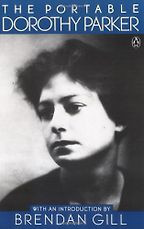
Let’s talk more about all that as we discuss your five books, starting with The Portable Dorothy Parker. Please introduce Parker to readers who haven’t had the pleasure – we have an international audience.
Lack of knowledge about Dorothy Parker is not confined to the international audience. She is no longer well known here either. Dorothy Parker wrote many kinds of things – short stories, book reviews and poetry. Not the kind of poetry people think of, not John Donne – she wrote light-hearted poems, she wrote theatre reviews, she wrote for The New Yorker. She was most known for being part of a group that was called the Algonquin Round Table – a group of writers that hung around the Algonquin Hotel who were known for being very witty. The reason they were known was that there was a newspaper columnist among them, FPA [Franklin P Adams], who chronicled their witticisms, almost daily.
“New York has always, always, always – from the Dutch until this day – been about real estate”
People should still read Parker because she is really funny. When you read the book reviews she wrote 60 years ago, you still laugh out loud, even if you don’t know the book. Of course in that era, in every era really, people who were funny were taken less seriously. This was the era of Hemingway – she was not Hemingway. I prefer her, but that is a minority opinion.
The people who gathered at the Algonquin Round Table in the 1920s, beside Parker, also called themselves “the Vicious Circle”. Do you need to have bite to get ahead in New York?
It depends what you mean by getting ahead. When people talk about getting ahead, they tend to mean getting rich. You don’t have to be witty to get rich – wit is something that would probably only hamper you. Being witty doesn’t get you far anywhere any more. It’s not very valued.
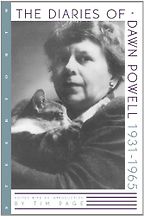
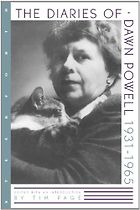
On to another woman who was well known at the Algonquin, but perhaps less well known outside her coterie of fans, who included Hemingway. Tell us about Dawn Powell and her diaries.
Dawn Powell was completely unknown to me until the late 1980s, when Gore Vidal – who knew her when she was old and he was young – wrote an essay about her for The New York Review of Books. Then a tiny, tiny press started republishing her.
There is no other writer I could recommend more heartily than her. If you had asked me to choose New York novels, I would have had a very rough time choosing among hers. They are spectacularly good. She wrote two sets of books. One whole group of her novels is set in Ohio, where she’s from – they are also excellent. But the New York ones are funnier, they’re basically satires. You should read Dawn Powell’s novels and then read her diaries, or vice versa, it doesn’t really matter. But when you read her diaries you see what it really means to be a writer. She struggled her whole life for money. She’s constantly worrying about money, because she doesn’t have any. This is the condition of most writers. You could read the letters of James Joyce and you’d see this. And I can’t stress enough how good she was. It teaches a little lesson: You can be sensational and not succeed financially. In fact, you’re more likely not to succeed financially if you’re really good.
The diaries are immensely rich – they give you a great picture of a certain sensibility and a certain part of New York.
And what can we learn, from reading Powell and Parker, about the social swirl that makes New York great?
Powell overlaps in era with Dorothy Parker, but there is a difference in their sensibilities. Powell was more bohemian than Parker. She lived in the Village her entire New York life. Dorothy Parker was very connected to The New Yorker, which was in Midtown. Those writers were generally more successful financially. Dorothy Parker was depressed by nature. Dawn Powell tended towards optimism, even though she had a much worse life – a child who was severely autistic and plenty of problems with her husband. A way in which they were similar was there was an endless, unbelievable, shocking amount of drinking.
As I said, they’re basically of the same era. If you read both of these books you’ll see that New York was at one time a million cities at once because there are so many different sensibilities at work.
Urban economist Ed Glaeser told me that cities should be credited for humanity’s greatest hits – from Athenian philosophy through to Facebook – because cities enable us to casually exchange ideas, information and inspiration. Do you second this opinion?
I certainly second that opinion. Density creates that dynamic. You don’t get that in Los Angeles, I don’t care who claims it. I don’t care how many rich people build museums in LA. To me, it’s not a city if people spend half their day in a car.
Did Mayor Michael Bloomberg’s smoking ban [in 2003] cut down on the kind of casual exchanges that help New York happen?
I said directly to Michael Bloomberg, “You know what sitting around in bars and restaurants, talking and smoking and drinking, is called, Mike?” He said, “What?” I said, “It’s called the history of art.”
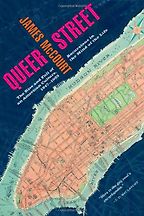
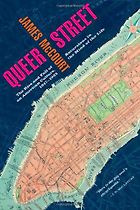
On to Queer Street. Please tell us about James McCourt’s book, which is subtitled The Rise and Fall of an American Culture, 1947-1985.
James McCourt is a writer I adore. There is not a note of an opera, a frame of a movie, a page of a book that he hasn’t heard, seen or read in 50 languages. This is the only non-fiction he ever wrote. It’s a book you have to read to understand. I’ll do my best, but it’s hard to describe. When this book came out, it was badly, albeit favourably, reviewed in The New York Times. It was totally misunderstood. It is a geography and a history of what people would now call gay New York.
I beg people to read this book. He tells you about a sensibility that has ceased to exist. In this book you see what the status markers were within the homosexual community in this era. And the status markers were how much you knew, how smart you were, how cultivated you were. It had nothing to do with money – that’s not what status was about. There used to be competing values in this culture.
This book ends as the Aids crisis is reaching its height. You’ve said that the epidemic set the city back culturally. Please make your point.
It set the city back culturally because these people died, and they died within a few years. People who invented the culture and participated in it just disappeared in the blink of an eye. Almost in the way that the British upper class died in World War I, it seemed to happen all at once and it changed us.
So the city lost what you call its “cultural connoisseurs”.
We lost not just the artists but also the audience. But Aids also created the present, previously unimaginable, freedom of homosexuals to be homosexuals. Without Aids this would not have happened. I know that, I was here. Aids made the culture more homogenised, but it also enabled there to be such a thing as gay marriage.
McCourt once worried that the legalisation of gay marriage would lead many to marry just for the sake it. You’ve also expressed some scepticism about marriage equality. If gay New Yorkers had always been as devoted to marriage and kids as many are today, would New York’s cultural landscape look any different?
Let me assure you that the phrase “gay marriage”didn’t even exist until recently. It’s not that people didn’t think gay marriage would ever happen – no one had thought of it. The concept did not exist. So, of course, things would’ve been completely different. As a single person who loathes domesticity of any sort, I don’t think anyone should be allowed to get married. Or if they do get married, I don’t think they should get a tax break for it. One of the things that the proponents of gay marriage used to advance their cause was that there are economic advantages to being married. If one group gets advantages, everybody should have them – but maybe no group should have them.
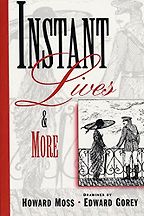
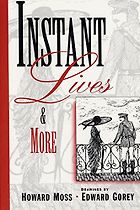
Next, a collaboration between Howard Moss, the former poetry editor of The New Yorker and Edward Gorey, the satirical illustrator. Tell us about these two men and their book, Instant Lives and More.
The edition I’ve chosen happens to have these drawings by Edward Gorey, which is, of course, an asset because he is a wonderful artist. But the reason I chose this over the original version, which was just called Instant Lives, is because of the More. And the More is a piece that I think is the funniest thing published in my lifetime. It is a parody of one of Ned Rorem’s diaries – Ned Rorem is a composer who published, over many decades, his diaries. It would be helpful if you’ve read the Ned Rorem diaries, but it’s not essential. Howard Moss, the poet, the professor and the poetry editor of The New Yorker for many years, published this piece in the early 70s. And I became obsessed with it. Among my friends, quoting this thing became a way of life. It’s unbelievably funny.
Support Five Books
Five Books interviews are expensive to produce. If you're enjoying this interview, please support us by donating a small amount.
The Instant Lives are parodies of the biographies of writers, composers and artists written in the style of whomever they are about. They are incredibly layered and immensely funny.
What makes this a New York book?
This is a New York sensibility. Howard Moss, who was gay, lived in New York and let me assure you, he would not have been allowed to live anywhere else. These people, the authors of the five books that I’ve named, these are the people who came to New York for freedom – not so they could get rich, but so they could be free to pursue their interests and live their lives the way they wanted.
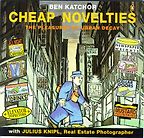
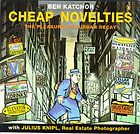
So that leads us to Cheap Novelties. Please introduce us to this graphic novel and its author-illustrator Ben Katchor.
Ben Katchor has an incredible eye for minute details. You see in this book a profoundly New York sensibility, which is very different from these other authors. It is not a mandarin sensibility, but it is piercingly intelligent and observant. If you read this book, or any of his books, you are going to get a view of New York that is not available anywhere else. Katchor might be galaxies away from Howard Moss or Jimmy McCourt or Dawn Powell or Dorothy Parker but there were and there are numerous authentic versions of New York. Each one of these books gives you an authentic version of New York, even if the thing that is authentically New York is just the author’s sensibility.
This book was published in the early 90s. You see what New York used to look like. He ended up recording something that has disappeared. When he did these drawings, some of what he depicted was already gone and some was still there. His consciousness is a kind of a collage, and of course there is nothing more contemporary than that.
The first time I met Katchor – and I don’t really know how old he is but I would say around my age, which is 500 – we were talking about some old place and he said, “You know, that delicatessen culture is gone.” That’s not all his book is about. It’s about how everything in New York is always changing. This is one of the things I find heartening. The present day New York will also disappear should Bloomberg ever relinquish his ill-gotten throne. There is a subtitle to this book…
The Pleasures of Urban Decay, with Julius Knipl, Real Estate Photographer.
New York has always, always, always – from the Dutch until this day – been about real estate. But it was a billion real estate people – it was not centrally planned, which it now is. In that way, Bloomberg is like Mao. One of the things that Bloomberg did was make a plan for knocking down New York and building up Marina del Rey, or whatever he thinks this is. That was never done before.
New York has undergone a lot of change in the past decade or two. In particular, of course, there was 9/11. How did that affect the city?
It changed New York immensely, the way that it changed the country immensely. To me the primary way it changed this country was that Americans could not wait to give up their civil liberties. They practically stampeded to give away their civil liberties. And safety became a countrywide preoccupation. In fact, I would say it took hold even more outside the city. That’s all you would hear: “Safety, safety, safety”. I think there is nothing more dangerous than constantly thinking about safety. I’m not saying it’s good to get blown up – it’s horrible. I’m not saying it was not scary. I lived here – it was very scary. It’s scary to be attacked, but Europe has been attacked numerous times and they did not race to give up the things that they valued.
I really hope it will change back, in the sense that I really hope that people will stop being so afraid. What the reaction to 9/11 showed me is that not many Americans valued their civil liberties. But I did and I do. So, to me, that’s a very bad legacy of 9/11.
Has New York snapped back? And what is immutable about the city?
New York prospers. This morning [in 2009], on the New York news, I saw Sheldon Silver, the speaker of the state assembly, talking about how great the new “Freedom Tower” was doing, how it’s all leased out. As if what happened was merely a real estate disaster. That neighbourhood, which was once called the Financial District and is now known as Ground Zero, is apparently very commercially buoyant. I’m not saying that’s a bad thing, but to me that wasn’t the main thing.
Get the weekly Five Books newsletter
Present-day New York has been made to attract people who didn’t like New York. That’s how we get a zillion tourists here, especially American tourists, who never liked New York. Now they like New York. What does that mean? Does that mean they’ve suddenly become much more sophisticated? No. It means that New York has become more like the places they come from. That won’t last.
What is immutable about New York is that it’s always changing and it’s relatively hard to live here – relative to the places where people drive from mall to country club. It’s expensive, it’s not necessarily clean and you have to walk. So I think, in the end, the people who will be in New York are the people who deserve to be here – people like me.
September 10, 2011
Five Books aims to keep its book recommendations and interviews up to date. If you are the interviewee and would like to update your choice of books (or even just what you say about them) please email us at editor@fivebooks.com
When Fran Lebowitz made her way to Manhattan in the late 1960s, she subsidised her writing by driving a cab. She landed a job with Andy Warhol’s Interview and became a national sensation through a best-selling book of sardonic essays entitled Metropolitan Life. Currently a contributing editor at Vanity Fair, Lebowitz is widely known for her appearances on late-night talk shows. Martin Scorsese made a documentary about her life entitled Public Speaking (2010).
When Fran Lebowitz made her way to Manhattan in the late 1960s, she subsidised her writing by driving a cab. She landed a job with Andy Warhol’s Interview and became a national sensation through a best-selling book of sardonic essays entitled Metropolitan Life. Currently a contributing editor at Vanity Fair, Lebowitz is widely known for her appearances on late-night talk shows. Martin Scorsese made a documentary about her life entitled Public Speaking (2010).