The birth story of American liberalism is the subject of the book that you are working on. Please give us a preview.
The book I’m writing grows out of my obsessive interest in conservative history. There is a clear asymmetry. Conservatives have a canon of texts and things that provide some ideological clarity. That should make liberals jealous – they have lost touch with their ideological forebears, and the sustenance that comes with having a genealogy of their beliefs. I’ve set about trying to help liberals trace their roots.
There was a moment when liberalism had a very distinct meaning. The term liberal was always associated with political liberty. Between the enlightenment and the early part of the 20th century, the term was also associated with a limited role for government. In the middle of what we call the Progressive Era, liberalism stops meaning laissez faire and starts meaning faith in affirmative government. I’m interested in that moment.
At the height of the progressive era, presidential candidates chased after the same set of reform-minded voters. After Theodore Roosevelt was defeated in his 1912 third-party run to regain the presidency, he was so embittered that he began criticising Woodrow Wilson in the most over-the-top way. Sensible progressives wanted to distance themselves from Roosevelt’s fulminations, so they stopped calling themselves progressives and many began calling themselves liberals. The meaning of the term liberal changes a lot over the stretch of time between Woodrow Wilson and Barack Obama. But you can see the outlines of a sensibility and ideology from that time on.
The term progressive is making a comeback. But it means something different today.
We went through a long period where people who were left-of-centre were very confused about what to call themselves. The term liberal was trashed in the course of the 1970s and 1980s. A whole generation of politicians, who would have identified themselves as liberal in a previous era, rushed to call themselves something else – “progressives”, “new democrats”, and so forth. But these people clearly have a different agenda than the original progressives, who were much more interested in reforming the citizenry and creating a sense of almost spiritual regeneration in the country. If you asked people who identify themselves as progressives what it is they mean, you probably hear them talk about implanting virtue in the polity.
Which label do you wear on your lapel?
I call myself a liberal because there is this ideological tradition. I think running away from the term liberal creates intellectual confusion and muddies the public’s perception. I’d rather rehabilitate the word liberal than distance myself from the liberal legacy.
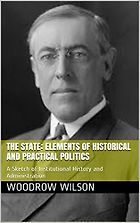
Let’s begin with The State by Woodrow Wilson. The then-to-be 28th president of the US wrote this treatise in 1898, just after receiving his PhD in political science. Tell us about it.
Today people like to call Barack Obama and Bill Clinton intellectual presidents. They aren’t, in comparison to the likes of Woodrow Wilson. He was a genius. He wrote this book, The State, as a young academic. It’s from a neglected and relatively radical period of his career. In the next decade, he took a much more conservative turn as president of Princeton. The book outlines a much more robust role for the executive branch and also what an activist state would look like.
So you can see why Wilson has become the bête noire for Glenn Beck and the Tea Party. He wasn’t nearly as left wing as Teddy Roosevelt in his most progressive incarnation, but he is easier to demonise. He doesn’t have a stuffed animal named after him like Roosevelt. There is something distant and nerdy about him. Still, it’s ridiculous to hold him up as a poster child for socialism. He was criticised from the left for being a corporatist and he was criticised by the right for paving a path to socialism. But he actually represented a third way. If you want to trace American liberalism back to any sort of genesis, The State being published would be a good candidate. And if you want to trace it back to one politician, that politician is Wilson.
How did Wilson’s two terms shape the progressive agenda?
Wilson racked up a lot of progressive accomplishments as governor of New Jersey. For instance, worker’s compensation. When he ran for president in 1912, his guru was Louis Brandeis, who advocated using antitrust laws to break up big business. As president, he created the Federal Trade Commission, he created the Federal Reserve Board, and he appointed Louis Brandeis to the Supreme Court.
But the crucible of the Wilson administration was World War I. Progressives thought that the war presented a tremendous opportunity to remake the state as a much more active player in the economy and in society. The government grew tremendously during the war and progressives were installed in various new-fangled agencies. They thought that nationalism could be a vehicle for creating a liberal state, but instead they saw that the war unleashed animal spirits. There was hysteria and paranoia, labour and racial strife. A period of liberal disillusionment followed, during which the entire infrastructure that Wilson had managed to construct disappeared almost overnight.
In The State, Wilson lists various functions performed by the US government, and cites John Stuart Mill to support his conclusion that “it’s hardly possible to find any justification common to them all, except the comprehensive one of general expediency”. How important is utilitarianism to liberal thought?
If you ask people “who was the quintessential liberal thinker?”, a lot of people would say “John Stuart Mill”. But when it comes to American liberalism, utilitarianism isn’t really that central. Pragmatism is a much bigger influence. Pragmatism was a political philosophy developed, largely at Harvard, by William James and John Dewey. Neither of those thinkers was heavily influenced by Mill.
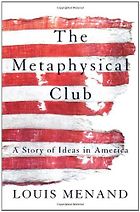
Let’s move onto The Metaphysical Club by Louis Menand. Although this Pulitzer-winner subtitles itself a story of ideas, it’s also a quadruple biography of four pivotal figures in American political thought. Please tell us about them and this book.
It’s a beautifully crafted group biography about the birth of the first American school of philosophy – pragmatism. Pragmatism is an idea about ideas. The gist is to assess theories based on their efficacy. Menand describes ideas as being like microchips or screwdrivers, tools that help us achieve results. That concept sprung from this generation. So, the four figures it tells this birth story through are Oliver Wendell Holmes, who became the legal embodiment of pragmatism, William James, who is the philosopher of pragmatism, Charles Pierce, who was James’s mentor, and John Dewey, who made James’s ideas more coherent and more part of popular conversation.
Define pragmatism for us. And tell us about its relationship to American liberalism.
Pragmatism is the view that theories and policies should be evaluated based on how well they work. This became extremely important to the ethos of liberalism. Pragmatism coalesced when there was an abundant sense that we needed to break free from old thinking, and that we needed government by experts, who would experiment to produce policies that worked better to meet the challenges of the new century.
Menand makes much of how the struggle to save the union, and the fratricidal horrors of the Civil War, lead to the development of pragmatism. Did those factors directly influence the development of American liberalism?
This book tells how the Civil War remade politics, and the long dark shadow that it cast over the country. The Civil War shattered old certitudes. You couldn’t go around making dogmatic arguments after having witnessed all the carnage that was caused by a clash of dogmas. Oliver Wendell Holmes fought in the war and came out of it profoundly embittered. William James didn’t fight but had a brother who was shattered by the experience. And Harvard, the institution where they worked, was remade by the war, into the first great university where professors were supposed to produce ideas, not just instruct students. So pragmatism was born out of the horrors of the Civil War and really is part of the liberal fabric.
I think liberalism, like pragmatism, is at once an ideology and an anti-ideology. It has a set of concerns and priorities, but it also prides itself on its sense of experimentation and efficacy. This sense was renewed during that last decade when liberals defined themselves against the Bush administration, which they saw as ploughing ahead with whatever big idea they had, damn the consequences.
It is said in Washington that Obama is a pragmatist.
There’s a book by a famous intellectual historian, James Kloppenberg, making the case that Obama is an heir to this tradition. But while he is a realist and may possess a tendency towards compromise, I think it’s a stretch to tie him too closely to William James.
Let’s move on to Herbert Croly and The Promise of American Life. Some consider this 1909 book one of the most influential in American political history. Tell me about it and its impact.
The book provided the clearest distillation of American liberalism to date: “The use of Hamiltonian means to achieve Jeffersonian ends.” From the foundation of this country, there was a great debate between Hamiltonians, who had a vision of a strong state, and Jeffersonians, who advocated a yeoman’s republic with limited government. The genius of that aphorism is that it synthesises what liberals believe. We believe in individual freedom – we just believe that you need a strong state to realise that vision.
When Croly wrote the book, he was an obscure architecture critic. Then, when Teddy Roosevelt returned from one of his African safaris, he began waving the book around and proclaiming it to be the great distillation of his own thinking. The publication of the book coincided with a radical turn for Roosevelt. He delivered a famous speech in 1910 about a “new nationalism”. The press was excited to discern the impact of this unknown philosopher on Roosevelt. The speech helped make Croly’s book a phenomenon.
Croly was the co-founder of The New Republic, the influential political magazine that you edited for more than four years, and whichinvented the modern usage of the term liberal. Please tell us about the magazine’s role in the political arena.
Herbert Croly had a vision not just of what liberal policy should look like, but of what liberal politics should look like. He really believed that it was necessary to have an elite that could help educate and elevate public opinion. So he founded The New Republic to speak to a very small audience of influential thinkers.
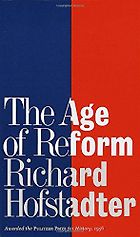
Let’s now look back at the progressive era through the prism of The Age of Reform, Richard Hofstadter’s 1955 Pulitzer-winning history of the 1890s through 1930s.
Hofstadter is the quintessential Cold War liberal. He clearly doesn’t have a special place in his heart for the early era of American liberalism. Hofstadter’s goal in this book is to dissociate progressives from New Deal liberals. He famously portrays progressives as members of a status-anxious middle class, whose anxieties shaped and limited their moralistic policies. He’s not a big fan of Woodrow Wilson either. I love this book but I also don’t especially agree with Hofstadter. I think that he fails to see all the continuities between the Wilson years and the New Deal years. Although there are many histories of the progressive era, there’s no clear consensus on why a profusion of reform occurred at a moment in history when the country was relatively prosperous.
George Will [the conservative columnist] called Hofstadter “the iconic public intellectual of liberal condescension”.
I think Will doesn’t like him because he coined the phrase “the Paranoid Style” to refer to extreme right-wing politics. Hofstadter’s style is a little more polemical than we’re used to in academic historians. Maybe that’s great. He interwove his histories with cultural criticism. I think that helps explains why his work survives on reading lists even as his historical theories fall out of fashion.
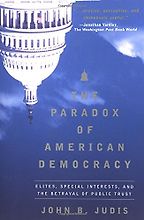
Finally, The Paradox of American Democracy by John B Judis. He argues that lobbyists, interest groups and think-tanks are “making politics the exclusive province of paid hacks and single-issue fanatics”. Tell us about the book and the paradox that the title refers to.
Judis makes the case that elites lost the ethos of disinterestedness, one of the great ideals of the progressive era. It connects back to pragmatism, which advocated disinterested policy makers making decisions based on a calculus about the public good. This progressive ideal of disinterestedness became enshrined in the way that elites thought. If you look at the Federal Reserve, or the Brookings Institution, or The New York Times, all these elite entities were supposed to act with blindness towards the class interests of whoever was running and funding them. Unfortunately, conservatives have waged a long and successful war against the ideal of disinterestedness.
Since Judis published his Paradox in 2000, the problems he identifies seem to have intensified. Political contributors are more empowered, while labour unions are losing members. How would Judis update his vision of American democracy?
The systems keep getting worse, but the diagnosis doesn’t change. Once you lose an ideal like disinterestedness, it’s hard to recover. We’re now locked in an era of ideological warfare where there’s no common idea of the common good.
If you were asked to define American liberal by Merriam Webster (not Wikipedia), what would you say?
Croly’s definition – using Hamiltonian means for Jeffersonian ends – is about as precise as you can get. It captures the notion that we need a robust government to protect liberty. We need a strong state to preserve freedom – that’s what liberals believe, no matter what they call themselves.
Five Books aims to keep its book recommendations and interviews up to date. If you are the interviewee and would like to update your choice of books (or even just what you say about them) please email us at editor@fivebooks.com
Five Books interviews are expensive to produce. If you've enjoyed this interview, please support us by donating a small amount.