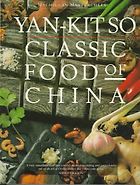
The first book you’ve chosen is Yan-Kit So’s Classic Food of China. But can you define what is the core cuisine of a country like China, which is so large and disparate?
People sometimes think that Chinese cuisine is the equivalent of French cuisine or something like that, but actually China is more a continent than a country. One of the main characteristics of Chinese food is that it is so varied and multi-faceted, which makes it an over-simplification to talk about Chinese cuisine. For example, Sichuan province, where I lived for some time and about whose cuisine I wrote my first book, is roughly the size of France. But there are certain cultural things that the different cuisines of China share.
How effectively does Yan-Kit So draw those out?
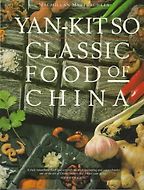
Yan-Kit So was a very clever, serious historian, and a sort of mentor to me when I first started writing about food. I actually ate at her house. I was very lucky to be invited to dinner. She was a brilliant cook, applying the same kind of academic rigour to her cooking as to her scholarship. She was a perfectionist. Her first book was a very clear, accessible introduction to Chinese cookery. In fact, before I even went to China I did my first Chinese cooking from that book. All her recipes work – she tested them thoroughly. It’s still in print, and there’s a really nice mix of dishes from different regions.
“The Chinese word for pepper, jiao, originally referred to Sichuan pepper. Black pepper is known as hu jiao, meaning barbarian (imported) pepper”
Classic Food of China was really her great work, though. I think it was the last book she produced before she died, some years ago. It’s one of the few really well-researched historical and cultural Chinese cookery books. It has the most fantastic introduction, which talks about the history of Chinese food culture and introduces some of the classic texts of Chinese cuisine – an overview of different culinary regions, the way people thought and wrote about food, and celebrated festivals. But it also includes a collection of recipes from all over China, many of them with introductions that explain the history and some of the background.
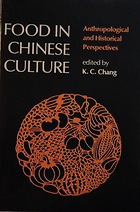
So this was your grounding. But then you pursued your interest in more detail. Was it here that the second book, KC Chang’s Food in Chinese Culture, came into its own?
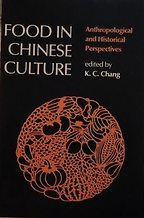
This is more of an academic book, a collection of essays about food culture by leading China scholars which came out in 1981. It was probably the first book in English to bring serious academic scrutiny to Chinese food culture, and to use the scholarly techniques applied to other subjects to food, offering the views of different experts on different periods of Chinese history. There’s so much information in it. KC Chang was an archaeologist, so he wrote the introduction and the chapter about ancient Chinese food customs. Then you’ve got chapters on all the other main dynastic periods, and one on modern China. It remains a key work, and if you want to become more deeply informed about the history of Chinese food it’s a great place to start.
Is there a clear continuum in Chinese cooking from ancient traditions to contemporary styles, or do you have the same sort of thing as in Europe where large-scale dynastic change often shifted how the palate was defined?
It’s a real mixture. There are some things that are stunningly continuous in Chinese history. For example, there’s a text from the third century BC called The Root of Tastes, written by a merchant called Lu Buwei. Lu records how the legendary chef Yi Yin lectured his king on cookery in the 16th century BC. The way Yi Yin describes the arts of flavour and the control of fire is something that’s still applicable today. There’s also a very famous archaeological site in Hunan province, the Mawangdui tombs, which are one of the richest sources of information on Han dynasty eating habits. Not only did they contain a lot of bamboo strips inscribed with cooking techniques, the names of dishes and so on, but archaeologists also found a stash of actual food, as well as dining instruments and fabulous lacquer ware. Among the foods they found in the tombs were fermented black beans with ginger, and they look exactly the same as the ones you can buy in Chinatown today. So you have some culinary techniques that go back more than 2000 years, for example the use of fermented soy products to bring flavour to food.
But then you also have massive historical shifts. One of the key moments in this respect was the late Ming, early Qing dynasty, when you had the arrival of new world food that transformed cuisines all over the world. In the case of China, the arrival of potatoes and sweet potatoes via Portuguese traders was one of the reasons that the nation was able to grow, because these foodstuffs made possible the cultivation of mountainous regions. Similarly, the chilli was first seen in China in the 16th century when it arrived in the eastern ports with the Portuguese traders. Inhabitants of the eastern provinces didn’t really develop a taste for it, but it found its way along the Yangtze to Hunan and Sichuan. It fitted in with the cosmologies of these regions, because there’s the idea in Chinese medicine that when the climate is very damp you need to eat heating foods to redress the balance of the body. In the past the Hunanese and Sichuanese had used things like ginger and other herbs, but suddenly the chilli appeared and suited them perfectly.
But while the chilli is not indigenous, Sichuan pepper is?
Sichuan pepper is an ancient native Chinese spice. It’s one of the spices they found in the Mawangdui tombs. The Chinese word for pepper, jiao, originally referred to Sichuan pepper. Black pepper is known as hu jiao, meaning barbarian (imported) pepper.
Was there ever a European influence on Chinese cuisine?
There’s a legend about a Han dynasty Chinese envoy called Zhang Qian who is supposed to have brought sesame, coriander, alfalfa and other things from Europe along the silk road. There are clues in the Chinese language about which things came across the land routes because they are prefixed by “hu”,which referred to the barbarians of the northwest. Hence hu jiao. Carrot is hu luobo, literally “barbarian radish”. The Yuan dynasty was Mongol, the invaders from the north, so they ate mutton and dairy foods. In northern China you can still see the use of mutton, which the southern Chinese don’t like at all, and the appearance of a few dairy products in the everyday diet.
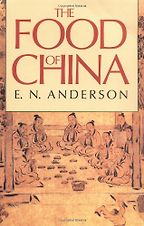
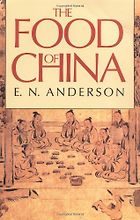
Your third choice is The Food of China by EN Anderson.
This was one of the books on my reading list when I did a Masters degree in Chinese studies at SOAS [in London], for which I wrote a dissertation on Sichuanese food. It offers a good counterpart to the KC Chang. It’s very well researched and comprehensive, covering all aspects of Chinese cooking – ingredients, cooking techniques, history, agricultural system and so on. But although Anderson is an anthropologist, The Food of China is written in a slightly more accessible style, halfway between that of a popular book and a very scholarly book. And because it is written in one voice rather than by a group of different scholars, it’s a really good read.
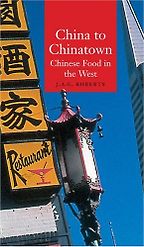
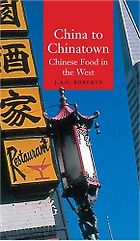
Next is China to Chinatown: Chinese Food in the West, by JAG Roberts. Was it a taste for Anglo-Chinese food that originally prompted your deeper exploration?
I’ve always been fascinated by the way Chinese people think about Western food and vice versa. For example, in the West there have been these weird stereotypes that have swung between seeing Chinese food as either cheap and trashy – dumbed down to a set menu of sweet-and-sour pork and egg-fried rice – or else as terrifying exotica – dog meat, penises and strange rubbery things. Actually, if you talk to Chinese people who are not acquainted with Western food you find the same horror and incredulity.
What do Chinese people particularly abhor about Western cuisine?
Traditionally, they don’t eat dairy products, and certainly not cheese. Cheese is considered smelly and disgusting. Also they don’t traditionally eat much raw food, so salads were barbarian food, although the new generation are coming round to them. And in China people are not used to eating huge hunks of meat. So a whole steak on a plate with chips is not really a meal. At the Chinese dinner table you never have knives, only chopsticks, so to have a huge slab of meat you need to cut for yourself seems utterly barbaric. And whilst you would always have a refreshing soup with a Chinese meal, that’s not so essential in Western food. Finally, rare meat has shocked and scandalised a number of Chinese people I’ve met.
But Roberts’s book looks at the question from the other side – what Westerners made of Chinese food, from early accounts by missionaries and explorers right up to Chinese food in America. He has drawn together all kinds of different sources that would be a lot of work to find on your own. And it’s very funny to see the range of reactions to Chinese food, for example what early visitors to China made of it. Some were very impressed by the diversity of the produce and the freshness of the diet that people had. But there was also horror at what people ate, which you see right up to today in the prejudice against the Chinese in San Francisco, and the anti-Chinese legislation which Andrew Coe also talks about very well in his book
Five Books aims to keep its book recommendations and interviews up to date. If you are the interviewee and would like to update your choice of books (or even just what you say about them) please email us at editor@fivebooks.com
Five Books interviews are expensive to produce. If you've enjoyed this interview, please support us by donating a small amount.