Zionismis the national political movement dedicated to the establishment and preservation of a Jewish state in the land of Israel. You’re an Israeli historian but you are not a Zionist. Perhaps you could tell us about your background and how your views on Israel and the conflict with the Palestinians have evolved and developed.
I was born in Buenos Aires in Argentina. My parents were communists and we emigrated to Israel in 1963, when I was seven years old. We went to a Marxist kibbutz, where I grew up for the first few years, and then we moved to another cooperative settlement of the Labour Movement, a moshav. That was where I spent most of my life in Israel.
I always belonged to the Zionist left in Israel. My views began to change and radicalise around the time of the Lebanon war in 1982, which is something that happened to a number of people of my generation and social background. It wasn’t only the war that changed my perspective, but it was the massacres at [the Palestinian refugee camps of] Sabra and Shatila and the hand grenade that was thrown by a [Jewish] settler at a demonstration in front of the Israeli prime minister’s office which killed one of the leaders of the Peace Now movement.
You served in the Israeli army in Lebanon, didn’t you?
Although I knew there was going to be a war and I knew why, to my shame when I was called to serve and participate in the operation against the Syrian surface-to-air missiles in the Bekaa Valley, I went without having too many hesitations. When I was demobilised it dawned on me that I had really obeyed orders that were given by a state of which I was part and I had not questioned them, even though I knew the war was a bad idea. The whole experience made me start doubting many other things.
Anyway, after the war I completed my BA degree and then an MA at the School of History at Tel Aviv University. And then in 1986 I went to Oxford University to do my doctorate. I was already doubting the whole notion of Zionism and the Jewish State as I was going to Oxford. My stay there really tipped the balance and I became not only a non-Zionist, but in certain ways also anti-Zionist.
You’ve selected five books on the history of Zionism. Can you tell us what ties them together?
In different ways they do not accept either the grand Zionist Israeli narrative of the modern history of Israel/Palestine or of Jewish history. Some of them take on the entire story, others take part of the story and dissect it and reject it. So what I’d say underlies all of the books here is the non-acceptance of the Zionist narrative on a variety of topics but especially the grand narrative of Jewish history and of the Israel/Palestine history since 1882. Kornberg is a bit of an odd one out in this list, because although his work is critical I am not sure whether this is matched by his politics.
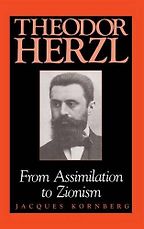
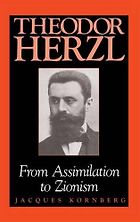
Theodor Herzl is widely regarded as the father of modern political Zionism. Although there was Jewish settlement in Palestine before he wrote his seminal work Der Judenstaat (The Jewish State) in 1895, he is credited with transforming Zionism into a coherent national political movement. Why did you choose Kornberg’s biography of him?
I think this is the best biography of Herzl I have seen. The first reason that it’s so good is that it is based on meticulous research and it also unearths documents, letters and diary entries that were either unseen by others or seen but not commented upon or their significance not illuminated. Secondly, I think that this book shows a remarkably deep understanding of Herzl’s personality. It’s not a psycho-biography, but it’s the best understanding of his emotional, mental, intellectual and political make up, which is accompanied by a subtle awareness of the historical context.
Can you tell us about Theodor Herzl?
Herzl was a Hungarian Jew born in 1864 in Budapest to wealthy parents who were not completely alienated from Judaism nor completely assimilated. One could call them secular, bourgeois Jews with an attachment to Judaism. They moved to Vienna, the centre of the Austro-Hungarian Empire, when Herzl was just finishing high school. After school Herzl enrolled at the university to study law. He also joined fraternities while he was there, the most significant of which, Alba, was extremely right-wing German nationalist, and anti-Semitic. He was also obsessed in this period with duelling, something which Kornberg analyses with much insight in his book, and which was palpable in Herzl’s conversion to Zionism.
Herzl was not really a successful or active lawyer. His ambition was to become a literary figure whose plays would be performed in Vienna’s most famous theatre and in the wider German-speaking world. He also wanted to write novels that would bring him fame and status. He eventually became a journalist, where he was more successful, because as a playwright or as a literary writer in general he was not that successful at the time.
Get the weekly Five Books newsletter
As a journalist, he was a correspondent for the very prestigious Neue Freie Presse and became its correspondent in Paris, where in 1894-1897 his conversion to Zionism occurred. That’s when he wrote many of the texts for which he became famous and, of course, from there he proceeded to establish the World Zionist Organisation and really transformed it into an organisation with clear political aims and global ambitions. He died relatively young, aged 44, in 1904.
What makes Kornberg’s biography so special and what conclusions does he draw?
Kornberg refutes thoroughly the view of Herzl as someone who offered a progressive universal vision of the liberation of the Jews. He puts much more emphasis on the arrival of Herzl to Zionism through the rejection of the possibility of the Jews participating in the betterment of European society so that it would include them, and through alienation from his own Jewishness and his deep underlying desire to be a Gentile himself. Kornberg shows how Herzl really wanted to be accepted as a white Christian man and how he came, because of this alienation, to think that those who stood in his way were the exilic Jews, or the unmodernised Jews. He was thinking of ways in which he could “normalise” the Jews so they wouldn’t stand in his way of becoming a proper white man. I think this is a very interesting underlying thesis, which he supports with ample documentation. The book is really structured around a series of answers that Herzl was looking for, to apply to the Jews so they would normalise. Zionism was only the last of a series of attempts that went from conversion to Christianity, to socialism and ultimately to Zionism.
What Kornberg also shows is how Herzl understood the so-called Jewish problem very much in the same way as anti-Semites, by accepting that there was something wrong with the Jews and they were uncorrectable as long as they stayed within Europe as an exiled nation. And therefore, he concluded, they had to leave Europe and create their own colony in the east, which would normalise them. Along the way, Kornberg makes some specific discoveries, which were a revelation to me. Through very meticulous philological research, he puts to rest the myth that Herzl’s metamorphosis occurred as a result of witnessing the Dreyfus affair in Paris. With marvellous research, he shows that this could not have been the case. What Herzl did as a shrewd politician was to retrospectively concoct the story that he converted to Zionism while witnessing the humiliation of the Jewish officer Dreyfus. This became conventional wisdom but it is not factually and empirically true.
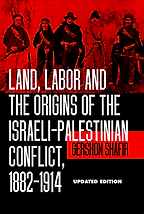
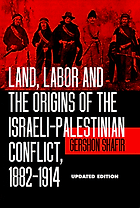
Land, Labor and the Origins of the Israeli-Palestinian Conflict
is a fundamental and radical critique of the early history of Zionist settlement in Palestine. Can you tell us more about it?
I think that Gershon Shafir’s book is probably the most important landmark in the study of the Israeli-Palestinian conflict because he’s the one who really introduced into it the framework of comparative settler colonialism. I think it’s the most fundamental book for understanding the challenge to the Zionist Israeli hegemonic story about Israel-Palestine from 1882 onwards. Although the book is quite well known, people seem not to understand that this actually is a much more radical criticism of how Israel came into being than the story of the 1948 Arab-Israeli war, which has got a lot more attention.
What do you mean when you talk about the framework of comparative settler colonialism?
This is a field of study that looks comparatively at white settler colonial societies since the 16th century, and makes a conceptual distinction between metropole colonialism (eg, British India) and settler colonialism (eg, the US, Australia and Argentina). This implies neither that all settler societies are identical nor that their historically distinct trajectories should be discarded; rather that they are comparable and that the comparison adds invaluable insight to the study of these societies. The importance of comparative settler colonialism is, furthermore, also an ethical and political concern. Many settler projects gave birth to powerful nation states, which have asserted their hegemonic narratives nationally and internationally.
The comparative field not only serves to refute these narratives through evidence and interpretation but also creates a language that offers a powerful historical alternative to the hegemonic narratives conventionally generated by these settler societies. Most potently, perhaps, this field unmasks the attempt to create settler narratives in which the identity and institutions of the settler nation is bifurcated and separated from that of settler-indigene relations. What is unyieldingly insisted upon is the fact that the dispossession and elimination of the indigenous people is not one of many facets of the settler nations’ history: It is the most pivotal and fundamental constituent of what they actually are.
How does this book differ from the previous histories written about early Zionist settlement in Palestine?
In three ways, but they are all interconnected. First, he introduces the framework of comparative settler colonialism to the understanding both of the history and the ongoing politics of the Israeli-Palestinian conflict. Shafir’s book first appeared in 1989 and more than 20 years later it is quite clear that as a critical framework the comparative settler colonial paradigm is the one that’s becoming more and more acceptable to those who want to understand the conflict.
Five Books interviews are expensive to produce. If you're enjoying this interview, please support us by donating a small amount.
Second, he has completely refuted the traditional Zionist narrative whereby there were two separate historical trajectories of two self-contained communities – the Zionist settlers and native Palestinians – which were impregnable to one another. The first trajectory is the Jewish community of settlers in Palestine, the Yishuv, and then Jewish society as it developed in Israel. The other is that of the Palestinians, or the local Arabs, which Zionist historiography says had a completely different trajectory, nothing to do with that of the Jewish side.
What Shafir shows is that they actually shaped one another and that the most important feature for understanding who and what the early Jewish community was and Israeli state is, is the conflict with the Palestinians. The need to dispossess the Palestinians is not an extraneous factor in the history of the Yishuv and the Israeli state; it’s the most important constituent of what it actually is. Third, Shafir presented a viable alternative to the purely ideational way – which is typically Zionist – of telling the story of the creation of the Jewish state as a set of wonderful ideas that realised themselves on the ground. He puts much more emphasis on the socio-economic foundation of this conflict and how the settler-colonial need for land and labour really shaped the conflict rather than utopian ideas imported from Europe.
Shafir rejects the idea that the kibbutzim were first set up by the Jewish settlers in Palestine because of their socialist beliefs. Instead, he argues they were the most effective way of settling the land and providing work for Jewish immigrants.
This was the big innovation that he introduced. To argue that Zionism was colonial in the same sense that the British were colonial in India or Africa is, of course, nonsense. It was settler colonialism. It was an attempt by a community of European immigrants to carve out for themselves a country in a colony that was conquered by Britain, the imperial power. At least until 1967, the conflict with the Palestinians was not a conflict between a metropolitan colonial power and natives. It was a settler colonial clash between two national movements. One was a national movement of white settlers and the other was an indigenous national movement reacting to this threat. No one is arguing that this is a conflict in which the coloniser comes to exploit the resources and native population of the conquered territory and is eventually driven out. The colonial settlers always come to stay and carve for themselves a national patrimony. As one of the founding scholars of comparative settler colonialism, Patrick Wolfe, famously wrote: “Invasion is a structure, not an event.” So in this sense the transformation of our understanding of the history of Israel/Palestine that Shafir introduces is really paradigmatic.
I would like to add that when you read this book – which I think is magnificent but is not easy to read as it’s a complex argument – you see how he excavated the impact of settler colonial thinking in Europe upon the early Zionist settlers. For instance, the impact of the attempt by the German state in the east Prussian marshes to dispossess the Poles who had a hold on the land there and to basically Germanise that area in the closing part of the 19th century. This project was very influential on the settlement experts of the Zionist movement, especially Arthur Ruppin, who is probably the most important individual in the history of early Zionist colonisation.
Can you tell us something about the author of your next book choice, Edward Said?
Edward Said was a Palestinian American scholar and probably one of the most influential intellectuals of the second half of the 20th century. Mainly through his book Orientalism, although he wrote much more, he supplied the foundations for sustained criticism of colonial knowledge and culture which has no parallel in terms of its impact on the critique of colonialism and in particular colonial knowledge and culture by artists, writers and scholars who were shaped by and at the same time actively shaped colonialism. Concerning scholars specifically, the book’s basic thesis is that they laid the intellectual foundations and context for colonialism and were part of it, not aloof producers of objective knowledge on the Orient as it really was.
Said was born in Jerusalem to Palestinian parents. He grew up in Cairo. His father was a very successful, wealthy businessman. His parents sent him to finish his studies at a prestigious boarding school in New England and from there he proceeded to study and work at the top Ivy League universities. He went to Princeton, Harvard and then spent his entire career at Columbia University as professor of comparative literature. He was also politically active as a public intellectual and discovered at a certain point in his life, although not at an early stage, the issue of Palestine. He became one of the most important champions of the cause of the Palestinians and had a very interesting interaction and relationship with critical Israelis like myself. I myself had a personal friendship with him. I initiated the translation of Orientalism into Hebrew for which he wrote a special preface. He was influential on me not only in terms of his writings but also as a friend.
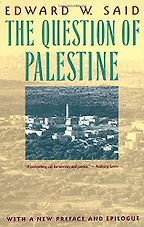
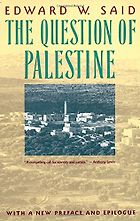
Tell us about The Question of Palestine.
The book was a sequel to Orientalism and is one of three books, the third being Covering Islam, that Said wrote at the end of the 1970s and in the early 1980s. The Question of Palestine is his take on how Palestine was dispossessed and how Zionism is really a European project. In that sense you can say that The Question of Palestine was for him a personal case study of Orientalism. If Orientalism was the way that Europe came to view the rest of non-Europe, especially Arabs and Islam in general, The Question of Palestine looks in particular at the colonial venture in Palestine, the way Palestine was viewed in Europe and how it came to be regarded as belonging to the Jews who had a right to return there.
The importance of The Question of Palestine for me is the second chapter, “Zionism from the Standpoint of its Victim”. What he does is to look at how the idea of Zionism and the return of the Jews to Palestine emerged in Europe. He looks mainly, although not exclusively, at three thinkers and writers – Moses Hess, George Eliot and Theodor Herzl. With George Eliot he looks at her novel Daniel Deronda. What is so significant for me in this chapter is that although Said is studying European thinkers, he is constantly showing their influence on the eventual fate of the indigenous people of Palestine. In other words, Said offers a way to look at the colonial settlers that doesn’t deteriorate into uncritically reproducing their own story of themselves, which is a trap that one can easily fall into because the West and the Zionists were and are victors and clearly their culture is hegemonic, so it’s not easy to study them without actually reproducing their own concerns, their own vantage point, their own sensibilities, and concomitantly to forget about the indigenous people altogether.
Said, throughout his career, really mainly studied the hegemonic culture of the West. You can see how in Orientalism and The Question of Palestine he’s really at his best when he is studying it. Even in Culture and Imperialism one senses that it is easier for Said to carry a sustained argument on the hegemonic colonial writers than it is to carry a sustained discussion on the anti-colonial writers. There is an interesting tension in which he is aesthetically at ease with the former, but he politically identifies with the latter. In the end, Said never forgets that the point of studying the hegemonic culture is to see what the consequences were for those who were the victims of that culture. So he studies Moses Hess, Herzl and George Eliot, but what he always bears in mind, hence the title of the chapter, is how all this was detrimental to the victims.
I’m critically interested in the settlers themselves, in their culture, their narratives, their consciousness. What makes it possible for me to remain critical is to always bear in mind that unless you look at it in the context of the interaction with the colonised, and the consequences for the colonised, then you are colluding with the hegemonic culture of the colonisers. That is something I learnt how to do from Said, precisely because there’s a sense in which my interests are the same as his. In that sense The Question of Palestine, and especially that particular chapter, was eye-opening for me.
The rest of the book mainly looks at the idea that the Holy Land belongs to the Jews and that they are returning to it. Said shows the modernity and the colonial Christianness of the notion of the Jews being restored to Palestine and how Zionism is really part of that phenomenon and tradition. He shows the European colonial context within which this all emerged and, in a way, also the limitations of the 19th century and early 20th century European nation state, European enlightenment, European tolerance and inclusiveness. For instance, if you look at his analysis of Daniel Deronda, it’s clear that George Eliot represented the liberal extreme of her society in the second half of the 19th century but precisely perhaps because she was a liberal and in a way pro-Jewish, her eventual solution in that novel is for the Jews to emigrate and establish their own homeland in the promised land, which points not only to the colonial origins of Zionism but also to the limitations of European society’s willingness to be inclusive and to accept the Jews. I like Said’s analysis of George Eliot. I know he liked her literature and you can see from this book that he has a very engaged reading of Daniel Deronda.
Can you tell us about the controversy Facts on the Ground sparked when it was published?
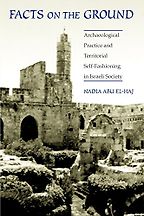
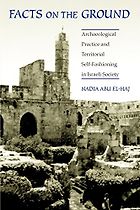
Nadia Abu El-Haj is a Palestinian American, but from a younger generation than Edward Said. She did her doctorate in anthropology at the University of Chicago and published this book in 2001. It’s important to tell the story of the controversy surrounding it because it really shows the lunacy of US politics and culture, especially when it comes to talking about Israel/Palestine. The book was picked up by an alumna of Barnard College in New York where Abu El-Haj teaches and was at the time a candidate for tenure. This alumna was an American Jewish settler in the Occupied [Palestinian] Territories. She started a campaign to deny Abu El-Haj tenure on the grounds that this was an anti-Semitic book, that she was an incompetent scholar who could not read Hebrew, and who falsified the topic she was studying. She basically wanted to see her fired. This thuggish attack engendered a wave of support for Nadia Abu El-Haj. Barnard College eventually dismissed the criticisms of her and she was given tenure.
What can you tell us about the book?
The book itself is a study of the archaeology of Palestine as it was developed by the Israeli state as a continuation of the 19th century Christian tradition of unearthing the Bible and of finding archaeological remains in order to prove the historical veracity of the Old Testament and therefore the claim of the Jews over the Holy Land. In a way this is part of the myth of the return to the land of Israel, in which the Jews are not immigrating to Palestine and dispossessing the indigenous people, but are in fact returning and reclaiming what had been originally theirs, by divine right and archaeological proof.
What she did was to study the science of archaeology from the perspective of what one could call the criticism of knowledge – to show how knowledge is part of power, politics, of ideology of political purposes and specifically to show how this was part of the Zionist claim over Palestine and the emptying of this land – not only physically but also discursively and scientifically – of the Palestinians’ presence. The author undertook a long period of research in Israel/Palestine, which was preceded by a very thorough study of Hebrew. She did extensive research in Israeli archives and journals and carried out interviews. What she was able to do was a very thorough empirical, documented study of Israeli archaeology and how it was part of ideologically and politically claiming the land and, as a consequence, disinheriting the Palestinians.
Given that she is an anthropologist not an archaeologist, is she really qualified to take such a stand? It’s surely unfair to criticise all Israeli archaeologists for being ideologically motivated?
I think this is sheer nonsense. The implication of this would be that you cannot criticise a field of knowledge unless you’re a practitioner of it. It’s like saying you can’t be a critic of colonialism unless you are a colonial officer, because otherwise you don’t really know the craft. Or you can’t, as a lawyer, sue for medical malpractice because you’re not a doctor. Historians study medieval guilds without being craftsmen and peasants and without having done a single day of agricultural work. EP Thompson wrote magnificently on working-class consciousness – last I hear, he wasn’t exactly a member of the British working class.
I think she has been vindicated by Israeli archaeologists themselves. A group of Israeli archaeologists that had been sent after the 1967 war by the state to dig the West Bank, where most of the biblical stories are supposed to have occurred, said, because they are honest archaeologists, “what we have found is that the biblical stories have no corroborating evidence outside the biblical text itself”. This is the same argument that Nadia Abu El-Haj makes. The findings of these archaeologists triggered a big debate in Israel in the late 1990s and early 2000s.
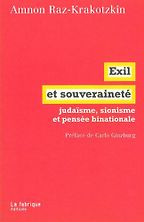
Tell us about your final book choice, Exil et Souveraineté.
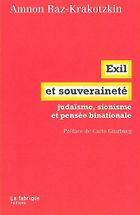
First of all, let me say I chose the book because it is the most readily available work in a European language in which Amnon Raz-Krakotzkin puts forth his original argument on sovereignty and exile. Ideally, I would have chosen his two-part essay in Hebrew (1993 and 1994), entitled “Exile within Sovereignty: Toward a Critique of the ‘Negation of Exile’”. I wish this essay was available in English and other European languages.
Amnon Raz-Krakotzkin is a contemporary of mine and a close friend who teaches at Ben Gurion University in Israel. He did his doctorate at Tel Aviv University with the famous scholar of both European and Jewish history Amos Funkenstein. First, let me tell you something about his name as it relates to his views. He was born to parents who were part of the Labour elite in Israel. They were members of the Palmach [fighting force] and fought in the 1948 war. The surname with which he was born is Raz, which is a typical Israeli surname. The fact that he, not his parents, decided to hyphenate his name and add the East European name Krakotzkin is not coincidental, it’s a political choice. That fact that he has added the Krakotzkin to the Raz is, in a nutshell, his criticism of the Zionist principle of the negation of Jewish exile.
What Raz-Krakotzkin has done is study the way medieval Jews were represented in Zionist scholarship. Zionism really has one ideological foundation which has three expressions – the negation of exile, the return to the land of Israel and the return to history. The negation of exile is to say that the Jews from time immemorial had constituted a territorial nation which was exiled from its homeland. Therefore, its existence in exile is abnormal – it’s not full and cannot by definition be the full expression of the essence of this nation. In order to be normalised and healthy, it has to be expressed on the soil of the homeland. Therefore, life in exile may have given birth to some impressive cultural achievements, but is by definition not a full expression of Jewish life. This can happen only when they are territorialised in their own homeland. Therefore, negation. Because life in exile is by definition not full, it’s abnormal and hence also the stereotypes that are basically anti-Semitic of the exilic Jew as docile, submissive, unproductive, unhealthy, even physically ugly.
The return to the land of Israel is not separable from the negation of exile, it’s just the same principle told differently, in which to normalise the Jews you have to bring them back to the land of Israel. Their experiences and histories in exile are insignificant and are only significant in so far as they are a transitory movement back to the land of Israel. Now what the return to the land of Israel really is, is the negation of Palestine and, by implication, of its native inhabitants and their history. What this really is, is a double negation. The negation of exile negates the existential experiences of Jews in exile. The return to the land of Israel negates the experienced history of Palestine and its inhabitants as long as there is no Jewish sovereignty over it. The history of the Jews in their places of exile is insignificant and the history of Palestine and Palestinian Arabs before Zionism and the creation of Israel is again denied and rendered meaningless.
Now, what Amnon Raz-Krakotzkin does is to criticise the negation of Jewish exile by using [German-Jewish intellectual] Walter Benjamin’s Theses on the Philosophy of History [also translated as On the Concept of History]. The way he looks at Walter Benjamin’s approach is as a radical criticism of the fetish of progress by victorious, triumphant, positivist historical scholarship. He then says this can be applied also to the Zionist negation of exile. What he’s calling for – you have to remember that he is a very political scholar – is the adoption of an exilic perspective on the sovereignty of the Jews over the land of Israel from within that sovereignty and its consequences for the Palestinians.
This clarifies the title “Exile within Sovereignty” of his seminal essay in Hebrew. What he says is that only through this perspective can we forge first of all a genuine alliance with the Palestinians – they as victims and we as dissenters from Israeli sovereignty, of which we have been part – and create a sort of opposition which is based on an exilic criticism of sovereignty, a perspective that through this Jewish experience in exile can identify with the victim. He says this is a precondition for any political consciousness in which the dispossession of the Palestinians is reversed by creating an alliance between the dispossessed of Zionism, the exilic Jews of the past (obviously their negated perspective rather than they in person) and the Palestinians of the present.
Get the weekly Five Books newsletter
What he is seeking to achieve, in other words, is a position in which you cannot celebrate sovereignty, which the Jews have achieved, without marking the consequences of this sovereignty for those who are exiled within their own homeland, the Palestinians. This is a precondition for achieving a political alliance between dissenting Jews and Palestinians in order to create a change within Israel/Palestine. The foundation of this is a criticism of Jewish sovereignty from within that sovereignty. He’s not denying that he is part of that project of Jewish sovereignty but he’s undermining it by bringing in the perspective of exile. He’s been accused of creating this idyllic picture of exile, but that’s not what he’s trying to do. He brings in Walter Benjamin in order to ignite an exilic criticism from within Israel, from within Jewish sovereignty, in order to undermine it. It’s a complicated attempt, but for me it was an influential text on shaping my own thoughts about Zionism and Israeli-ness and about the settler colonial conflict with the Palestinians.
Five Books aims to keep its book recommendations and interviews up to date. If you are the interviewee and would like to update your choice of books (or even just what you say about them) please email us at [email protected]