World » Asia » Georgia
The best books on Georgia and the Caucasus
recommended by Per Gahrton
'Most people still live rather primitively, and that is not good from a purely economic point of view, but it’s very charming and the food is wonderful.'


'Most people still live rather primitively, and that is not good from a purely economic point of view, but it’s very charming and the food is wonderful.'
What were you doing in Georgia in the early 1990s?
I was in Tbilisi. Well, first I was in Moscow studying, but I had friends in Georgia – the future prime minister, Zurab Zhvania, was a good friend (he started the Green Party in the 80s in Georgia, and so I knew him that way). He joined Shevardnadze, but then took part in the Rose Revolution in 2003 as one of its leaders. In 2005 he died in very mysterious circumstances, which I write about in my own book.
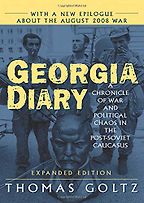
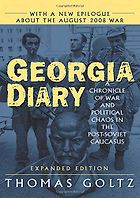
Let’s get started. Tell me about your first book, Thomas Goltz’s Georgia Diary.
That’s a real war correspondent’s chronicle of the war in the early 90s ,when Georgia lost Abkhazia, the republic that later, in 2008, finally seceded formally and was recognised by Russia. But, in reality, Georgia had lost it already in the war in 1992-3 and, of course, there was at that time chaos both in Georgia and in Russia. I was in Georgia and Russia more or less at the time it happened – but I had no chance to go to Abkhazia, unfortunately.
Thomas Goltz was there, though, and he has written a fantastic chronicle of the events that really illustrates the fact that this was a tough war. He is pretty even-handed, and that’s what’s interesting; he states clearly that the Georgians tried to conquer Abkhazia, which is awkward in a way because Abkhazia was an autonomous republic inside Georgia, but after the fall of the Soviet Union everything was in chaos and Abkhazia wanted some kind of independence. So the Georgians went in there, but it wasn’t the real Georgian army. Goltz describes it as plunderers and convicts released from prison, and some honest people – a real mixture. When they went into Abkhazia they behaved very, very cruelly – like thieves, killers, murderers. That is true, but it’s also true that Abkhazia was supported by lots of funny Russian forces from the Northern Caucasus, people who said they were going to form a new Caucasian state. It was all very chaotic, and Goltz gives a perfect picture and succeeds in not being partisan.
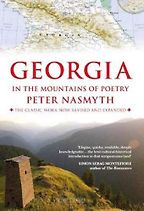
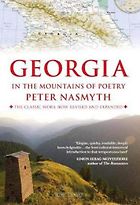
Tell me about the Peter Nasmyth book. I don’t know this one.
This is quite a different type of book. It’s a description of the land and the people of Georgia – not so much about the conflicts, but about the different parts of Georgia, their fantastic food and how they use grapes in funny ways that we don’t do in our part of the world.
How do they use grapes in funny ways?
They make a kind of sausage from grapes. Well, it looks like a sausage, but it doesn’t taste at all like a sausage. I don’t know really how they manage to do it. They are pretty long sausages, and grapes are not very long. This is the kind of thing he talks about in the book. But apart from the well-known provinces that have now seceded, like Abkhazia, he also tells about the special languages and people. There is a large Armenian minority, a large Azerbaijani minority and you also have, inside Georgia away from the borders, peoples who speak other kinds of languages or dialects, like the Mingrelian people over on the west coast by the Black Sea.
The first president of independent Georgia, Zviad Gamsakhurdia, came from that province. He fought the civil war and later committed suicide. He was a fanatic. He said, for instance, that the Georgian language is the mother of all languages and all other languages are developed from Georgian. The Georgian language even has its own script. There is no language that has those letters – not Russian or even Armenian.
There’s another province called Svaneti up in the north where they have very specific systems for agriculture that nobody uses in any other part of the world. He gives a feeling for the country in a way that no other book does. It’s a very agricultural country still. Most people still live rather primitively, and that is not good from a purely economic point of view, but it’s very charming and the food is wonderful.
What’s your favourite Georgian food?
They have a kind of smorgasbord like we have in Scandinavia with lots of small dishes, but they are completely different dishes to ours, of course. There is some kind of big mushrooms that they cook and fry in a special way with some spices and I always take a lot of them. It’s a specific mushroom to Georgia. And khachapuri of course [Georgian bread stuffed with melted cheese] – but you get fed up with that after a time.
I would never get fed up!
It’s like a hot dog or a kebab: it’s very common, and you get it too often.
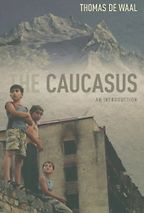
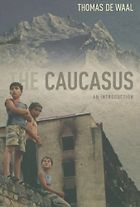
Tell me about Thomas de Waal’s book, The Caucasus.
He’s a good journalist too. Not the same as Goltz – perhaps more analytical. He’s been at it a long time around the Caucasus, and doing a newsletter that still appears on the web every week about Georgia, Azerbaijan and Armenia. It’s the kind of news you don’t find in the big media – everyday news and political news. He summarises in this book what he knows about these three countries. It’s more or less a textbook. If you don’t know anything about them and you want to have the basic knowledge before you go there, then you should absolutely read this book. You get the politics and all the problems and analysis.
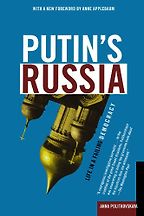
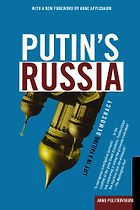
What about the Politkovskaya’s Putin’s Russia?
That’s quite another book. The author is, of course, well known in the world. I met her once. She was in Strasburg when I was at the European Parliament, and we had a discussion – that must have been a couple of years before she was killed. She was very upset about the development of Russia and the authoritarian attitude of Putin. He’s not a Stalinist dictator, but he’s reckless. He’s an authoritarian guy who doesn’t like opposition, and he’s prepared to use all the means of the state. We have such politicians in democratic states, but he’s very ruthless. Politkovskaya spent a lot of time in Chechnya, of course, and she saw how they really tortured and killed people out there. Shoot first and ask afterwards.
She was a very down-to-earth journalist, and she gave the reality from the point of view of the common people, especially women, but also others. She was not non-partisan; she was very partisan, but she managed to be a professional journalist, although she was so emotionally engaged, and that’s probably why somebody saw her as a threat. I don’t think Putin killed her, but when she was assassinated (probably by some stooges of the Chechen leader) Putin made a very awkward comment about people we don’t need, or something.
Can you give me an example of a story she tells about women in Chechnya?
Yes, there are many stories about women who they suspect were terrorists. There was a Russian officer finally convicted because he was too cruel: he took a woman prisoner and used her sexually and abused her and then he killed her. There are a lot of similar stories. They don’t always end with the killing of the victim, but there was a lot of sexual abuse among the Russian soldiers in Chechnya.
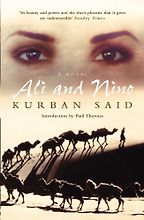
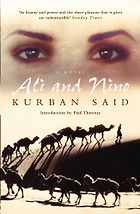
Finally, Ali and Nino. Quite a few people have chosen this.
This is another type of book. It isn’t about Georgia but it’s about the South Caucasus and the history and the background, the mixture of nationalities and religions and culture, which now a lot of political forces try to change into uni-ethnic states or areas, which I think is a real pity. But for most of history, this area was very multicultural. This is the story of a guy and a girl from different ethnic and religious groups falling in love, and all these types of problems, but the background and the surroundings of the story give it real depth.
When you come to Tbilisi, you think it’s a completely Georgian city, but a few decades ago – and especially 100 years ago – there were more Armenians in Tbilisi than Georgians, and there were Jews and lot of North Caucasian tribes: the Circassians, the Persians, Arabs, Russians and Turks who have overwhelmed Georgia in the past and left small parts of their population there. There was an enormous mixture. We have these problems in another way in Western Europe today, but basically such a multitude could be very creative, and this book reminds us of this background and gives us an insight into the problems of a multitude of different nationalities in close proximity.
March 23, 2011
Five Books aims to keep its book recommendations and interviews up to date. If you are the interviewee and would like to update your choice of books (or even just what you say about them) please email us at editor@fivebooks.com
Support Five Books
Five Books interviews are expensive to produce. If you've enjoyed this interview, please support us by donating a small amount.

Per Gahrton
Per Gahrton is a Swedish politician, chair of Green Think Tank and Palestine Solidarity Association of Sweden (PGS) and author of Georgia: Pawn in the New Great Game. His book describes the modern history of Georgia and American and Russian policy towards the country, as well as the Rose Revolution and the mysterious death of Prime Minister Zurab Zhvania.
Per Gahrton
Per Gahrton is a Swedish politician, chair of Green Think Tank and Palestine Solidarity Association of Sweden (PGS) and author of Georgia: Pawn in the New Great Game. His book describes the modern history of Georgia and American and Russian policy towards the country, as well as the Rose Revolution and the mysterious death of Prime Minister Zurab Zhvania.
© Five Books 2025