The former FBI Chief Negotiator says that negotiators need to come across as non-threatening and non-judgmental. And active listening isn’t just something you use in a hostage situation; it’s important in everyday life, too
You were a negotiator with the FBI for 30 years. During that time what did you discover were the key skills to being a negotiator?
I think to be an effective and successful negotiator you have to have a lot of self-control and avoid becoming emotionally involved in the situation yourself. Rudyard Kipling has a famous quote which says, ‘If you can keep your head while all about are losing theirs…’ and it is something I include in my book because I think it is a good indicator of someone that will be successful as a negotiator. Also you have to be a very good listener and to acknowledge the perspective and viewpoint of the other person without necessarily agreeing or disagreeing with it. So I think those are some of the great skills that you would see in a good negotiator.
And presumably you need to be flexible as well.
Yes, I think you do. If you have a rigid, inflexible approach to problem solving I think you shut down a lot of avenues of resolution. So you need to come across as someone who is able to adapt to the circumstances and be open to dealing with the issues that are important to this person.
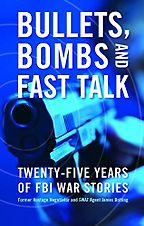
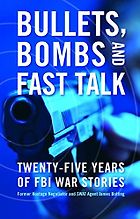
Those sound like qualities that have served you well. Let’s talk about your first choice, Bullets, Bombs and Fast Talk: 25 Years of FBI War Stories by James Botting, who sounds like he worked on some high-profile cases.
Yes, Jim Botting is a very close friend of mine and a colleague in the FBI. Jim’s stories are based out of the Los Angeles office of the FBI, where he worked on a number of very interesting and high-profile cases. The book gives the reader a really good glimpse into a day in the life of an FBI agent working on the streets. He is very good at setting the stage and sharing with the reader what it is like to be an FBI agent.
Can you give me an example of one of his more high-profile cases?
He was involved in some of the cases that I worked on, like the Waco Siege. In fact I asked for him to be on my team. He also worked on a case involving the Symbionese Liberation Army. This was the group that had kidnapped the American heiress Patty Hearst. At one point group members were found barricaded in a house in Los Angeles and there was a big shoot-out. The police responded and eventually there was a fire that burned down the place that they were hiding in. Jim was on the scene of that. It was a very dangerous and challenging case.
Tell me about what you were both doing in the Waco Siege.
Jim was one of my team leaders. I had a large team of negotiators split between two 12-hour shifts and he was in charge of one of the shifts. As the overall negotiation coordinator, I divided my time between the two teams. I brought Jim in because I thought he would do a great job managing that team, which he did.
Most people know that the Waco Siege ended badly, but your work there was one of the more successful parts of the operation.
I was in charge of the negotiations for the first 26 days and during that time it was a very vulnerable situation. It started when Federal agents from the Bureau of Alcohol, Tobacco and Firearms tried to exercise an arrest warrant and a search warrant and there was a big shoot-out that occurred between ATM agents and some of the followers of David Koresh, who were part of a Davidian religious sect. Four agents were killed and a number of them were wounded, and six of David Koresh’s followers were killed as well.
The FBI was charged with investigating the murders and Federal agents tried to come in to resolve the situation, and I headed up the negotiations during the siege. For the first 26 days my negotiation team got 35 people out, including 21 children. And then, in a sort of controversial aspect of this, the FBI decided to take a more aggressive approach during the second half of the ordeal and no one else came out. Some tear gas was inserted on the 52nd day and the Davidians started fires and essentially committed mass suicide.
And this is something that you feel deeply frustrated about because you had been taken off the case.
Clearly it is the most challenging, difficult and frustrating case I had ever worked on because I believe the negotiation strategy that I had formulated and led my team on was working because we were getting people out. It certainly wasn’t succeeding as quickly as some would have wanted but the more aggressive approach had the opposite effect and served to shut down any meaningful negotiations. I am quite confident in my own mind that had we continued on as I had led the group we probably would have gotten quite a few more people out – perhaps all of them.
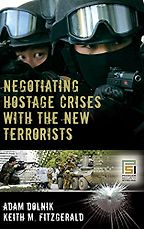
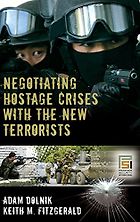
What about the techniques used in your next book, Negotiating Hostage Crises with the New Terrorists by Adam Dolnik and Keith Fitzgerald?
I actually met Adam Dolnik at a conference in Turkey and he asked me to review his book and write a foreword for it, which I ended up doing. And I think it is a very interesting book because they examine primarily terrorist hostage sieges that occurred in Russia. For example, they looked at the Beslan school and Moscow theatre situations. Their premise is that the authorities are under-prepared to deal with the new terrorist, who is a bit more sophisticated in understanding how to manipulate law enforcement’s response.
I think it is a very good book on articulating many of the problems that authorities have, and by authorities I mean not just police but governments, in dealing with organised radical terrorists who are willing to die. And I think it is probably the best book out there on that topic. I think its only weakness is that it draws conclusions based only on Chechnyan terrorists and we may see other terrorists act in different ways around the world.
The authors think that the terrorists are pretty adept at stopping negotiation approaches and I think in the case of Beslan and the Moscow theatre there is some truth in that, but I am not sure that is applicable across the world with other terrorist groups. For example, in the famous Mumbai incident the behaviour of the terrorists was also very frightening and demonstrated a lot of forethought which was put into the planning in how to deal with negotiations, but I think in many respects it was also different from the Chechnyan terrorists. So I think we have to be careful about drawing absolute conclusions about how terrorists are likely to behave and we have to be more flexible.
But if a terrorist is determined to die how can you negotiate with them?
Well, it is very challenging. It is like the suicidal individuals that the police deal with all the time. If someone really is convinced that they are going to kill themselves and they are determined to do that then you are going to be unsuccessful in stopping them. But we try to find a level of ambivalence and that gives us an opportunity to insert our efforts to try to stop them from doing that. And I think the same is true for terrorists.
As we look at today’s world, with a very committed fundamentalist terrorist, the prognosis for getting them to comply is extremely difficult but not impossible. There are always some people who, when put on the spot, will choose life over death. And I think we have to make that effort time and again if for no other reason than to buy time and slow down the process, so we have better resources available if we have to use tactical intervention.
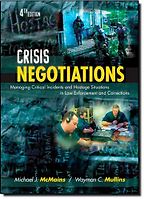
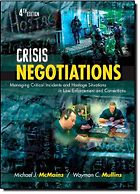
Your next book is Crisis Negotiations, Managing Critical Incidents and Hostage Situations in Law Enforcement by Michael J McMains and Wayman C Mullins.
I assisted the authors with their first edition; they are now on their fourth edition. This is more of a textbook for negotiation practitioners. It certainly talks about techniques and so forth. It may not be particularly appealing to the average citizen who wants to learn more about this but I think for someone who wants to pursue a career in this or learn more about how it works at the street level this is the only book out there which really covers it from that academic perspective.
So what kinds of things does it teach?
It is very basic. It deals with things like how you set up a negotiation team, what sort of training you should have, command decision-making and tactical team interaction, how to deliver items into the site and how to affect surrenders. It is pretty specific on the dos and don’ts.
And these kinds of techniques are relatively new. The old way of doing it was to go in and take down the bad guys whatever the cost.
I think the book came along much later and by then most law enforcement agencies had changed their way of doing things. You could in essence say what they have done is to collect together the policies and procedures we really spearheaded in the FBI. But you are right, prior to the education programme there was a fairly restrictive approach to dealing with these cases and not just with the FBI but with most police forces. It was basically a confrontational approach in which we essentially said, ‘Come out and surrender, or else.’ That was, of course, typical of law enforcement worldwide and it sometimes worked but often resulted in significant failures with loss of life.
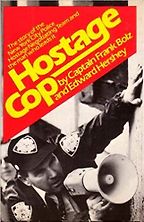
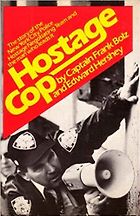
Let’s move on to Hostage Cop by Frank Bolz and Edward Hershey.
This was the first book to come out on this subject. Frank Bolz is one of the founding fathers of hostage negotiation in the New York City Police Department. His book tells the story about how negotiations got started in New York and what the basic concepts were. It focuses on the classic bargaining interactions where someone is holding a hostage and a negotiator shows up and says, for example, ‘Hey listen, I want to help you but my boss wants to get something for this, so before I can give you what you want, you need to do something for me.’
The basic premise of quid pro quo bargaining is highlighted. We’ve learned much since those early days and basic strategies. For example, we know today that over 90 per cent of the incidents that police negotiators respond to are emotionally driven situations in which a true bargaining interaction does not play a role. However, this book gives you a good foundation for how the whole process started.
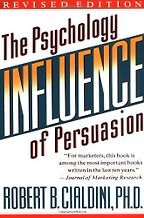
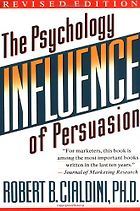
Your final book is Influence: The Psychology of Persuasion by Robert Cialdini.
It’s a book that really was the foundation for much of what we spearheaded in the FBI that moved professional negotiators towards becoming crisis interveners. What we realised when we examined cases was that we were responding to people manifesting their anger, rage, frustration and loss. Typically we found they really had no clear purpose or goal in their behaviour. So what we had to do was try to create an opportunity to influence them positively, to move them away from taking violent actions in situations when they neither wanted nor needed something tangible from us.
When we were working out how to do this we copied very heavily from Cialdini’s book. We looked at ways people gain influence with another and it is all about relationship building, earning trust and demonstrating a genuine interest in their issues and concerns. We learned that negotiators needed to come across as being non-threatening and non-judgmental.
The primary tool which is taught to negotiators around the world is something we call active listening skills. This is the idea that listening is not a passive endeavour but it requires an active engagement in which the negotiator paraphrases whatever issues are brought up by the person that we are dealing with. Further, the negotiator acknowledges the emotions being expressed by saying things like, ‘You sound angry or you seem frustrated,’ or, ‘You sound like you are confused and just don’t know what to do.’ Such statements are a powerful way that a negotiator can reflect back to the person to show that you understand how they feel about what is going on in their life and the impact it is having. And a lot of that came from Cialdini and the research that Cialdini reported in this book.
This is an idea that you also mention in your own book, and there you point out that active listening isn’t just something people can use in a hostage situation, it is just as important in everyday life.
Absolutely, and those adaptations that were made to law enforcement negotiators to be more successful in the most volatile situations obviously have a higher level of success when you are dealing with friends, children, colleagues and spouses. Listening is always the cheapest concession we can make to anyone. Taking the time to listen and understand is a powerful tool to create a trusting relationship that helps resolve conflict and gain cooperation.
But it doesn’t work with your wife, does it?
No, she tells me she’s heard it all before, and because she knows what I do for a living if I try that stuff she says, ‘Hey don’t try that here!’ But I think in most situations in life listening is the key ingredient that we can employ in avoiding or resolving conflict. If we come across as being sincere and genuine it speaks volumes about us as human beings and makes us worthy of the other individuals’ respect in kind.
When I used to interview people when they had surrendered after an incident and ask them what one thing I said to make them change their mind, they would invariably reply, ‘I don’t know what you said but I liked the way you said it.’ Our genuine, sincere, and concerned tone and demeanour are the most powerful tools of influence that we know.
February 1, 2011
Five Books aims to keep its book recommendations and interviews up to date. If you are the interviewee and would like to update your choice of books (or even just what you say about them) please email us at editor@fivebooks.com
Five Books interviews are expensive to produce. If you've enjoyed this interview, please support us by donating a small amount.
Gary Noesner
Gary Noesner retired from the FBI in 2003 following a 30-year career as an investigator, instructor and negotiator. He was a hostage negotiator for 23 years, spending the last ten years as the FBI’s Chief Negotiator. During his career he was involved in numerous crisis incidents: prison riots, right-wing militia standoffs, religious zealot sieges, terrorist embassy takeovers, aircraft hijackings and over 120 overseas kidnapping cases involving American citizens. Following his retirement from the FBI he became a Senior Vice President with Control Risks, an international risk consultancy, and most recently spent five and a half years working on a kidnap case involving three American defence contractors taken hostage by FARC in Colombia, South America. He has written a book about his FBI negotiation career, entitled Stalling for Time.
Gary Noesner retired from the FBI in 2003 following a 30-year career as an investigator, instructor and negotiator. He was a hostage negotiator for 23 years, spending the last ten years as the FBI’s Chief Negotiator. During his career he was involved in numerous crisis incidents: prison riots, right-wing militia standoffs, religious zealot sieges, terrorist embassy takeovers, aircraft hijackings and over 120 overseas kidnapping cases involving American citizens. Following his retirement from the FBI he became a Senior Vice President with Control Risks, an international risk consultancy, and most recently spent five and a half years working on a kidnap case involving three American defence contractors taken hostage by FARC in Colombia, South America. He has written a book about his FBI negotiation career, entitled Stalling for Time.